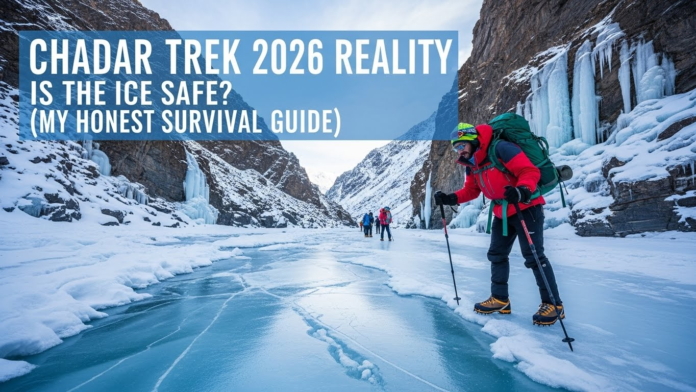
I still remember the sound before I remember the cold. A deep, hollow crack echoing under my boots, like the earth clearing its throat.
That was my first real moment on the Chadar Trek, and it answered the one question everyone asks me about 2026.
Yes, the ice can be safe. But only if you understand how fragile it truly is.
This is not a dreamy Instagram trail. Chadar is survival walking on a living river. Climate change, thinner ice cycles, and unpredictable temperatures have changed the trek forever. If you are planning Chadar Trek 2026, you deserve the unfiltered truth, not marketing promises.
This is my honest, boots-on-ice survival guide.
Is the Ice on Chadar Trek 2026 Actually Safe?
Short answer: Yes, but only during a narrow weather window and only with the right local judgment.
Long answer: The ice is no longer uniformly thick like it used to be a decade ago. Locals now call it “moving ice,” not frozen river. Parts refreeze overnight, melt by afternoon, and break without warning.
In 2026, safety depends on three things:
- Night temperatures staying below -15°C
- Continuous ice formation for at least 7 to 10 days
- Real-time route changes by Zanskari guides
If any one of those fails, sections of the trek are delayed, rerouted, or canceled entirely.
I watched our guides test ice thickness every single morning with iron rods before letting us step forward. That should tell you everything. What I did wrong was not to check the government SOPs, you can check it here on the Leh govt official website.
Why Chadar Trek Is Riskier in 2026 Than Before?
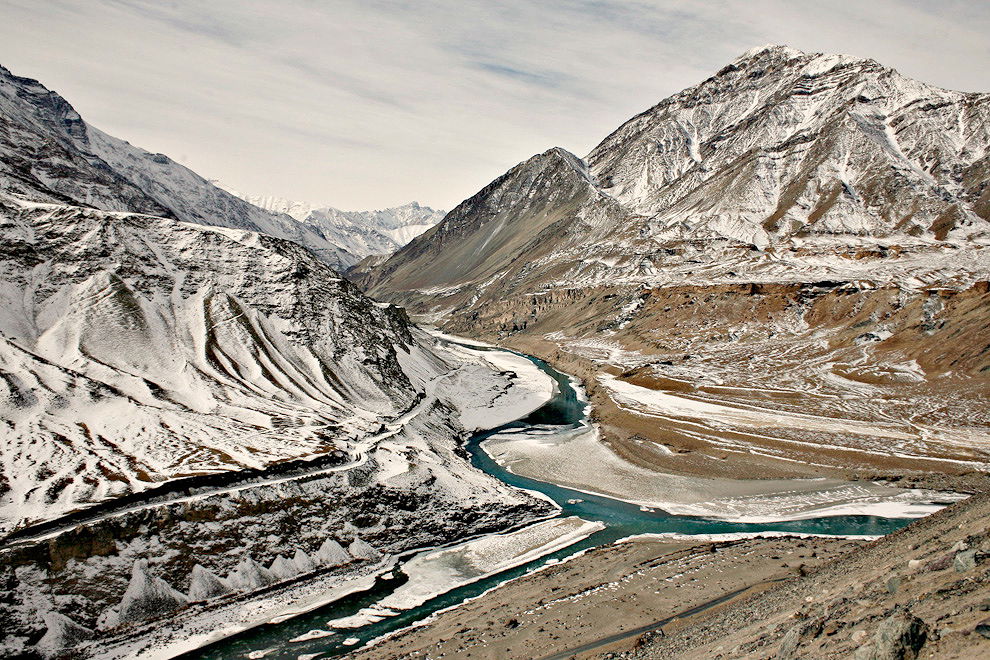
The biggest lie online is that Chadar Trek difficulty has stayed the same. It hasn’t.
Climate Reality on the Zanskar River
The Zanskar River now freezes unevenly. You will walk on:
- Hard black ice
- Soft white snow ice
- Slush that looks solid but sinks instantly
Some sections disappear overnight. One day you walk on ice, the next day you scramble over rocks hugging canyon walls.
This unpredictability is what makes Chadar dangerous, not the cold.
My First Ice Crack Moment (And What I Learned)
At around 11 am, sunlight hit the canyon. The river beneath me made a low cracking sound. Not loud, not dramatic. Just enough to freeze my blood.
Our guide calmly said, “Keep walking. Don’t stop.”
Here’s what I learned that day:
- Standing still is worse than moving
- Panic breaks balance faster than ice
- Trust your guide more than your instincts
The ice didn’t break, but my confidence did. And that humility probably saved me later.
Best Time for Chadar Trek 2026 (This Matters More Than Fitness)
Safest window:
Mid-January to early February 2026
December is too early. Ice is forming but not stable.
Late February is risky. Sun gets stronger. Ice thins fast.
If your operator pushes dates without discussing temperatures, walk away.
How Guides Decide If Ice Is Safe Each Day?

Good guides do not follow fixed itineraries anymore.
They check:
- Ice thickness with metal rods
- River sound beneath ice
- Color of ice (clear is strongest)
- Overnight minimum temperature
Some days, we walked only 4 km instead of 12. Some days, we climbed rocky cliffs instead of ice.
That flexibility is survival.
What Happens If Ice Breaks on Chadar Trek?
Let’s be honest.
If you fall in:
- Water temperature is near zero
- Hypothermia can start within minutes
- Rescue depends on immediate team response
This is why walking roped together in risky sections is common now. And why solo Chadar trekking should never be considered in 2026.
I saw one trekker slip knee-deep into slush. His boot froze solid within minutes after pulling out.
That was a warning, not an accident.
Permits, Fees & The “Hidden” Costs of 2026
Most agencies advertise packages for ₹25,000, and you think, “Great, that fits my budget.” Stop right there. That is not the final price.
In 2026, the local administration in Ladakh has become incredibly strict about who gets on the ice. They don’t want another rescue disaster. So, before you step foot on the Chadar, you have to pay a series of mandatory fees that usually aren’t included in your base package.
Here is the real breakdown of what you will pay in Leh:
- Wildlife & Environmental Fee: ~₹2,200 – ₹2,500 (Paid to the department).
- ALTOA (Association of Tour Operators) & Rescue Fee: ~₹2,500. This is non-negotiable. If you slip and break an ankle, this fee funds the rescue team that drags you out on a sledge.
- Mandatory Medical Checkup: ~₹2,000. You cannot skip this. You have to physically go to the SNM Hospital in Leh, get your vitals checked, and get a “Fit for Trek” card. No card = No trek.
- Adventure Insurance: If your agency doesn’t include it, expect to pay another ₹2,000 – ₹3,000 for high-altitude coverage.
The Reality: Carry at least ₹8,000 to ₹10,000 in CASH to Leh. ATMs freeze or run out of money, and UPI doesn’t work when the internet is down. Don’t be the person begging strangers for cash at the permit office.
The Toilet Situation: What Nobody Tells You
I’m going to be very graphic here because nobody else will, and you need to know this.
There are no luxury toilets on the frozen river. There are no porcelain seats. There is a “Dry Pit Tent.”
This is essentially a small tent with a hole dug in the sand. You do your business in the hole and cover it with mud. That’s it. But at -30°C, simple biology becomes a logistical nightmare.
Here is the cold reality:
- Wet Wipes are Useless: Do not bring them. They will freeze into solid bricks of ice within 10 minutes of opening the pack. You cannot wipe with a brick.
- Water Freezes Instantly: You cannot use water to wash. It will turn to ice before it hits the ground.
- Toilet Paper is King: Bring 2-3 rolls of your own. Keep them in a Ziploc bag so they stay dry.
- The “Zipper” Struggle: Unzipping 4 layers of clothing (thermal + fleece + down jacket + windbreaker) while your fingers are numb is a panic-inducing experience. Practice this at home.
My Pro Tip: Keep a small bottle of hand sanitizer inside your jacket pocket (close to your body heat). If you leave it in your bag, it will freeze, and you’ll have nothing to clean your hands with.
This isn’t glamorous, but it’s part of the survival experience. If you can handle the toilet tent at -30°C, you can handle anything.
Clothing That Actually Keeps You Alive on Chadar
Forget fashion lists. Here’s what worked for me.
Absolute Essentials
- Double-layer waterproof boots
- 3 pairs of socks, rotated daily
- Down jacket rated -30°C
- Windproof outer shell
- Balaclava and glacier goggles
Cotton is death here. Once wet, it never dries.
At night, temperatures dropped to -25°C inside tents. Water bottles froze solid even inside sleeping bags. Here I have written a recent blog on winter jackets, don’t forget to check it out.
Mental Survival Is Harder Than Physical

What no one prepares you for is the silence.
No phone signal. No trees. No warmth. Just ice, rock, and breath.
There were moments I questioned why I paid to suffer like this. But then the canyon opened, sunlight hit frozen waterfalls, and the river shimmered beneath my feet.
Chadar strips you down emotionally. It shows you how little you actually need.
Leh Acclimatization Is Non-Negotiable
Before stepping on ice, I spent two full days in Leh doing nothing.
That saved me.
Altitude sickness on Chadar is brutal because cold hides symptoms. Drink water even when you are not thirsty. Eat even when food feels heavy.
If your itinerary rushes Leh acclimatization, cancel it.
Who Should NOT Attempt Chadar Trek 2026?
Be honest with yourself.
Avoid Chadar if:
- You panic in isolation
- You hate extreme cold
- You expect luxury
- You don’t trust guides easily
This trek rewards patience, humility, and adaptability, not ego.
Is Chadar Trek 2026 Worth It Despite the Risks?
Yes.
But only if you respect it.
Chadar is not about conquering nature. It is about borrowing a frozen river for a few days and leaving quietly.
I walked away with cracked lips, bruised knees, and a deep respect for people who call this place home.
It changed how I understand comfort forever.
Final Safety Checklist for Chadar Trek 2026
- Choose mid-Jan to early Feb
- Pick operators with local Zanskari guides
- Train balance, not speed
- Prepare mentally for route changes
- Accept that cancellation is sometimes the safest outcome
If you can accept all of that, Chadar will give you something rare. If you are also visiting Kashmir, read my guide on Driving to Gulmarg in Winter.
Is Chadar Trek safe in 2026?
Yes, the Chadar Trek can be safe in 2026, but only during a short weather window in mid-January to early February. Safety depends on stable sub-zero temperatures, real-time ice assessment, and experienced local guides. The trek is riskier than before due to climate change.
How thick is the ice on Chadar Trek?
Ice thickness varies daily, usually between 4 to 8 inches in safe sections. Some areas may have thinner ice or slush, which is why guides constantly test the surface and change routes when needed.
What is the best time for Chadar Trek 2026?
The safest and most reliable time is mid-January to early February 2026. December ice is usually unstable, while late February brings higher sun exposure and faster ice melting.
Can beginners do Chadar Trek?
Yes, beginners can do Chadar Trek if they are physically fit and mentally prepared. Prior trekking experience helps, but more important skills are balance, cold tolerance, and the ability to follow guide instructions without panic.
What happens if the ice breaks during Chadar Trek?
If ice breaks, guides immediately reroute or rope the group for safety. Falling fully into the river is rare but dangerous due to freezing water. This is why solo trekking and ignoring guide advice is extremely risky.
How cold does it get during Chadar Trek?
Day temperatures range from -5°C to -15°C, while nights can drop to -25°C or lower. Inside tents, water bottles and shoes often freeze solid overnight.
Is Chadar Trek affected by climate change?
Yes. The Zanskar River now freezes unevenly due to changing winter patterns. This has made the trek shorter, more unpredictable, and more dependent on daily weather conditions than in the past.
How many days do you need to acclimatize before Chadar Trek?
You need at least 2 full acclimatization days in Leh before starting the trek. Skipping acclimatization increases the risk of altitude sickness, which is harder to detect in extreme cold.
Is Chadar Trek canceled often?
Yes, partial delays or route changes are common, and full cancellations happen when ice conditions are unsafe. A responsible operator prioritizes safety over completing the trek at all costs.
Is Chadar Trek worth it in 2026?
Chadar Trek is worth it only if you accept uncertainty and discomfort. It is no longer about completing a fixed route, but about experiencing a rare frozen river environment with respect, patience, and flexibility.

