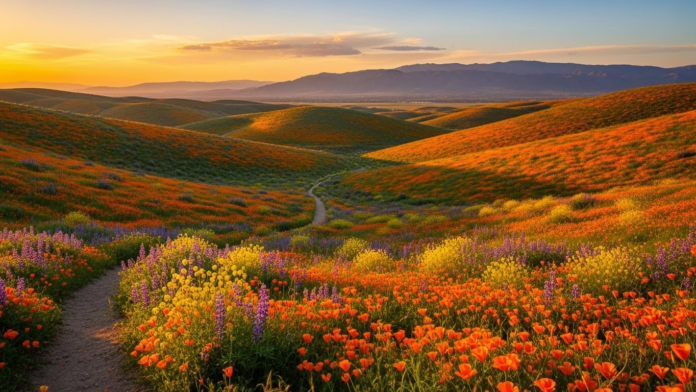
It is 2026. If you are reading this, you are probably staring at your calendar, wondering if you need to book a flight to Palm Springs or Las Vegas next month. You’ve seen the photos from 2016 or 2019 – valleys painted in electric purple and neon orange – and you want to know: Is 2026 going to be a Superbloom year?
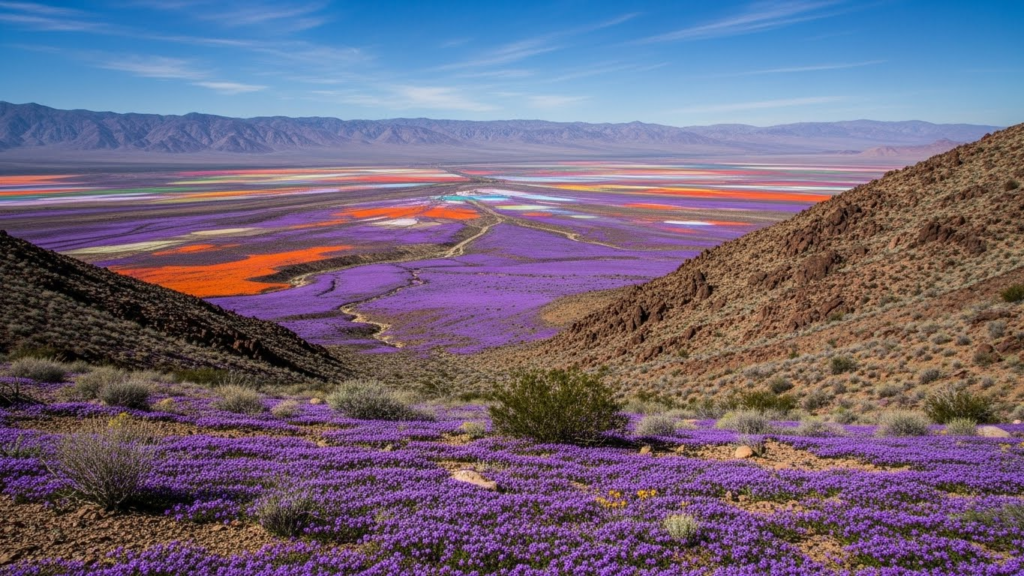
I have chased wildflowers across the Mojave and Colorado deserts for years. I’ve driven five hours for a rumor of Desert Gold only to find dry dirt, and I’ve stumbled upon unexpected carpets of Sand Verbena that brought me to tears.
Here is the straight answer right now.
The California Superbloom 2026 Verdict:
Anza-Borrego is the safer bet; Death Valley is the high-stakes gamble.
Thanks to steady regional rains in late 2025, Anza-Borrego Desert State Park is currently tracking for an above-average bloom, likely starting mid-February in the lower desert. Death Valley, however, is currently classified as a “Good Bloom” year, not a “Superbloom” year. While it has received some moisture, it missed the singular, massive “deep soaking” event in early winter required to trigger a historic, valley-wide explosion, though localized pockets near Badwater and Ashford Mill will still be stunning.
The Science of the Bloom: Why It’s So Hard to Predict
What triggers a Superbloom?
It isn’t just about “rain.” According to National Park Service ecologists, a Superbloom requires a “perfect storm” of three things:
- Deep Soaking Rain: More than a half-inch of rain in early winter (Nov/Dec) to wash the protective coating off dormant seeds.
- Continuous Moisture: Regular follow-up showers to keep the sprouts alive without drowning them or triggering invasive grasses.
- No Drying Winds: A heatwave or windstorm in February can kill the whole show in 48 hours.
Think of the desert like a savings account. It needs consistent deposits (rain) all winter to afford a big purchase (flowers) in the spring. If the account is empty, the desert stays dormant.
Death Valley 2026 Forecast: The “Wildcard”
Is Death Valley worth visiting for flowers in 2026?
Death Valley is the dramatic diva of superblooms. It doesn’t do “moderate.” It either explodes, or it stays brown.
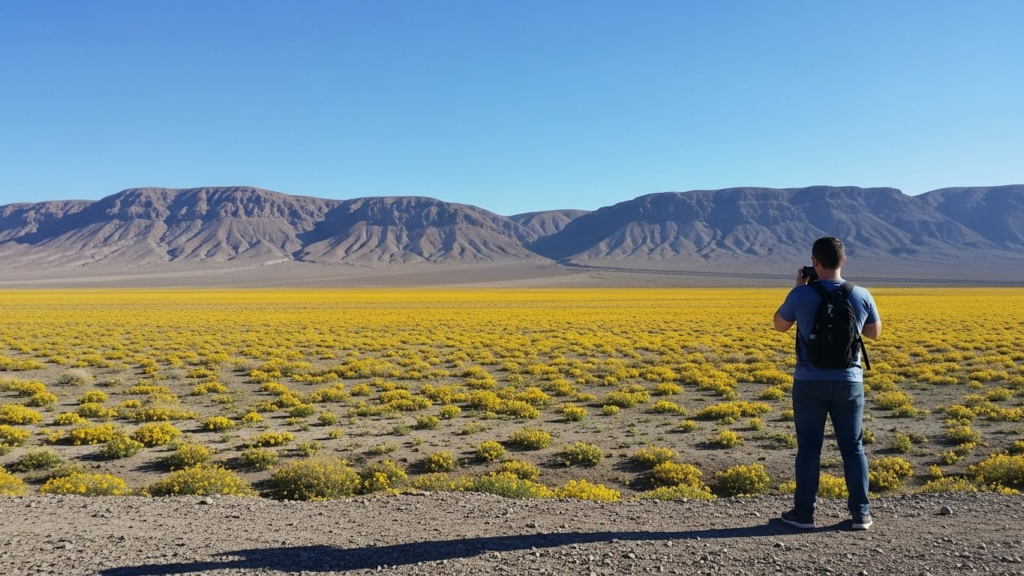
The Current Situation:
We are seeing green shoots in the alluvial fans near Ashford Mill and Warm Springs. This is promising. However, the data suggests we haven’t had that catastrophic, flood-level rain event that triggers the Desert Gold (Geraea canescens) to cover the entire valley floor like it did in 2016.
Where to Look:
If you go to Death Valley this year, lower your expectations from “Superbloom of the Century” to “Beautiful Solitary Moments.” Focus on:
- Lower Elevations (Feb – Mid March): Look for Desert Gold and Sand Verbena along Badwater Road.
- Mid Elevations (April – May): If the valley floor disappoints, drive up to Titus Canyon or the Emigrant Canyon area. The higher elevation blooms (Phacelia, Paintbrush) are often more reliable even in drier years.
My Advice:
Go to Death Valley for the landscapes – the salt flats, the painted hills, the silence. Let the flowers be a bonus. If you go expecting a carpet of gold and don’t find it, you’ll be disappointed. If you go for the desert and find a single perfect Ghost Flower, you’ll be delighted.
Anza-Borrego 2026 Forecast: The “Reliable” Showstopper
Why Anza-Borrego is the top pick for 2026.
Anza-Borrego Desert State Park is different. It is closer to the coastal mountains, meaning it catches more stray moisture than the deep interior of Death Valley. It is more forgiving.
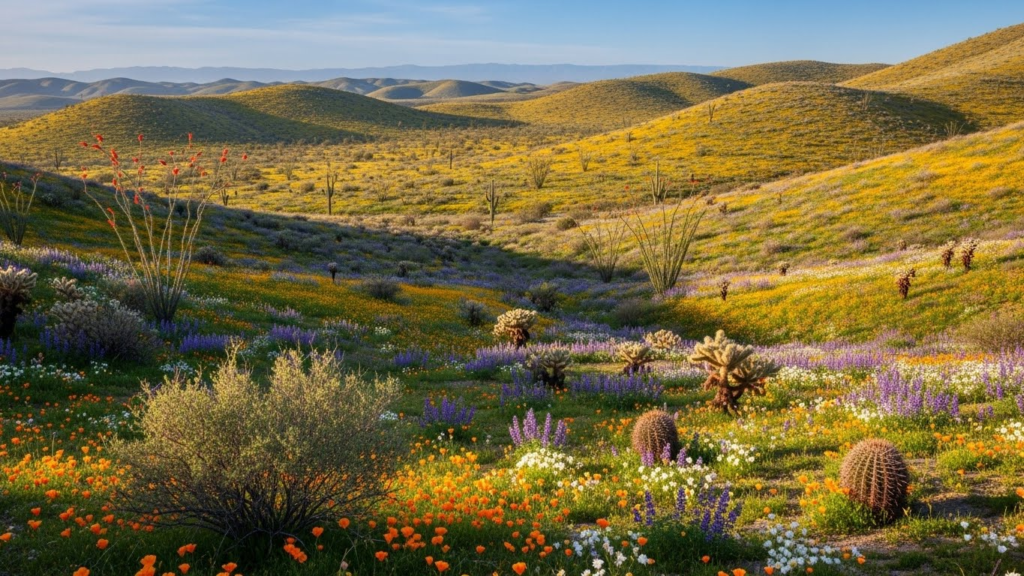
The Current Situation (Jan 2026):
Rangers are reporting excellent germination in Henderson Canyon and the Coyote Canyon areas. The invasive mustard grass (the enemy of wildflowers) is present, but the native species are fighting back.
What to Expect:
- Mid-February: The “first wave” of Desert Sunflowers and Sand Verbena will hit the Borrego Valley floor.
- Early March: This is usually the peak. Expect the fields along Henderson Canyon Road to be traffic-jammed but spectacular.
- The Cactus Bonus: Even if the wildflowers fade, Anza-Borrego has a massive glorious bloom of Barrel Cactus and Beavertail Cactus in late March/April that Death Valley can’t match.
My Advice:
If you have only one weekend and you need to see flowers, drive to Anza-Borrego. It is accessible, family-friendly, and offers a higher density of blooms per mile this year. For off the beat path lovers, I have also compiled a list of 35 best off the beaten path places in the USA, must check that out.
Death Valley vs. Anza-Borrego: The 2026 Face-Off
If you are torn between the two, here is the breakdown based on the current 2026 outlook.
| Feature | Death Valley National Park | Anza-Borrego Desert State Park |
| 2026 Bloom Potential | Moderate. Good localized spots, but likely not a “Superbloom.” | High. Strong germination signs; high confidence for a colorful March. |
| The Scenery | Alien, vast, stark, intimidating. | Accessible, mountainous, scrubby, greener. |
| Driving Distance | Remote. 4.5 hrs from LA, 2 hrs from Vegas. | Accessible. 2 hrs from San Diego, 3 hrs from LA. |
| Crowds | Spread out. You can find solitude. | Intense. Henderson Canyon Rd becomes a parking lot. |
| Best For | Adventure seekers, photographers, silence lovers. | Families, day-trippers, macro photographers. |
| Key Flower | Desert Gold (Yellow). | Desert Sand Verbena (Purple) & Dune Primrose. |
The “Don’t Doom the Bloom” Rulebook
How to visit without destroying the superbloom.
I cannot stress this enough: Do not lay in the flowers.
In 2019, I watched a family trample a pristine patch of poppies just to get a TikTok video. What they didn’t realize is that desert soil is fragile. When you crush it, you compact the dirt, making it impossible for seeds to grow there next year. You aren’t just killing a flower; you are killing the future blooms.
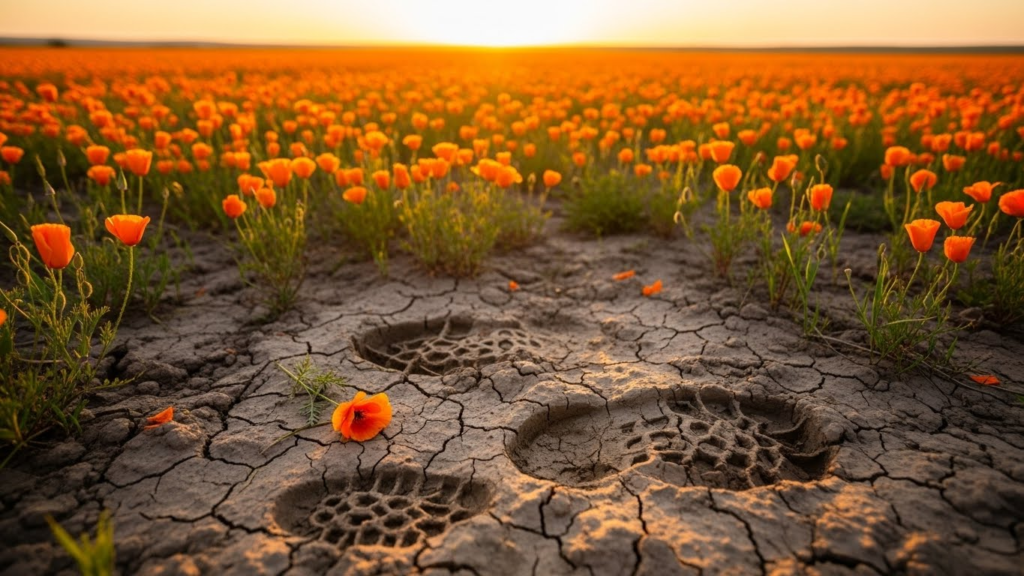
- Stay on the Trail: If there isn’t a trail, walk in the sandy wash (dry riverbed), not on the vegetation.
- Pull Over Safely: Do not stop in the middle of the road. In Anza-Borrego, traffic can be dangerous. Pull completely off the pavement.
- Leave the Drone: In Death Valley (and all National Parks), drones are illegal. In Anza-Borrego, they are technically allowed in some areas but are incredibly annoying to other visitors. Just enjoy the view with your eyes.
Practical Planning: When to Go?
Timing is everything.
- Death Valley: The window is earlier. Feb 15 – March 15 is your prime window for the valley floor. If you go in April, you’ll need to hike up into the mountains.
- Anza-Borrego: The window is slightly later and longer. Feb 25 – March 20 is usually the sweet spot.
Gear Check:
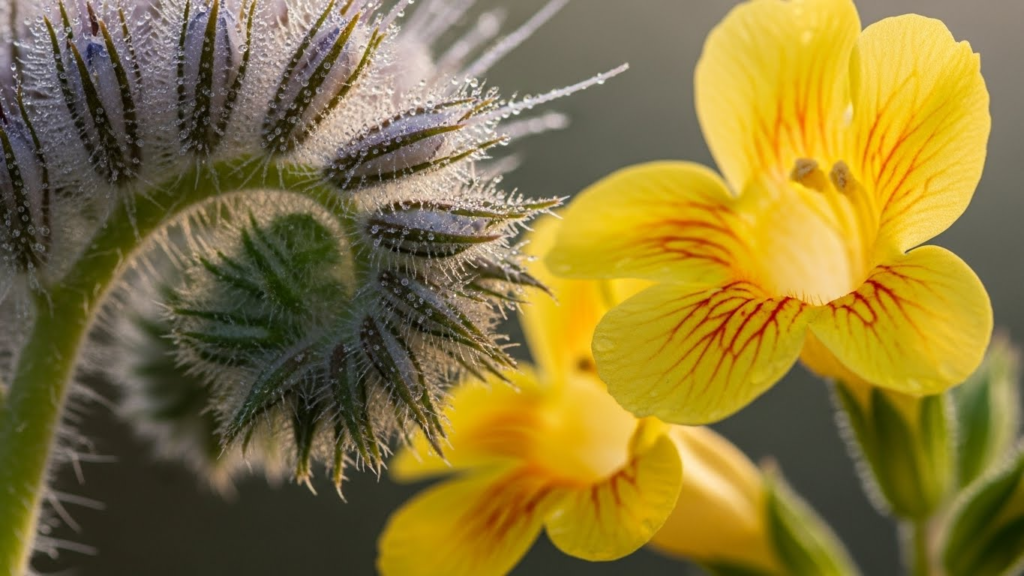
Macro Lens: The “Superbloom” looks great wide, but the real magic is in the details—the hairy stem of a Phacelia or the delicate petals of a Monkeyflower.
Sunscreen & Hat: It’s 2026; the sun hasn’t gotten any cooler. Even if it’s 70°F, you will burn.
Water: 1 gallon per person per day. No jokes.
4 Best Places to See Wildflowers in 2026
While Death Valley and Anza-Borrego are desert giants, other renowned California bloom sites include:
- Antelope Valley California Poppy Reserve – peak usually mid-March to late April
- Mojave National Preserve – mid-February to mid-May
- Carrizo Plain National Monument – brilliant spring displays after rainy winters
- Coastal hills and foothills across central California for non-desert blooms
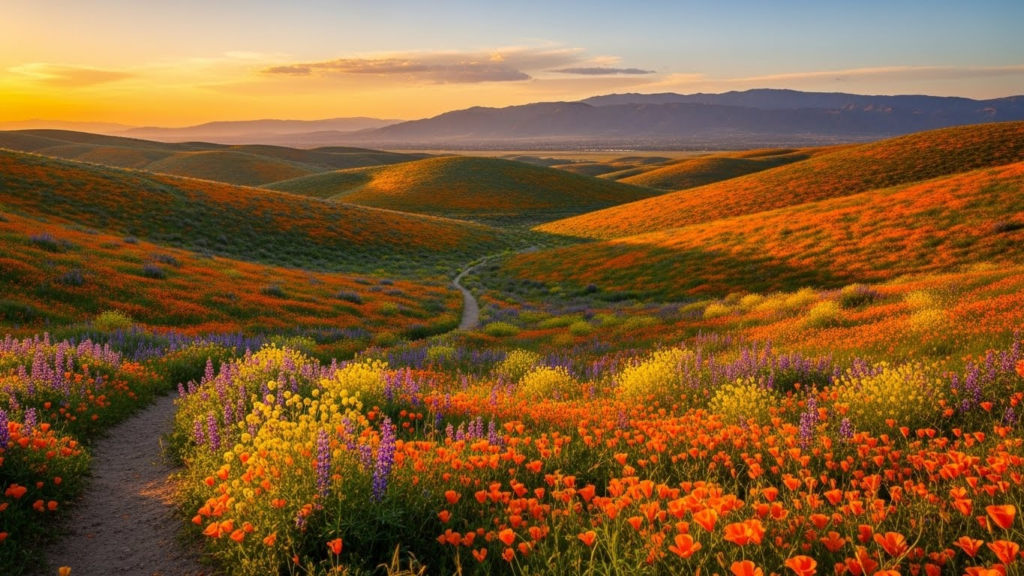
Each has unique species and timing, so checking local bloom reports as spring progresses is key.
Practical Tips for Visiting the 2026 Wildflower Season
Plan for flexibility: If conditions shift, bloom timing can slide by weeks.
Check official bloom reports: The National Park Service and desert natural history groups often update weekly.
Beat crowds: Early season weekday mornings are best.
Respect the land: Stay on marked paths and protect blooms for future seasons.
Superbloom 2026 – What to Expect
In Anza-Borrego Desert State Park, the forecast looks especially promising for gorgeous 2026 wildflower displays thanks to strong late-season rains and warmer conditions. In Death Valley, while a global headline-making superbloom isn’t certain, 2026 should deliver at least above-average wildflower blooms in many areas if precipitation continues favorable. Watching real-time reports through early spring will give you the best chance to catch these fleeting spectacles at their peak.
My Plan for 2026: I’m heading to Anza-Borrego on February 28th. I’m packing my camera, a gallon of water, and zero expectations. I hope to see you there – just please, stay on the trail.
When is the best time to see the California Superbloom in 2026?
For the desert regions (Death Valley and Anza-Borrego), the peak is expected between mid-February and mid-March 2026. Coastal blooms (like Antelope Valley) happen later, usually from mid-March to April.
Where is the best place to see wildflowers near Los Angeles?
Anza-Borrego Desert State Park is the best reliable desert option (3 hours away). For rolling hills of poppies later in the spring (April), Antelope Valley California Poppy Reserve is the top spot, provided late winter rains sustain the crop.
Is Death Valley having a Superbloom in 2026?
As of January 2026, it is unlikely to be a historic “Superbloom” (which happens once a decade), but a “good” bloom is forecast. Expect beautiful patches of gold near Ashford Mill, but not a valley-wide carpet.
Do I need a reservation to visit the Superbloom?
For Death Valley, you need an entrance pass ($30/vehicle), but no reservation. For Anza-Borrego, day use is generally free, but some developed areas charge a small fee. Antelope Valley often requires parking reservations on peak weekends due to crowds.
What is the difference between a bloom and a Superbloom?
A “bloom” happens every year with scattered flowers. A “Superbloom” is a cultural term for a rare ecological event where nearly all dormant seeds germinate at once, creating dense, continuous carpets of color visible from miles away (or even space).
Can I bring my dog to the Superbloom?
In Death Valley, dogs are allowed on roads but not on trails or in the wildflower fields. In Anza-Borrego, dogs must be on a leash and are allowed on dirt roads but not on hiking trails. It is generally better to leave pets at home to protect the fragile flora.
Why are there so many caterpillars during the Superbloom?
You might see millions of White-lined Sphinx moth caterpillars. This is normal! The abundance of plants provides food for them. They are part of the ecosystem; please do not squish them.
Is Lake Elsinore (Walker Canyon) open for the 2026 bloom?
Check local city updates. After the chaos of 2019 (the “Poppy Apocalypse”), Lake Elsinore has frequently closed access to Walker Canyon during bloom seasons to protect public safety and the habitat.
What is the official flower of the Death Valley bloom?
The Desert Gold (Geraea canescens). It looks like a tall yellow daisy and is responsible for the famous “fields of gold” photos.
How long do the superblooms last?
A desert bloom is fleeting. Once the flowers peak, they can last 2 to 3 weeks maximum before the heat kills them or the wind blows the petals away. If you see a report that the bloom is “peaking,” go immediately.

