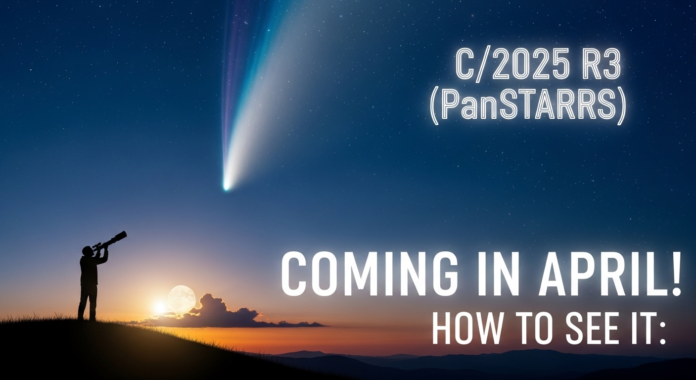
Imagine standing under a dark sky at dawn, a faint glowing traveler streaking across the horizon. In April 2026, skywatchers around the world might get exactly that moment as Comet C/2025 R3 (PanSTARRS) makes its closest approach to the inner solar system – and possibly becomes one of the most talked-about celestial events of the year.
Why C/2025 R3 (PanSTARRS) Comet Matters?
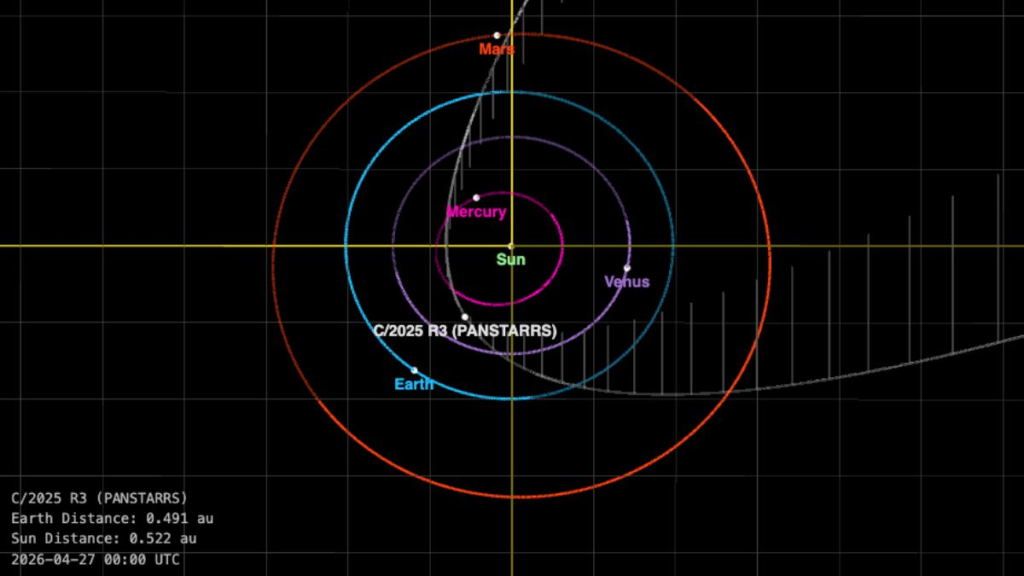
This icy visitor was spotted by the Pan-STARRS survey in September 2025, and astronomers have been tracking its trajectory ever since. It is set to swing by the Sun and Earth in late April 2026, offering a rare viewing opportunity.
Experts are excited because:
- C/2025 R3 could brighten enough to be visible through binoculars or even with the naked eye under dark skies – a treat for amateur astronomers.
- Its brightness predictions vary widely, making its peak unpredictable and exciting.
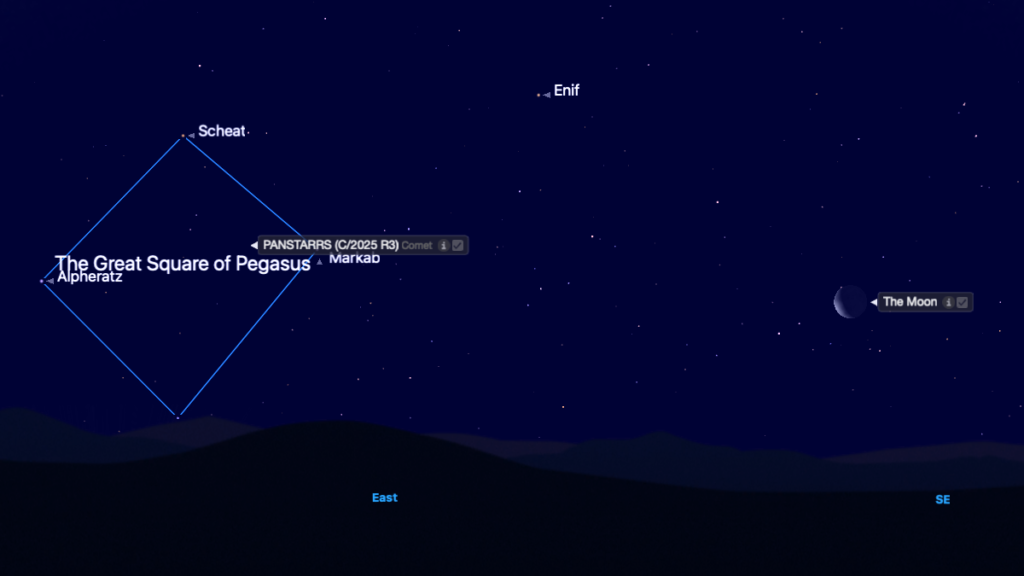
- The comet will sweep through constellations like Pegasus and Pisces as it journeys toward and past Earth.
Unless its activity surprises us, this might be the only time in your lifetime the comet becomes a showpiece – especially if it flies back into deep space afterward.
Best Viewing Dates for C/2025 R3 (PanSTARRS) Comet
Timing is everything if you want to catch this cosmic visitor.
Mid-April to Early May 2026 — This is your peak window for viewing.
- April 17, 2026 (New Moon): Perfect conditions because the sky will be darkest. Ideal for binocular or naked-eye viewing.
- April 20 – 27, 2026: As the comet gets closest to the Sun and then to Earth — the sky position changes quickly. Those in the Northern Hemisphere have the best chances just before sunrise.
- Early May: After it slips past the Sun, southern sky observers may catch it low in the evening sky.
Note: A full Moon on May 1 can wash out faint details, so plan around the moon phase for the best view.
How to Spot Comet R3 Like a Pro?
Gear & Setup
Binoculars or Small Telescope:
If C/2025 R3 only reaches magnitude ~8, it won’t be bright enough for the unaided eye in most mid-latitude locations.
Dark Skies:
Find a location far from city lights so your eyes can fully adapt.
Star Chart or Sky App:
Comets move nightly; an app makes it easier to track precisely where it will appear.
Best Viewing Tips
Look Low Before Sunrise (North):
In mid-April, the comet will hang low in the eastern sky before dawn.
After Sunset (South):
In early May, as it moves away from the Sun, Southern Hemisphere viewers can try just after dusk.
Arrive Early:
Monitor weather and rise well before sunrise – the best views happen when the sky is darkest.
Also read – 15 Best Places to Stargaze in India
What to Expect Visually?
Visibility predictions are tricky:
- Faint Glow with Equipment:
At magnitude ~8, R3 will be a “fuzzy comet” – best seen through optical gear. - Possible Naked-Eye View:
If R3 surprises with brightness boosted by sunlight scattering, it might reach magnitude ~3 – visible without aid from truly dark sites.
Even if it falls short, April’s night sky offers other rewards like meteor showers perfect for stargazing.
Want to study more in this celestial piece? Here is more information by Harvard University for you.
Final Thoughts
For astronomy novice or a seasoned skywatcher, April 2026 could deliver a memorable celestial spectacle. Keep an eye on predictions as the date draws closer and prepare your binoculars and cozy blankets for a night under the stars.
Will Comet R3 be visible to the naked eye in April 2026?
Comet R3 may become visible to the naked eye, but it is not guaranteed. Current predictions suggest it could brighten enough to be seen without equipment from very dark locations, though binoculars will significantly improve visibility.
When is the best date to see Comet R3?
The best time to see Comet R3 is expected between April 17 and April 27, 2026, with April 17 being ideal due to the new moon, which creates darker skies and better viewing conditions.
What time of day can you see Comet R3?
In the Northern Hemisphere, Comet R3 will likely be visible just before sunrise, low on the eastern horizon. In the Southern Hemisphere, it may be visible shortly after sunset in late April and early May.
Where in the sky will Comet R3 appear?
Comet R3 is expected to move through constellations near Pegasus and Pisces, appearing low on the horizon. Its exact position will change nightly, so a stargazing app or updated sky chart is recommended.
Do you need a telescope to see Comet R3?
A telescope is not required, but binoculars are strongly recommended. If the comet remains faint, binoculars or a small telescope will provide a much clearer view than the naked eye.
Why is Comet R3 considered special?
Comet R3 is special because it is making a rare close pass through the inner solar system, and its brightness could increase rapidly. Events like this do not happen often, and many comets never return once they pass the Sun.
Can Comet R3 be seen from cities?
Seeing Comet R3 from a city will be difficult due to light pollution. For the best chance, viewers should travel to dark-sky locations, rural areas, or high elevations away from artificial lights.
How long will Comet R3 be visible?
Comet R3 should be visible for several weeks, starting in mid-April 2026 and fading into early May as it moves away from the Sun and Earth.
Is Comet R3 dangerous to Earth?
No, Comet R3 poses no threat to Earth. It will pass safely at a large distance, and events like this are closely monitored by astronomers well in advance.
How can beginners prepare to watch Comet R3?
Beginners should check weather forecasts, use a sky-mapping app, arrive early to let their eyes adjust to darkness, and bring binoculars. Choosing a moonless night and a dark location greatly increases the chances of a successful sighting.

