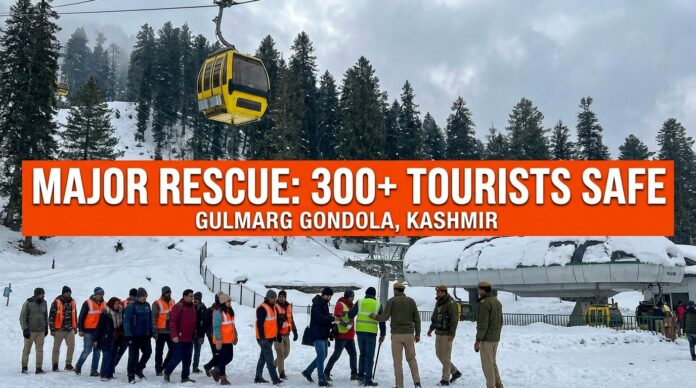
Right off the bat, if you are planning a trip to Kashmir or have loved ones currently visiting, you need to read this. On May 25, 2026, a massive disaster was successfully averted when over 300 tourists were left stranded mid-air in the famous Gulmarg Gondola. We have seen our fair share of travel mishaps, but a mid-air crisis at 500 feet requires unparalleled rescue precision.
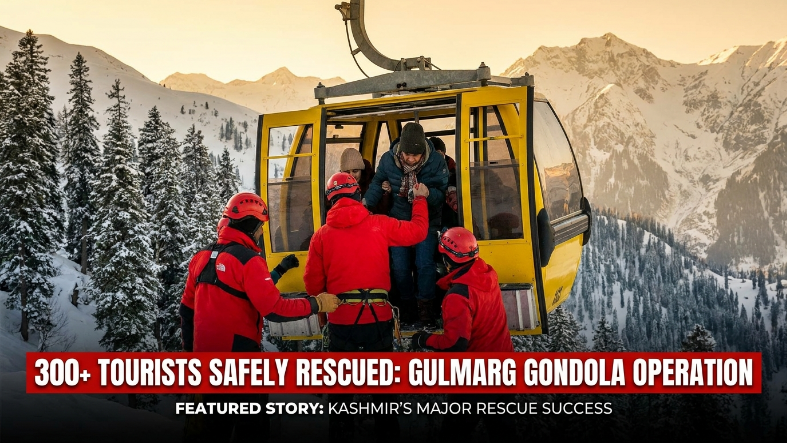
In this blog, I am giving you the exact details of what happened, how the mega rescue operation unfolded, and the crucial safety updates you need before booking your next cable car ride. My motto here is simple: to provide you with the absolute, fluff-free facts and real-life safety insights you will not find anywhere else. Let’s dive directly into the timeline, the heroes of the day, and the government’s response.
What Exactly Happened at the Gulmarg Gondola?
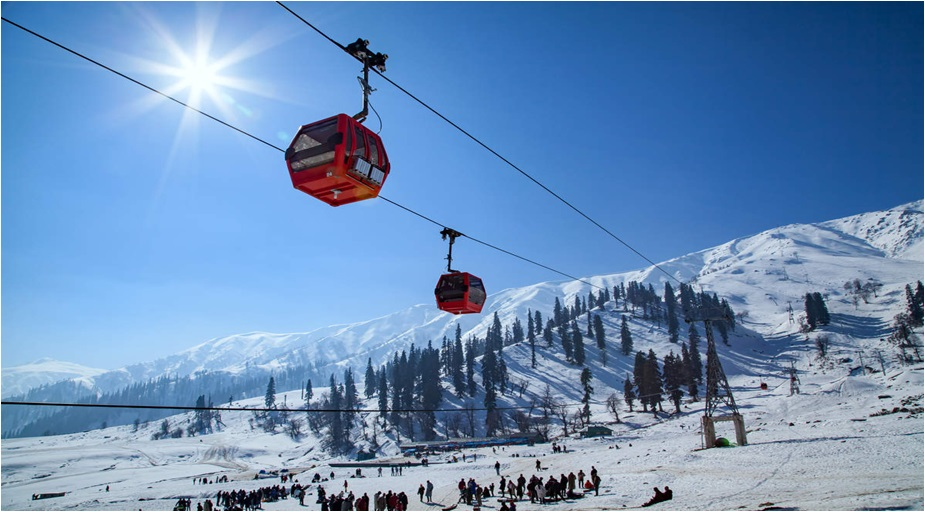
The Gulmarg Gondola suffered a sudden gearbox malfunction on May 25, 2026, bringing 65 cable car cabins to a screeching halt mid-air.
Tourists travelling between the Base Station and Phase-1 (Kongdori) suddenly found themselves suspended in the sky. This was not a minor operational delay. The mechanical snag completely stopped the movement of the ropeway, leaving men, women, and children trapped inside swinging cabins. Heavy rains and challenging mountainous terrain made the situation extremely dangerous. The sudden halt triggered immediate panic among the passengers. However, emergency evacuation protocols were activated instantly by the authorities.
Key Facts of the Incident:
- Location: Gulmarg Gondola (Base Station to Phase-1, Kongdori)
- Date: Monday, May 25, 2026
- Number of Tourists Stranded: Over 300 (specifically around 320 people)
- Number of Cabins Stuck: 65 cabins
- Height of Suspension: Nearly 500 feet above the ground in some sections
- Duration of Snag: 7 to 8 hours
Who Executed the Massive Rescue Operation?
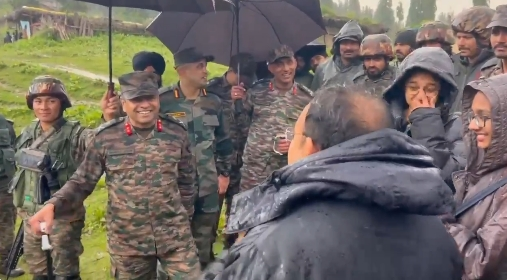
A joint task force of the NDRF, SDRF, Indian Army, Jammu & Kashmir Police, and local administration conducted the rescue.
When a disaster of this scale hits, local efforts alone are not enough. The response from the government and armed forces was swift and monumental. The Director General of Police (DGP) Nalin Prabhat, alongside the Deputy Inspector General (DIG) of the North Kashmir Range, immediately proceeded to the site. Over the course of a grueling 7-hour mission, the joint forces worked seamlessly to bring every single passenger down without a single casualty.
We always tell our readers that India’s disaster response teams are world-class, and this incident proves it. Here is a clear breakdown of the agencies involved and their specific roles:
| Rescue Agency | Key Contribution in the Evacuation |
| Indian Army (Chinar Corps) | Deployed Casualty Assistance Teams (CATs) and All-Terrain Vehicles (ATVs) for rapid evacuation in muddy, steep terrain. |
| J&K Police & SOG | First responders on the scene. Maintained ground control and communicated with stranded tourists via megaphones to prevent panic. |
| NDRF & SDRF | Utilized specialized ropes, ladders, and high-altitude rescue techniques to safely extract passengers from cabins 500 feet in the air. |
| Civil Administration | Set up temporary relief centers, provided medical stretchers, and distributed hot tea and refreshments to rescued tourists. |
How Were the 300+ Tourists Rescued Safely in Gulmarg Gondola in Kashmir?
Rescuers used advanced rope-access techniques, ladders, and All-Terrain Vehicles to physically extract and transport the tourists down the mountain.
The operation was far from easy. Evacuating people from a hanging box 500 feet in the air while heavy rain batters the valley is a logistical nightmare. Yet, the teams executed it flawlessly by following a strict protocol.
- Immediate Communication: The very first step taken was crowd control. Authorities used heavy-duty megaphones from the ground to constantly communicate with the trapped tourists. Keeping passengers calm is a secret trick in any successful rescue operation—panic inside a hanging cabin shifts the center of gravity and makes the situation lethal.
- Rope and Ladder Evacuation: Specialized climbers from the State Disaster Response Force (SDRF) and National Disaster Response Force (NDRF) ascended the towers. They used safety ropes and long ladders to bring tourists down one by one safely.
- Medical Evacuation: Around 45 tourists who were elderly, physically unfit, or deeply traumatized were carefully brought down on medical stretchers.
- ATV Transport: The Indian Army brought in their All-Terrain Vehicles (ATVs) to quickly move rescued individuals across the muddy, rain-soaked terrain to safety base camps.
Why Did the Technical Snag Occur at Gulmarg Gondola?
Initial investigations confirm a major gearbox fault, with officials also investigating potential capacity overload as a contributing factor.
As an experienced travel writer, I always dig into the why so you know exactly what you are walking into. According to the Managing Director of the Cable Car Corporation, Syed Qamar Sajjad, a severe technical glitch in the machinery caused the breakdown. However, ground officials have also pointed out that the Gulmarg Gondola has been operating at or beyond its carrying capacity for the past year. Running continuous heavy loads puts immense stress on the gears and cables.
Chief Minister Omar Abdullah has officially announced a strict probe into the malfunction. He assured the public that if any administrative lapses are found, strict action will be taken immediately.
When Will the Gulmarg Gondola Resume Operations?
The Gulmarg Gondola will remain strictly closed on May 26 and 27, 2026, for comprehensive technical maintenance and a full safety audit.
If you have tickets booked for these dates, you must contact your tour operator immediately for a refund or rescheduling. Puma engineers—the mechanical experts behind the cable car infrastructure—have been called in to fix the gearbox and conduct a top-to-bottom safety audit. The cable car will only be made operational after these experts provide a definitive green light.
What Are the Top Leaders Saying About the Rescue?
National and regional leaders unanimously praised the swift, zero-casualty operation executed by the armed forces and disaster management teams.
When high-level officials speak up, it gives us a clear picture of the severity and success of the event.
- Defence Minister Rajnath Singh: Applauded the swiftness, professionalism, courage, and coordination of the joint rescue team.
- Home Minister Amit Shah: Saluted the disaster response forces for their valour and skill in a challenging six-hour-long operation.
- Lieutenant Governor Manoj Sinha: Continuously monitored the rescue operation and directed the DGP to personally oversee the ground efforts.
- Chief Minister Omar Abdullah: Assured the public that all cabins were intact and ordered a thorough inquiry into the technical fault to fix responsibility.
5 Secret Survival Rules If You Get Stuck in a Cable Car
Do not panic, stay seated, conserve your phone battery, listen to ground commands, and trust the rescue professionals.
Over my two decades in the travel industry, I have interviewed dozens of rescue operators. While cable car accidents are rare, knowing exactly what to do can save your life. If you ever find yourself in a stranded gondola, follow these definitive, real-life survival rules:
- Stay Seated and Keep Still: Your instinct will be to stand up and look out the window. Do not do this. Moving around shifts the cabin’s weight, which can cause severe swaying and stress the grip on the main cable.
- Preserve Your Phone Battery: Immediately turn off mobile data, lower your screen brightness, and put your phone on power-saving mode. Only send one definitive SMS to emergency numbers (like 112 in India) with your exact cabin number and the number of people inside.
- Do Not Force the Doors: Never attempt to pry the cabin doors open. The drop outside is fatal, and tampering with the doors can disrupt the electronic safety sensors needed by rescuers.
- Listen to Ground Instructions: Rescue teams will use megaphones. Follow their instructions word-for-word. When they arrive at your cabin, let them secure you with a harness before you make any movement.
- Control Your Breathing: High altitudes combined with panic can cause hyperventilation. Take slow, deep breaths. Reassure the children and elderly with you that help is actively on the way.
Final Thoughts on the Gulmarg Rescue
The successful evacuation of over 300 tourists from the Gulmarg Gondola is a testament to the incredible efficiency of India’s disaster response teams. While the technical snag was a terrifying ordeal for those suspended 500 feet in the air, the zero-casualty outcome should give future tourists absolute confidence in the safety nets available. Always check weather advisories and local news updates before embarking on high-altitude adventures.

