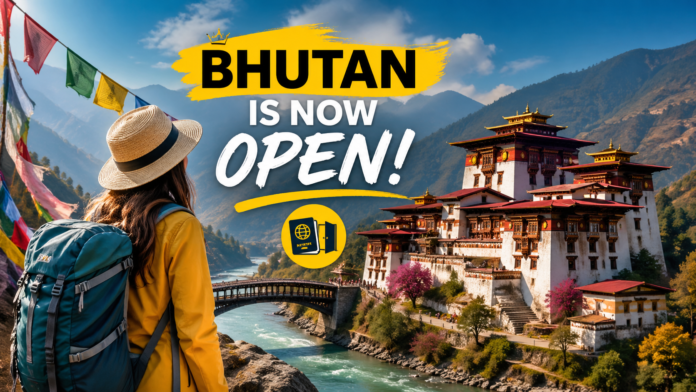
I have followed Bhutan for years. Every time I looked into visiting, the answer was the same: expensive, complicated, and hard to reach. But right now, something genuinely historic is happening to this Himalayan kingdom, and most travellers have not caught on yet.
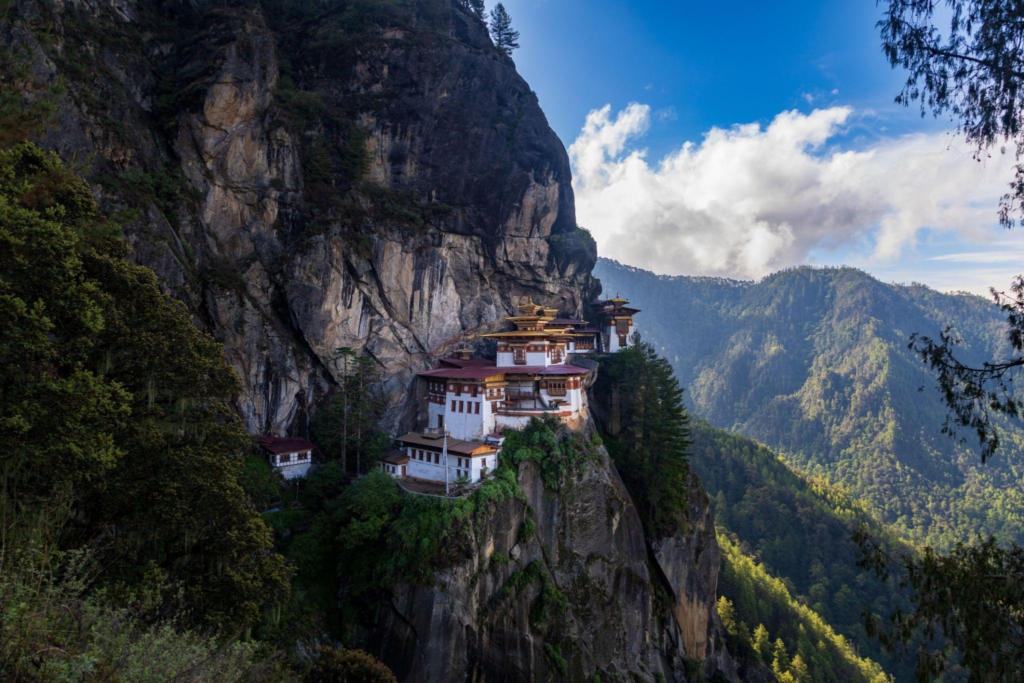
Bhutan is building its second international airport, an entirely new city, and a brand-new long-distance hiking trail, all at once. The window to visit this kingdom before it transforms into something far more accessible is open right now. Once the Gelephu International Airport launches in 2029, the game changes permanently.
Here is everything you need to know before you book.
What Is Bhutan and Why Has It Been So Hard to Visit?
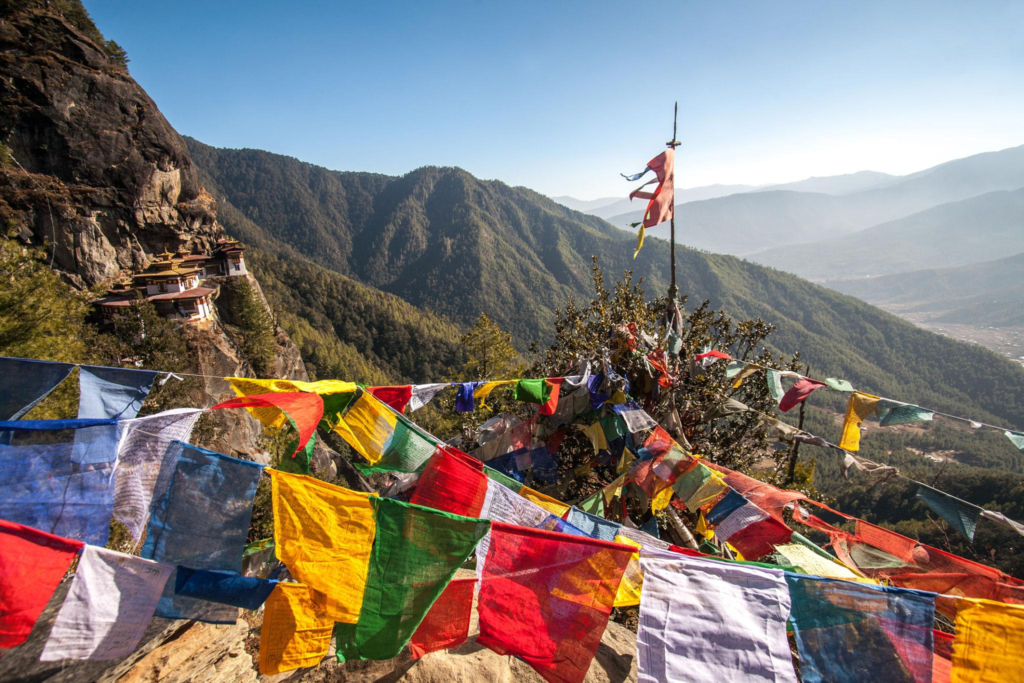
Bhutan is the world’s last Buddhist kingdom, tucked into the folds of the Himalayas between India and China. For centuries, it functioned almost as a hermit nation, deliberately closing itself off from the outside world. Tourism was only permitted starting in 1974, and even then, Bhutan designed its system to keep visitor numbers tightly controlled.
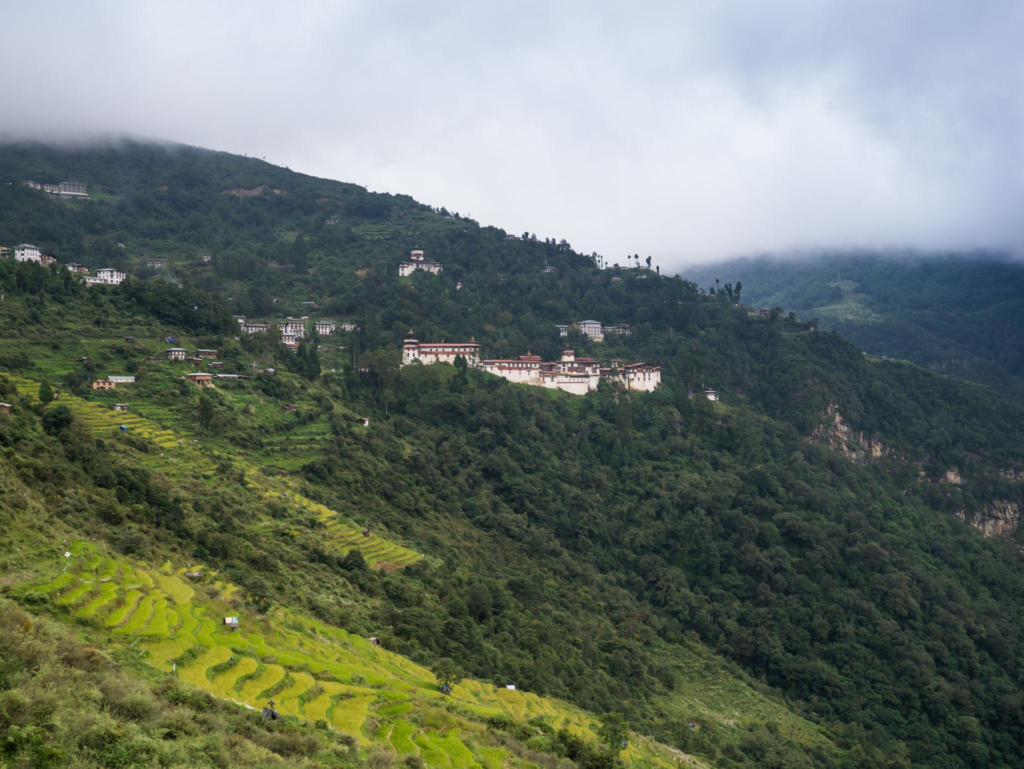
The policy it adopted is called “High Value, Low Volume.” In practice, that meant:
- Every international visitor had to book through a licensed Bhutanese tour operator
- A Minimum Daily Package Rate of US $200 to $250 per day was mandatory, covering accommodation, meals, a guide, and internal transport
- Only two airlines serve the country: Drukair and Bhutan Airlines
- The sole international airport, Paro, handles roughly 8 flights per day
- In all of 2025, Paro airport welcomed just 88,546 visitors
Since 2022, the all-inclusive tariff has been replaced with a $100 (£74) Sustainable Development Fee per adult per night, with travel costs arranged separately. The system is simpler, but Bhutan has made clear it is not abandoning its controlled-tourism model. The philosophy stays. The access, however, is about to grow.
The One Airport That Has Kept Bhutan Isolated Until Now
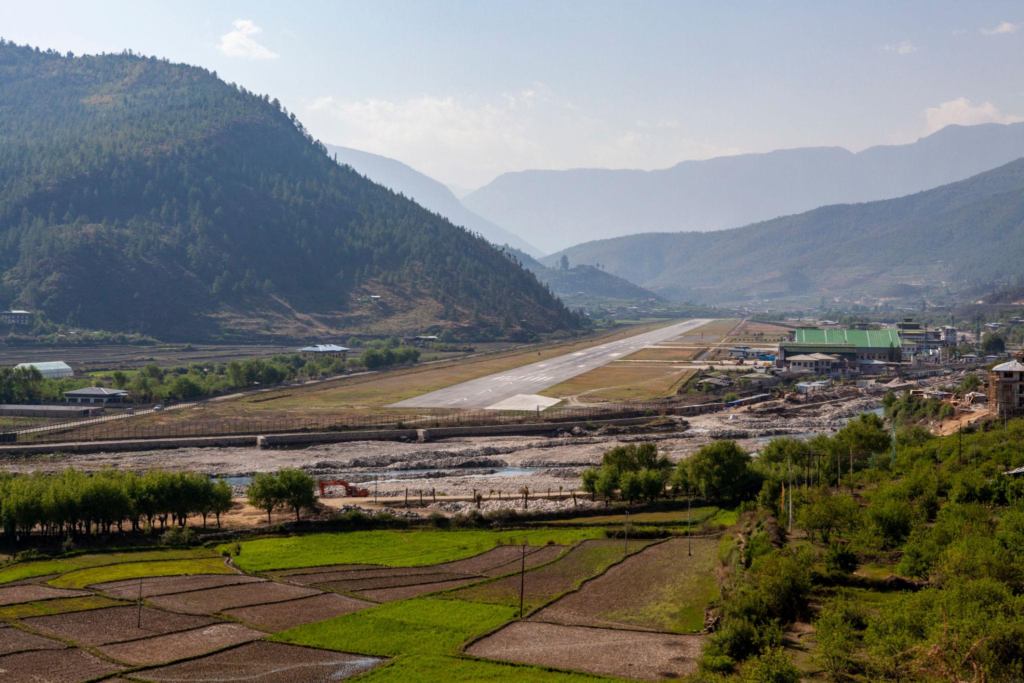
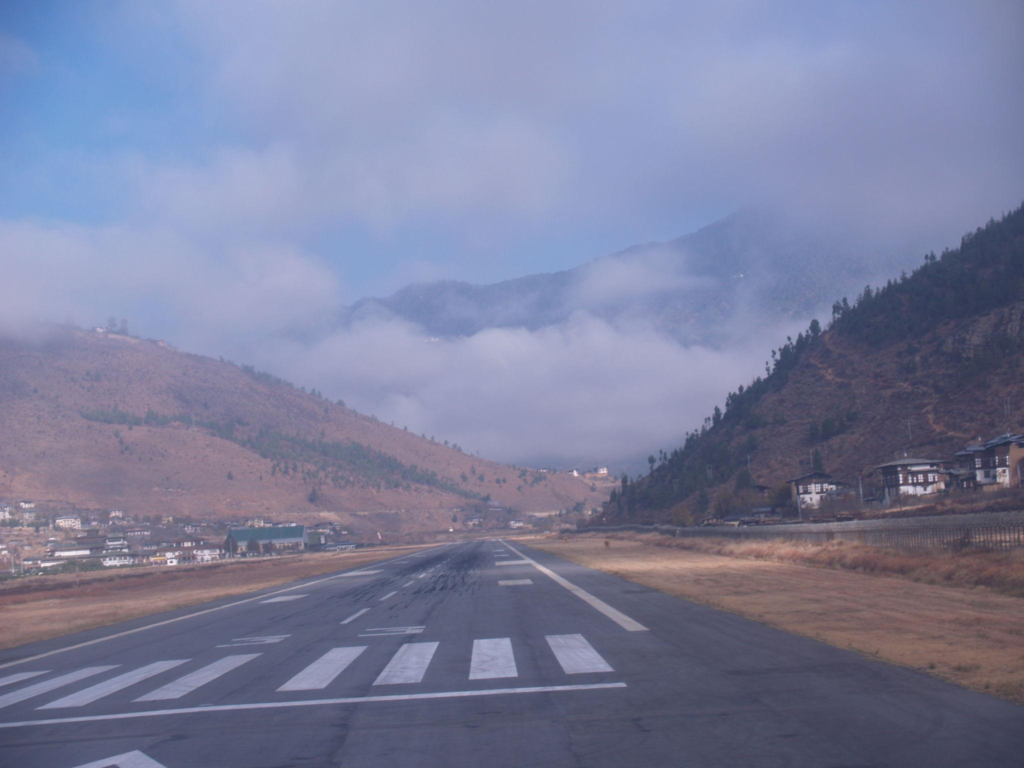
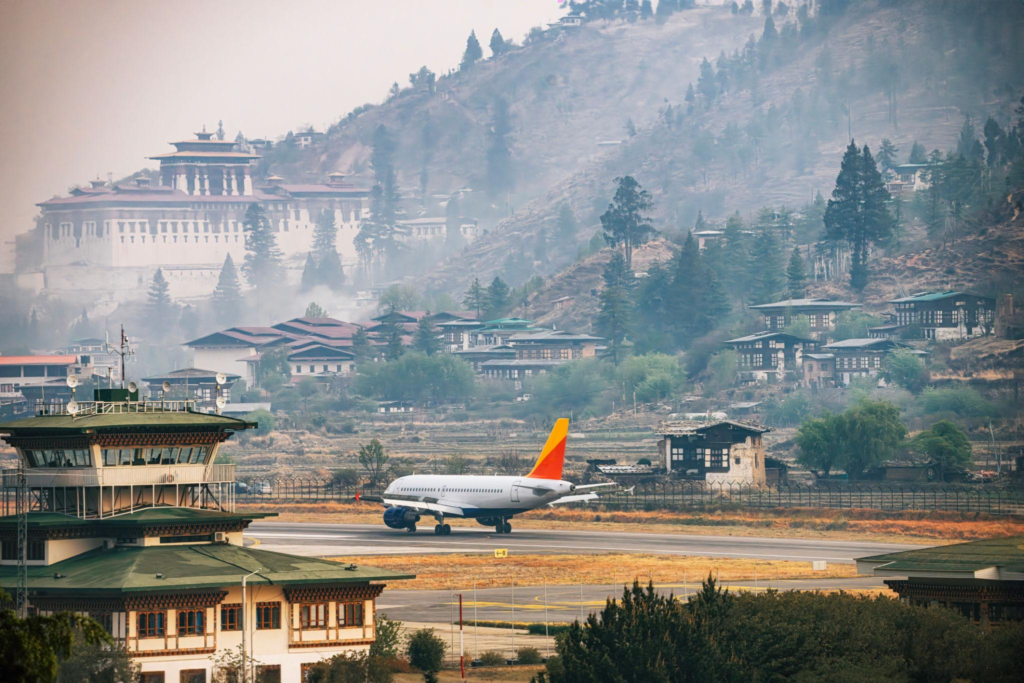
Landing in Paro is one of the most dramatic airport experiences on Earth, and not in a comfortable way.
Paro sits at 2,243 metres above sea level, surrounded by mountains that rise to 5,500 metres. The valley is narrow and winding. There is no radar assistance and no computer guidance for pilots. Every landing and takeoff is done entirely by sight. Because of this, fewer than 50 pilots in the world are currently certified to land at Paro. That single fact explains more about Bhutan’s isolation than anything else.
For travellers arriving from North America or Europe, the journey typically involves multiple layover days in Bangkok, Kathmandu, or Delhi. Round-trip flights from connecting hubs can run upwards of £890 (roughly $1,200 USD). Once you land, the well-travelled circuit takes you through Thimphu, Punakha Valley, Phobjikha Valley, and Bumthang. Beautiful, yes. But it is the same itinerary that the majority of visitors follow, and it barely touches Bhutan’s south.
Also read – 15 Best Places to Stargaze in India in 2026 & 5 My Favourite
The New Bhutan Airport That Will Change Everything
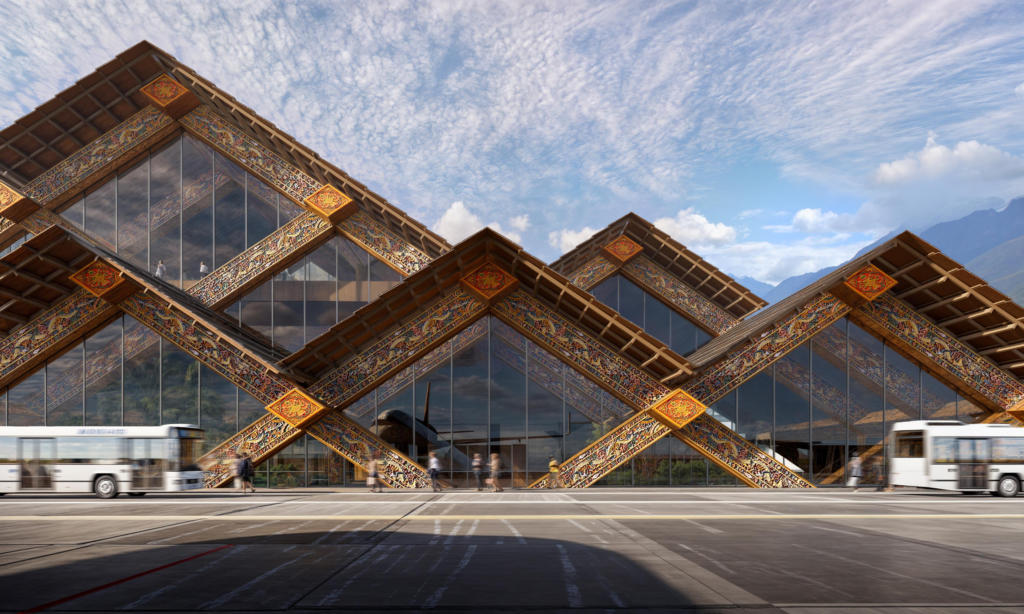
The Gelephu International Airport is scheduled to open in 2029, and it already won the Future Project of the Year award at the 2025 World Architecture Festival.
This is not a modest expansion. Here is what is being built:
- A latticed timber terminal carved from Bhutanese wood, designed to naturally regulate humidity
- Architecture that visually evokes the mountain landscapes around it
- Dedicated spaces for gong baths, yoga, and meditation within the terminal itself
- A planned capacity of 123 flights per day, compared to 8 at Paro
- A 69-kilometre rail connection to Assam, India, which will form Bhutan’s first-ever railway
The airport is located in Gelephu, a southern lowland town near the Indian border. Earlier this year, the King of Bhutan himself, Jigme Khesar Namgyel Wangchuck, stood alongside 12,000 volunteers in a sun-lit clearing hacked from the jungle to help clear land for construction. That image alone tells you how seriously Bhutan is taking this.
| Feature | Paro Airport (Now) | Gelephu Airport (2029) |
|---|---|---|
| Daily flights capacity | ~8 | ~123 |
| Location | Western highlands, 2,243m altitude | Southern lowlands, near India |
| Qualified pilots | Fewer than 50 worldwide | Standard commercial operations |
| Region it opens | Western Bhutan circuit | Southern biodiversity corridor |
| Railway connection | None | 69km rail link to Assam, India |
What Is the Gelephu Mindfulness City?
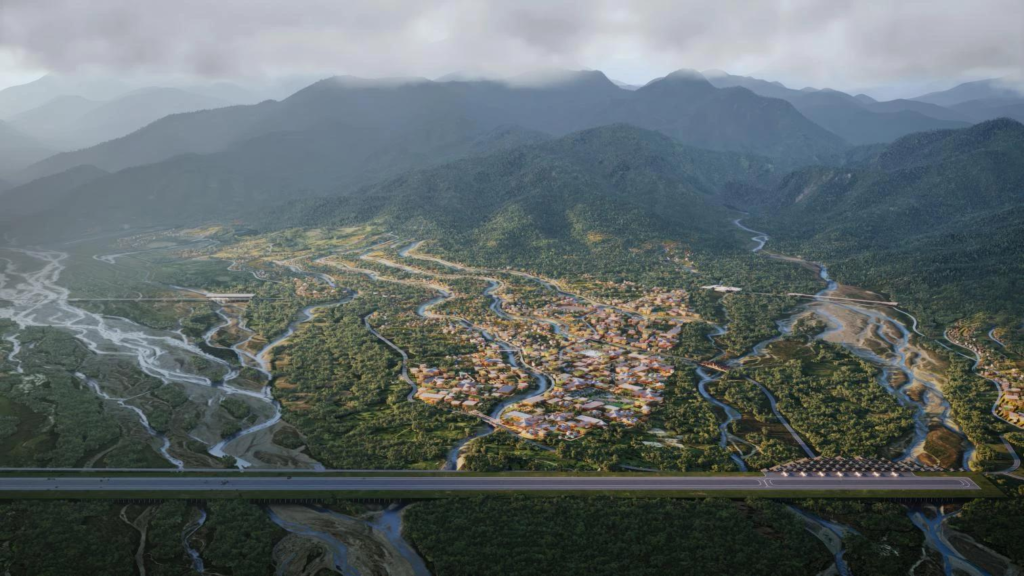
The airport is just one part of a far bigger plan. Bhutan is building an entirely new city from scratch around it.
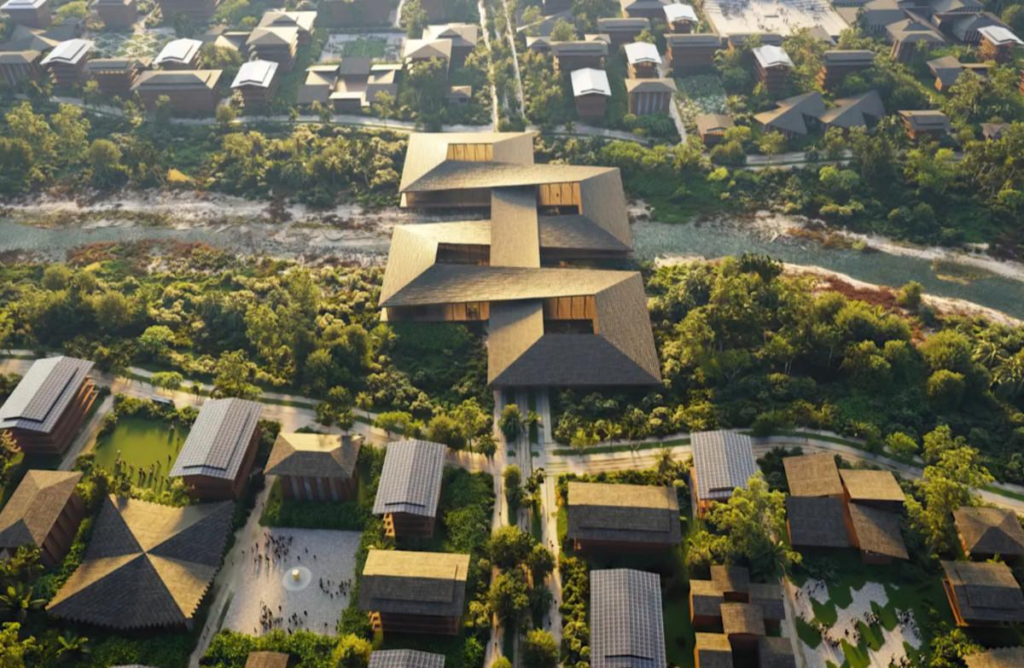
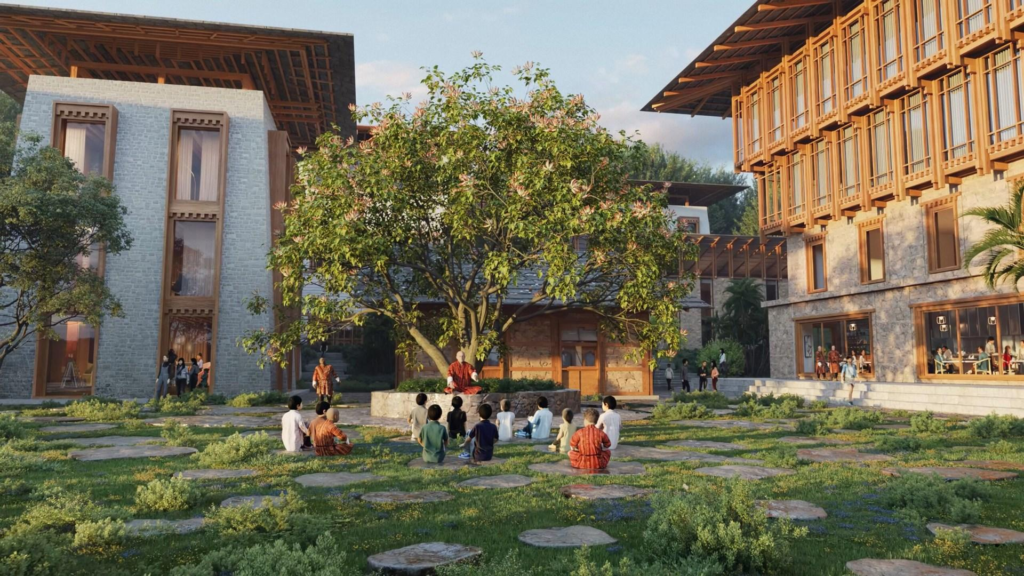
The Gelephu Mindfulness City (GMC) is a special administrative region conceived by King Wangchuck more than a decade ago. Covid pushed it into action. During the pandemic, Bhutan essentially shut down until September 2022. Tourism collapsed. A youth exodus that was already happening accelerated sharply. The king’s response was to build something that had never existed in Bhutan before: a city designed to attract international business, foreign residents, and global travellers, all while keeping sustainability and spirituality at its core.
The long-term ambition for GMC is to eventually house 1,000,000 Bhutanese and foreign residents by 2060.
Dr Lotay Tshering, Bhutan’s former prime minister during the pandemic and now GMC’s Governor, put it plainly to BBC Travel: the city needs flights and passengers to function. His vision is for Gelephu to become a stopover destination in its own right. Rather than flying through Bangkok or Hong Kong to reach other parts of Asia, travellers would route through Gelephu, spending days on a jungle safari or in a meditation retreat before continuing their journey.
Buddhist masters are already being invited to submit proposals for retreat centres and temples within the city. Bhutan’s Central Monastic Body has proposed building a traditional dzong (a monastic and administrative fortress) with guest accommodations and spaces for sacred Buddhist study and dance.
Also read – 10 Top Countries for Cultural Experiences in Less Budget
What Will You Actually Find in Southern Bhutan?
Southern Bhutan looks nothing like the Bhutan you have seen in photographs. Forget the clifftop monasteries, the prayer flags in mountain wind, and the high-altitude drama. Gelephu is lush, subtropical, and fragrant.
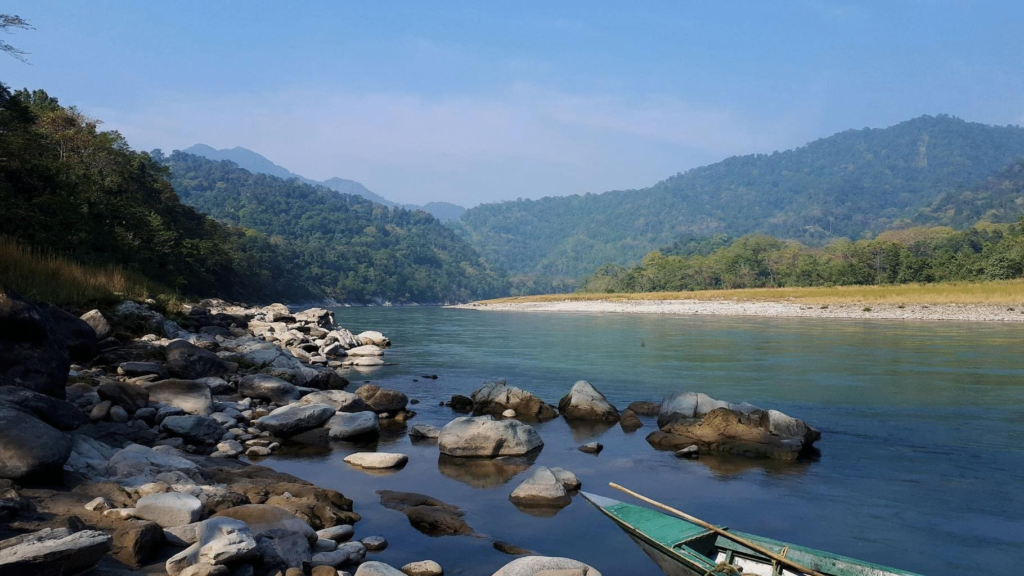
Think cardamom and orange groves. Farmland threaded with rivers. Palms. Hot springs that Bhutanese communities have used for generations. This is a completely different country within the same country.
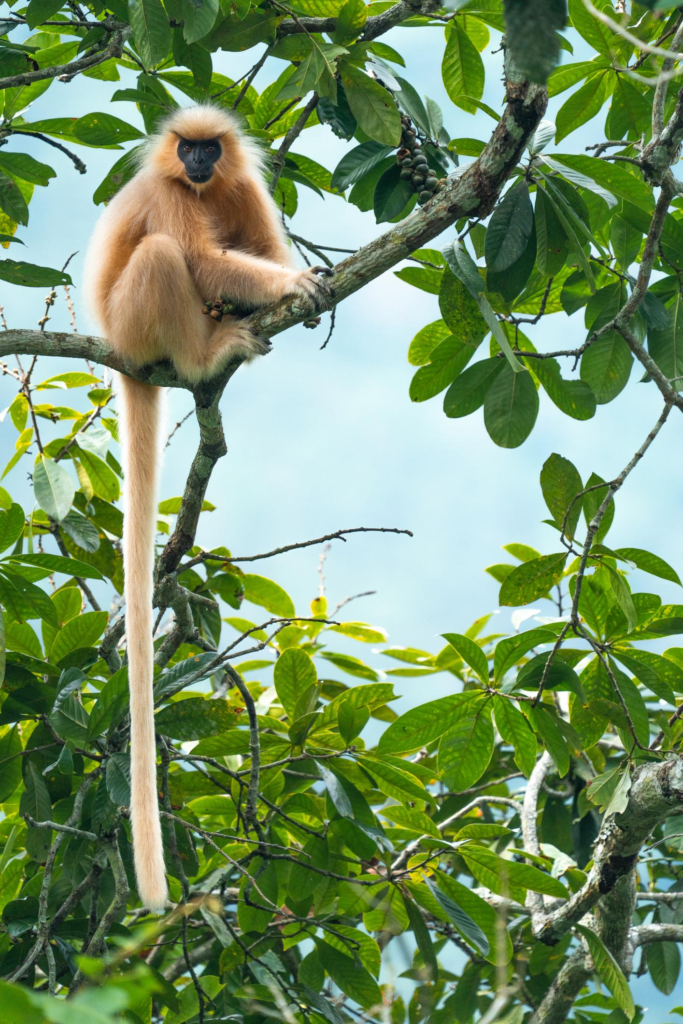
Two national parks flank Gelephu, including Royal Manas National Park, Bhutan’s very first national park. Inside it, visitors will come face to face with:
- Elephants
- Tigers
- One-horned rhinos
- Clouded leopards
- Golden langurs
- More than 360 species of birds
- The critically endangered white-bellied heron, half of whose entire world population lives in Bhutan
Matthew DeSantis, founder of the luxury travel outfitter MyBhutan, described the south to BBC Travel as one of the wildest places on the planet. He called it a hidden sanctuary for the natural world, where endangered species have found a haven precisely because so few travellers have ever ventured there.
The New 168km Hiking Trail That Nobody Is Talking About Yet
The Lotus-Born Trail is opening in 2028, and it is one of the most extraordinary long-distance walks being built anywhere in the world right now.
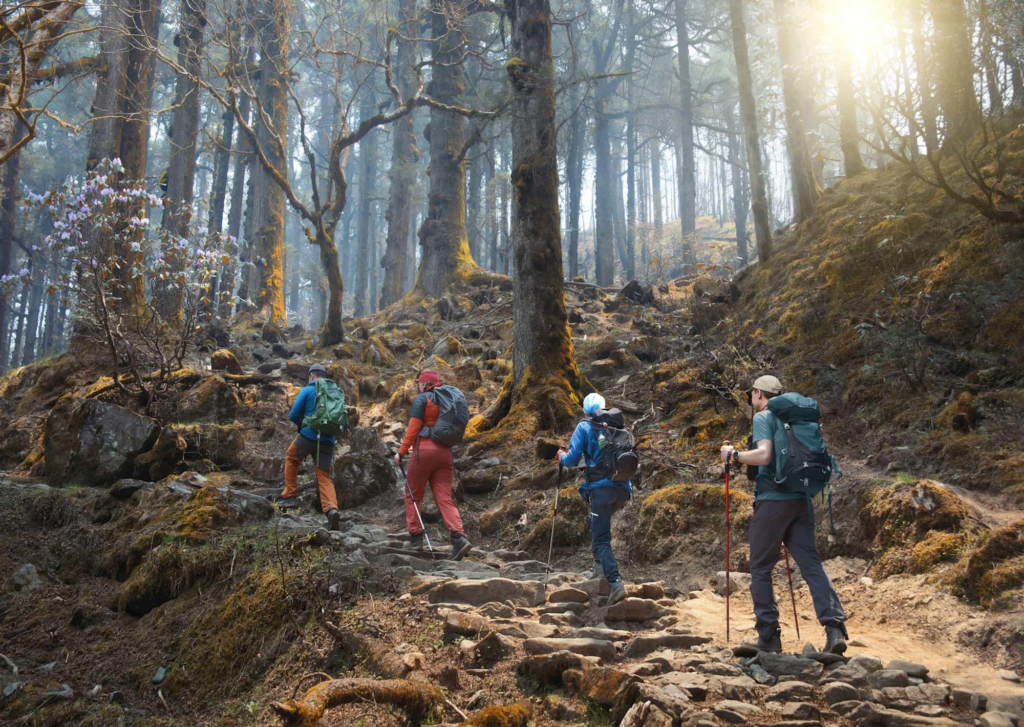
Here is why it matters:
- 168 kilometres in total length
- 8-day journey from start to finish
- Begins in lowland subtropical forests where golden langurs and one-horned rhinos live
- Climbs nearly 3,500 metres in elevation through rhododendron forests
- Reaches alpine ridgelines in central Bhutan
- Follows the historical footsteps of Guru Rinpoche, the figure who brought Buddhism to Bhutan
This trail connects the subtropical south to Bhutan’s spiritual heartland in a single continuous walk. Nothing like it currently exists in the country. It is being designed for hikers who want more than the standard monastery circuit, and it will open just one year before the new airport becomes operational.
What Else Is New in Southern Bhutan Right Now?
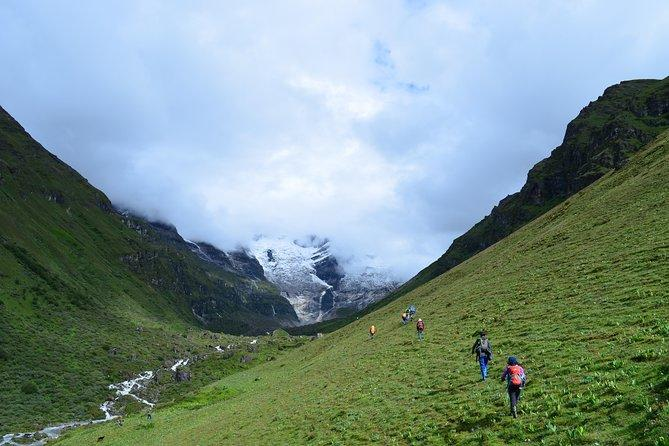
You do not need to wait until 2028 or 2029 to experience something different in Bhutan. The southern region already has new infrastructure worth travelling for today:
- A newly opened tiger trail within Royal Manas National Park
- Rafting on the nation’s longest river network
- Dedicated birding experiences for serious wildlife travellers
- Homestays and eco-camps instead of the high-altitude luxury lodges of the western circuit
- Bhutan’s first high-end fly fishing lodge, opened in Manas in 2024
This is the version of Bhutan that costs less, crowds less, and gives far more direct access to local communities and raw landscapes.
Why Visit Bhutan Now, Before 2029?
The honest answer is that right now is the last moment Bhutan is still genuinely hard to reach. That difficulty is part of what makes it feel so extraordinary.
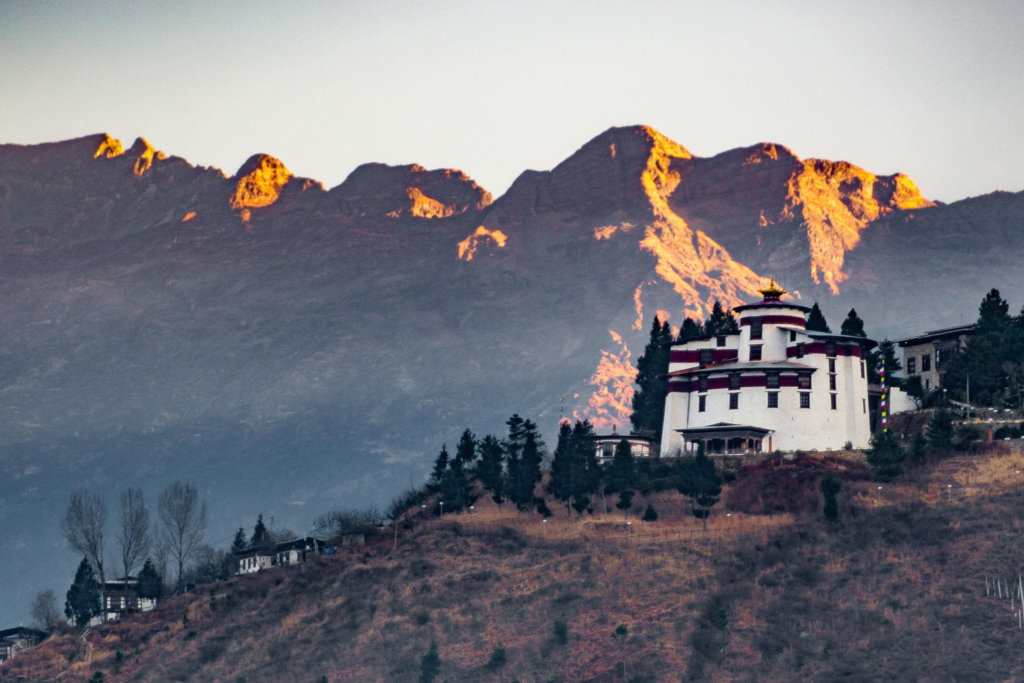
The Sustainable Development Fee of $100 per adult per night still filters out casual visitors. Fewer than 50 pilots can land at Paro. The southern region receives almost no international travellers. The new hiking trail is not yet open. The new airport is still three years from completion.
What you get by going now:
- A country where mass tourism infrastructure simply does not exist in the south
- Wildlife areas that see almost no foreign visitors
- A cultural experience that has been deliberately protected for decades
- The ability to say you visited the south before it became a global travel story
- Prices and access that will be structurally different once 123 flights per day start arriving
The King cleared jungle with 12,000 volunteers to build this future. GMC’s governor has said publicly that Bhutan must have passengers. The architecture award, the new rail line, the hiking trail, the retreat centres being planned by Buddhist masters. All of it points in one direction.
The crowds are coming. The only question is whether you will be there before them.
Practical Information: How to Visit Bhutan in 2026
| Detail | Information |
|---|---|
| Entry point | Paro International Airport (only current option) |
| Airlines serving Paro | Drukair and Bhutan Airlines only |
| Sustainable Development Fee | $100 USD (£74) per adult per night |
| Booking requirement | Through a licensed Bhutanese tour operator |
| Typical connecting hubs | Bangkok, Delhi, Kathmandu |
| Round-trip flight cost | From approx. £890 / $1,200 USD from connecting hubs |
| Paro visitors in 2025 | 88,546 |
| New airport location | Gelephu, southern Bhutan |
| New airport opening | 2029 (projected) |
| New hiking trail opening | 2028 (Lotus-Born Trail, 168km) |
| Bhutanese currency | Ngultrum (pegged to Indian Rupee) |
| Best time to visit south | October to April (subtropical lowlands) |
The Gelephu International Airport already has its award. The King has already cleared the jungle. The trail is already mapped. The city already has a governor and a vision. Bhutan is not waiting for permission to open up. It is doing it on its own terms, on its own timeline, and with 1,000,000 future residents in mind.
For now, it is still the world’s hardest kingdom to reach. Go while that is still true.
Source: BBC Travel, Reporting by Erin Levi. Quotes from Dr Lotay Tshering (GMC Governor), Tshering Dolkar (GMC Tourism Director), and Matthew DeSantis (MyBhutan).

