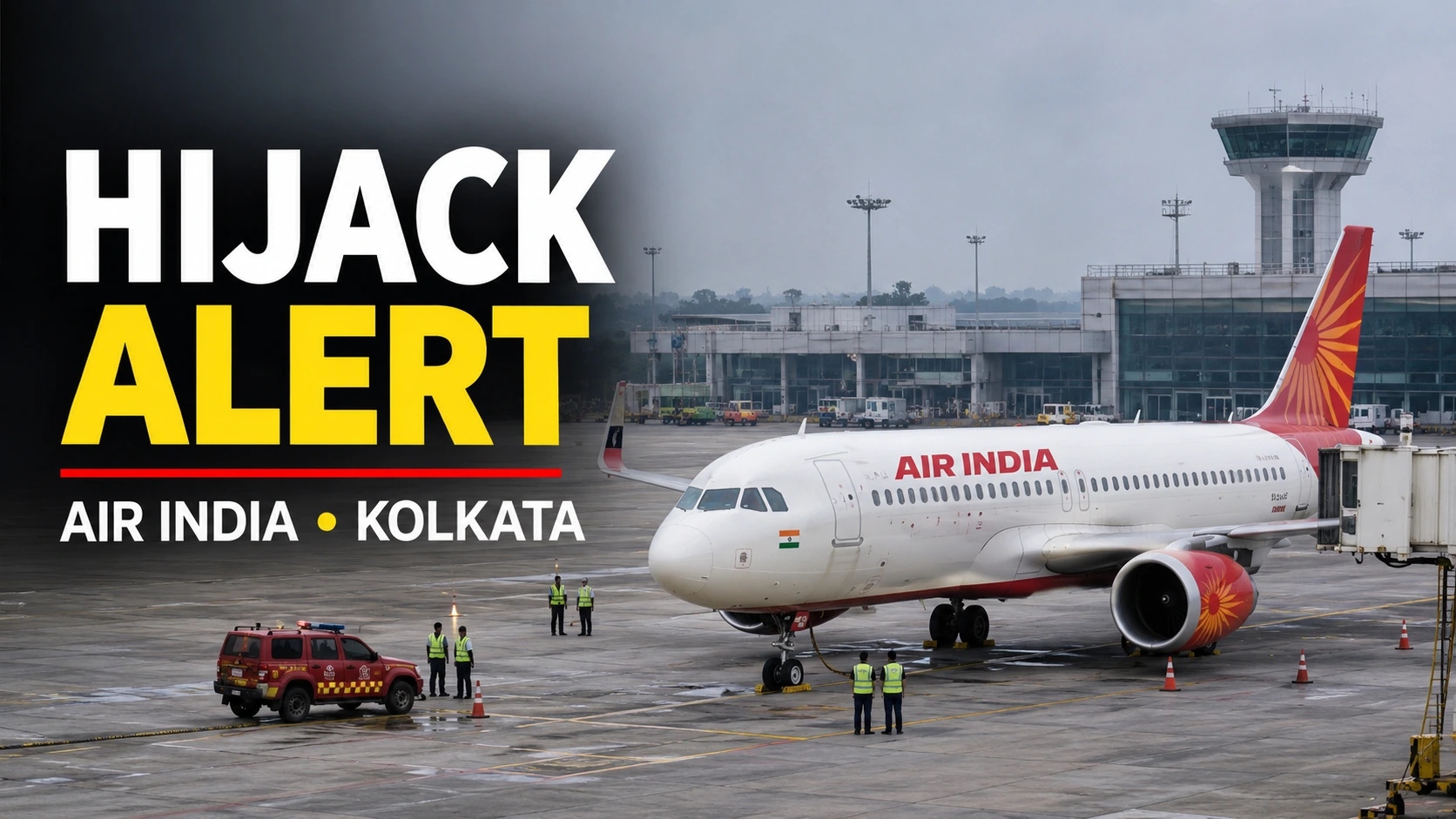
An Air India flight from Kolkata to Mumbai was grounded before departure after a threat note warning of a hijack was discovered in an aircraft washroom. The pilot notified air traffic control, prompting the immediate evacuation of all passengers and the activation of standard airport security protocols.
The aircraft was moved to an isolation bay where security agencies conducted a comprehensive inspection of the cabin, baggage, and exterior. Authorities initiated an investigation to evaluate the threat, while passengers were instructed to follow security directions and monitor official airline updates for flight status.
The incident occurred at Netaji Subhas Chandra Bose International Airport in Kolkata just before the Air India flight’s scheduled departure. The aircraft had already been boarded when the threat note was discovered, turning an ordinary pre-departure process into a full airport security response.
The flight was scheduled to leave Kolkata for Mumbai at 10:20 a.m. The note reportedly warned that the aircraft would be hijacked at 11:10 a.m., according to details reported by Indian news agencies and carried by NDTV.
What happened to the Air India flight at Kolkata Airport?
The aircraft did not take off after the threat note was found inside the washroom. The pilot informed Air Traffic Control, after which airport authorities activated security procedures.
The key sequence was:
- A threat note was found in the aircraft washroom.
- The pilot notified Air Traffic Control.
- Passengers were asked to leave the aircraft.
- The aircraft was taken to an isolation bay.
- Security agencies began a detailed inspection.
- The flight’s departure was disrupted while checks continued.
The aircraft had been moved away from normal airport operations so security teams could examine it under controlled conditions. The Airports Authority of India’s official Kolkata Airport page identifies the facility as Netaji Subhas Chandra Bose International Airport.

Were passengers safe after the hijack alert?
All passengers who had boarded the aircraft were safely evacuated, according to the reports available after the incident. There was no indication in the initial reporting that the aircraft departed with passengers onboard after the warning was discovered.
Passengers were not simply left waiting inside the cabin. Moving everyone off the aircraft allowed security personnel to search the cabin, baggage areas and other relevant sections without passengers remaining inside.
For travelers, the practical meaning is clear: a hijack warning found before take-off triggers a controlled security response, even when no immediate danger is visible. The aircraft must be checked before authorities can decide whether it is safe to return to service.
Also read – New Delhi Chokes as Diwali Pollution Spikes 59 Times then WHO Limit …
Why was the Air India aircraft moved to an isolation bay?
The aircraft was moved to an isolation bay to separate it from regular airport traffic during the security inspection. This gives security teams more space to examine the aircraft and limits disruption around other gates and parked planes.
An isolation-bay procedure can allow authorities to:
- Search the passenger cabin
- Inspect washrooms and overhead compartments
- Check baggage and cargo areas
- Examine the flight deck and aircraft exterior
- Question relevant personnel
- Secure potential evidence
- Prevent unauthorized access during the inspection
The precise outcome of the search, including whether the note was genuine or a hoax, should not be assumed until investigators issue a formal finding. A threat message can create a major operational response even when it later proves to be non-credible.
How did the threat note affect Kolkata Airport departures?
The immediate disruption centered on the affected Air India service, but airport security alerts can also create delays for nearby flights. Aircraft movements, gate use, baggage handling and passenger screening may all be adjusted while authorities secure the area.
Travelers at Kolkata Airport should expect possible changes if a security incident affects their terminal or departure area. The AAI Kolkata Airport information page provides airport-related information, but airline apps and airport announcements remain the most useful sources for individual flight updates.
Passengers should check:
- The Air India flight-status page or mobile application
- Departure screens at the airport
- Gate and boarding announcements
- Messages from the airline
- Any instructions issued by airport security personnel
A flight marked “delayed” may later receive a new aircraft, departure gate or schedule. Travelers should avoid leaving the airport based only on an early delay notice unless the airline confirms a cancellation or provides alternative instructions.
What should passengers do when a flight faces a security alert?
Passengers should follow crew and airport security directions immediately. Arguing about the delay, filming restricted areas or attempting to return to the aircraft can interfere with the response.
The most useful steps are:
- Keep the boarding pass and identification ready.
- Follow the crew to the designated waiting area.
- Do not touch suspicious notes, bags or objects.
- Avoid spreading unverified claims on social media.
- Check the airline’s official update before changing onward travel.
- Ask the airline about rebooking if a connection is at risk.
- Keep receipts for reasonable expenses caused by a later cancellation.
Passengers with onward flights from Mumbai should contact the airline as soon as the Kolkata departure is officially delayed. Waiting until the aircraft is cleared may leave fewer rebooking options, especially on a busy route.
Does a hijack alert mean the aircraft was actually hijacked?
No. A hijack alert means authorities received information suggesting a possible unlawful takeover; it does not prove that a hijacking occurred.
In this case, the aircraft was stopped before departure after the note was found. The available reporting described a threat alert and security inspection, not an aircraft hijacking in progress.
That distinction matters because dramatic headlines can cause confusion. The confirmed facts are that the note was discovered, the pilot informed ATC, passengers were evacuated and the aircraft was searched in an isolation area. Further conclusions require an official investigation.
What happens after a threat note is found on an aircraft?
Authorities normally assess the note, secure the aircraft and determine whether there is any continuing threat. Investigators may also review passenger movement, cabin access, cleaning activity, security footage and the timing of the note’s discovery.
The investigation may examine:
- Where the note was found
- Who had access to that location
- Whether the writing or message contains identifiable clues
- Whether any suspicious item was present
- Whether airport or aircraft security procedures were bypassed
- Whether the warning was deliberate, mistaken or fabricated
The Bureau of Civil Aviation Security is India’s specialist aviation-security authority, while the Directorate General of Civil Aviation oversees civil aviation regulation. Their roles differ, but both are relevant to India’s broader aviation safety and security framework.
Will the Air India flight operate later?
The initial reports did not establish a confirmed replacement departure time. The airline must complete the security process before deciding whether to clear the aircraft, use another aircraft or cancel the service.
Passengers should rely on Air India’s official channels rather than social media posts or unofficial airport updates. The Air India official website provides booking and flight-service information, while airport staff can explain where affected passengers should wait.
Travelers who miss a connecting flight because of the disruption should request a documented delay or cancellation reason. That record can help when seeking rebooking or discussing eligible assistance with the airline.
The main takeaway for Kolkata–Mumbai passengers
The Air India flight was stopped before take-off after a hijack warning was found in its washroom. Passengers were safely removed, the aircraft was isolated and security checks began.
The incident highlights why airport authorities treat every aviation threat seriously, even when the message appears vague or may later prove false. For passengers, the best response is practical: follow instructions, keep travel documents accessible, monitor official updates and avoid treating unverified online claims as confirmed information.