
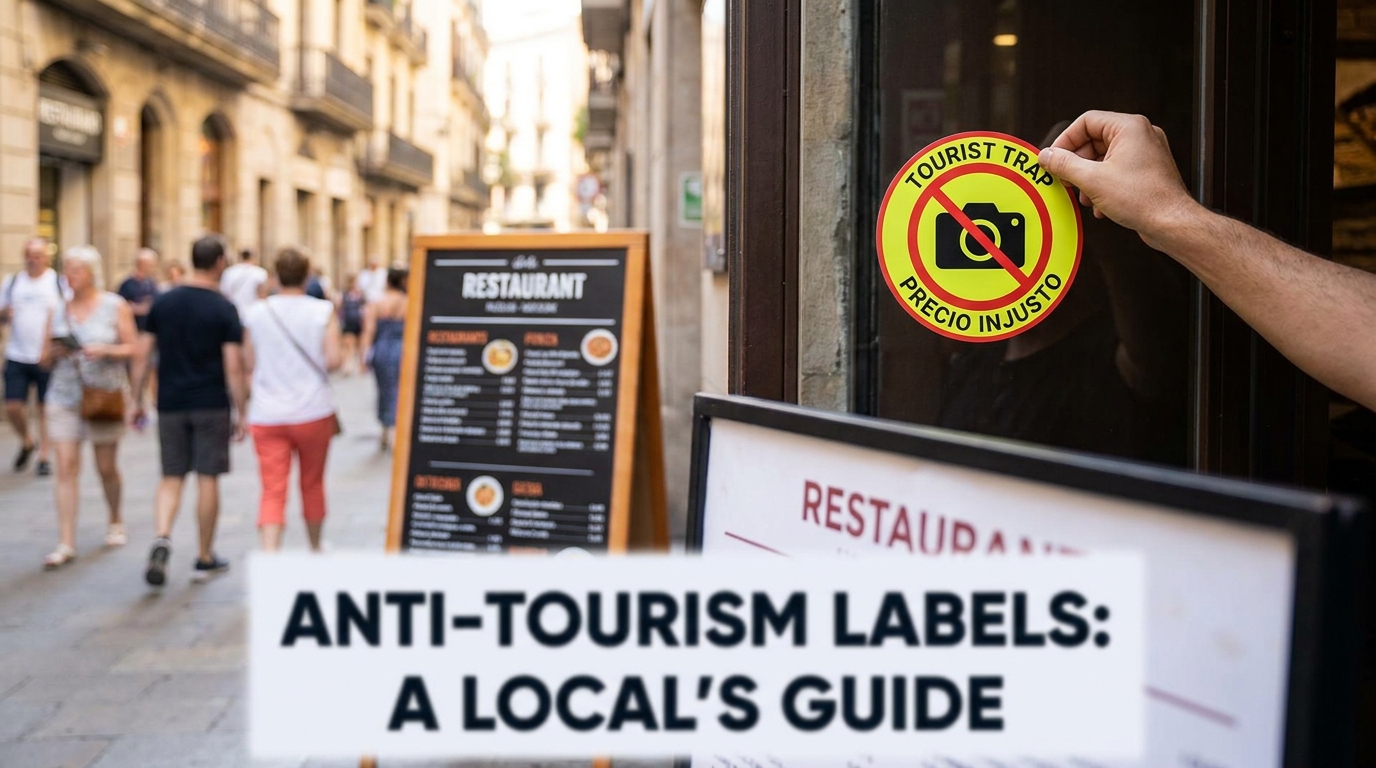
Barcelona residents have found a direct, unavoidable way to fight back against overtourism and protect unsuspecting visitors: slapping warning stickers directly onto the menus and doors of “tourist traps.” If you are planning a trip to the Catalan capital, these grassroots labels are becoming your best, unofficial guide to knowing where not to spend your money.

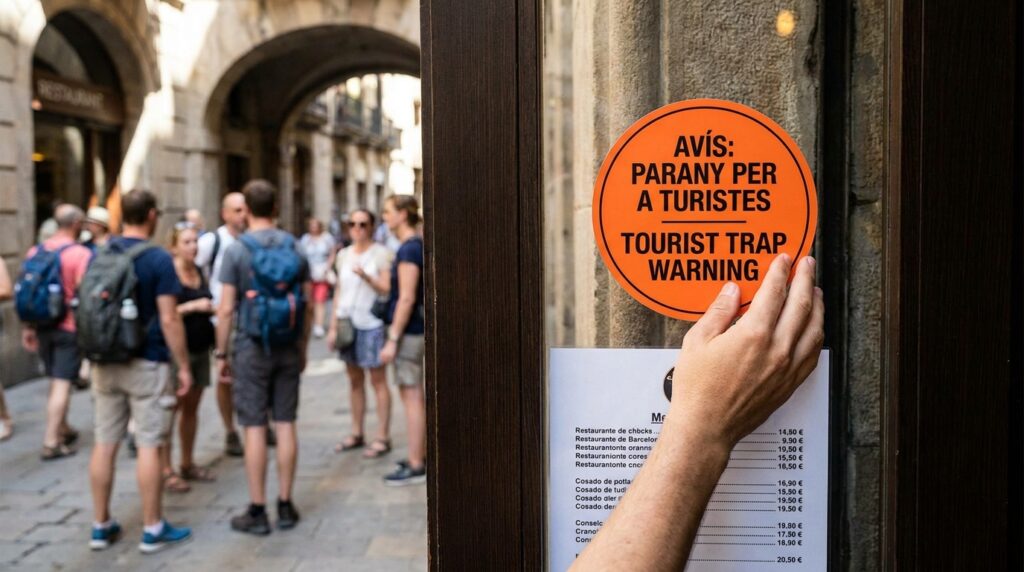
The strategy is simple but highly effective. Frustrated by skyrocketing rents and the loss of authentic neighborhood culture, locals are taking matters into their own hands. They are physically tagging bad restaurants, fake souvenir shops, and illegal short-term rental lockboxes.
Here is exactly what is happening on the streets of Spain, why the locals are angry, and how you can use this movement to travel smarter.
What Are These Stickers and Who Is Placing Them?
The stickers are small, blunt, and usually placed right where you can’t miss them—over the prices on laminated menus or across the front doors of heavily trafficked bars.
They are being placed by everyday citizens—displaced renters, local business owners, and neighborhood associations—who are tired of their city catering exclusively to “fast tourism.”
What the stickers actually say:
- “Tourist Trap” / “Trampa para Turistas”: Placed on restaurants serving frozen, microwaved food at massive markups.
- “Tourists Go Home”: Often found on the self-check-in key lockboxes attached to residential apartment buildings.
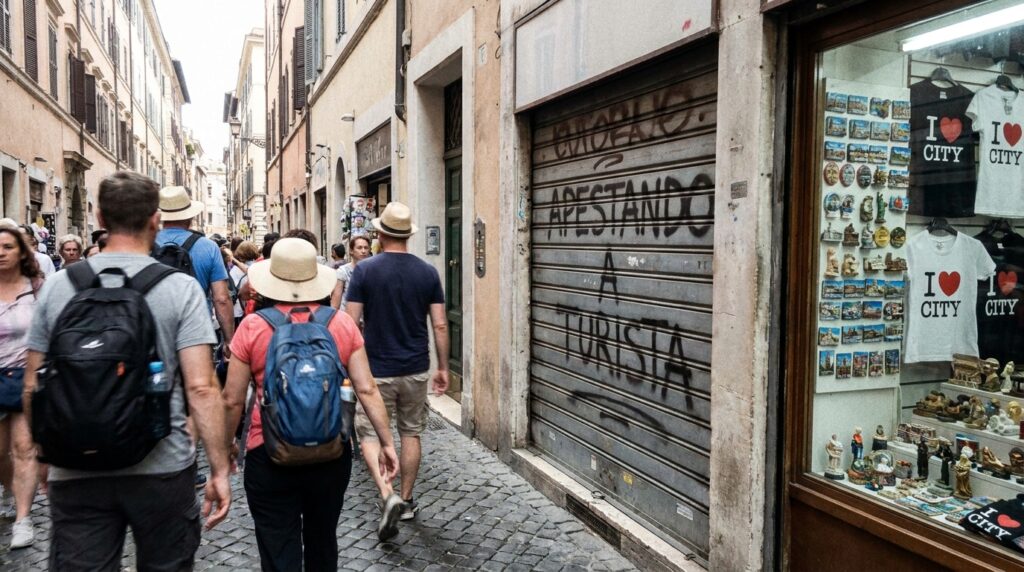
- “Apestando a turista” (Stinking of tourist): Tagged on businesses that have pushed out local hardware stores or traditional bakeries to sell cheap souvenirs.
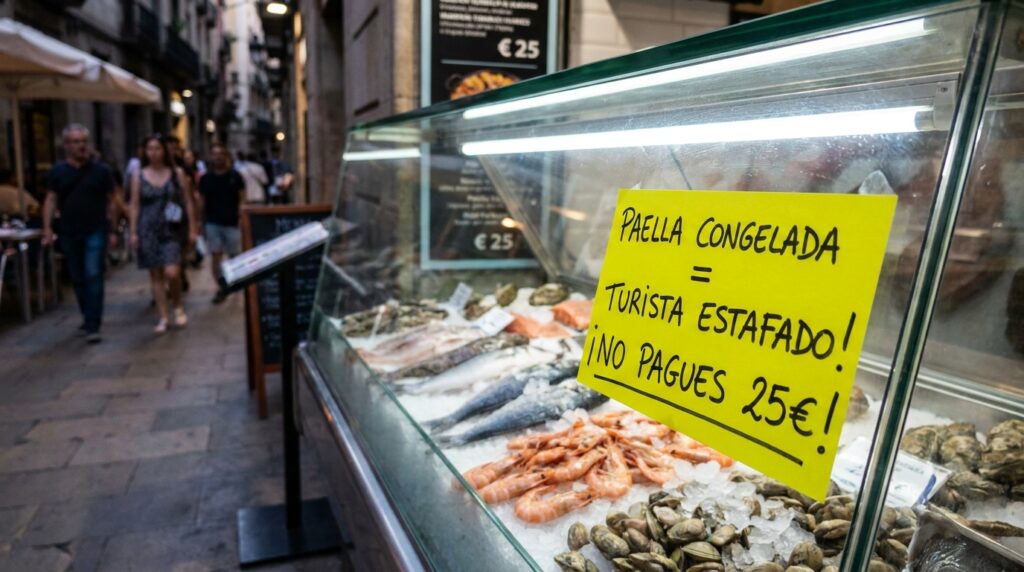
My Personal Experience: During a walk near Las Ramblas, I saw a bright yellow sticker slapped across a restaurant’s seafood display. It warned that the paella was frozen and mass-produced. It saved me €25 and a ruined evening. The locals aren’t just protesting; in a strange way, they are doing genuine foodies a massive favor.
Why Are Barcelona Residents Protesting? The Breaking Point
The core issue driving this sticker campaign is a severe housing crisis, not a hatred of foreigners. Barcelona simply does not have the infrastructure to support 85 million annual visitors to Spain without pushing its own residents out.
When you understand the numbers, the frustration makes complete sense. Landlords are refusing to renew long-term leases for locals, opting instead to flip apartments into highly profitable short-term vacation rentals.
The True Cost of Overtourism in Barcelona
| The Issue | The Reality for Locals | What It Means for Tourists |
| Housing Costs | Rent has increased by 68% over the last 10 years. | Authentic neighborhoods are emptying out. |
| Dining Quality | Traditional tapas bars are replaced by generic chains. | It is much harder to find real, quality Catalan cuisine. |
| Street Crowds | Daily life (groceries, commuting) becomes impossible. | Major sites like Park Güell feel more like theme parks than city landmarks. |
To combat this, Barcelona’s Mayor Jaume Collboni recently announced a plan to ban over 10,000 short-term tourist apartment rentals by 2028.
Also read – FIFA World Cup 2026 Ticket Scams: How to Spot Fakes & Stay …
How to Spot a Tourist Trap (Before You See the Sticker)
You shouldn’t rely entirely on local activists to guide your dining choices. You need to know how to read the streets yourself. Based on years of navigating European tourist hubs, here are the immediate red flags that you are walking into a trap.
- The “Hustler” at the Door: If a restaurant employs someone to stand outside with a menu and aggressively wave you inside, keep walking. Good restaurants in Barcelona are full because the food is good; they don’t need to beg.
- Pictures on the Menu: A menu translated into eight different languages featuring faded, glossy photos of food is a guaranteed sign of a tourist trap.
- Paella for Breakfast, Lunch, and Dinner: Authentic paella is typically eaten for lunch, and traditionally on Thursdays in Catalonia. If a place is serving it at 11:00 PM in the Gothic Quarter, it came from a frozen plastic bag.
- No Locals Inside: Peak Spanish dinner time is between 9:00 PM and 10:30 PM. If the restaurant is packed at 6:30 PM and everyone is speaking English, you are in the wrong spot.
When and Where You Will Notice the Tension Most
You will see these stickers mostly in the heavily saturated downtown districts. The Gothic Quarter (Barri Gòtic), El Born, and the immediate streets surrounding the Sagrada Familia are the epicenters of both the tourist traps and the local pushback.
During the peak summer months of July and August, tensions run the highest. Recent protests even saw locals using water guns to playfully (but pointedly) spray tourists dining at notorious tourist-trap terraces.
What You Should Do Instead: Travel Smart and Respectfully
You can still visit Barcelona, have an incredible time, and respect the local population. It just requires a slight shift in how you travel.
- Stay in licensed hotels: Avoid booking short-term apartment rentals in residential buildings. Hotels are regulated, employ local staff, and don’t remove housing from the local market.
- Venture out of the center: Spend your evenings in neighborhoods like Gràcia or El Poblenou. The food is infinitely better, the prices are fair, and the locals are welcoming because the economy there is balanced.
- Spend money at traditional businesses: Buy your morning coffee from a local cafe, not a massive global chain. Shop at local artisan stores rather than buying mass-produced magnets from a corner kiosk.
By recognizing the signs of a tourist trap, you aren’t just saving yourself from a bad meal—you are voting with your wallet to support the real Barcelona.