


Canada eTA is the CAD $7 electronic travel authorization that visa-exempt travellers must hold before flying to Canada — and the single most common reason travellers are stopped at check-in is not knowing it exists. The authorization is run by Immigration, Refugees and Citizenship Canada (IRCC), it is linked electronically to the passport used to apply, and it is checked by the airline before boarding. Without a valid eTA, a visa-exempt traveller flying to Canada will not be allowed on the plane.
The rule is narrower than most travellers assume, and that narrowness is where the mistakes happen. A Canada eTA is an air-travel requirement only. The same traveller who needs one to fly into Vancouver needs nothing of the kind to drive across the border from Seattle, arrive by train or bus, or sail in on a cruise ship. The paperwork follows the mode of travel on each leg, not the destination alone — so a British traveller can drive into Canada with only a passport, yet needs an eTA to fly home from Vancouver. This guide sets out who needs one, who is exempt, what it costs, and how to apply without falling for the copycat sites that charge many times the government fee.
Canada eTA: Quick Facts
| Question | Answer |
|---|---|
| What is it? | An electronic travel authorization run by IRCC, linked to the passport used to apply |
| Who needs one? | Visa-exempt foreign nationals flying to Canada, or transiting through a Canadian airport |
| Fee | CAD $7 per person, paid online by card; one person per form; non-refundable |
| Validity | Up to 5 years, or until the passport expires, whichever comes first; multiple trips |
| Stay per visit | Normally up to 6 months at a time |
| Processing time | Usually approved within minutes by email; sometimes several days if IRCC asks for supporting documents |
| Where to apply | Only on the official Government of Canada website, canada.ca |
| Biometrics | Not needed for an eTA-only visit |
Canada eTA: Who Needs One and Who Does Not
Visa-exempt foreign nationals flying to Canada need a Canada eTA, and so do visa-exempt travellers who only transit through a Canadian airport. The group includes passport holders from the United Kingdom, Ireland, France, Germany and most other European Union states, Australia, New Zealand, Japan, South Korea, Singapore, Chile and dozens of other visa-exempt countries and territories. Every traveller in the group needs their own eTA, including children, and the authorization is tied to the exact passport presented in the application. Change the passport and the eTA does not follow: a new passport means a new application and another CAD $7, as Immigration.ca’s guide, updated 26 November 2026, sets out.
Transiting counts, and it catches people out. If an itinerary connects through Toronto, Vancouver, Montreal or any other Canadian airport on the way to a third country, and the traveller is a visa-exempt national, an eTA is needed for the transit even if the traveller never leaves the airport. The authorization is checked against the flight, not against a plan to sightsee. A small number of transit programmes have their own conditions, so travellers with an unusual routing should confirm their category on canada.ca before booking.
The table below is the fastest way to work out which document a journey needs. It is built from the IRCC rules as set out by BT Immigration, last reviewed 23 November 2026.
| Traveller | Flying to or through Canada | Arriving by car, bus, train or boat |
|---|---|---|
| Citizen of a visa-exempt country | eTA and passport | Valid passport only |
| Citizen of an eligible expanded-eTA country who meets the conditions | eTA or visitor visa | Visitor visa |
| Citizen of any other visa-required country | Visitor visa | Visitor visa |
| US citizen | Neither; valid US passport | Neither; proper identification such as a US passport |
| US lawful permanent resident | No eTA; valid green card and passport | No eTA; valid green card |
| Holder of a valid Canadian visitor visa | Travel with the visa | Travel with the visa |
One narrow exception is worth noting for sea travellers: a traveller from an eTA-required country arriving by boat directly from Saint-Pierre-et-Miquelon, other than on a cruise ship, does need an eTA to board. Cruise ship arrivals do not. It is a small rule, but it is exactly the kind of detail that strands a traveller who assumed the land-and-sea exemption was total.
Canada eTA Exemptions: US Citizens, Green Card Holders and Canadians
US citizens are exempt from the Canada eTA requirement entirely. IRCC’s wording is that US citizens must carry proper identification, such as a valid US passport, and for air travel the valid US passport is the document to carry: it proves both citizenship and identity, airlines expect it, and it removes any argument at the border. The exemption does not depend on where the US citizen lives, how long the stay is, or whether the trip is for business or leisure. A dual citizen who holds both US and, say, British nationality should travel on the US passport to use the exemption cleanly, because entering on the British passport would make them a visa-exempt foreign national who needs an eTA.
US lawful permanent residents have been exempt since 26 April 2022. They travel with a valid passport from their country of nationality together with a valid green card, or equivalent proof of status in the United States. The pairing matters: the passport alone does not prove US status, and the green card alone does not prove nationality. Green card holders should treat the card itself as a travel document and keep it with the passport, for every method of travel to Canada — a point Always Packed’s explainer, checked 13 November 2026 against IRCC guidance, stresses for travellers who hold a green card but not US citizenship.
Canadians sit outside the eTA system in the other direction. Canadian citizens, including dual citizens, cannot apply for an eTA and must travel on a valid Canadian passport when flying to Canada. Canadian permanent residents likewise travel on a PR card or a permanent resident travel document, not an eTA. Travellers who already hold a valid Canadian visitor visa do not need an eTA either, and can keep travelling on that visa until it expires.
Canada eTA: The 17 Countries With Partial eTA Access
Citizens of 17 visa-required countries can apply for a Canada eTA instead of a visitor visa — but only when flying, and only if they meet a strict condition. They must have held a Canadian visitor visa at any time in the past 10 years, or hold a valid US non-immigrant visa on the day they apply for the eTA. The US visa must be valid on the day of application, but not necessarily on the day of travel. They must also be coming for a temporary stay, normally up to six months, and flying to or transiting through a Canadian airport on a passport from an eligible country. Anyone from these countries who does not meet all of the conditions needs a visitor visa, as does anyone arriving by car, bus, train or boat, including a cruise ship, even if they do not leave the ship.
The 17 eligible countries are Antigua and Barbuda, Argentina, Brazil, Costa Rica, Indonesia, Malaysia, Mexico, Morocco, Panama, the Philippines, St. Kitts and Nevis, St. Lucia, St. Vincent and the Grenadines, Seychelles, Thailand, Trinidad and Tobago, and Uruguay. Indonesia and Malaysia were added on 26 May 2026, as part of Canada’s Indo-Pacific engagement. Both countries remain visa-required, so travellers who do not meet the conditions, or who arrive by land or sea, still need a visitor visa.
The addition of Indonesia and Malaysia is the most recent change to the list, and it shows why the list should never be treated as fixed. Because the list changes when Canada lifts or imposes visa requirements, travellers should confirm their own status with IRCC’s entry-requirements tool before booking rather than relying on a list read months earlier. Canada’s entry rules change often — the site’s report on Canada’s separate Ebola-related travel ban for February 2027 is a reminder of how quickly a new restriction can appear for a different group of travellers: Canada Ebola Travel Ban February 2027: Who Is Affected.

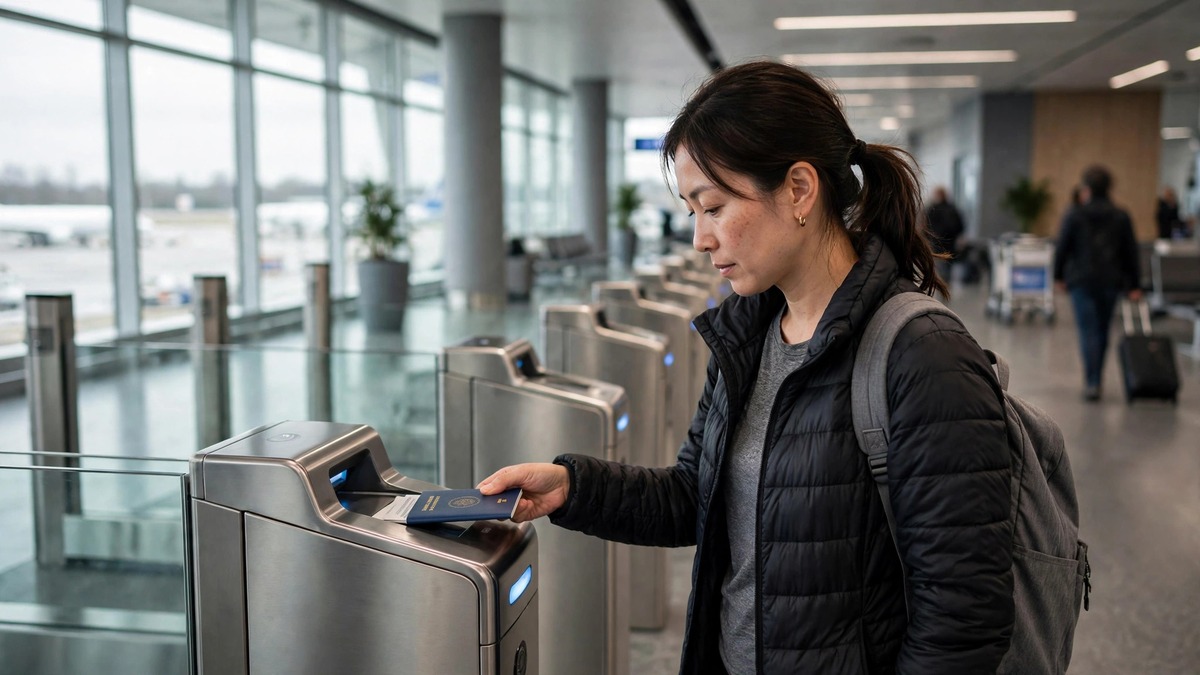
How to Apply for a Canada eTA in Six Steps
Apply only on the official Government of Canada website. That single sentence is the most important advice in this guide, and IRCC repeats it for a reason. Third-party sites dress themselves up as official, run travellers through the same questions, and charge many times the government fee for forwarding an application the traveller could have filed directly. The government fee is CAD $7. Any larger charge is an intermediary’s markup, and any site that cannot be reached from canada.ca should not be given a passport number or a card. The official starting point is the IRCC eTA page on canada.ca, which states plainly that it only costs CAN$7.
- Use the official site only. Start at canada.ca and follow the eTA links from there. Check that the address ends in canada.ca before entering any personal details.
- Get ready before starting. Have a valid passport, a credit or debit card and an email address. The form cannot be saved, so have the answers ready. It is in English and French, with help text in other languages.
- Enter the passport number carefully. Use the number at the top of the passport information page. A wrong number is the single most common problem IRCC lists, and if the number in the approval email does not match the passport, a new eTA must be applied for.
- Pay CAD $7 and print the receipt at once. Pay right after completing the form. Each person needs their own form and payment — one person per form, with no discounted family rate — and the fee is non-refundable. Print the receipt immediately, because a copy cannot be obtained later.
- Wait for the email. Most applicants receive an approval email within minutes. If IRCC needs supporting documents, it emails instructions within 72 hours and processing can take several days, which is why the standing advice is to apply before booking a flight, not after. Check the junk folder too.
- Check the approval and fly on the same passport. Make sure the passport number in the approval email matches the passport exactly. There is nothing to print and nothing is stamped into the passport: the eTA sits in the system, linked to the passport number, and the airline sees it at check-in. Present that passport at check-in, where airline staff scan it to confirm a valid eTA. Without one, boarding is refused.
Canada eTA Cost, Validity and What Happens After Approval
The Canada eTA costs CAD $7 per person, and it is valid for up to five years or until the passport expires, whichever comes first. Within that period, a traveller can visit Canada as often as they like for short stays, normally up to six months at a time. A new eTA for the same passport replaces the old one, and if a new passport is issued, the old eTA ends with it and a new application is needed before flying. With no stamp in the passport, a traveller can stay six months from entry or until the passport expires, whichever comes first; to stay longer, a visitor record must be applied for before the status ends.
For comparison, a visitor visa costs CAD $100 per person, and biometrics with a visitor visa cost CAD $85 per person, according to the IRCC fee list checked on 23 November 2026. eTA applicants who are only visiting do not give biometrics at all. That fee gap is one reason the expanded eTA matters so much to travellers from the 17 eligible countries: qualifying for an eTA instead of a visitor visa saves CAD $93 per person, plus the biometrics appointment, plus the longer visitor-visa wait.
An approved eTA is not a guarantee of entry. On arrival, a border services officer checks the passport and documents and decides whether to admit the traveller, and sets the permitted stay. Travellers with a criminal record, including for impaired driving, should resolve their admissibility before travelling. The eTA also does not authorise work or study, and it does not replace a work or study permit. The two systems are linked, though: when IRCC approves a first work permit or study permit, it issues the necessary visa or eTA automatically, and visa-exempt nationals who renew a permit inside Canada receive an eTA automatically with the renewal. A work or study permit is not itself a travel document, so whether a visa or an eTA is needed depends on nationality, not on the permit.
Canada eTA Mistakes: The Five Errors That Stop Travellers Boarding
- Applying on a copycat site. The most expensive mistake is also the most avoidable. Only canada.ca charges CAD $7. Sites charging more are intermediaries, and handing a passport number and card details to an unofficial site is a risk no saving of time justifies.
- Typing the passport number wrong. IRCC lists an incorrect passport number as the most common problem. Use the number printed at the top of the photo page, check it twice, and check that the number in the approval email matches the passport exactly. If it does not, apply for a new eTA — the old one cannot be fixed.
- Applying after booking, or at the airport. Most approvals arrive within minutes, but some take several days. Apply before booking the flight, and never leave it to the day of travel: if IRCC asks for supporting documents, there may not be time to complete the process.
- Assuming the eTA covers a land or sea arrival. A traveller from an expanded-eTA country who flies in on an eTA and then plans to re-enter by car, bus, train or boat still needs a valid visitor visa for that crossing. The eTA is an air-travel document only.
- Assuming an eTA guarantees entry. The eTA lets a traveller board the flight. The border services officer makes the entry decision on arrival. Travellers who are refused an eTA should not travel, because the airline will not board them, and should reapply only after dealing with the reasons for the refusal. Travellers from an eligible visa-required country can apply for a visitor visa instead.
Canada eTA vs the World’s Other Travel Authorizations
The Canada eTA is one of a family of electronic authorizations, and confusing one country’s rules with another’s is how travellers get caught at check-in. The shape is familiar everywhere: a short online form, a passport link, a small fee. The exemptions and the details differ, and those differences are the whole point. The United States runs ESTA, and Britain runs its own ETA — and South Korea runs the K-ETA, which now exempts travellers from 22 countries.
Also read: South Korea K-ETA Exemption: 22 Countries in 2027
The practical takeaway is to treat each country’s authorization as a separate task with its own official site, its own fee and its own lead time. A traveller who has an ESTA for the United States still needs a Canada eTA to fly to Toronto; a traveller who has a UK ETA still needs a Canada eTA to fly to Vancouver; and a traveller transiting through Canada on the way to a third country needs the Canadian authorization even if the final destination needs nothing at all.
Canada eTA: The Bottom Line Before Booking
The Canada eTA is cheap, fast and simple — and that is exactly why it catches travellers out. A CAD $7 form that takes minutes feels too small to matter, so it gets left to the last minute, filed on the wrong website, or skipped entirely by a traveller who assumes a visa-free passport means no paperwork at all. The airline check-in desk does not share that assumption: without a valid eTA linked to the passport presented, a visa-exempt traveller flying to Canada will not board.
The checklist is short. Work out the category from the passport and the mode of travel. Apply only on canada.ca, before booking the flight, with the passport number checked twice. Pay CAD $7 per person, keep the receipt, and check the approval email. And remember the two dates that frame the whole system: the eTA lasts up to five years or until the passport expires, and Indonesia and Malaysia joined the 17-country expanded list on 26 May 2026 — proof that the rules move, and that the official site, not a memory of last year’s rules, is the place to confirm them.


