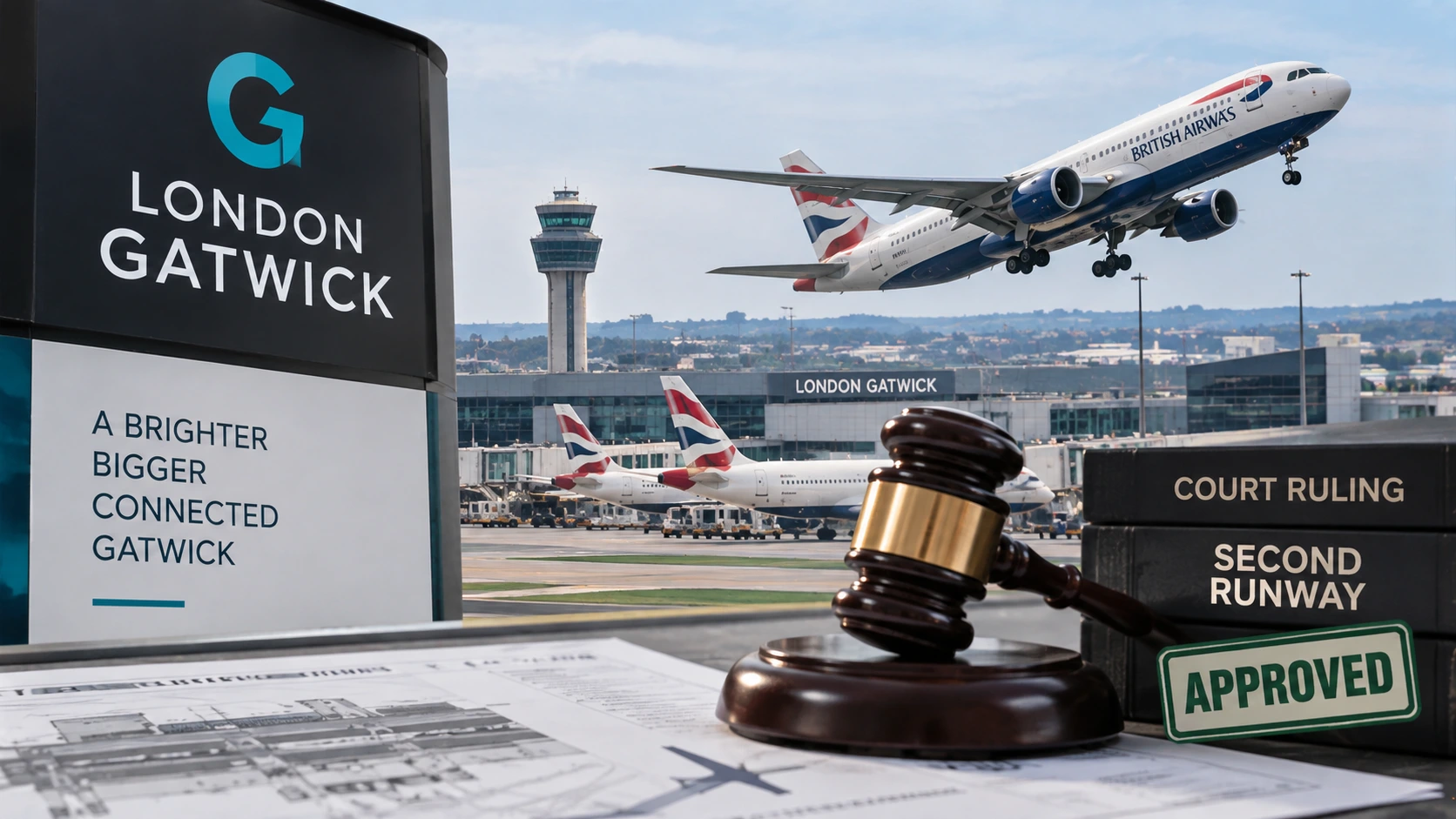
London Gatwick Airport has officially cleared its final legal hurdle to proceed with a £2.2 billion ($3 billion) expansion project following a decisive Court of Appeal ruling. On August 4, 2026, senior judges permanently dismissed a major legal challenge launched by local environmental campaigners against the government’s development consent order. This ruling means the airport can immediately move forward into the design and delivery phase to transform its existing standby strip into a fully operational second runway.

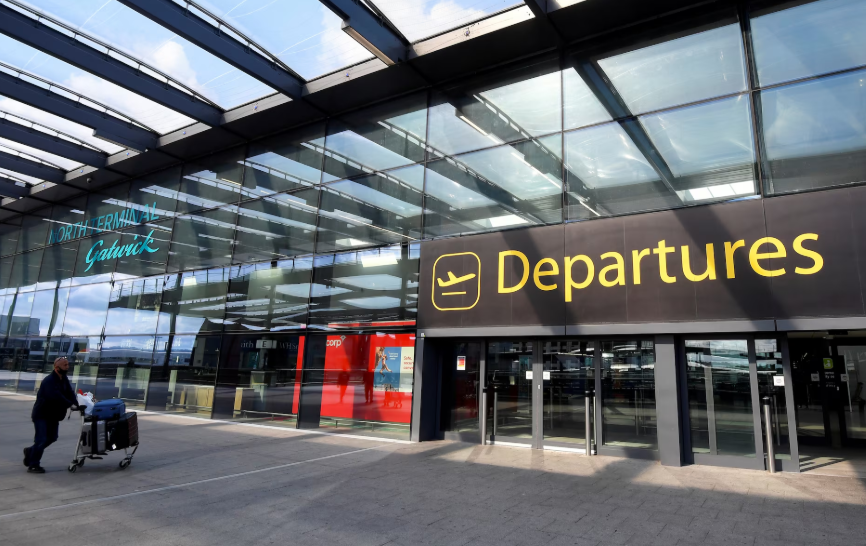
The expansion guarantees thousands of new jobs, massively increases annual flight capacity, and solidifies Gatwick’s position as a premier global transport hub. By blocking any further legal appeals, the court has ended an eight-year planning saga, providing absolute certainty for airlines, construction firms, and international investors watching the UK aviation market.
What Does the Northern Runway Project Actually Involve?
The Northern Runway project upgrades an existing standby taxiway into a permanent, secondary runway to operate simultaneously alongside the main strip. Engineers will physically shift the northern runway’s centreline exactly 12 metres north to comply with strict international aviation safety separation standards. This massive £2.2 billion capital expenditure is funded entirely by VINCI Airports, meaning no public taxpayer money is required for the construction.
Aviation planners designed the dual-runway system with highly specific operational constraints to maintain safety and efficiency.
- Northern Runway: Strictly restricted to take-off operations for narrowbody commercial aircraft, such as the Airbus A320 and Boeing 737.
- Main Runway: Handles all inbound landings and continues to manage take-offs for larger widebody international jets.
- Infrastructure Upgrades: Includes new taxiways, massive terminal extensions, upgraded highway access, and new aircraft hangars.
By keeping landings on the main strip and dedicating the new runway to narrowbody departures, air traffic controllers can maximize efficiency without causing mid-air bottlenecks.
Why Did the Court of Appeal Dismiss the Legal Challenge?
The Court of Appeal rejected the final legal challenge because judges found that the original development consent order properly addressed all statutory environmental requirements. Campaign group Communities Against Gatwick Noise Emissions (CAGNE) and local campaigner Peter Barclay originally sued the Department for Transport, arguing that ministers failed to evaluate the scheme’s climate, noise, and wastewater impacts. High Court Justice Mould initially dismissed these claims in a detailed 195-page judgment published by the Judiciary of England and Wales on June 23, 2026.
The campaigners then attempted to escalate the case to the Court of Appeal under new rules for nationally significant infrastructure projects. However, senior judges refused to grant CAGNE permission to appeal. The court stated that the legal process only provides specific routes for challenging a government error in judgment, which clearly did not occur during the planning approval.
This decisive refusal brings an eight-year planning and legal battle to a permanent close. Campaign groups stated the ruling reflects poorly on changes to the legal process, but they have exhausted all domestic avenues to halt the construction.
Also read – Free Rail Travel Expands Across Britain for Veteran Families

How Will the Expansion Impact Flight Capacity and Local Jobs?
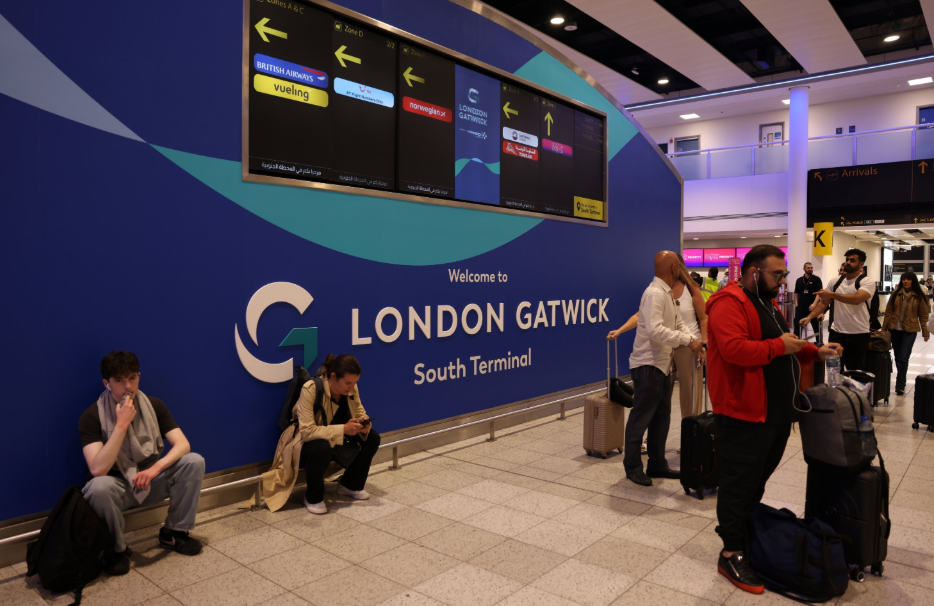
The expansion will increase Gatwick’s total annual flight movements by approximately 100,000, allowing the airport to handle up to 80 million passengers per year by 2047. Currently serving over 200 global destinations, the airport will use this extra capacity to attract new airlines, increase daily route frequencies, and ease existing flight congestion across the South East of England.
The economic benefits extend far beyond the airport perimeter, heavily stimulating the regional and national economy.
- Job Creation: The project generates 14,000 direct and indirect new jobs across the aviation and construction sectors in Sussex and Surrey.
- Economic Boost: The expansion delivers an estimated £1 billion injection into the national economy every single year.
- Supply Chain: Local businesses providing construction materials, catering, and transport will see immediate contract opportunities.
Airlines operating out of Gatwick have strongly backed the proposal, as the limited runway space previously stifled their ability to add new holiday and business routes. The additional 13 million annual passengers will significantly boost tourism revenues across London and the surrounding counties.
What Are the Specific Environmental Mitigation Plans?
The government approved the revised scheme specifically because the Planning Inspectorate imposed much tighter environmental controls on the airport than initially proposed by the developers. Gatwick Airport must adhere to strict noise caps, advanced wastewater management protocols, and strict emission limits during both the construction and operational phases.
To offset the carbon impact of 100,000 extra flights, Transport Secretary Heidi Alexander announced parallel green infrastructure investments. The government is directly injecting £219 million into sustainable aviation fuel (SAF) production facilities across the UK.
Furthermore, the Civil Aviation Authority (CAA) and the Department for Transport have earmarked an additional £43 million to advance hydrogen-powered and electric flight technologies. These investments ensure that the airport expansion aligns directly with broader national climate goals while supporting regional economic growth.
How Does This Compare to Other UK Airport Expansions?
The success of Gatwick’s Northern Runway project stands in sharp contrast to the ongoing delays surrounding Heathrow Airport’s proposed third runway. While Heathrow has faced decades of political gridlock and soaring budget estimates, Gatwick secured its approval by utilizing existing land within its current airport boundary.
Because Gatwick is only modifying a standby strip rather than paving entirely new land over residential villages, the planning process faced fewer extreme statutory hurdles. The UK Government actively supports developments that maximize existing infrastructure without requiring massive compulsory purchase orders or complex airspace redesigns.
When Will the Second Runway Open for Commercial Flights?
The first commercial flights are officially scheduled to take off from the newly extended Northern Runway in 2030. With the final legal barrier removed by the Court of Appeal, Gatwick Airport management confirmed they are moving immediately into the final design and procurement phase.
| Project Phase | Estimated Timeline | Primary Activities |
| Legal Clearance | August 2026 | Court of Appeal permanently dismisses CAGNE challenge. |
| Procurement & Design | Late 2026 – 2027 | Finalizing blueprints and awarding heavy construction contracts. |
| Active Construction | 2027 – 2029 | Shifting the runway 12 metres north and expanding terminals. |
| Testing & Certification | Early 2030 | Safety testing dual-runway operations with aviation regulators. |
| Commercial Launch | Mid 2030 | First narrowbody flights depart from the new Northern Runway. |
Travelers booking flights out of London over the next few years will not experience any immediate disruptions, as the heavy construction remains isolated from the active main runway. Once open, the dual-runway system will drastically reduce holding patterns and departure delays, offering a vastly smoother travel experience for millions of passengers.