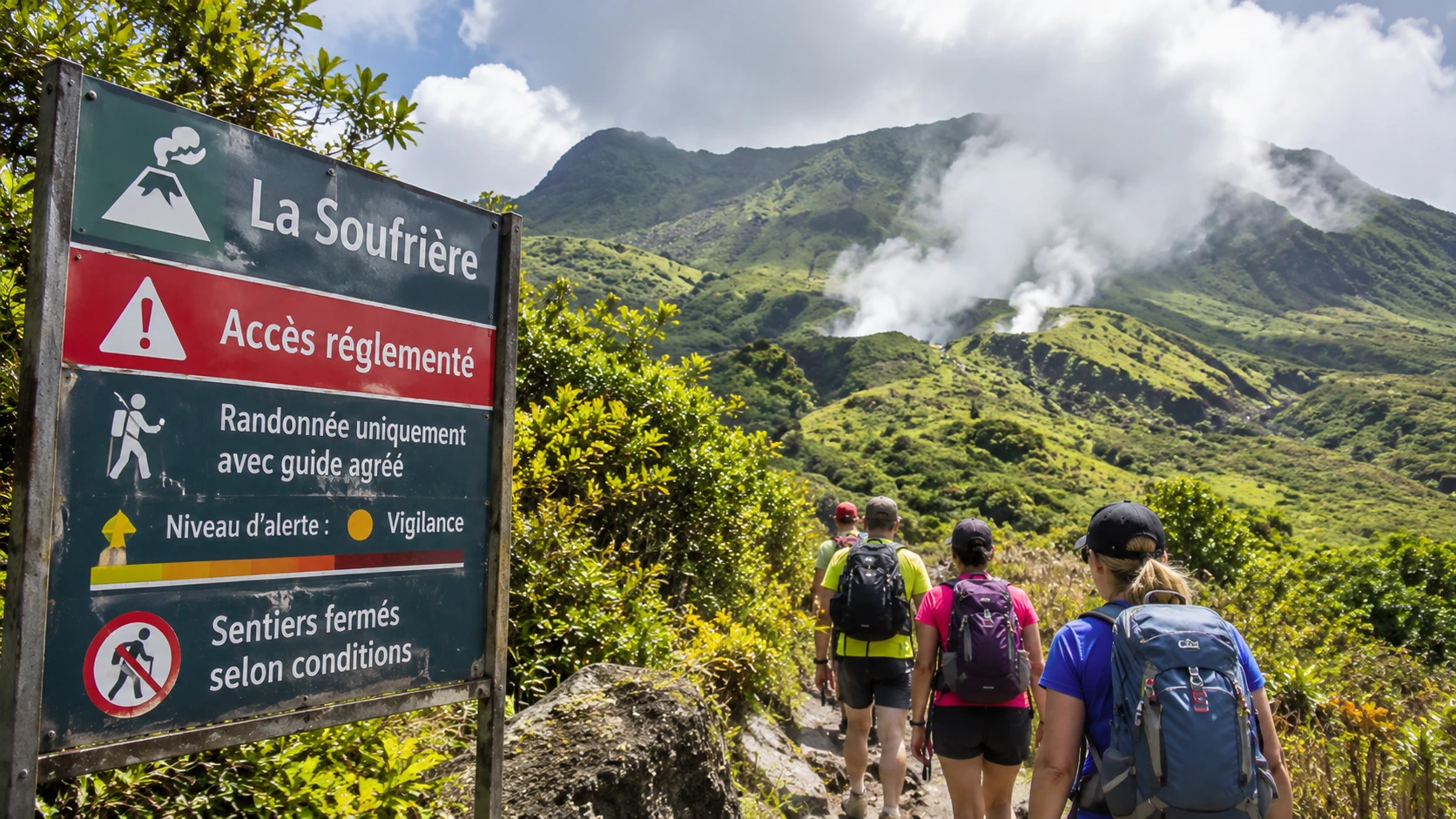
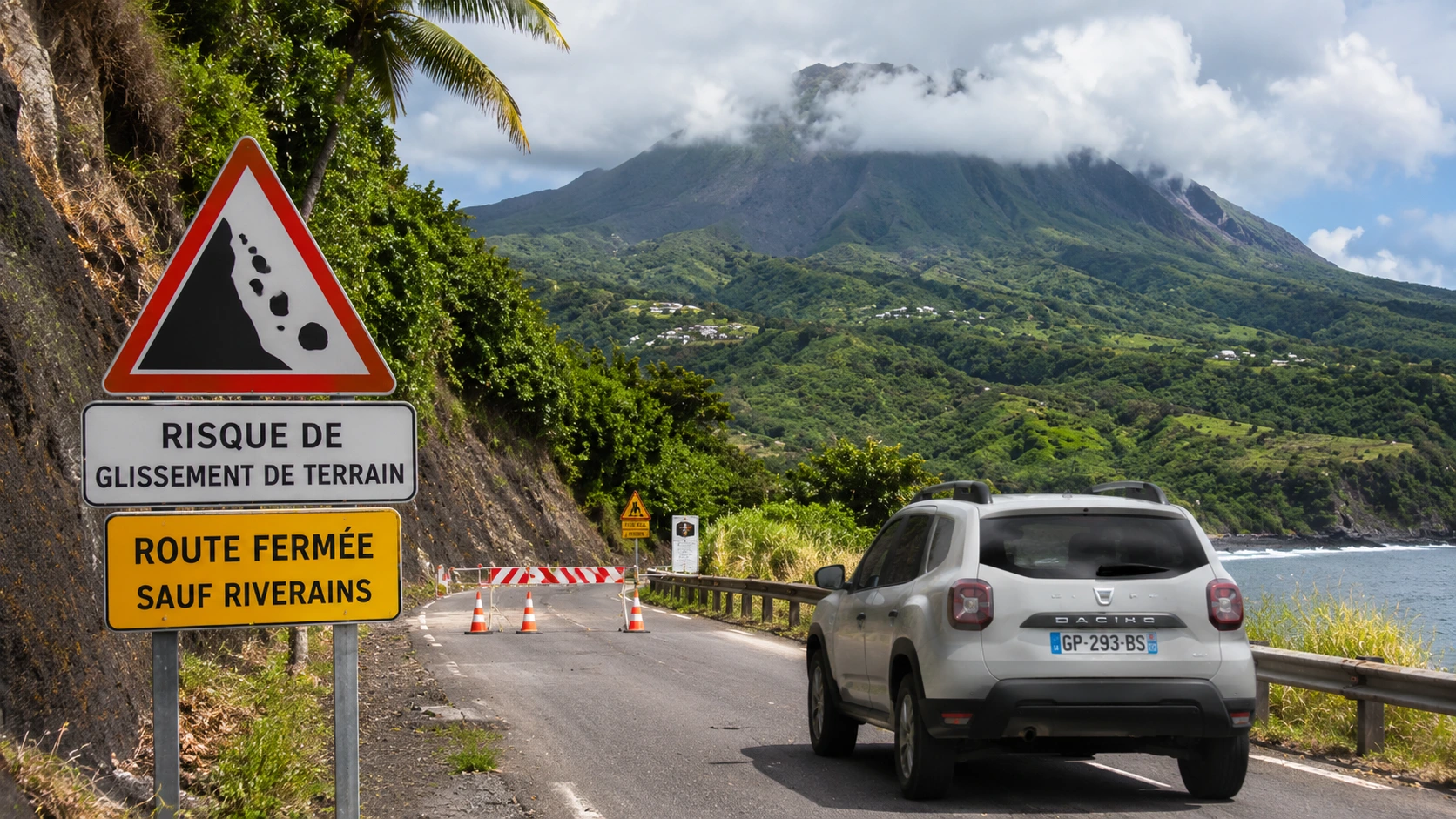
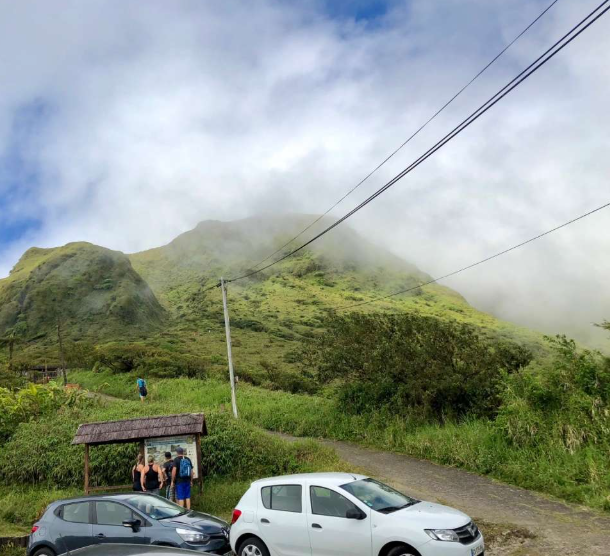
Mount Pelee coastal roads trigger alerts because they wrap an active volcano with steep rain cut slopes and frequent rockfalls. The volcano sits at 1,397 meters above Saint Pierre and Le Precheur, and the most scenic coastal and mountain roads run directly below unstable flanks.
Recent maintenance notices warn of intermittent closures near Le Precheur, Grand Riviere and the Ajoupa Bouillon pass after heavy rain. Debris slides can block one lane with no immediate detour, and repair crews close sections for clearing during daylight. Rental car drivers unfamiliar with Creole signage or overnight closure times get stuck on the wrong side of the block.
Official guidance on Martinique travel notes general safety, road conditions and emergency support for visitors and advises checking local alerts before driving in mountain zones U.S. Department of State.

Also read – Driving Demands Certified 4×4 Vehicles Iceland Travel Alert
Which Mount Pelee Coastal Roads Need Extra Rental Car Caution
Not every road near Mount Pelee carries the same risk. The coastal north loop is the most sensitive, while southern approach roads are wider and better drained.
Mount Pelee roads where rental car caution is highest:
- N2 Coastal Road from Saint Pierre to Le Precheur to Grand Riviere: Narrow, sea cliff exposure, rockfall nets and single lane bridge sections. Night driving is strongly discouraged.
- Route de la Trace D10 through Morne Rouge and Ajoupa Bouillon: Mountain pass with tight curves, fog banks and landslide barriers. Fog reduces visibility to under 20 meters on wet mornings.
- D39 and small commune roads to trailheads: Unmarked potholes, soft shoulders and no street lighting. GPS often underestimates travel time by 30 percent.
Safer alternative when Mount Pelee coastal road alerts are active: Stay on the N1 south loop from Fort de France to Saint Pierre, then assess conditions at the town hall or gendarmerie before committing to the north loop. Locals often pause a north drive if rain lasted more than 2 hours.
When Mount Pelee Coastal Roads Close and How Rental Car Drivers Can Check Status
Mount Pelee coastal road closures happen without long notice and usually after overnight rain or seismic maintenance work. Most temporary closures run from early morning until early afternoon for debris removal.
How to check Mount Pelee road status before you drive:
- Check with your rental agency at pickup for current N2 and D10 closure sheets. Agencies in Fort de France and airport counters receive prefecture bulletins daily.
- Ask your hotel or gite host in Saint Pierre or Le Morne Rouge for the morning road call. Hosts know if Le Precheur or Grand Riviere was blocked overnight.
- Look for physical barriers and electronic signs at Saint Pierre north exit. Do not drive around barriers. Fines apply and insurance voids on closed roads.
Avoid planning a tight ferry or flight connection on the same day as a north loop drive. Build in a 3 hour buffer so a closure does not cause a missed departure from Aimé Césaire Airport.

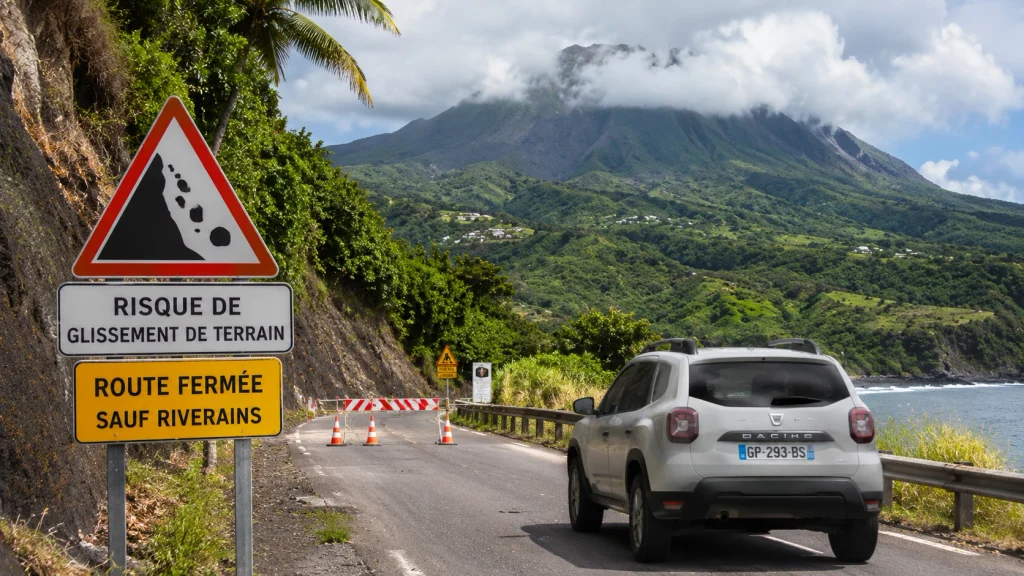
What Rental Car Insurance and Vehicle Choice Matters for Mount Pelee Coastal Driving
Rental car choice decides how well you handle Mount Pelee coastal roads. Low clearance economy cars scrape on patched landslide sections and struggle on steep 12 percent grades near Morne Rouge.
Smart rental car booking checklist for Mount Pelee coastal roads:
- Choose a compact SUV with higher clearance over a sedan. Better sight line over cliff curves and less risk of undercarriage damage.
- Confirm full insurance with gravel and undercarriage coverage. Standard basic cover often excludes damage on unpaved detours or closed road incursions.
- Inspect tires, brakes and wipers at pickup. Mountain rain needs strong wipers and tread. Photograph all existing scratches with time stamp.
- Request a physical road map and emergency number. Mobile signal drops between Le Precheur and Grand Riviere, so offline maps are essential.
Ask clearly: does your Mount Pelee rental car contract cover towing from a landslide closure zone and does it allow driving on D39 communal roads. Get the answer in writing on the rental agreement.
How to Drive Mount Pelee Coastal Roads Safely: Speed, Parking and Weather Rules
Safe driving on Mount Pelee coastal roads is slow and defensive. Speed limits drop to 30 kmh in villages and 50 kmh on cliff sections, and enforcement is by fixed radar near Saint Pierre.
| Mount Pelee Driving Situation | Safe Rental Car Practice |
|---|---|
| Wet cliff curves on N2 | Stay in lane, honk lightly before blind curves, keep 4 second gap from scooters |
| Fog on Route de la Trace | Use low beam, not high beam, pull over at viewpoint if visibility under 30 meters |
| Rockfall debris on road | Do not swerve into oncoming lane, stop, hazard lights on, call emergency if blocked |
| Parking at Mount Pelee trailheads | Use designated lots only, never block evacuation access, lock and hide valuables |
Experience based timing tip: Start the north loop before 8 a.m. to avoid afternoon cloud and to finish before the common 2 p.m. to 5 p.m. rain burst. Drivers who start at noon often face both wet rock and headlight glare on the return leg.
Carry 1 liter of water per person, cash for small fuel stations that may not take foreign cards, and a charged power bank. Fuel up in Saint Pierre, as stations north of Le Precheur are sparse and close early on Sundays.
What to Do If Mount Pelee Coastal Road Is Closed or Your Rental Car Is Stuck
A Mount Pelee coastal road closure does not end your day if you have a backup plan. Turn back early rather than waiting at a barrier for hours.
- If stopped by a barrier near Le Precheur: Turn around at Saint Pierre and switch to the southern Carbet beaches or the Saint Pierre ruins museum. Do not attempt mountain footpaths as detours.
- If your rental car is hit by falling rock: Move to a safe shoulder, hazards on, call rental agency and 112 for emergency assistance. Do not move large rocks yourself.
- If you need alternative transport: Taxis from Saint Pierre can complete short hops when rental cars are restricted. Agree fare before boarding and confirm if the taxi route is open.
Keep passport, rental contract and insurance paper in a waterproof folder. If police document an incident, get a copy for your insurer before leaving Martinique. For broader safety and emergency contact guidance, save the official Martinique travel information page offline U.S. Department of State.
For real time prefecture notices and volcanic monitoring updates, check local authority bulletins in Saint Pierre and confirm with your rental provider before any Mount Pelee coastal drive U.S. Department of State.