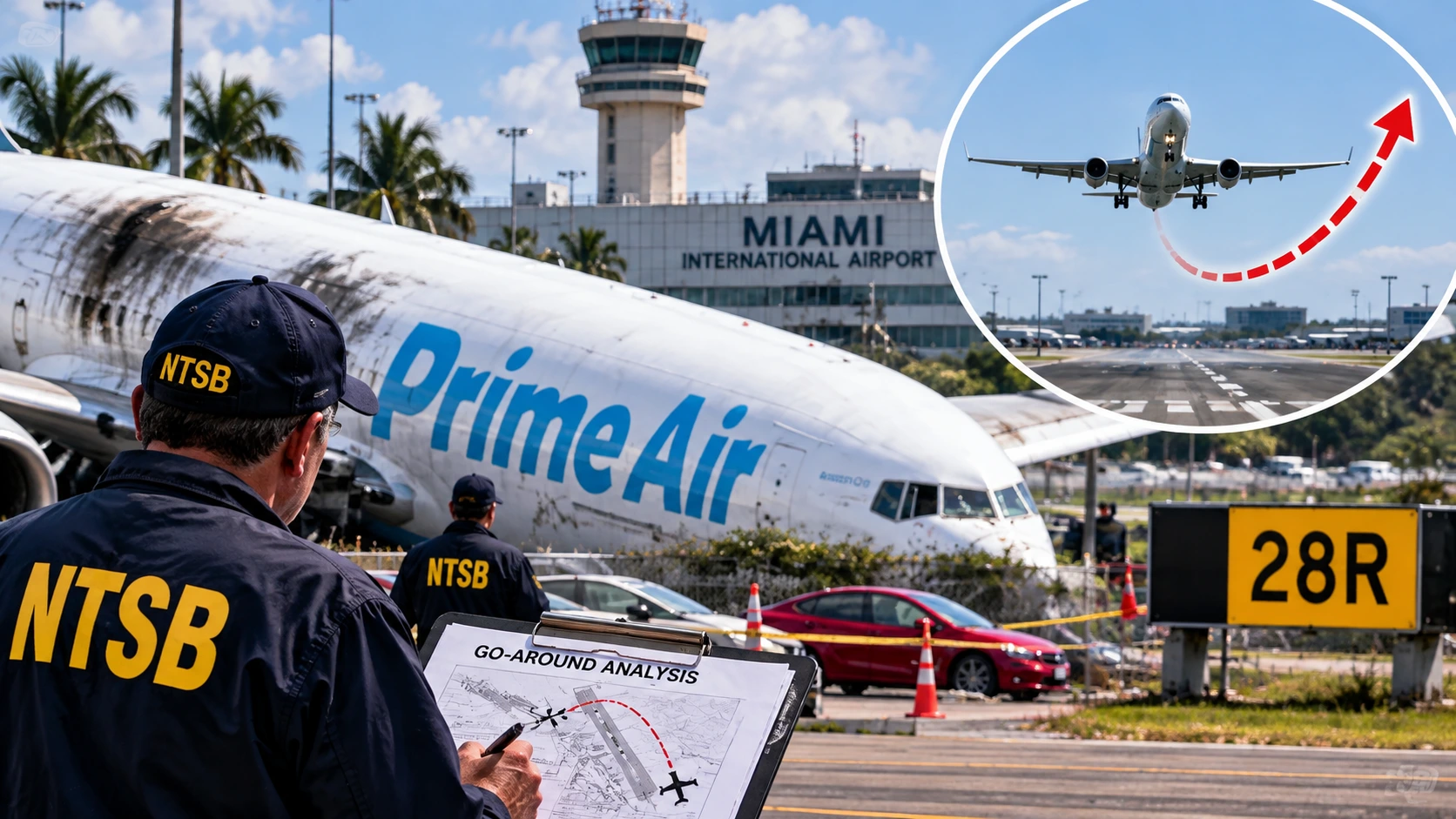
The National Transportation Safety Board has released the first detailed look at the final 30 seconds of the Amazon Air cargo flight that overran Runway 30 at Miami International Airport on September 6, 2026. Flight data shows the pilots briefly attempted a go-around after an unsteady touchdown before abandoning the maneuver and trying to stop the aircraft.


I have followed many runway-overrun investigations over the years. The difference between a successful go-around and a late decision often comes down to a few seconds and remaining runway length. Here is what the NTSB has established so far and why the sequence matters.
What Happened in the Miami Cargo Jet Accident
A Boeing 767-300 freighter operated by 21 Air as Flight 7598 for Amazon Air arrived from San Juan, Puerto Rico. During landing on Runway 30 the aircraft overran the runway, left airport property, struck two vehicles, and came to a stop. Five people in the vehicles were killed and five others were injured. Both pilots survived.
The official investigation page is maintained by the NTSB at ntsb.gov/investigations/Pages/DCA26MA352.aspx.
Key Flight Data Timeline Released by the NTSB
Investigator-in-charge Chihoon Shin presented the following sequence from the flight data recorder during a media briefing:
| Time Before End of Recording | Event |
|---|---|
| 30 seconds | Nose landing gear and right main landing gear touched down at 158 knots |
| 23 seconds | Wheel brakes applied |
| 19 seconds | Left main landing gear touched down at 134 knots |
| 15 seconds | Brakes released; throttles increased to values consistent with go-around thrust (approx. 120 knots) |
| 11 seconds | Throttles reduced to idle; brakes reapplied (117 knots) |
| 7 seconds | Aircraft accelerations changed in multiple directions (96 knots) |
| End of recording | Ground speed 65 knots |
There was no indication in the recorded data that the speed brakes or thrust reversers deployed.
Also read – Ranked: The Most Expensive Tourist Visas in the World
Why the Late Go-Around Decision Matters
A go-around is the standard procedure when a landing becomes unstable. In this case the data shows the aircraft first touched down unevenly—nose and right gear before the left gear. Brakes were applied, then released while power was increased, consistent with an attempt to climb away. Seconds later the crew reduced power and reapplied the brakes.
Aviation safety specialists note that a go-around decision made after the aircraft is already on the runway and at high speed consumes remaining runway length rapidly. Once that length is gone, stopping becomes far more difficult even with full braking.
What Investigators Are Examining Next
NTSB Chair Jennifer Homendy stated that investigators planned to interview both pilots and would release additional information from the cockpit voice recorder after those interviews. The agency is also conducting a performance study to determine whether the aircraft’s deceleration systems functioned as designed and whether other factors such as weather, runway condition, or aircraft systems contributed.
The investigation remains active. No probable cause has been determined.
Practical Lessons for Passengers and Aviation Watchers
Runway overruns are rare but serious. When they occur, the critical factors almost always include approach stability, decision timing, and the correct use of deceleration devices. Travelers cannot influence cockpit decisions, yet understanding these elements helps explain why pilots sometimes choose to go around even when the runway is in sight.
For those who follow aviation safety, the NTSB’s transparent release of early flight-data details is the most reliable way to track the facts as they become available. Check the official investigation page regularly rather than relying on secondary summaries.
Bottom Line on the Miami Runway Investigation
Flight data released by the NTSB shows the cargo jet touched down unsteadily, briefly increased thrust consistent with a go-around, then reduced power and continued braking before overrunning the runway. Speed brakes and thrust reversers did not deploy according to the recorded data. The full investigation continues, with pilot interviews and further analysis still underway. The authoritative source for updates remains the NTSB investigation page at ntsb.gov/investigations/Pages/DCA26MA352.aspx.