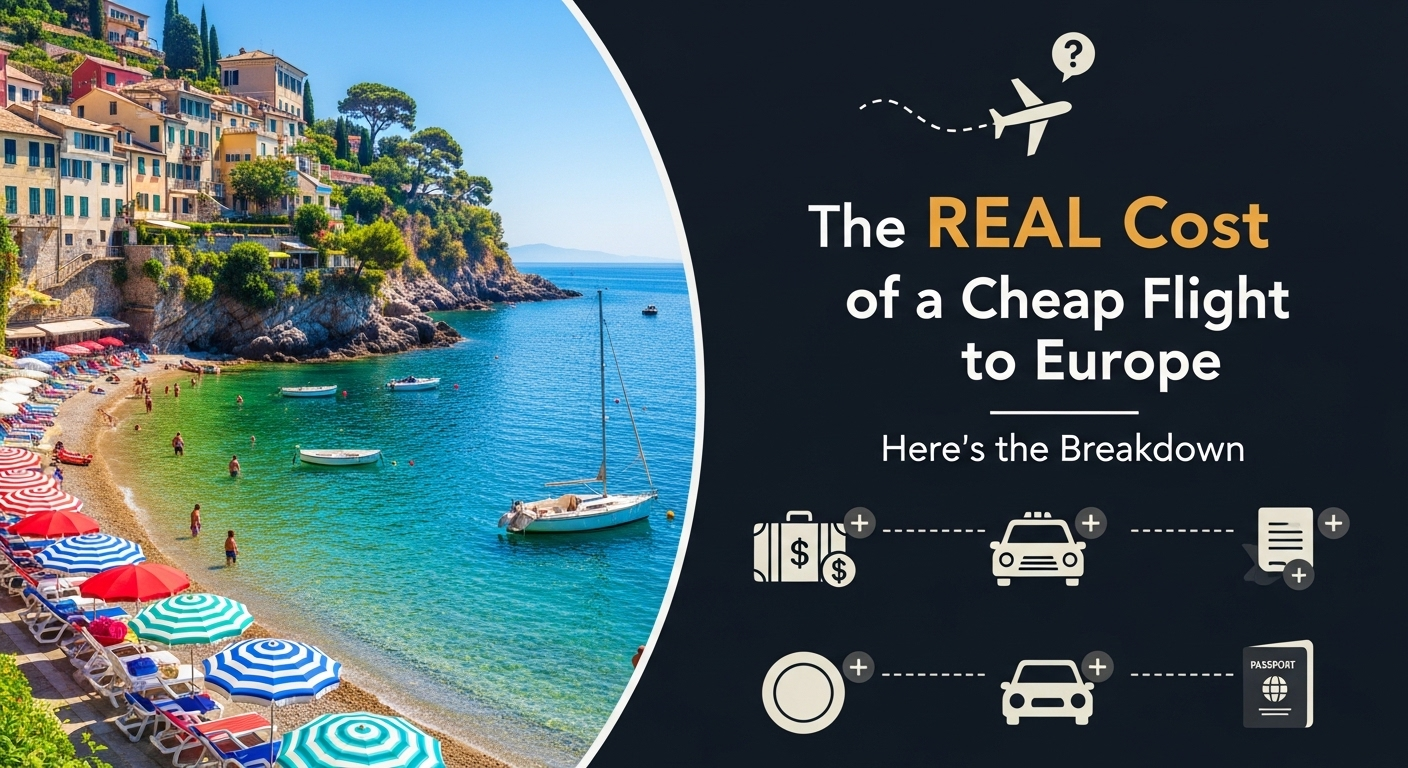
The real cost of a cheap flight to Europe in 2026 often ends up costing over $600. Budget airlines unbundle fares, meaning passengers pay extra for carry-on baggage ($50-$80), seat selection ($20-$40), in-flight meals, and transportation from remote budget airports. Additionally, new 2026 EU regulations like the ETIAS authorization fee and Sustainable Aviation Fuel (SAF) surcharges are pushing the final travel costs higher.
Are you seeing unbelievable $250 round-trip flights to Paris, Rome, or London popping up on your feed and wondering if it’s too good to be true? In 2026, the European travel market is booming, but the airline pricing model has drastically changed. What looks like a steal on Google Flights can quickly turn into a budget-busting nightmare if you aren’t prepared for the hidden fees.
If you are planning your European summer vacation, this blog is your ultimate guide. We are doing a complete breakdown of the real cost of cheap flights to Europe in 2026, exploring the upcoming travel trends, and helping you decide if budget airlines are actually worth your hard-earned money.

What is the Hidden Costs of a Cheap Flight to Europe?
When you book a basic economy or budget airline ticket (like Norse Atlantic, Ryanair, or easyJet), you are paying exclusively for a seat on the plane. Everything else is an “ancillary” fee. Here is exactly what you will end up paying for:
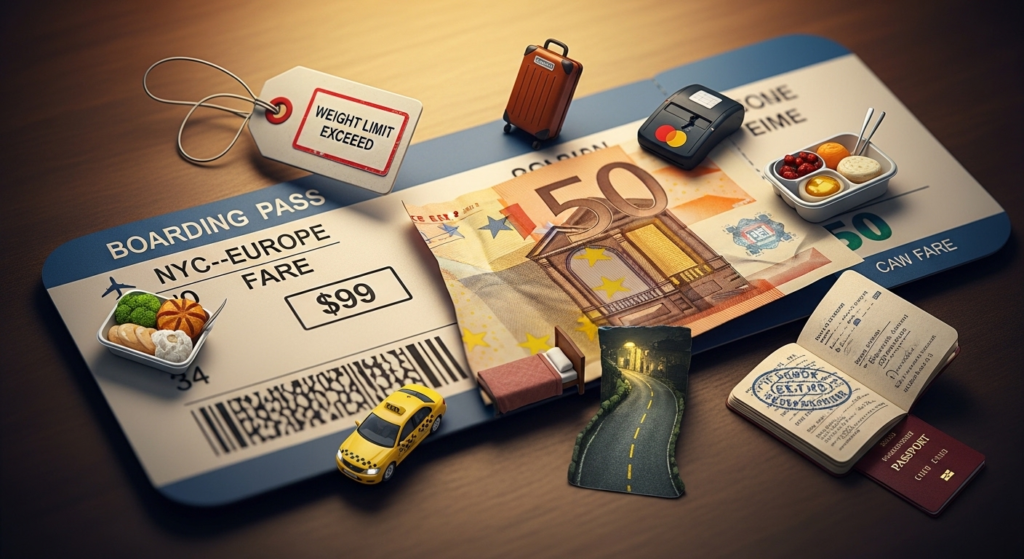
- Carry-On Luggage: Gone are the days of a free roller bag. In 2026, almost all budget carriers charge between $50 to $80 each way just to put a bag in the overhead bin.
- Checked Baggage: Need a 20kg suitcase? Expect to pay $70 to $100+ per flight leg if booked in advance, and double that at the airport counter.
- Seat Selection: Want to sit next to your partner or avoid the middle seat near the bathroom? That will cost you $15 to $45 per seat, per flight.
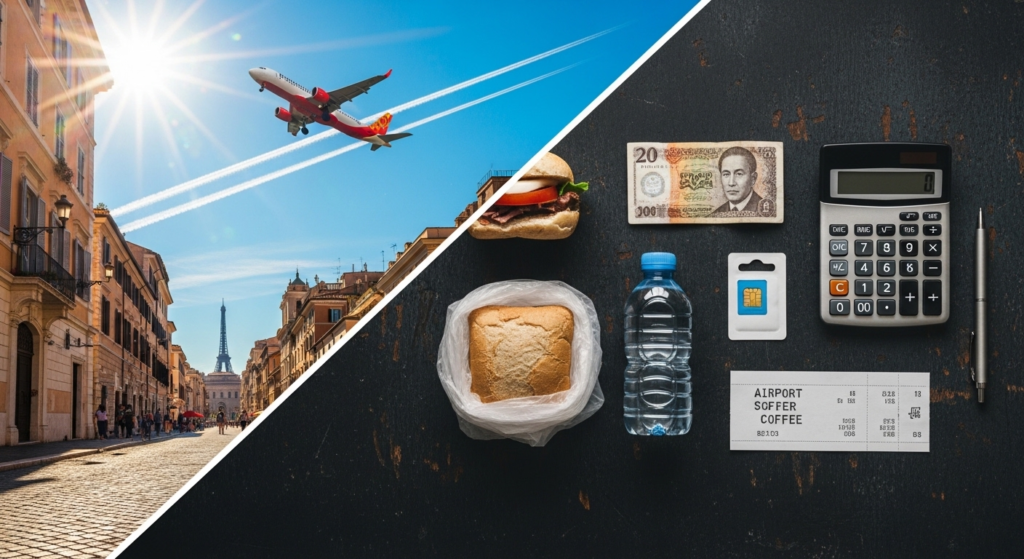
- Food and Water: Budget airlines flying transatlantic routes often charge for all food and beverages. A simple sandwich and a bottle of water can easily set you back $15 to $20.
- Remote Airport Transfers: Budget airlines rarely fly into major hubs like London Heathrow or Paris CDG. They fly into remote airports like London Stansted or Paris Beauvais. A bus or train from these distant airports to the city center can cost $30 to $50, plus 1-2 hours of your time.
Also read – Tried & Tested Cheapest Ways to Travel in Europe
Why Are Airlines Pricing This Way in 2026?
You might be asking, why do airlines make pricing so complicated instead of just showing one final price?
The answer comes down to algorithmic competition and unbundling. Airlines know that travelers sort flight searches by “Price: Lowest to Highest.” By unbundling the fare (stripping away bags, food, and seats), they guarantee their flight shows up at the very top of Google Flights or Skyscanner.
Furthermore, 2026 has brought strict European Union environmental mandates. Airlines are now required to blend more expensive Sustainable Aviation Fuel (SAF) into their planes. To offset these operational costs without raising the “advertised” base fare, airlines have heavily increased their backend fees.
Complete Breakdown: Budget Carrier vs. Full-Service Airline
Let’s do the real math for a round-trip transatlantic flight to Europe in 2026.
| Fee Category | Budget Airline (Base Fare) | Full-Service Airline (Economy) |
| Base Ticket Price | $250 | $650 |
| Carry-On Bag | $120 ($60 x 2) | $0 (Included) |
| Checked Bag (1) | $160 ($80 x 2) | $0 (Included on most) |
| Seat Selection | $60 ($30 x 2) | $0 (Included) |
| In-Flight Meals | $60 ($30 x 2) | $0 (Included) |
| City Transport | $60 (Remote Airport) | $20 (Main Hub) |
| TOTAL REAL COST | $710 | $670 |
Conclusion: As you can see, the $250 “cheap” flight actually ends up costing $40 more than the full-service airline once you add the basic necessities of international travel!
Also read – 9 Spectacular European Cities That Worth Your One Day
Upcoming Trends for Europe Travel in 2026
If you are traveling this year, you must factor in these upcoming 2026 travel trends to stay within your budget:
- The ETIAS Implementation: The European Travel Information and Authorisation System (ETIAS) is fully active in 2026. Visitors from visa-exempt countries (like the US, UK, and Canada) must pay a €7 fee and apply online before boarding their flight.
- AI-Driven Dynamic Pricing: Airlines are using advanced AI in 2026 to change baggage and seat fees in real-time based on demand. A bag fee might be $50 on Tuesday but jump to $80 on Friday. Tip: Always buy your baggage allowance at the exact moment you buy your ticket.
- Green Taxes & SAF Surcharges: Expect to see a new line item on your receipt called a “Green Tax” or “SAF Surcharge.” Several European nations have implemented these departure taxes to fund climate initiatives, adding $10 to $25 to your ticket out of Europe.
Frequently Asked Questions (FAQs)
Do I need to pay for carry-on luggage on flights to Europe in 2026?
Yes, most budget and even “Basic Economy” tickets on major airlines now charge between $50 to $80 for a standard carry-on bag. Only a small personal item (like a backpack that fits under the seat) is free.
What is the new ETIAS fee for Europe in 2026?
The ETIAS is a mandatory travel authorization for visa-exempt visitors entering the Schengen Area. It costs €7, is valid for three years, and must be approved before you board your flight.
Are budget airlines safe to fly across the Atlantic?
Absolutely. Budget airlines must adhere to the exact same strict international safety and maintenance regulations as premium airlines. You are sacrificing comfort and convenience, never safety.
Why are flights to Europe suddenly so cheap initially?
Airlines unbundle fares to rank first on flight search engines. The cheap base fare only covers your physical seat; the airline makes its actual profit by charging you later for bags, food, and seat selection.
How much does food cost on a budget transatlantic flight?
Expect to pay premium prices. A simple hot meal or sandwich combo with a drink usually costs between $15 and $25. It is highly recommended to bring your own snacks from the airport terminal.
What are “remote airports” in Europe?
Budget airlines save money on landing fees by flying into secondary airports (like Paris Beauvais instead of Charles de Gaulle, or Frankfurt Hahn). These can be 1 to 2 hours away from the actual city center.
How can I avoid hidden airline fees?
Read the fine print before booking. Travel only with a personal item, skip seat selection, bring an empty water bottle to fill up at the airport, and pack your own meals for the flight.
Is it cheaper to fly full-service in 2026?
Often, yes. Once you factor in a carry-on, a checked bag, and a meal, a standard Economy ticket on a full-service airline like Delta, Lufthansa, or British Airways is usually cheaper and much more comfortable.
What is the SAF surcharge on my airline ticket?
SAF stands for Sustainable Aviation Fuel. Because the EU mandates the use of this eco-friendly (but expensive) fuel in 2026, airlines pass this cost down to consumers as a surcharge of $10 to $25.