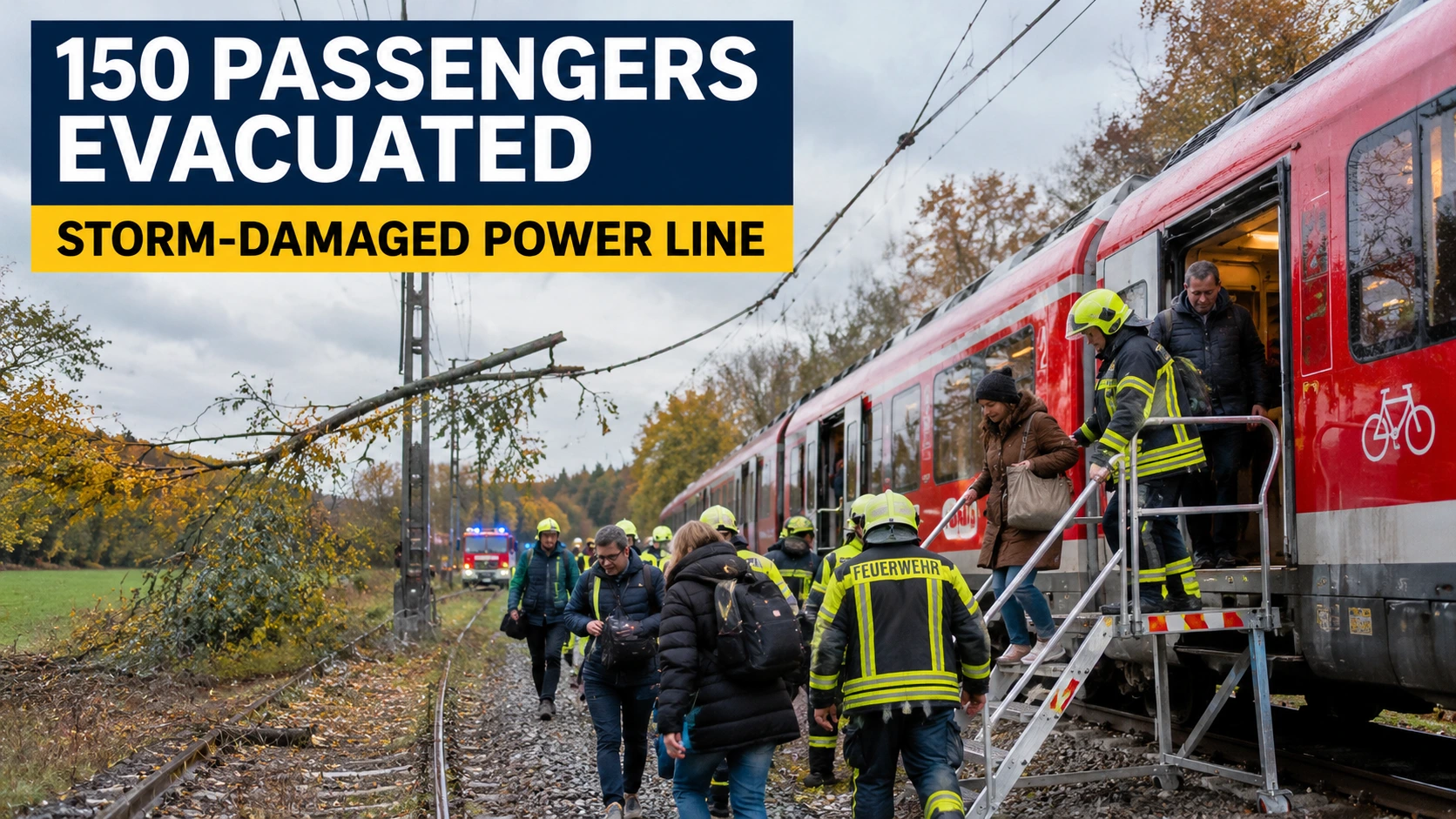
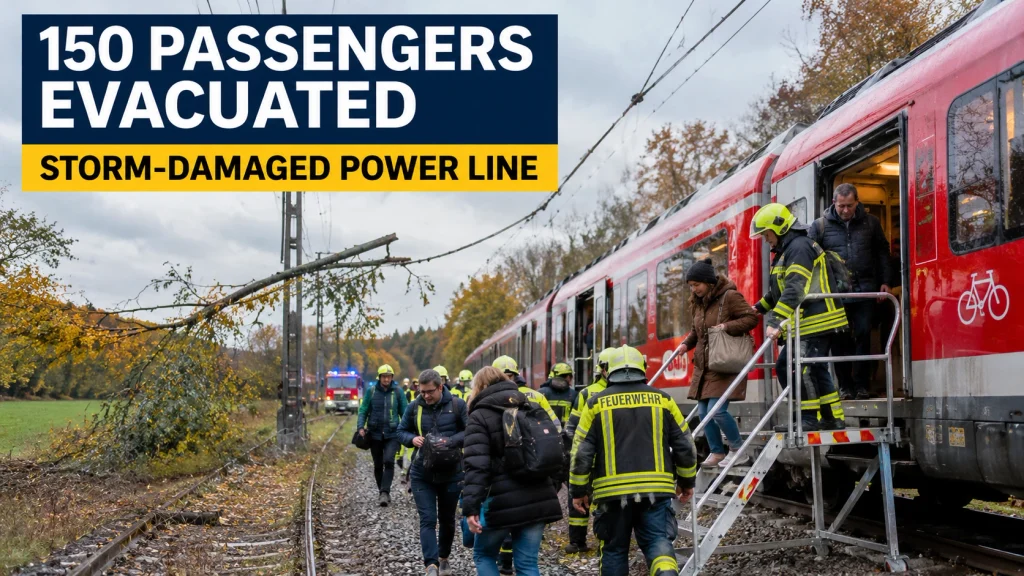
Heavy storm branches tore down a high-voltage overhead power line near Tutzing, Germany, trapping a regional train and forcing the emergency rescue of approximately 150 passengers. This severe weather incident temporarily shut down regional rail traffic in Upper Bavaria, highlighting the vulnerability of the local transit network to sudden autumn storms. If you are traveling through southern Germany this week, you must actively monitor your rail application, as repair crews are still clearing debris from the tracks and repairing the electrical grid.
How the Tutzing Train Rescue Actually Unfolded
The accident occurred when powerful wind gusts snapped large tree branches, which crashed directly onto the overhead catenary wires spanning the tracks. A regional train moving through the Tutzing corridor subsequently drove into the collapsed infrastructure, bringing the locomotive to a complete and sudden halt. Because the heavy metal wires draped across the train carriage could still carry live electricity, the 150 passengers were strictly trapped inside the cabins for their own physical safety.
First responders from local fire departments and the Federal Police of Germany (Bundespolizei) arrived rapidly to secure the scene. Rescue crews manually grounded the power lines to ensure the area was electrically dead before safely guiding every single passenger off the stranded train. Authorities confirmed that the evacuation proceeded calmly, and a fleet of replacement buses quickly transported the stranded travelers to their final destinations.

Why You Must Never Exit a Train Snagged in Overhead Wires
When a train hits a downed overhead line, the absolute greatest threat to human life is not the initial collision, but the risk of severe electrocution. The German rail network utilizes an overhead power system that pulses with 15,000 volts of alternating current. If a live wire touches the metal exterior of the train, stepping out of the door and touching the ground will instantly complete the electrical circuit through your body.
The German Federation of Fire Brigade Associations (DFV) explicitly commands passengers to remain seated and completely avoid touching metal doors or window frames during these emergencies. You must wait until uniformed emergency personnel officially announce that the overhead system is fully disconnected and grounded. Attempting to force the doors open and walk down the tracks independently frequently results in fatal electric shocks.
Impact on Deutsche Bahn Regional Routes in Bavaria
The physical destruction of the overhead catenary system requires highly specialized engineering teams to repair, meaning the local tracks remain closed long after the passengers leave the scene. Rail commuters traveling south of Munich toward Starnberg and Garmisch-Partenkirchen will experience significant delays and mandatory bus transfers.
The Deutsche Bahn (DB) official travel portal directs passengers to utilize Rail Replacement Services (Schienenersatzverkehr) during these hard closures. Because replacement buses operate on slower local roads and hold fewer passengers than a train, you must factor in an additional 45 to 60 minutes of travel time for your journey through the Tutzing sector.
Finding these emergency buses at smaller regional stations often confuses foreign tourists. You must completely exit the train station and locate the bright purple “SEV” street signs posted in the adjacent parking lots, as buses never pick up passengers directly from the rail platforms.
| Rail Route Segment | Current Operational Status | Travel Fix |
| Munich to Tutzing | Heavy Delays | Take the S-Bahn S6 line if operational, or early buses. |
| Tutzing Local Tracks | Closed for Repairs | Follow purple “SEV” signs for street-level bus boarding. |
| Long-Distance Connections | Rerouted | Check the DB Navigator app for live alternate paths. |
3 Immediate Safety Checks for Rail Travel During Autumn Storms
Autumn and winter storms routinely disrupt the German rail network, pulling trees onto the tracks and freezing electrical switches. Preparing for these sudden delays ensures you do not end up stranded on a dark, unheated train for several hours. The German Weather Service (DWD) frequently issues severe wind warnings, which prompt railway dispatchers to drastically reduce train speeds across forested regions.
Execute these strict preparations before scanning your train ticket during a storm watch:
- Download the DB Navigator App: Never rely on physical station departure boards. The official smartphone application provides real-time push notifications the exact second a tree blocks your specific route.
- Pack thermal layers and water: When overhead lines break, the train completely loses heating and lighting. Keep a heavy winter jacket, a portable phone charger, and drinking water in your carry-on bag to stay warm and connected during a long rescue wait.
- Claim your delay compensation: The Federal Railway Authority (EBA) enforces strict passenger rights, even during severe weather events. If the storm delays your arrival by more than 60 minutes, you are legally entitled to a 25 percent refund on your ticket, escalating to 50 percent for delays exceeding two hours. You can file this claim directly through your digital DB account.