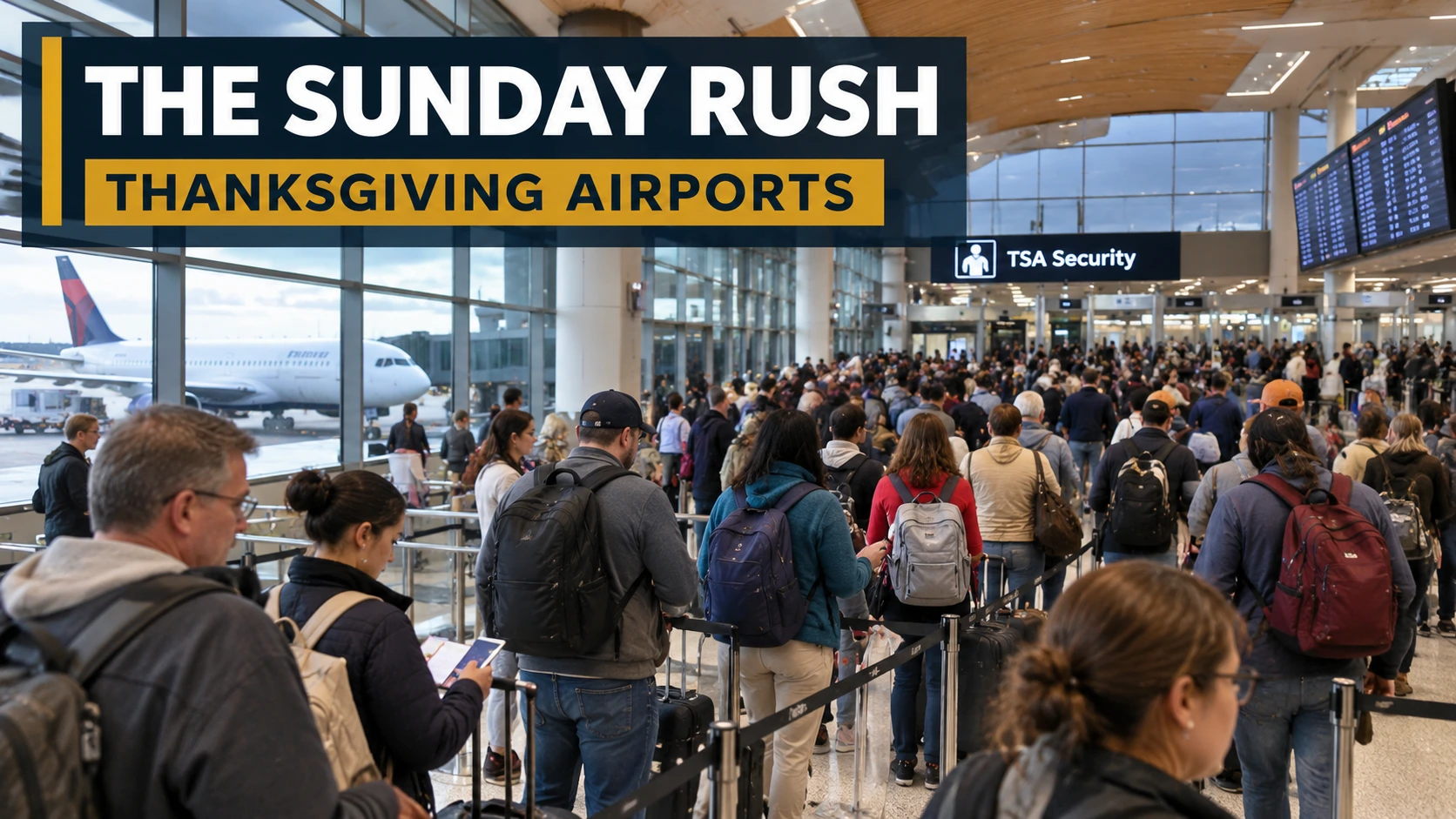
Anyone holding an airline ticket for Sunday, November 29, 2026, must prepare for severe terminal gridlock. The Sunday immediately following Thanksgiving historically triggers the highest airport foot traffic of the entire year, and federal security officials expect this specific date to shatter the existing all-time passenger record. Compounding this massive holiday volume is the lingering instability from the unprecedented mid-November nationwide aviation ground stop, leaving the commercial flight network highly vulnerable to cascading delays.
Why November 29 Will Paralyze Major Aviation Hubs
The Transportation Security Administration (TSA) screened an all-time record of 3.13 million passengers on the Sunday after Thanksgiving last year. Aviation analysts predict the upcoming November 29 rush will easily surpass that milestone, creating physical bottlenecks that modern airport infrastructure simply cannot absorb.
While the American Automobile Association (AAA) notes a microscopic dip in overall holiday travel due to inflation, the raw volume of Americans flying remains staggering, with nearly 6 million people passing through airport security checkpoints this week. Because leisure travelers and corporate commuters both attempt to fly home on the exact same Sunday afternoon, TSA checkpoint wait times at major hubs like Atlanta (ATL), Chicago (ORD), and Dallas (DFW) will stretch well beyond two hours.

The Safest and Most Dangerous Days to Fly This Week
Booking a flight on the wrong day guarantees you will stand in massive lines and face a high probability of missing your connection. If your schedule allows any flexibility, changing your departure date by just 24 hours cuts your exposure to terminal crowds in half.
The quietest time to fly is actually on Thanksgiving Day itself. Historical TSA data confirms that holiday morning flights operate at roughly 50 percent of normal capacity, meaning you encounter zero lines at baggage drop and clear security in minutes.
| Flight Date | Airport Crowd Level | Historical TSA Checkpoint Volume |
| Wednesday, Nov 25 | High Danger | 2.75 million (Heavy pre-holiday rush) |
| Thursday, Nov 26 | Absolute Safest | 1.55 million (Empty terminals) |
| Friday, Nov 27 | Very Safe | 2.39 million (Below average traffic) |
| Sunday, Nov 29 | Extreme Danger | 3.13+ million (Busiest day in history) |
| Monday, Nov 30 | High Danger | 2.89 million (Corporate commuter overlap) |
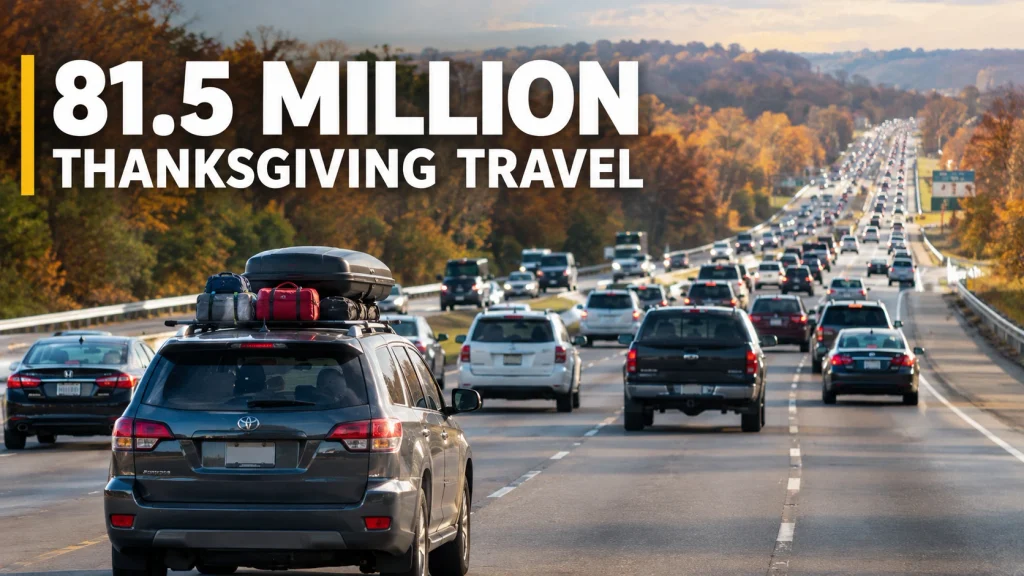
Also read – AAA Predicts 81.5 Million Americans Will Travel for Thanksgiving …
How the Recent FAA Ground Stop Impacts Holiday Resiliency
Airlines are entering the holiday stretch with a severely compromised operational buffer. Just two weeks prior to Thanksgiving, the Federal Aviation Administration (FAA) executed a massive nationwide ground stop due to failing legacy telecom equipment. This unprecedented four-hour halt forced the cancellation of over 9,000 flights and displaced hundreds of thousands of passengers.
Because aircraft operate on continuous, tightly knit loops, a single disruption at a major hub takes days to physically reset. If an early winter snowstorm hits a northern hub on the Wednesday before Thanksgiving, airlines no longer have the spare aircraft or rested reserve crews required to quickly recover the schedule.
3 Aggressive Fixes to Protect Your Sunday Flight
Surviving the busiest travel day in aviation history requires completely abandoning standard airport advice. Arriving exactly two hours early for a Sunday afternoon flight guarantees you will miss boarding.
Execute these strict tactical adjustments to protect your itinerary:
- Track the inbound metal: Do not rely on the airport departure screens. Download the FlightAware application and track the exact physical plane assigned to your route. If your aircraft is currently stuck in Denver due to a mechanical issue, your New York departure will definitely be delayed, allowing you to rebook on a different carrier before the rest of your terminal realizes what happened.
- Book the 6:00 AM departure: Thunderstorms and cascading crew timeouts happen in the late afternoon. The very first flight out in the morning boasts a 90 percent on-time departure rate because the aircraft parked at your gate overnight.
- Never check a bag: When airlines cancel flights during peak holiday volume, they cannot easily locate and return checked luggage. Traveling exclusively with a carry-on backpack allows you to instantly sprint to a different terminal and jump on a competitor’s flight if your original carrier grounds your route.
Knowing Your Legal Rights for Canceled Flights
When the airport network completely collapses, airline gate agents often hand out generic food vouchers and instruct passengers to wait for the next available seat. You are legally entitled to far more compensation.
The U.S. Department of Transportation (DOT) enforces strict federal rules regarding significant delays and cancellations. If an airline cancels your Sunday flight for any reason—including uncontrollable winter weather—and you choose not to travel, federal law mandates that the carrier must refund the entire purchase price of your ticket directly back to your credit card. You never have to accept an expiring airline travel credit when the carrier fails to operate the scheduled flight.