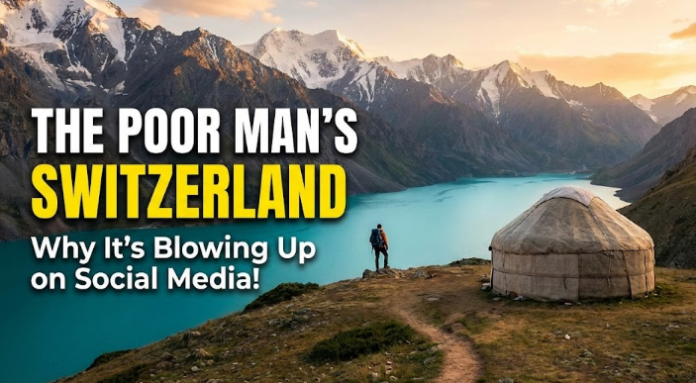
I remember the exact moment I realized I had been overpaying for mountains my entire life.
I was standing on a ridge in the Tian Shan range, looking down at a glacial lake so turquoise it looked like Gatorade poured into a rock bowl. To my left, a jagged snow-capped peak pierced the clouds – a dead ringer for the Matterhorn. The air smelled of wild sage and burning juniper wood.
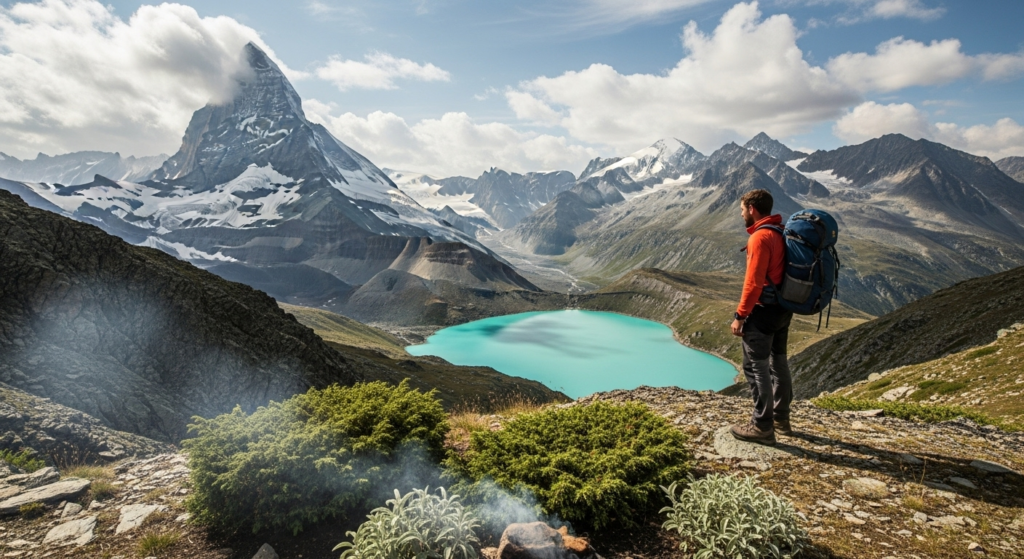
But instead of a $400-a-night Swiss chalet, I was staying in a hand-felted yurt for $15, including dinner. And instead of a crowded cable car, my only company was a herd of wild horses and a shepherd named Azamat who had just handed me a bowl of fermented mare’s milk.
Welcome to Kyrgyzstan. They call it “The Poor Man’s Switzerland,” but after spending three weeks traversing its wild valleys, I think that nickname is an insult. It’s not the budget version of Europe; it’s the raw, unpolished, and untamed version of what Europe used to be.
Here is why this Central Asian gem is blowing up your social media feeds right now – and why you need to go before the secret is fully out.
The “Swiss” Views Without the Swiss Price Tag
Let’s get the money talk out of the way, because honestly, the value proposition here is insane.
In Interlaken, a coffee costs you a mortgage payment. In Bishkek, the capital of Kyrgyzstan, you can feast like a khan for the price of a Starbucks latte. During my trip, I tracked my spending to see if the “budget” hype was real. It is.
The “Mountain Math” Breakdown:
| Expense | Switzerland (Avg) | Kyrgyzstan (Avg) |
| Dorm Bed / Hostel | $60 – $90 | $8 – $12 |
| Private Room / Yurt | $200+ | $15 – $25 (usually includes breakfast) |
| Coffee / Tea | $6 – $8 | $0.50 – $1.50 |
| Local Meal (Dinner) | $30 – $50 | $3 – $5 |
| Train/Bus Ticket | $50+ | $2 – $4 (Marshrutka) |
The Reality Check: While your wallet will be happy, your lower back might not be. In Switzerland, you glide up mountains on silent, engineered trains. In Kyrgyzstan, you bounce up a gravel track in a Soviet-era UAZ van that smells like gasoline and glory. It’s cheaper, yes – but you earn every dollar you save.
The Viral Spots You’ve Seen on Instagram
You’ve likely seen the drone shots. But let me tell you what the photos don’t show, because getting to these spots is an adventure in itself.
1. Lake Kel-Suu
This is the current darling of travel TikTok. It’s a high-altitude lake near the Chinese border that disappears sometimes. Literally. It drains into underground caves, so you could arrive and find an empty mud bowl.
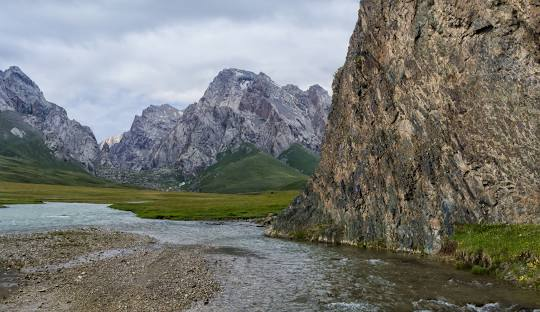
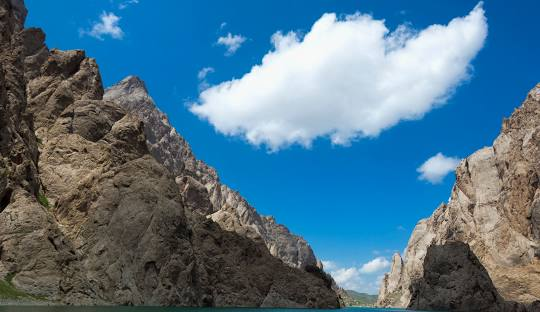
When I went, the water was there – a striking, milky turquoise snaking through vertical cliffs. We had to take a small motorboat to see the caves, and the silence was absolute.
- Pro Tip: You need a border permit to visit this zone. Apply for it two weeks in advance through a local tour agency in Naryn. Do not just show up; the military checkpoints are real, and they will turn you around.
2. Ala-Kul
If you want the view that beats the Alps, you have to hike the Ala-Kul pass. It’s 3,900 meters up. The ascent is brutal – scree slopes that slide one step back for every two steps forward.
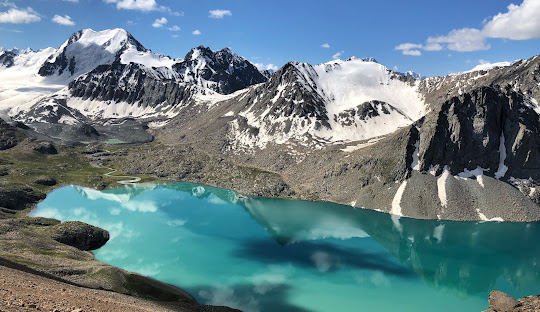
But cresting that pass? I cried. Partly from exhaustion, partly because the view of the sapphire lake surrounded by 5,000-meter peaks is spiritual.
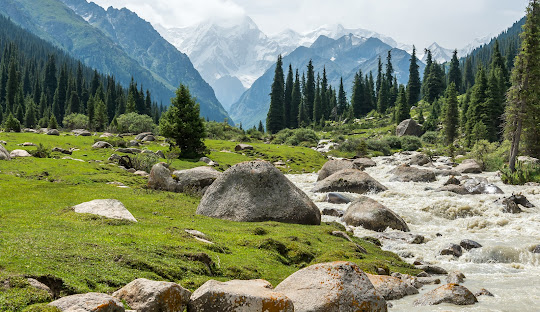
- My Advice: Don’t try to do this in one day unless you are an ultra-runner. Camp at the base or stay in the Sirota hut.
Also read – 9 Spectacular European Cities That Worth Your One Day
It’s Not Just Scenery: The Nomadic Culture Shock
Switzerland gives you chocolate and fondue. Kyrgyzstan gives you the soul of the Silk Road.
The magic of this country isn’t just the rocks; it’s the Jailoo – the high summer pastures. From June to September, families pack up their city lives and move into yurts in the mountains to graze their livestock.
One evening near Song-Kul Lake, I was invited into a family’s yurt. There was no electricity, just the glow of a dung-burning stove. The grandmother, a matriarch with gold teeth and a grip like iron, was rolling out dough for Beshbarmak (translates to “Five Fingers” because you eat it with your hands).
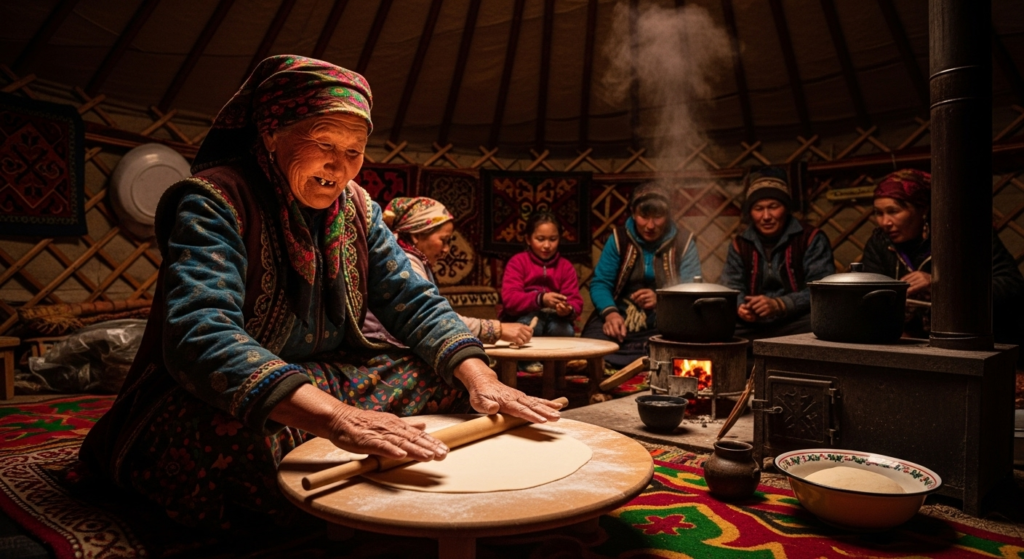
We sat on the floor, tearing boiled meat and noodles, drinking tea from bowls, communicating through smiles and awkward gestures. You don’t get this intimacy in a hotel. You are not a customer here; you are a guest.
Warning: You will be offered Kymyz (fermented mare’s milk). It tastes like smoky, sour vinegar. Drink a small sip to be polite. Your stomach will thank me for the restraint later.
Is It Actually Safe? (Real Talk)
I get this question constantly. “Is it safe? It ends in ‘Stan’!”
Let’s dismantle that prejudice. “Stan” just means “Land of.” Kyrgyzstan is the Land of the Kyrgyz.
I felt safer walking alone in Bishkek at night than I do in parts of London or San Francisco. The people are incredibly hospitable. However, there are real risks, just not the ones you think:
- The Roads: This is the biggest danger. Drivers are aggressive, and mountain roads are often unpaved drop-offs. Always wear a seatbelt, even if the driver laughs at you.
- Altitude Sickness: You go from 800m to 3,000m very quickly. Drink water until you are floating.
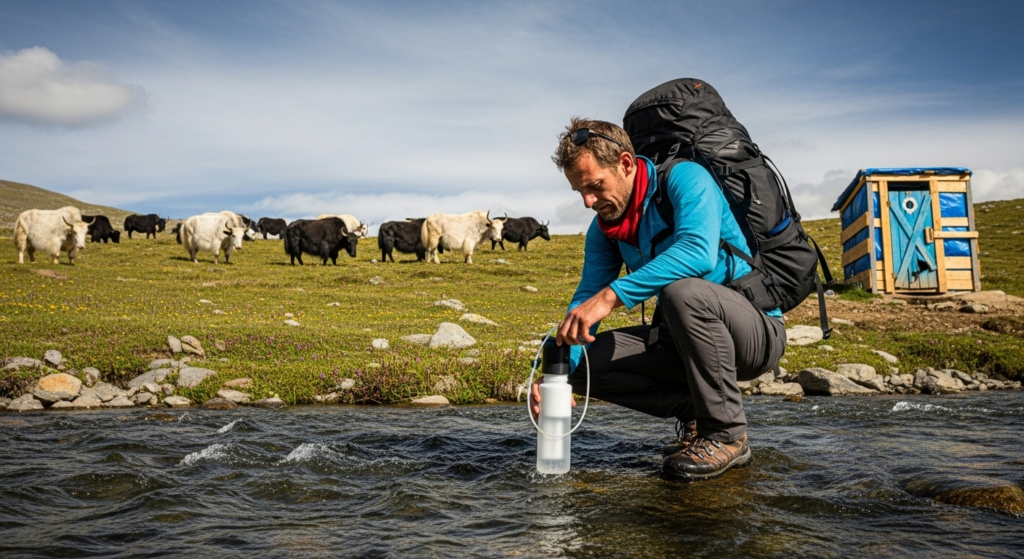
- Food Safety: The water in the mountains looks pristine, but livestock graze everywhere. Filter or boil everything, or you will spend your trip intimately acquainted with a hole-in-the-ground toilet.
How to Travel Kyrgyzstan Like a Pro
If you’re sold on the trip, here is how to actually do it without losing your mind.
- Download 2GIS: Google Maps is useless here. 2GIS is the local map app that knows every bus route and dirt trail.
- Cash is King: Credit cards work in Bishkek cafes. Outside the city? You need crisp Kyrgyz Som. ATMs in small towns are often broken.
- The Marshrutka: These are the shared minibusses. They leave when they are full, not when the schedule says. Personal space does not exist inside them. Embrace the chaos.
- The Season Matters: Go between June and September. If you go in October, the yurts are packed away, and the mountain passes are snowed in.
Why You Need to Go Now
Kyrgyzstan is at a tipping point. The visa policy is generous (mostly visa-free for 60+ countries), the influencers are arriving, and the “glamping” yurts with Wi-Fi are starting to pop up.
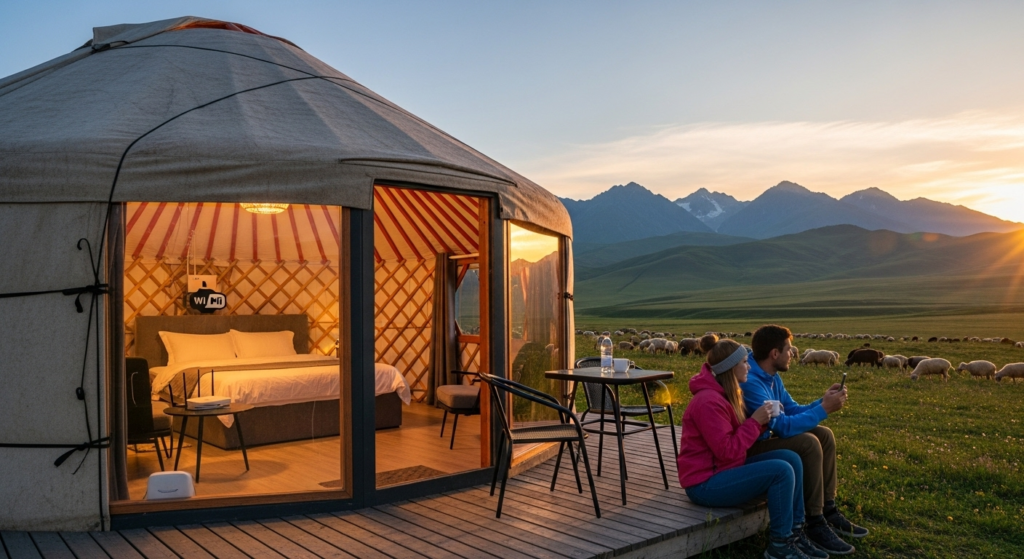
Right now, it still feels like an adventure. It still feels wild. You can still find a valley where you are the only tourist for miles.
It’s not the Poor Man’s Switzerland. It’s the Adventurous Traveler’s Paradise. And it won’t stay this quiet for long.
Practical Takeaway: If you plan to visit Lake Kel-Suu, you must apply for a border zone permit at least 10–14 days in advance. You can email local agencies like CBT Naryn or Tunduk Travel before you arrive to have the paper permit waiting for you. Without this piece of paper, the military checkpoint will turn you back after a 6-hour drive. Don’t risk it!
Has the “60-day visa-free” rule changed recently?
Yes, and this is the most critical update for 2026 that most blogs are missing. While many Western passports (USA, UK, EU) still get visa-free entry, the government recently tightened the “visa run” loop. The new rule for many nationalities is strictly 30 days within a 60-day period (effective late 2025). If you plan to stay longer than a month, you can no longer just cross the border to Kazakhstan and come back the same day to reset the clock. You must apply for an e-visa or extension in advance. Check the latest Foreign Ministry rules before you book a 6-week trip.
Is it true I need “perfect” dollar bills to exchange money?
This is not a myth; it is a strict banking rule. Kyrgyz exchange bureaus are incredibly picky about US Dollars/Euros. If your bill has a tiny tear, a stamp, a pen mark, or is an older series (pre-2009 for USD), they will refuse it or give you a terrible rate. Bring crisp, blue-strip $100 bills that look like they just came off the printing press. Also, ATMs in small towns are often broken or empty, so carry enough cash for your entire mountain loop.
Which map app actually works in Kyrgyzstan?
You must download 2GIS before you arrive. It works offline and knows every marshrutka route, dirt path, and hidden entrance in Bishkek. For hiking, Maps.me or Gaia GPS are essential. If you rely on Google Maps, you will get lost.
How do I visit the famous Kel-Suu Lake without getting turned back?
Kel-Suu is in a “border zone” near China, and you cannot just drive there. You need a specific military border permit that takes 10 to 14 working days to process. Most tourists show up in Naryn hoping to get one the next day and are rejected. You must email a local agency (like CBT or a tour operator) two weeks before your trip to file the paperwork for you.
Is the fermented horse milk dangerous to drink?
It is not dangerous, but it is a laxative for the uninitiated. Kymyz is slightly alcoholic and full of live bacteria that your stomach has likely never met. Locals drink it by the liter, but if you drink a full bowl on your first day, you will likely spend the night in the outhouse. Take one polite sip to show respect, then stop.
How do I visit the famous Kel-Suu Lake without getting turned back?
Kel-Suu is in a “border zone” near China, and you cannot just drive there. You need a specific military border permit that takes 10 to 14 working days to process. Most tourists show up in Naryn hoping to get one the next day and are rejected. You must email a local agency (like CBT or a tour operator) two weeks before your trip to file the paperwork for you.

