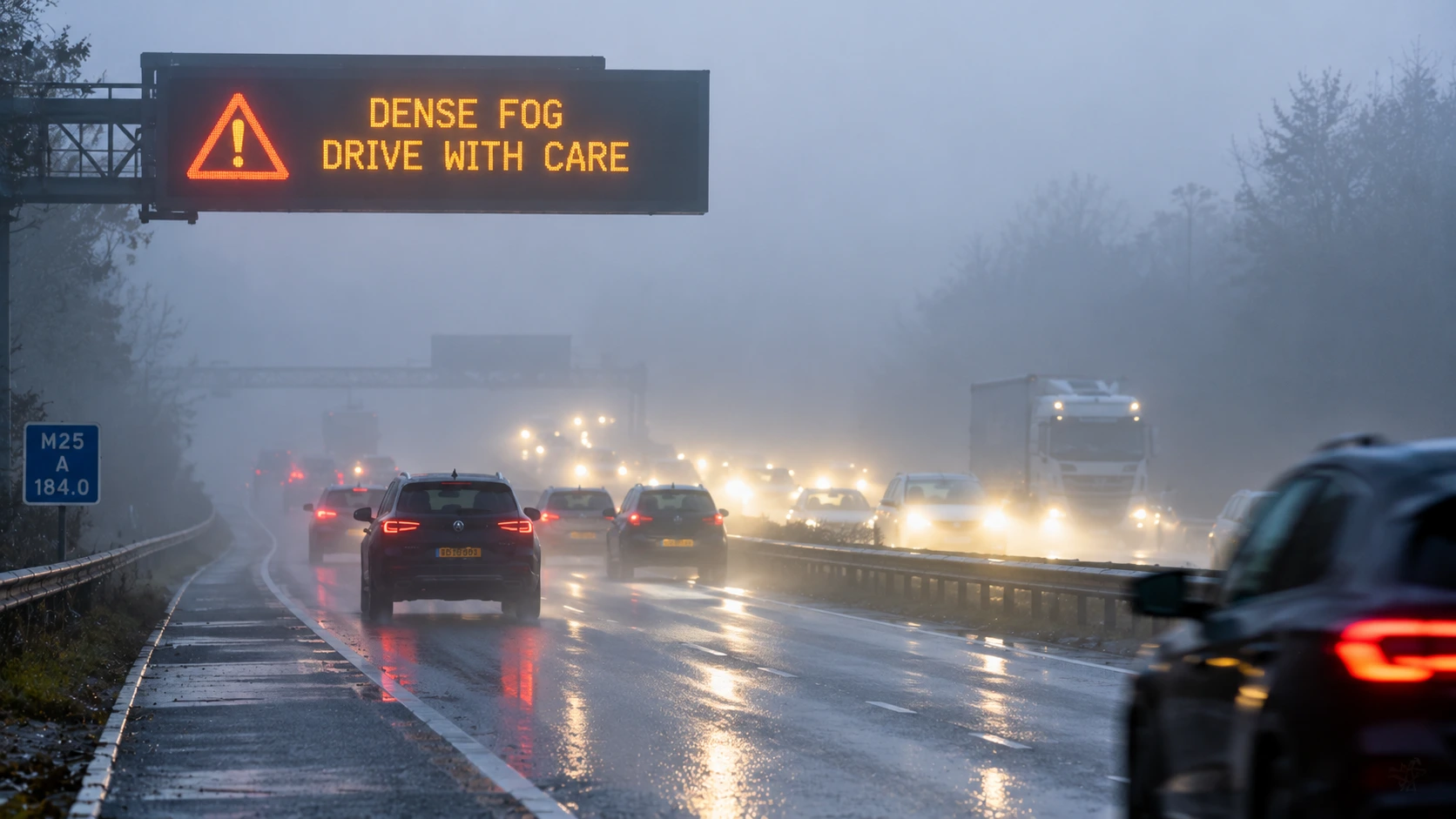
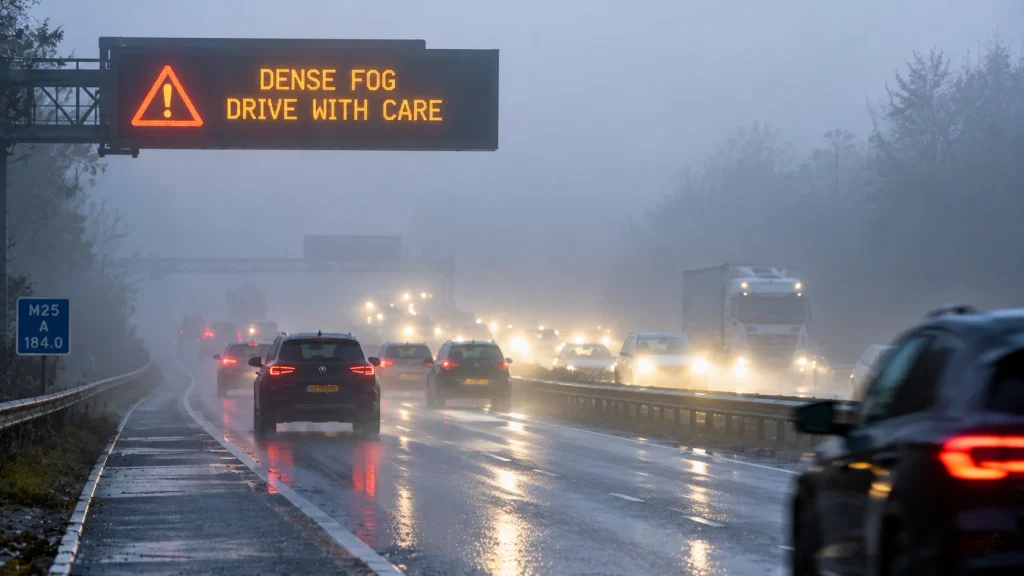
Dense fog is forecast for Thursday morning, October 29, and it will be thickest across central and southern England. The Met Office says it could cause problems on the roads and may be slow to clear in places. This guide covers where the fog will hit, how long it will last and the exact rules for lights, speed and distance.
Thick Fog Forecast: Where, When and How Bad?
The worst fog is expected across central and southern England in the early hours of Thursday. Met Office forecaster Alex Burkill said mist and fog could be locally dense first thing, with a risk of problems on the road.
| Detail | What the forecast says |
|---|---|
| Worst-hit areas | Central and southern England |
| Worst time | Early Thursday morning, October 29 |
| Clearing | Slow in places, then mostly dry with cloud and sunny spells |
| Friday and Saturday | Rain in northern and western areas, otherwise dry with some night-time fog |
| Temperatures | Around average for late October |
The reports describe a forecast warning, not a confirmed yellow weather warning. Check the Met Office warnings page before you leave, because warnings can be issued at short notice.

Also read – Forget the Cotswolds: 7 Secret UK Villages With Zero Traffic
Why Is Fog Coming After Storms Austen and Boelo?
High pressure is replacing the storm systems, and calm, damp air near the ground makes fog. Forecaster Craig Snell described a “big flip” from low to high pressure over 48 hours. Rain-soaked ground, light winds and clear, chilly nights are the standard recipe for fog.
Fog rarely lies evenly. It usually sits thickest in valleys, near rivers and over low fields, so a clear stretch can turn into a white wall within a few hundred metres.
How Should Drivers Behave in Thick Fog? 7 Rules
Slow down, use dipped headlights and leave a much bigger gap. The Met Office forecaster’s own advice is to avoid travel if possible. If the journey is essential:
- Drive slowly and brake early and gently.
- Use dipped headlights, never full beam. Full beam bounces off the fog and creates a white wall.
- Don’t follow the tail lights ahead. They give a false sense of safety and encourage tailgating.
- Leave extra space, well beyond the usual gap.
- Open the window at junctions and listen for traffic you can’t see.
- Don’t speed up the moment visibility improves, because fog often returns a few hundred metres later.
- Don’t stop on the carriageway unless you have to. Pull into a safe place instead.
When Are You Allowed to Use Fog Lights in the UK?
Use fog lights only when visibility falls below about 100 metres, and switch them off as soon as it improves. That is Highway Code rule 226. It says you must use headlights in seriously reduced visibility, generally when you can’t see more than 100 metres (328 feet).
A hundred metres is roughly a football pitch. On motorways, the roadside marker posts are 100 metres apart. If you can’t see the next post, fog lights are allowed.
| Situation | Dipped headlights | Fog lights |
|---|---|---|
| Visibility over 100m | Yes | Off |
| Visibility under 100m | Yes | Allowed |
| Fog has cleared | Yes | Switch off now |
| Rain or drizzle, clear view | Yes | Off |
Leaving fog lights on in clear conditions can bring a fine, reported at £50. They also dazzle other drivers and can hide your brake lights. There is a second reason to get this right: reports say not using your lights properly in fog could affect an insurance claim after a crash.
What to Check Tonight Before a Foggy Morning Drive
Ten minutes tonight saves a stressful start on Thursday. Storms Austen and Boelo have left wet roads, so do these:
- Clean the windscreen inside and out. Smeared glass scatters light and makes fog look worse.
- Check headlights and rear lights all work.
- Find your fog light switch now, not in the middle of a bend. Rear fog lights usually show an amber dashboard symbol.
- Top up washer fluid.
- Check live roads on National Highways travel updates for major routes.
- Allow 20 to 30 extra minutes, especially for school runs and early commutes.
Common Fog Myths: What Drivers Get Wrong
Most fog mistakes come from habits that feel safe but aren’t.
| Myth | Fact |
|---|---|
| Full beam helps you see further | It reflects off the fog and reduces visibility |
| Following tail lights keeps you on track | It shortens your gap and raises crash risk |
| Fog lights are for any bad weather | They are for visibility under about 100m only |
| Once it brightens, speed up | Fog often returns just up the road |
What Else Could Fog Affect Besides Roads?
Dense fog can also slow buses and trains and cause flight delays. If you rely on public transport on Thursday morning, check your operator’s live updates before you leave home. Any delay is likely to ease once the fog lifts and the day turns mostly dry.