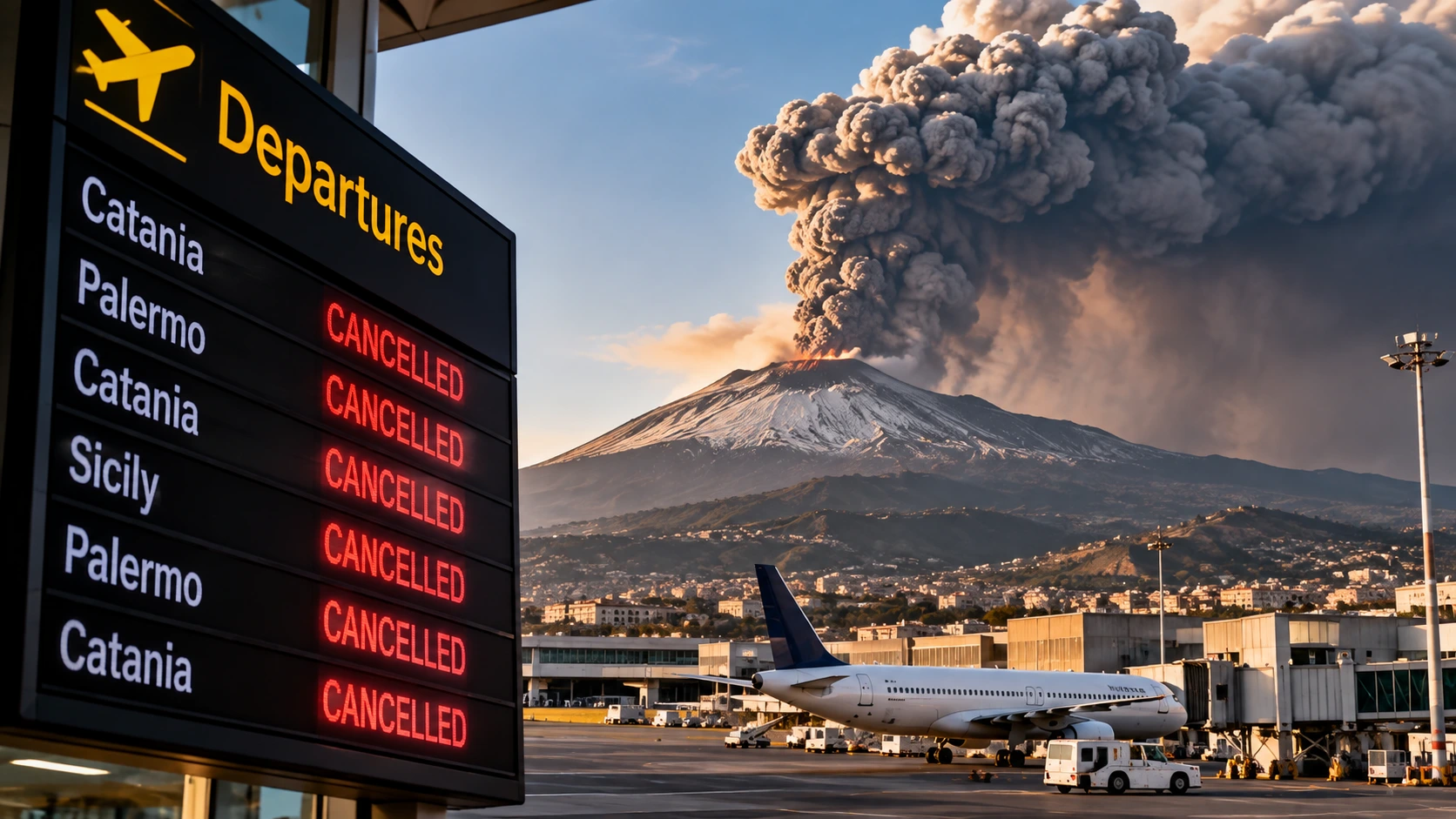
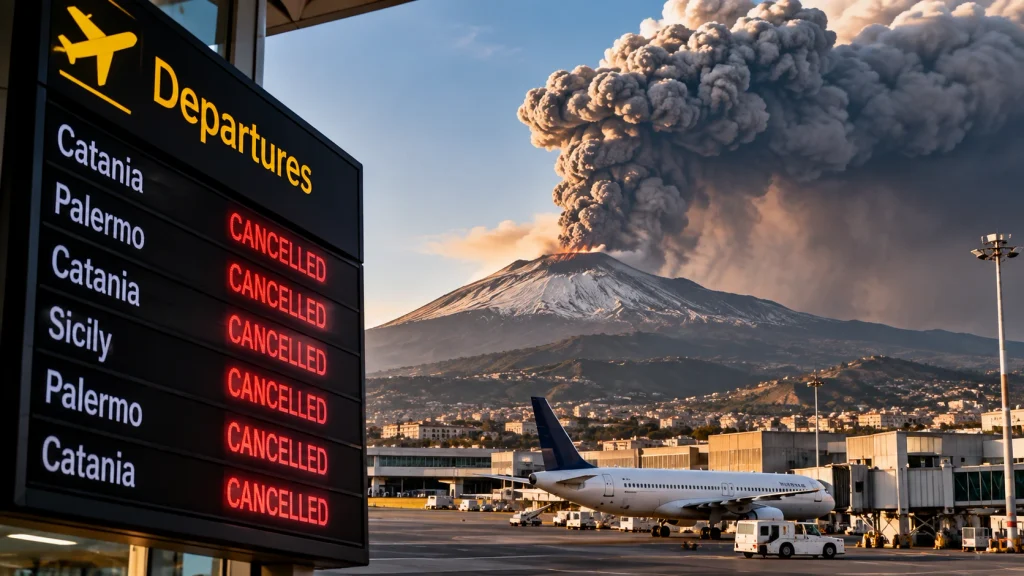
Catania Airport in Sicily has grounded all commercial flights for the third consecutive day after Mount Etna erupted, sending a massive 4-kilometer ash cloud into the sky. The airspace closure extends, leaving thousands of international tourists stranded. Officials issued a red aviation warning—the highest alert level possible—as the ash plume drifted steadily across two major Mediterranean airspace sectors.

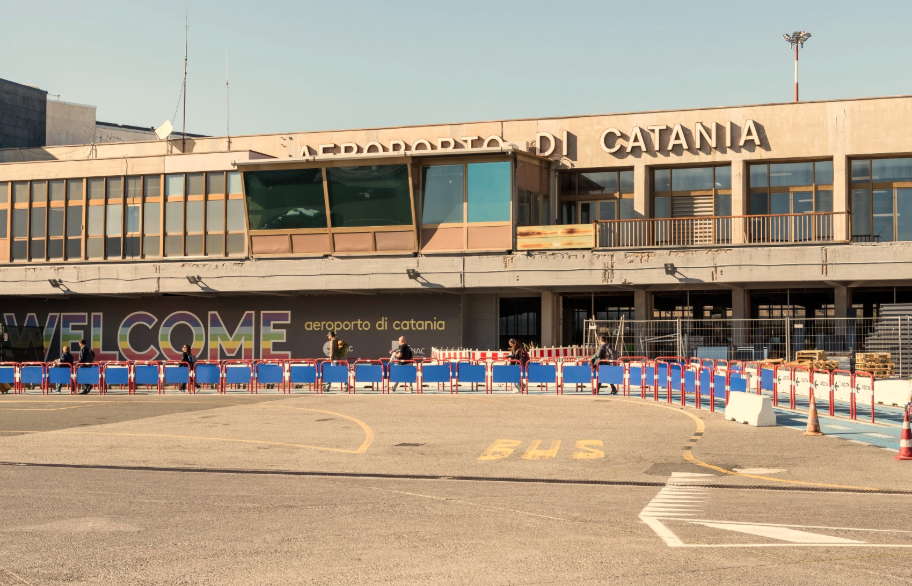
What is the Current Status of Catania Airport Flights?
Flights arriving at and departing from Catania Airport (CTA) remain completely suspended until midnight while crews attempt to clear volcanic debris from the runways. Earlier restrictions reduced the airport’s capacity to just four landings per hour before the intense ash fall forced a total operational shutdown. Airlines immediately cancelled dozens of outbound flights to major UK and European destinations.
Travelers must check their specific itinerary status through airline mobile applications before heading to the airport. The Italian Civil Aviation Authority (ENAC) requires airlines to update digital departure boards in real-time during environmental emergencies. Do not travel to the physical terminal if your flight shows a cancellation, as customer service desks are severely understaffed and cannot process rebookings on-site.

Why Does Volcanic Ash Force Airspace Closures?
Volcanic ash poses a catastrophic physical danger to commercial aircraft jet engines, making flying impossible even if the runway itself remains clear of lava. The tiny, abrasive particles of rock can easily be sucked into the engine turbines, where the extreme heat melts them into a glass-like coating. This coating damages internal components and frequently causes total engine failure mid-flight.
The U.S. Federal Aviation Administration (FAA) strictly warns that flying through an ash cloud is exceedingly dangerous and mandates total avoidance. In addition to engine failure, volcanic ash destroys aircraft instruments, heavily scratches windshields, and severely reduces pilot visibility. When wet ash settles on the tarmac, it makes the runway surfaces dangerously slippery for landing gear.
How Widespread is the Sicily Travel Disruption?
The airspace closure affects the entire eastern coast of Sicily, forcing airlines to divert dozens of incoming flights to alternative regional hubs. At least ten international flights were redirected mid-air immediately after the eruption began. Passengers scheduled to land in Catania suddenly found themselves touching down on opposite sides of the island.
| Redirected Airport | Number of Diverted Flights | Distance from Catania |
| Palermo Airport | 5 Flights | 210 kilometers |
| Trapani Airport | 3 Flights | 315 kilometers |
| Comiso Airport | 2 Flights | 90 kilometers |
Logistical chaos is mounting as diverted passengers struggle to find last-minute bus or train transport back across the island to their original hotels. Heavy overnight storms further complicated the situation, flooding local access roads and slowing down the ground transport network.
What Should Stranded Passengers Do Next?
Stranded passengers must contact their booking airline to secure a seat on the next available outbound flight from an open Italian airport. Under European passenger rights laws, airlines must offer a choice between a full ticket refund or a rerouted flight under comparable transport conditions. Because this is an extraordinary environmental event, airlines are not legally required to pay additional cash compensation for the delay itself.
However, carriers must still provide a standard duty of care while you wait for your replacement flight. Follow these exact steps to protect your finances and travel plans:
- Save all receipts: Keep digital and physical receipts for any meals, hotel rooms, or ground transport required during the delay.
- Contact your travel insurance: Call your provider immediately to verify your coverage limits for natural disaster interruptions.
- Check alternative airports: Ask your airline to rebook you out of Palermo or even mainland Italy if you can secure a ferry crossing.
- Monitor regulatory updates: Follow the European Union Aviation Safety Agency (EASA) for official updates regarding when the airspace will reopen safely.
Is it Safe to Travel to Eastern Sicily Right Now?
Local authorities maintain a red Volcano Observatory Notice for Aviation (VONA) alert due to the highly unpredictable seismic activity continuing at the northeast crater. The National Institute of Geophysics and Volcanology (INGV) confirmed that the ash plume successfully breached the 4-kilometer altitude mark, spreading rapidly due to strong coastal winds.
While the lava flow poses no direct threat to the surrounding resort towns or the airport infrastructure, the ash fallout creates severe respiratory hazards. The Italian Civil Protection Department (Protezione Civile) advises visitors already on the island to remain indoors when ash falls. Wear N95 masks if you must go outside, and avoid driving on ash-covered roads due to reduced traction.