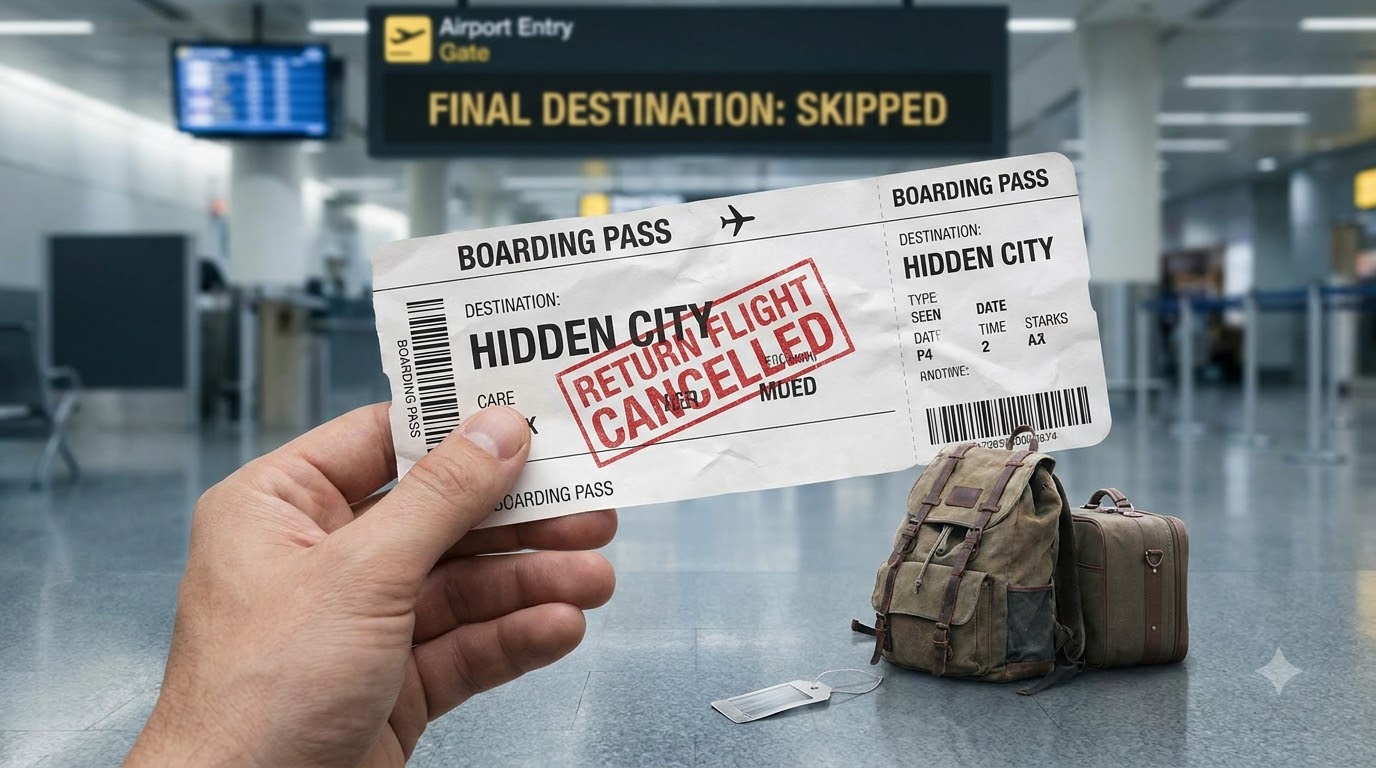
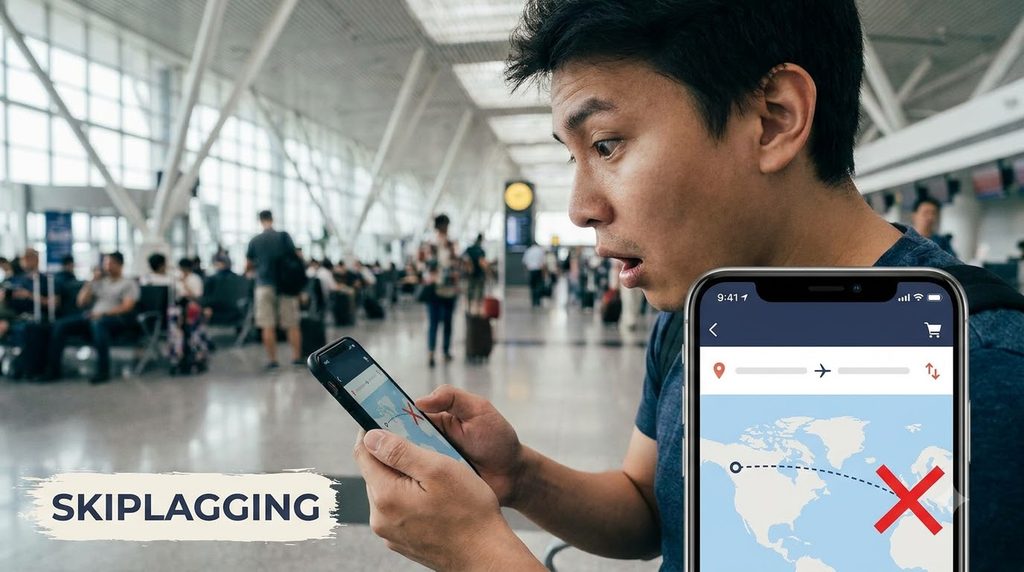
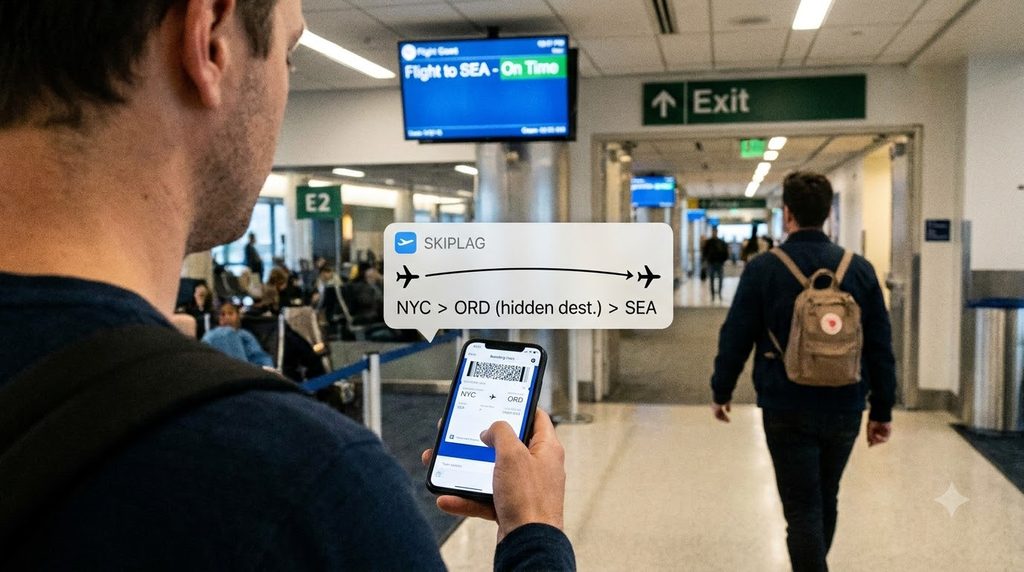
Skiplagging involves booking a flight with a layover and intentionally exiting the airport at the connection city instead of flying to the final ticketed destination. Travelers use this hidden city ticketing strategy because a connecting flight is often cheaper than a direct flight to that same hub. However, airlines strictly forbid this practice in their legal contracts of carriage. Violating these rules triggers immediate and severe penalties that quickly erase any initial financial savings. The risks range from canceled return tickets to permanent bans from major airline networks.

1. Automatic Return Flight Cancellation Rules
Airlines automatically cancel all remaining segments of an itinerary the moment a passenger misses a flight. If a traveler books a round-trip ticket and skips the final leg of the outbound journey, the return flight disappears from the system instantly. The automated boarding system flags the no-show at the gate and voids the rest of the booking. Travelers are then forced to purchase a highly expensive, last-minute ticket to get back home.
2. Complete Forfeiture of Frequent Flyer Miles
Loyalty programs monitor passenger travel patterns closely to detect hidden city ticketing. When an airline catches a traveler skiplagging, they have the contractual right to seize all accumulated reward miles. Losing hundreds of thousands of frequent flyer miles destroys years of travel investment for a small, one-time discount. Airlines conduct routine audits on accounts and wipe balances to zero without prior warning.
Also read – Fake Wallet Trick That Save Travelers from Losing Money
3. Revocation of Airline Elite Status
Elite status perks like priority boarding and free upgrades vanish immediately when an airline penalizes a passenger for ticket abuse. Airlines view skiplagging as a direct violation of their membership terms and conditions. Regaining status after a suspension requires flying thousands of miles from scratch at full price. Years of brand loyalty mean absolutely nothing once the security system flags a passenger for intentional fare manipulation.
4. Permanent Bans from the Airline Network
Airlines reserve the right to permanently ban repeat offenders from booking future flights on their network. If a traveler consistently exploits pricing algorithms, the carrier will block their name, payment methods, and frequent flyer numbers. This creates massive logistical problems if that specific airline dominates the traveler’s local airport hub. A lifetime ban forces the passenger to rely on inconvenient and expensive alternative airlines for all future travel.
5. Checked Luggage Rerouting Disasters During Layovers
Checked baggage always travels to the final destination printed on the ticket. If a passenger exits at the layover city, their suitcase continues flying to the ticketed endpoint without them. Retrieving a bag from a city the traveler never visited is expensive, time-consuming, and entirely the passenger’s fault. Asking a ticketing agent to short-check a bag to the layover city immediately exposes the skiplagging strategy and guarantees a penalty.
Also read – U.S. Travel Fraud Losses Hit $297 Million as Fake Booking …
6. Involuntary Rerouting Due to Weather
Airlines hold the right to alter flight paths during severe storms or mechanical failures. If a flight is rerouted through a different connecting city, the skiplagger loses their intended destination completely. The Federal Aviation Administration (FAA) prioritizes safety over schedules, meaning these sudden diversions happen frequently during winter travel. A passenger intending to stop in Chicago might suddenly find themselves stranded in Dallas with no valid ticket to Illinois.
7. The Gate-Checked Baggage Trap
Flights on smaller regional jets frequently run out of overhead bin space before boarding finishes. Gate agents force late-boarding passengers to check their carry-on bags at the jet bridge. These bags are sent directly to the final ticketed destination, trapping the skiplagger without their luggage at the connection city. Refusing to hand over the bag at the gate results in denied boarding for the entire flight.
8. Aggressive Fare Recovery and Financial Penalties
Airlines are now pursuing passengers to recover the financial difference between the hidden city fare and the actual cost of the flown route. Carriers will charge the credit card on file for the undiscounted price of the direct flight. In some cases, gate agents hold suspected skiplaggers at the podium and demand immediate payment before allowing them to board. The financial risk of the airline cancelling a return ticket segment can far exceed the savings from the lower fare.
9. International Travel Customs Violations
Skiplagging on international flights introduces serious legal complications regarding border entry and exit records. Exiting an airport in a foreign transit country without the proper visa violates local immigration laws. The U.S. Customs and Border Protection (CBP) closely monitors passenger manifests and requires accurate travel documentation for all border crossings. Missing the final international leg alerts border security to a missing passenger, potentially triggering a law enforcement investigation.
10. Legal Precedent and Ongoing Airline Lawsuits
Major airlines routinely file lawsuits against third-party websites that promote hidden city ticketing. While individual passengers rarely face criminal charges, airlines use civil litigation to enforce their contract of carriage. Courts generally uphold the airline’s right to set pricing and cancel tickets when passengers break ticketing rules. Recent legal battles continue to side with airlines demanding financial compensation from massive commercial skiplagging platforms.
11. Loss of DOT Consumer Protections
Passengers who intentionally break airline rules forfeit their rights to standard compensation for delays or cancellations. The U.S. Department of Transportation (DOT) outlines specific consumer protections for ticketed passengers facing disruptions. However, airlines will deny meal vouchers and hotel accommodations to travelers caught manipulating their itineraries. The airline owes zero duty of care to a passenger who abandons their contractual flight path.
12. Corporate Travel Policy Violations
Business travelers who skiplag to save their company money risk violating strict corporate travel policies. Expense management systems flag these irregular travel patterns during routine financial audits. Employees face disciplinary action or termination for deliberately breaching vendor contracts with preferred airline partners. Companies will not reimburse workers for the extra flights needed to get home after an airline cancels the rest of a skiplagged itinerary.
13. Wasted Non-Refundable Extras
Travelers lose money on prepaid extras like seat selection, priority boarding, and in-flight Wi-Fi for the skipped segment. Airlines never refund these ancillary fees when a passenger voluntarily abandons a flight. These lost upgrades further diminish the actual financial savings of the hidden city ticket. Buying extra legroom on a flight you never intend to take is a pure financial loss.
Skiplagging vs Standard Ticketing Comparison
Understanding the strict limitations of hidden city ticketing reveals why it remains a highly risky travel hack.
| Feature | Standard Ticket | Skiplagged Ticket |
| Checked Baggage | Allowed to final destination | Strictly prohibited |
| Round-Trip Booking | Fully valid and protected | Automatically canceled |
| Loyalty Miles | Earned on all segments | Risk of total forfeiture |
| Rerouting Protection | Rebooked to destination | Stranded at random layover |
Travelers must weigh these severe consequences against the short-term financial benefit of a discounted fare. Security agencies like the Transportation Security Administration (TSA) do not penalize skiplagging, but the airlines strictly enforce their own financial borders. Booking a standard, direct ticket remains the only way to guarantee a stress-free travel experience without risking thousands of dollars in penalties.