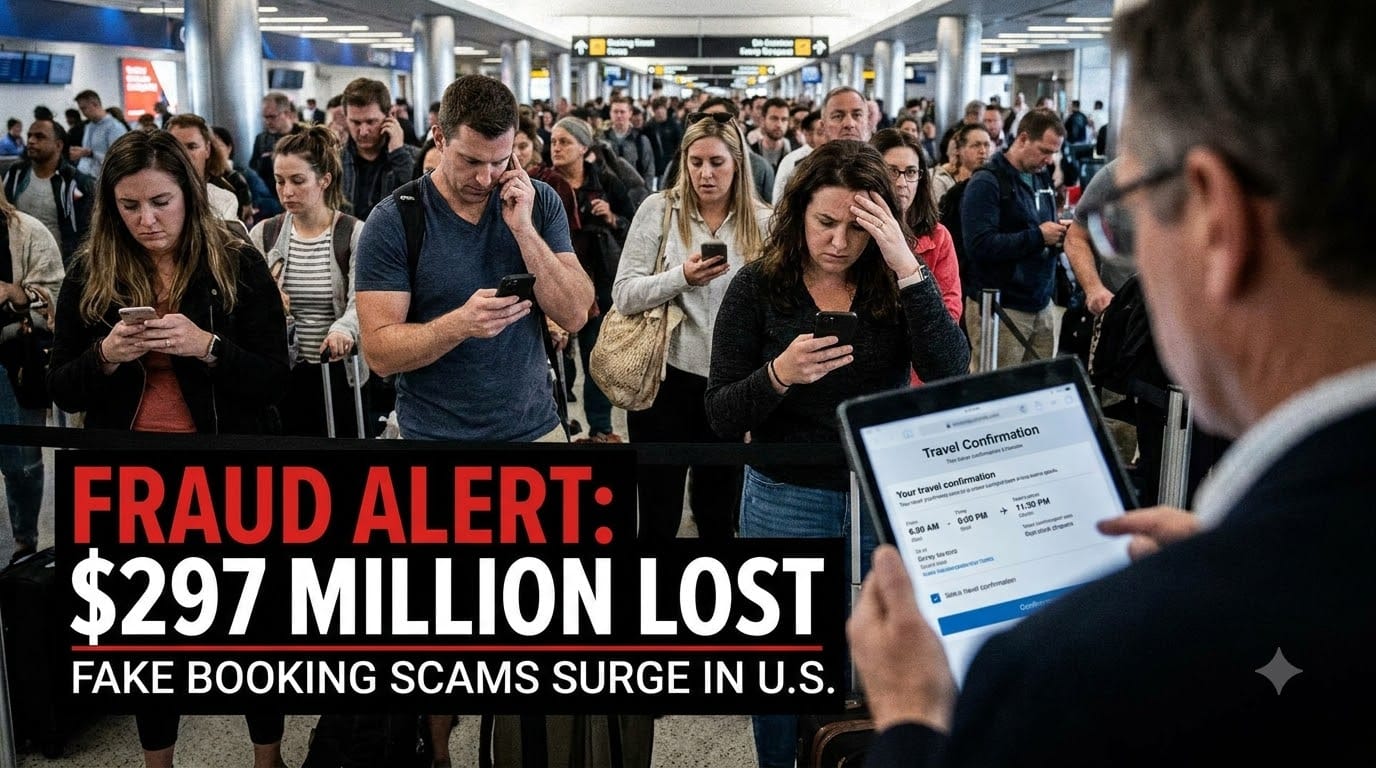
Americans reported $297 million in vacation and travel fraud losses in 2025, nearly three times the roughly $99 million reported in 2021. The practical warning for anyone booking a trip in 2026 is simple: the dangerous part may happen before you ever reach the airport.
Fake hotel sites, copied vacation rentals, bogus airline messages and sponsored ads can now look convincing enough to catch experienced travelers.

How bad are travel scams in the U.S.?
Travel fraud losses have risen sharply, while travelers may be more confident than careful. Research based on Federal Trade Commission data found that 87% of surveyed Americans believed they could recognize a travel scam, yet 22% said they had clicked a fake travel ad or sponsored search result.
| Warning sign | What to do |
|---|---|
| Huge discount with a countdown | Compare the price on the official site |
| Payment by gift card, wire or crypto | Do not pay |
| Rental owner wants payment off-platform | Keep the transaction inside the booking site |
| Airline text asks you to click urgently | Open the airline app yourself |
| Website address looks slightly different | Search for the company independently |
Also read – Fake Booking Scam Alert: Check This Before Paying for Summer …
What travel scam is easiest to miss?
A familiar-looking booking page is one of the easiest traps to overlook. The scam often works because a traveler is already expecting to pay.
Picture this: you search for a hotel, tap the first sponsored result and see the same logo, room photos and dates you expected. The price is only $80 cheaper. Nothing looks outrageous — and that is exactly why verification matters.
The FTC advises travelers to research travel companies before paying and says demands for vacation-rental payment by wire transfer, gift card or cryptocurrency are scam red flags.
How can you check a travel booking before paying?
Use a two-minute verification routine before entering card details.
- Open the airline, hotel or rental company’s official site separately.
- Search the business name plus “scam,” “review” or “complaint,” as the FTC recommends.
- Call the property’s publicly listed number if a deal looks unusually cheap.
- Prefer a credit card, which may give you a route to dispute qualifying charges. The Consumer Financial Protection Bureau explains charge disputes here.
What should you do after paying a travel scammer?
Act immediately rather than waiting to see whether tickets or confirmations arrive. Contact your card issuer or bank, save screenshots and receipts, change exposed passwords, and report the incident.
The federal government’s scam-reporting guide directs consumers to the appropriate agency.
One final rule is worth remembering: a bargain is not valuable until you verify who is taking your money.