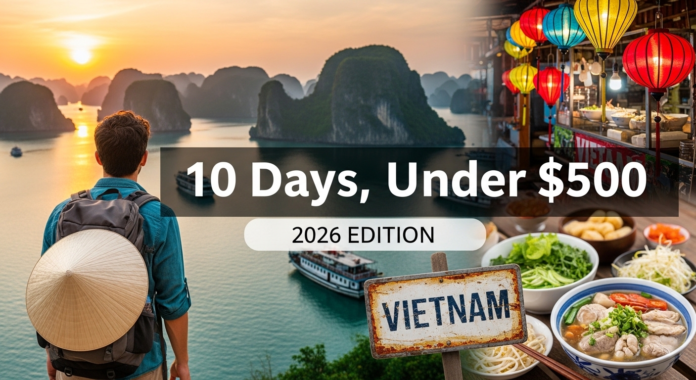
The first thing I remember about landing in Vietnam was the smell. Warm air mixed with street food smoke, grilled pork, and fresh herbs. It felt chaotic at first, but within an hour I was sitting on a tiny plastic stool in Hanoi eating a steaming bowl of pho that cost less than two dollars on my trip to Vietnam on a Budget.
That moment changed how I see travel.
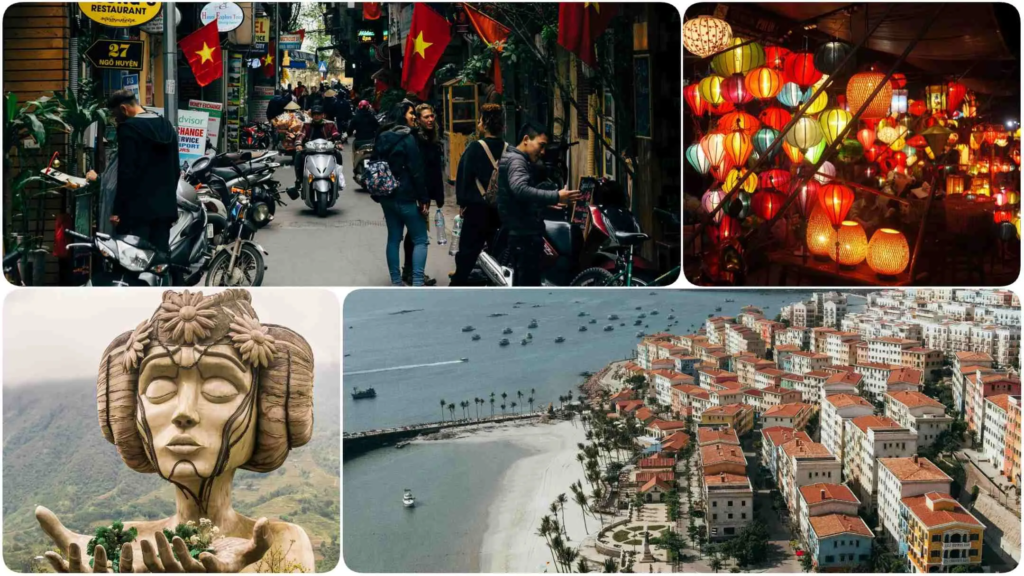
Vietnam remains one of those rare places where a traveler with a small budget can still experience a rich, full adventure. We’re talking mountain villages, glowing lantern streets, limestone islands, and some of the best street food on earth. But here is the 2026 reality: while inflation has touched everything, you can still travel across Vietnam for 10 days for under $500 – if you know which new apps to use and which tourist traps to dodge.
I tested this route myself, keeping track of 2026 exchange rates, new transit lines, and the small tricks locals use to save money. Here is exactly how it works.
Can You Really Travel Vietnam for Under $500 in 2026?
Yes. But it requires a “Local-First” strategy.
If you stay in social hostels, eat at street stalls (Quán), and utilize the newly expanded sleeper bus network instead of last-minute flights, a 10-day trip realistically lands between $425 and $505.
| Expense Category | 10-Day Budget (USD) | 2026 Money-Saving Hack |
| Visa (e-Visa) | $25 | Use only evisa.gov.vn (Avoid $20 agency fees). |
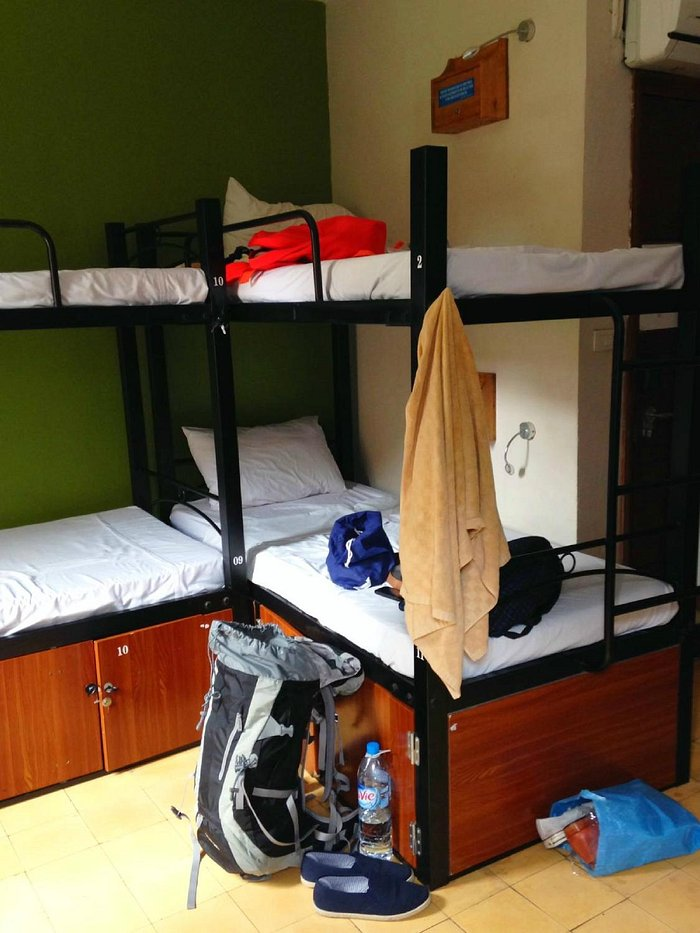
| Accommodation | $100 | Book “Social Hostels” with free breakfast/walking tours. |
| Food & Drink | $130 | Stick to street stalls; look for the “Bia Hoi” signs. |
| Transportation | $120 | Use Xanh SM electric bikes & the Hanoi Metro. |
| Attractions | $90 | Group tours for Ha Long; DIY cycling in Hoi An. |
| Total | $465 | Leftover Buffer: $35 |
The 10-Day Vietnam Budget Itinerary
Days 1–2: Hanoi – The Chaotic Capital
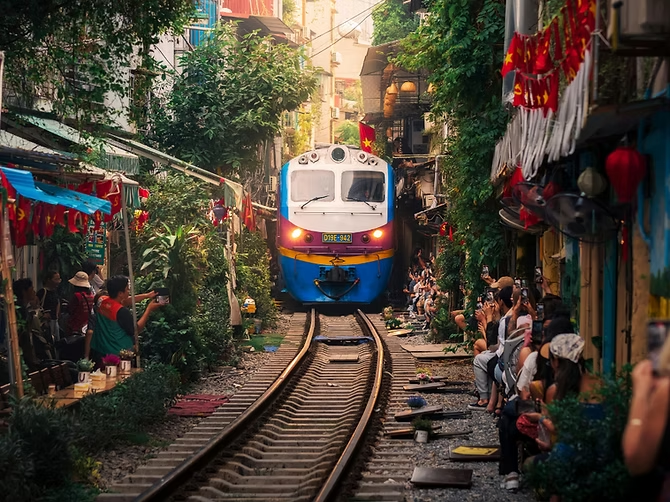
Walking through Hanoi’s Old Quarter feels like stepping into a living documentary.
- 2026 Update: Use the new Metro Line 3 to get across the city for $0.50.
- The Experience: I spent my first morning wandering narrow streets before stopping for pho bo. The owner smiled, pointed at the broth, and said “good for the soul.” She was right.
- Daily cost: $30–35
Day 3: Ha Long Bay Budget Cruise
Ha Long Bay is famous for luxury, but budget travelers can still see it. Skip the $200 overnight boats.

- The Move: Join a 1-day group tour from Hanoi. In 2026, these average $55–$65 including the new “Route 2” eco-fees, kayaking, and lunch.
- Budget tip: Bring your own water and snacks; boat prices for drinks are 3x the street price.
Also read – Why is Phu Quoc, Vietnam Suddenly So Popular? 7 Reasons to …
Days 4–5: Ninh Binh – “Ha Long Bay on Land”
Two hours south of Hanoi sits one of Vietnam’s most underrated gems. Ninh Binh feels quiet, green, and dreamlike.

- Must-See: Rent a bicycle ($2) and ride to Hang Mua for the sunset view.
- Daily cost: $28–32
Day 6: The “Sleeper” Strategy to Da Nang
Vietnam’s sleeper buses have leveled up. Many 2026 fleets now feature “cabin” style beds with curtains.
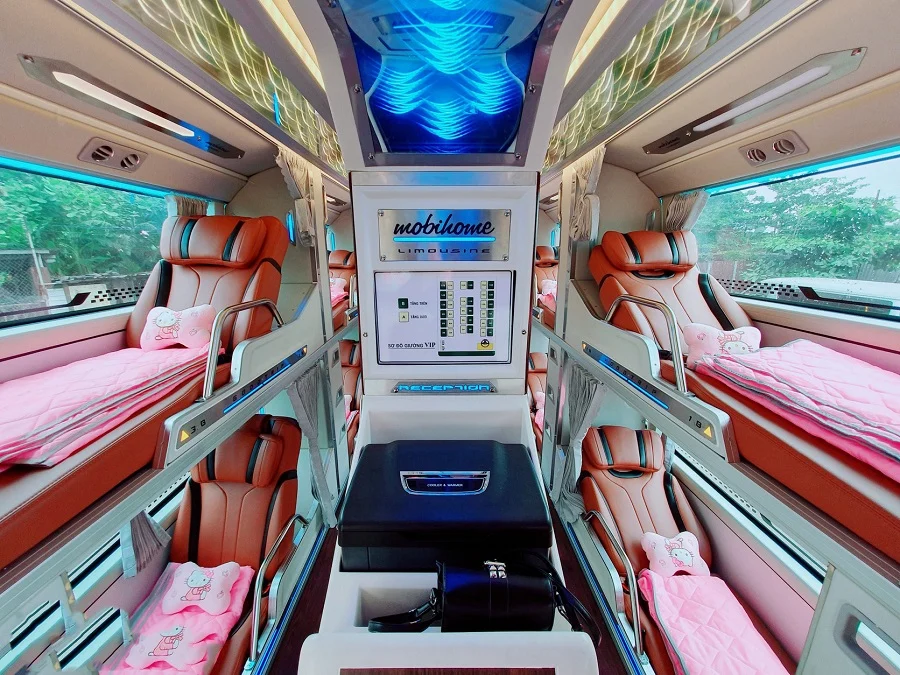
- Cost: $22–$30 via the Vexere app.
- Tip: It saves you a night’s hostel cost and a $70 flight. Bring a light jacket; the AC is notoriously “arctic.”
Days 7–8: Hoi An – Lanterns and Street Food
At night the streets glow with thousands of lanterns reflecting in the river.
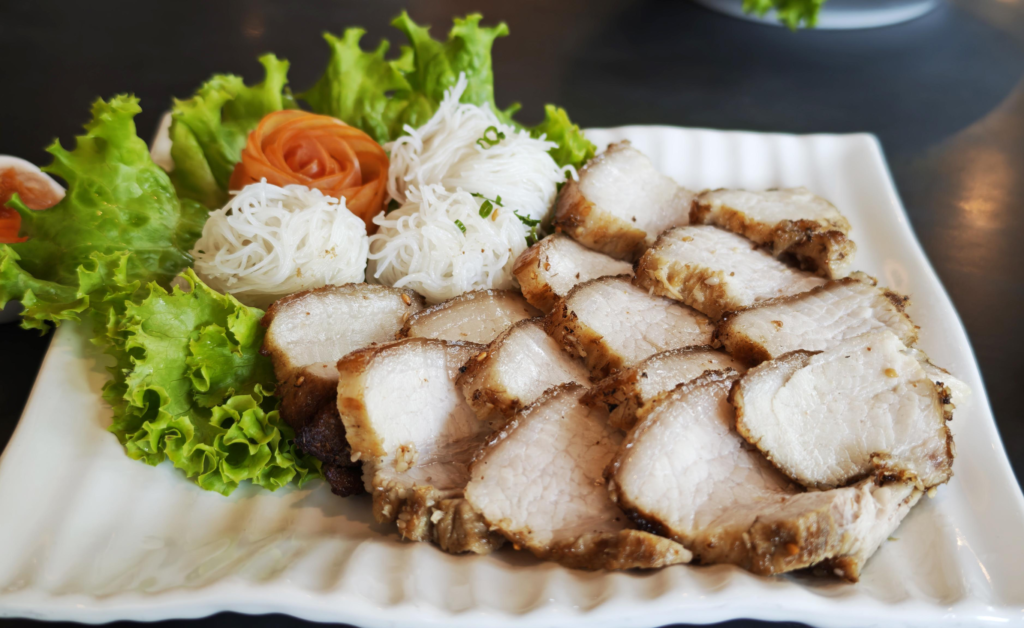
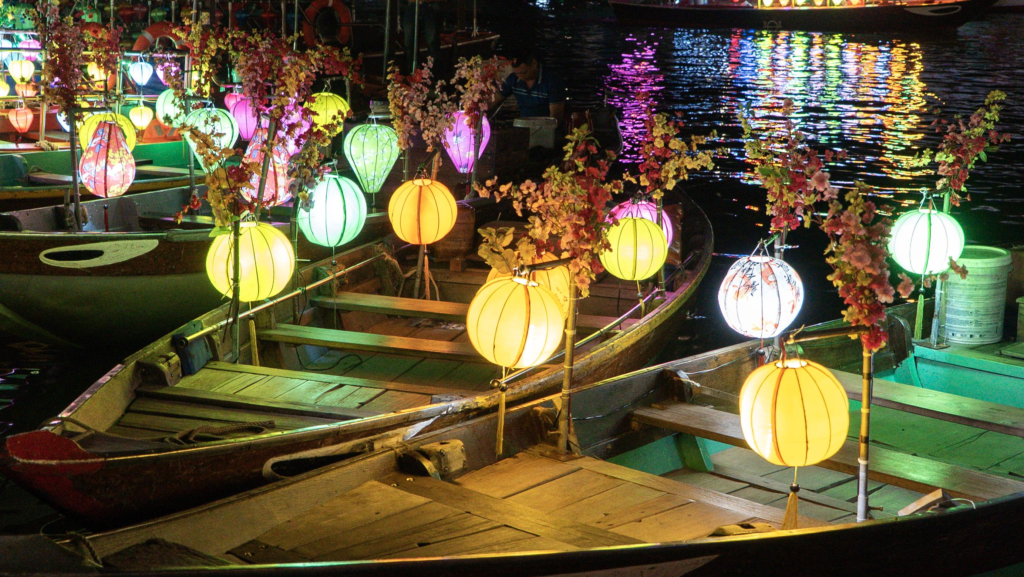
- Budget Experience: I sat by the river eating a $1.50 banh mi, watching floating candles. It felt like a movie scene.
- Daily cost: $28–34
Day 9: Ba Na Hills or Beach Day?
The famous Golden Bridge (Ba Na Hills) now costs ~$52 (1.3M VND) for a ticket.
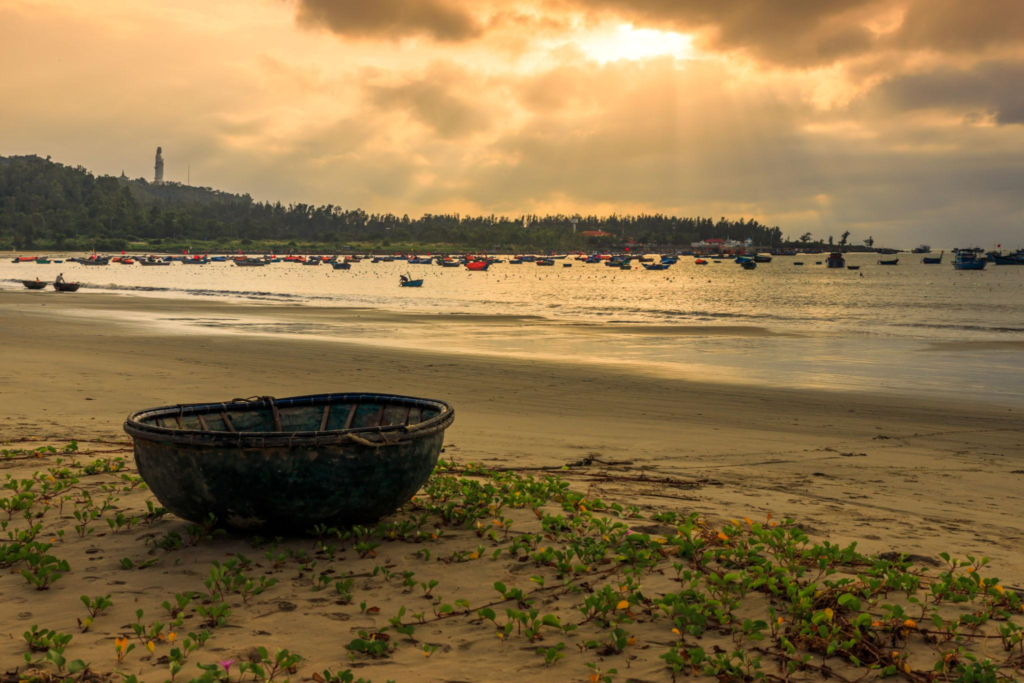
- Budget Choice: If $52 is too steep, spend the day at An Bang Beach or take a $4 basket boat tour through the coconut groves.
Day 10: Da Nang Departure
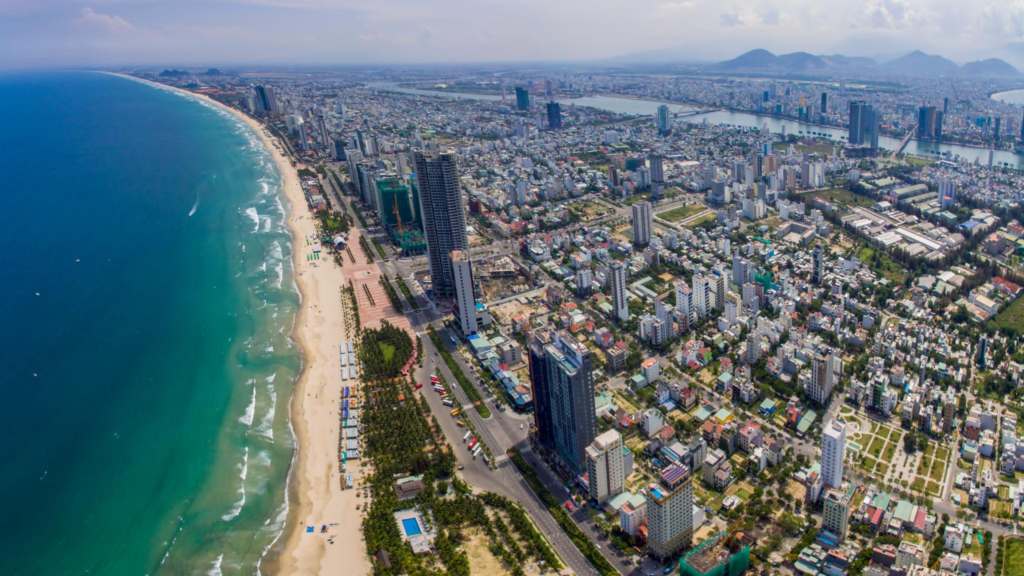
Da Nang is clean, modern, and relaxed. Before leaving, walk My Khe Beach and grab one last Egg Coffee ($1.80).
My 2026 Budget Survival Guide with New Tools
1. Use Xanh SM (GSM): This is the new electric taxi/bike fleet. It’s often cheaper and cleaner than Grab. Download the app the moment you land.
2. Zero-Fee ATMs: Look for TPBank or VPBank. They are the last few standing that allow foreign cards to withdraw cash without a local fee.
3. Vexere is King: Don’t buy bus tickets from hotel desks. Use the Vexere app to see 2026 prices and real photos of the bus seats.
4. The “Quán” Rule: If a place has “Quán” in the name and tiny plastic stools outside, the food will be 40% cheaper and 100% better than any “Tourist Restaurant.”
Final Thoughts: What Vietnam Taught Me
Traveling through Vietnam on a tight budget never felt limiting. In fact, it made the experience richer. Eating at street stalls meant chatting with locals. Taking sleeper buses meant meeting other travelers.
Vietnam reminds us that great travel isn’t about how much you spend; it’s about curiosity and saying “yes” to the small adventures.
People Also Ask: Vietnam Budget Travel Questions
Is $500 enough for a 10-day trip to Vietnam?
Yes, $500 is enough for a 10-day trip to Vietnam if you travel on a budget. By staying in hostel dorms ($6–10 per night), eating local street food ($2–4 per meal), and using sleeper buses for transportation, most backpackers spend around $40 per day. This makes it realistic to travel across Vietnam for 10 days within a $400–$500 budget.
What is the cheapest month to travel to Vietnam?
The cheapest months to travel to Vietnam are usually May, September, and October. These are shoulder-season months when flight prices and accommodation rates drop because they fall between peak tourist seasons. Traveling during these months can help you save significantly on flights and tours.
How much money do you need per day in Vietnam?
Budget travelers typically spend $30–$40 per day in Vietnam. This includes hostel accommodation, street food meals, local transportation, and a few attractions. Mid-range travelers may spend $60–$100 per day, while luxury travel costs much more.
Is Vietnam cheaper than Thailand for travel?
Yes, Vietnam is generally cheaper than Thailand for budget travelers. Food, accommodation, and long-distance transport are often more affordable in Vietnam. For example, a hostel bed in Vietnam may cost $6–10, while similar accommodation in Thailand often costs $10–15.
How much does food cost in Vietnam?
Food in Vietnam is very affordable. Street food dishes such as pho, banh mi, or bun cha usually cost $1–3, while meals in local restaurants range between $3–6. Eating where locals eat is the best way to keep your food budget low.
Is it better to travel Vietnam north to south or south to north?
Most travelers prefer traveling north to south, starting in Hanoi and ending in Ho Chi Minh City. This route gradually moves from cooler mountain landscapes to warmer southern beaches and cities. However, traveling south to north can also work well depending on flight prices.
What is the cheapest way to travel around Vietnam?
The cheapest way to travel around Vietnam is by sleeper buses or trains. Sleeper buses between major cities usually cost $15–25, and they save money by replacing a night in a hotel. For shorter distances, using the Grab ride-hailing app is cheaper than taxis.
Is Vietnam safe for budget travelers?
Yes, Vietnam is considered one of the safest countries in Southeast Asia for travelers. Violent crime is rare, and most visits are trouble-free. The main things to watch for are petty scams, pickpocketing in crowded markets, and overcharging taxis, which can easily be avoided by using apps like Grab.
Is Ha Long Bay worth visiting on a budget trip?
Yes, Ha Long Bay is still worth visiting even on a budget. While luxury cruises can be expensive, many travelers join budget day tours from Hanoi costing $40–50. These tours usually include transport, lunch, and activities like kayaking, making them a good value experience.
How much does a backpacking trip to Vietnam cost?
A backpacking trip to Vietnam typically costs $25–40 per day if you stay in hostels, eat street food, and use sleeper buses or trains. A 2-week backpacking trip usually costs around $350–600, excluding international flights.
How much does a hostel cost in Vietnam?
Hostel dorm beds in Vietnam usually cost $6–10 per night, while private rooms in budget guesthouses typically range between $12–20 per night depending on the city and season.
How much does transportation cost in Vietnam?
Transportation in Vietnam is very affordable. Short rides using ride-hailing apps like Grab can cost $1–3, while long-distance sleeper buses between cities usually cost $15–25.
Can you travel Vietnam without booking tours?
Yes, Vietnam is very easy to travel independently. Buses, trains, hostels, and attractions are simple to book locally or online, making it possible to explore the country without organized tours.

