
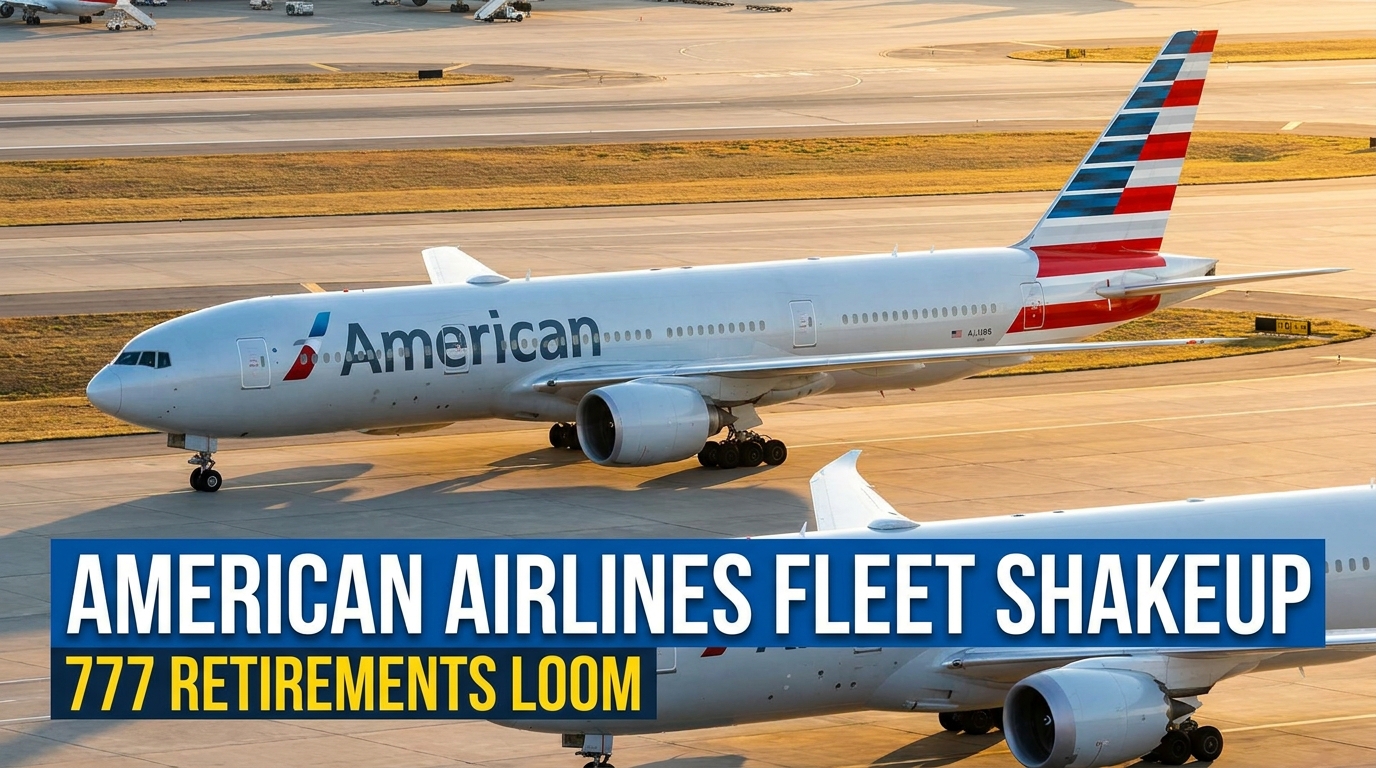
American Airlines is preparing for one of its most important long-haul fleet decisions in years. The airline has opened a request for proposals with both Airbus and Boeing as it looks beyond its current Boeing 787 deliveries and starts planning for Boeing 777 retirements expected in the 2030s.
This is not a small aircraft shopping exercise. Widebody jets decide where an airline can fly nonstop, how many premium seats it can sell, how much cargo it can carry, and how comfortable a 10-hour flight feels for passengers.

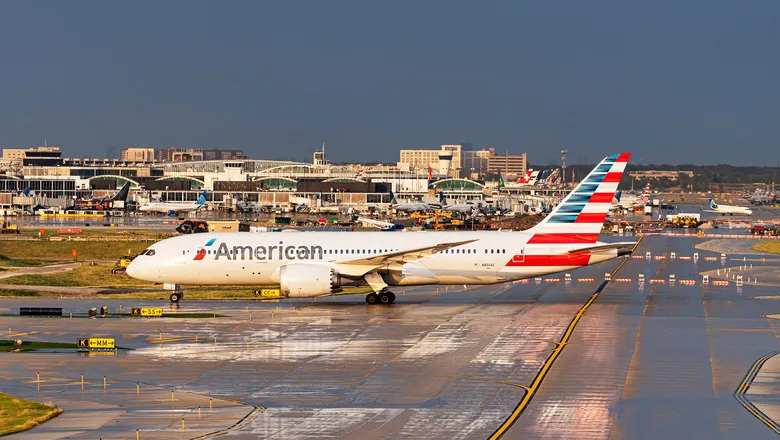
What is American Airlines planning with its widebody fleet?
American Airlines is evaluating its next long-term widebody aircraft order. CEO Robert Isom said during the airline’s annual shareholder meeting that American has an RFP in the market and is actively talking with Airbus and Boeing.
The big reason is timing. Widebody aircraft are not delivered quickly. Airlines often need to plan five to eight years ahead, especially when factory slots are tight and global carriers are competing for the same aircraft.
American currently has 19 widebody aircraft on order and options for 28 more, but that does not fully answer what replaces its older Boeing 777s in the 2030s.
Why is American looking at Boeing 777 replacements now?
American needs to decide early because its 777 fleet is aging into its next major chapter. The airline still relies on Boeing 777 aircraft for many long-haul routes, including premium-heavy international markets where range, seat count, and cargo space matter.
From a passenger view, the 777 is still a familiar long-haul workhorse. But from an airline planning view, every older jet eventually reaches a point where maintenance, fuel burn, cabin upgrades, and replacement timing must be balanced carefully.
The smart move is to decide before the deadline becomes urgent.
Also read – The Real Impact of American Airlines 6 U.S. Route Suspension
Which aircraft could American Airlines choose next?
The most realistic choices are Boeing 787 variants and Airbus A350 or A330neo aircraft. American already flies the Boeing 787, so staying with the Dreamliner family would keep training, parts, and pilot planning simpler. Airbus, however, can offer strong long-range aircraft that would give American a fresh negotiating option.
| Aircraft | Why it matters for American | Best use case |
|---|---|---|
| Boeing 787-9 | Already in American’s fleet and suited for long-haul routes | Flexible international growth |
| Boeing 787-10 | More seats than the 787-9, but less range | High-demand routes to Europe and South America |
| Airbus A350-900 | Strong range and modern cabin platform | Long routes where premium comfort matters |
| Airbus A330-900neo | Lower-risk Airbus widebody option with solid economics | Medium and long-haul routes with balanced demand |
| Boeing 777X | Large 777 replacement option, but bigger than American may need on many routes | Very high-demand international markets |
According to Boeing’s official 787 data, the 787-9 seats 296 passengers in standard layout and has a range of 7,565 nautical miles, while the larger 787-10 seats 336 passengers with a range of 6,330 nautical miles. Airbus lists the A350-900 as a long-range aircraft seating 332 to 352 passengers in a standard three-class configuration, while the A330-900neo is listed at up to 287 passengers in a typical three-class layout.

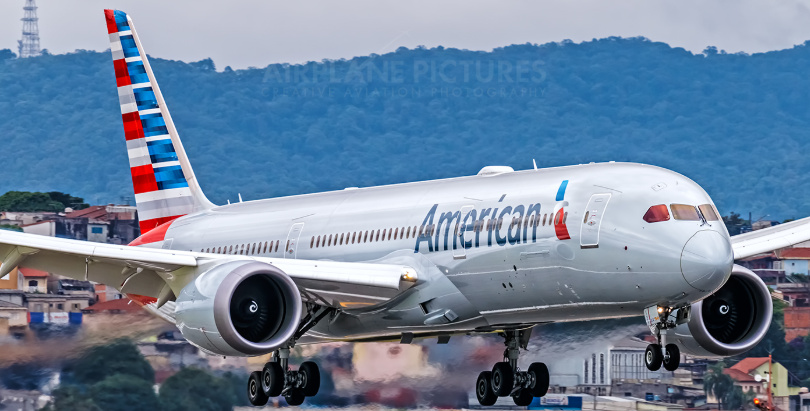
Why Airbus is back in the conversation
Airbus matters because American once had an A350 order and later walked away from it. In 2018, American terminated an order for 22 Airbus A350s that originally came from US Airways and instead expanded its Boeing 787 plan.
That history makes this new evaluation more interesting. If American seriously returns to Airbus for widebody aircraft, it would signal that the airline wants more leverage, more choice, or a better aircraft match than a Boeing-only path can provide.
For readers, the simple version is this: Boeing is the easier fleet-fit choice, while Airbus may be the stronger bargaining chip.
What does this mean for passengers?
Passengers should watch this because the next widebody order will shape American’s future international experience. New long-haul aircraft usually bring better cabins, newer entertainment screens, improved power options, quieter interiors, and more premium seating.
American has already been pushing harder into premium cabins. Its newer Boeing 787-9 aircraft include Flagship Suite seats, more privacy, and a bigger focus on premium economy. That matters because long-haul profits increasingly depend on travelers willing to pay more for comfort.
If American orders the right mix of aircraft, passengers could see:
- More nonstop international routes
- Better premium cabin availability
- Newer business-class seats
- More premium economy seats
- Improved aircraft reliability
- Better long-haul cabin consistency
Also read – Updated American Airlines Baggage Rules, Fees & Dimensions
What should frequent flyers do now?
Frequent flyers should not change travel plans yet, but they should watch aircraft type closely when booking. The order has not been finalized, and new jets would take years to arrive.
Here is the practical flyer checklist:
- Check the aircraft type before booking long-haul flights. A 787-9 with newer suites can feel very different from an older widebody.
- Do not assume every “business class” seat is the same. Cabin layouts vary by aircraft.
- Use seat maps before paying for upgrades. Premium economy and business seats can differ even within the same aircraft family.
- Watch routes from Dallas Fort Worth, Charlotte, Chicago, Miami, Philadelphia, and New York. These hubs are most likely to feel the impact of future long-haul fleet decisions.
- Look for newer 787-9 aircraft if comfort matters most. These are where American’s premium refresh is most visible today.
Why this order matters against Delta and United
American needs this widebody decision because Delta and United have been more aggressive in long-haul fleet growth. International flying, especially premium-heavy flying, has become a major profit battleground.
United has a large widebody operation and uses it to support a broad global network. Delta has also strengthened its long-haul fleet planning with newer Airbus and Boeing aircraft. American has powerful domestic hubs, but it needs enough modern widebodies to compete for high-value international travelers.
The airline’s 2024 order for 260 aircraft focused on Airbus A321neo, Boeing 737 MAX 10, and Embraer E175 jets. That order helped settle narrowbody and regional planning, but it did not solve the long-haul question.
The smart takeaway
American Airlines is not just buying planes. It is deciding what kind of global airline it wants to be in the 2030s. A Boeing-heavy decision would keep the fleet simpler. An Airbus order would add variety and potentially open different long-haul options. A mixed approach would give American flexibility, but it would also add complexity.
For passengers, the key point is simple: the aircraft American chooses now will affect future routes, fares, upgrades, cabin comfort, and premium seat availability for years.
The decision is worth watching because it will not just change American’s fleet sheet. It could change how American competes internationally.