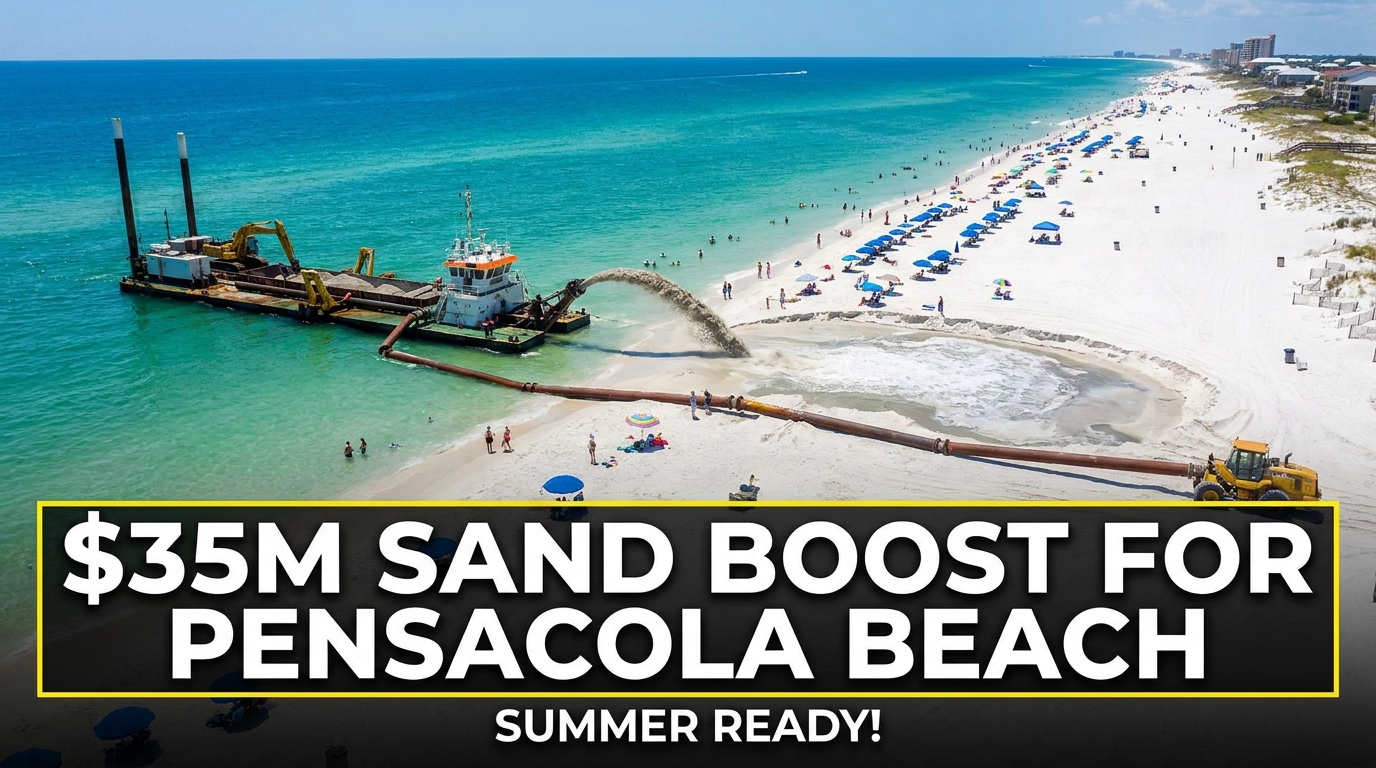
Pensacola Beach is heading into summer with a wider, fresher shoreline after a major $35 million beach renourishment project added about 1.5 million cubic yards of sand across 8.1 miles of Santa Rosa Island. The work is now complete, and the beach is fully reopened, giving visitors more room for beach chairs, long walks, family photos, and early-morning shell hunting.
For travelers asking “Is Pensacola Beach better after renourishment?”, the clear answer is yes. The beach is wider, the sand has been restored across key public areas, and shell hunters have had a rare bonus: shells pulled from the Gulf floor during dredging have been washing up along the newly nourished shoreline.

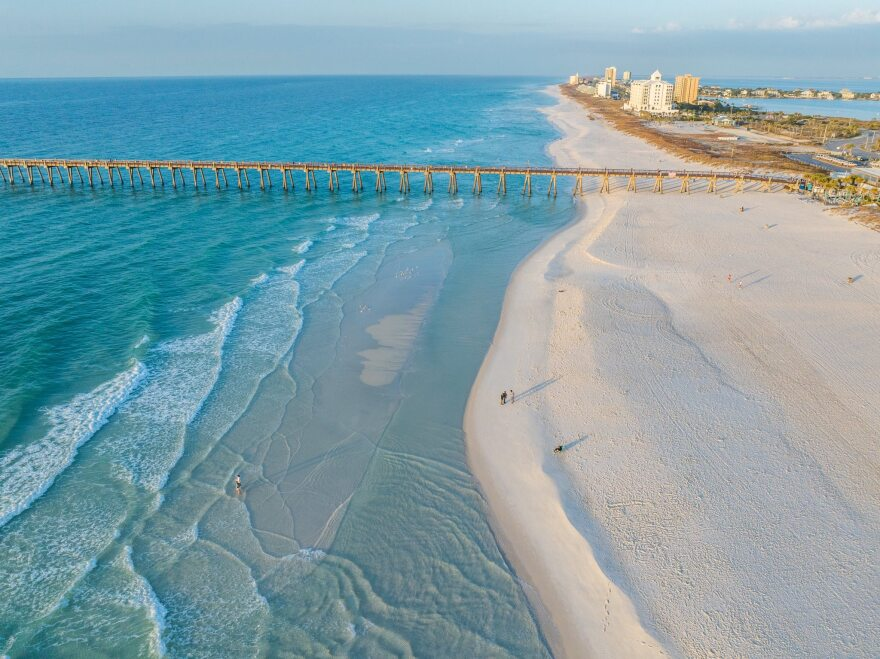
What happened at Pensacola Beach?
Pensacola Beach completed a large sand renourishment project before the heart of summer travel season. The official Pensacola Beach Nourishment project page lists the project at 8.1 miles, with 1.5 million cubic yards of sand, sponsored locally by the Santa Rosa Island Authority and built by Manson Construction Company.

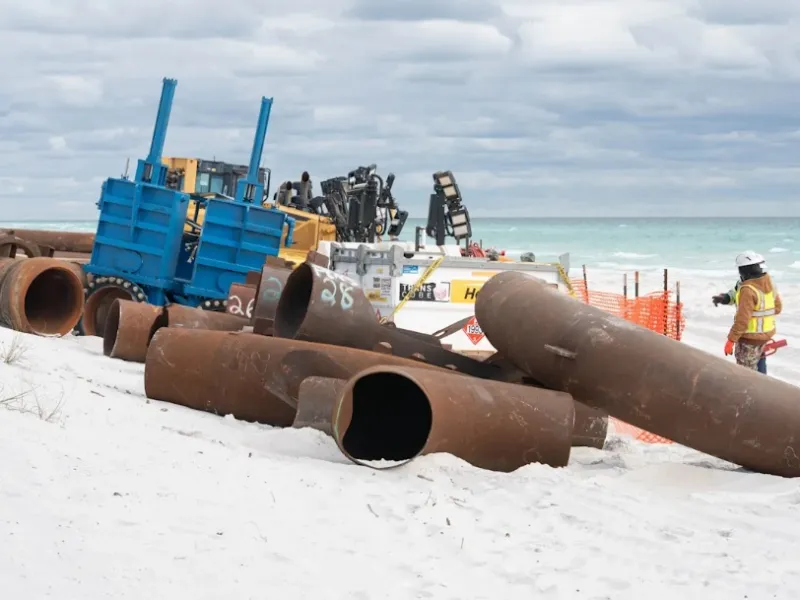
The project stretched across the public beach area between the national seashore sections, often described locally as running from Park East toward Park West near Fort Pickens.
The result is simple but important: more beach space where erosion had eaten into the shoreline.
Is Pensacola Beach open after the renourishment project?
Yes, Pensacola Beach is open, and the nourishment project was marked complete in early June 2026. The official project update said on June 2, 2026, that the project was complete and everything was fully reopened.
That matters for summer visitors because the beach is not entering peak season as a construction zone. Earlier phases included temporary work areas, equipment, pipeline landings, and limited parking impacts, but the full reopening means tourists can plan normal beach days again.
A smart visitor should still check local beach conditions before heading out, especially for flags, surf, and parking, but the sand project itself is no longer the big disruption it was during construction.

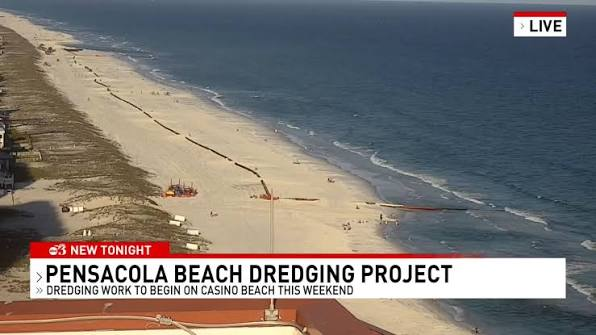
Why did Pensacola Beach need a $35 million sand project?
Pensacola Beach needed the sand boost to protect tourism, homes, public access, and storm resilience. Beach renourishment is not just about making the shoreline look pretty in vacation photos.
A wider beach helps in several practical ways:
- It gives visitors more usable beach space.
- It helps protect roads, utilities, homes, and businesses from storm-driven erosion.
- It supports the tourism economy that depends on the beach looking and functioning well.
- It restores sand that storms, tides, and time naturally pull away.
Santa Rosa Island Authority Executive Director Mike Burns said earlier coverage that the project was important for tourism, residents, and Escambia County’s economic health. He also connected the work to hurricane protection and infrastructure protection.
Pensacola Beach renourishment facts at a glance
The key numbers show how large this project really was.
| Detail | What visitors should know |
|---|---|
| Project cost | About $35 million |
| Beach length covered | 8.1 miles |
| Sand added | About 1.5 million cubic yards |
| Contractor | Manson Construction Company |
| Local sponsor | Santa Rosa Island Authority |
| Main construction period | Winter through spring 2026 |
| Full reopening update | June 2, 2026 |
| Best visitor benefit | Wider beach before summer |
| Unexpected bonus | Better shell hunting in some areas |
Also read – Tripadvisor’s Most Popular Summer Destinations for 2026
Why shell hunting is better after the sand project
Shell hunting improved because dredging pulled sand and shells from the Gulf floor and moved them onto the beach. Local coverage from WEAR News reported that beachgoers were finding more shells during the project, including different colors and decorative finds.
Burns explained the process in a simple way: the dredging works like a giant vacuum. It pulls sand from offshore and brings up shells mixed into that material. When the sand is placed on the beach, some of those shells come with it.
That is why visitors may notice shell patches that feel different from a normal Pensacola Beach day.

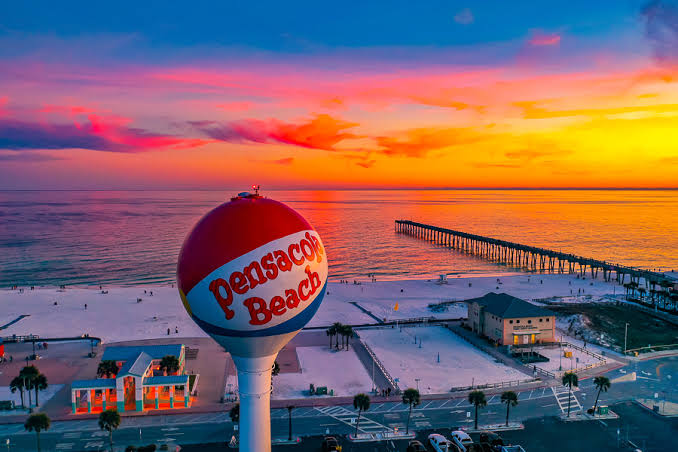
Where should visitors look for shells now?
The best shell hunting after renourishment is usually in fresh shell lines, near the swash zone, and away from the busiest towel-and-umbrella areas. Do not expect every step to reveal perfect shells. The better finds often sit in small pockets.
Try these simple shelling moves:
- Go early in the morning. You get first look before crowds walk the same stretch.
- Check around low tide. Visit Pensacola recommends shelling around low tide because receding water exposes fresh finds.
- Walk slowly along the water’s edge. The line where waves wash in and pull back often holds smaller shells.
- Look after rough surf or storms. Waves can rearrange shell beds overnight.
- Move away from the main crowd. Busy areas get picked over quickly.
- Use a mesh bag, not a plastic bucket full of wet sand. It is easier to rinse and carry.
A little real-life tip: don’t stare only at big shells. Some of the prettiest Pensacola finds are small, smooth, colorful pieces mixed into broken shell beds. The kind you almost miss until the sun catches them.
What shells can visitors find at Pensacola Beach?
Pensacola Beach shellers may find coquina, scallops, augers, baby’s ears, shark eyes, lightning whelks, turbans, and sand dollars, depending on season, tide, and surf. The Santa Rosa Island Authority shelling guide notes that the swash zone can hold tiny lightning whelks, turbans, coquina, and fragile baby’s ears, while shallow water can reveal more varied finds.
The important rule is this: only keep empty shells. If something is living inside, put it back gently. If a sand dollar is dark, fuzzy, or moving, it is alive and should stay in the water. White, dry sand dollars are the ones people usually collect.
Also read – The Secret California Beach That Glows Neon Blue at Midnight
Is the new sand safe for families?
Yes, the beach is open for normal use, but families should treat freshly restored sand with common sense. New sand can feel softer or uneven in places, especially after beach tilling and natural wave reshaping.
For families with kids:
- Watch for soft patches where feet sink deeper.
- Avoid digging large holes.
- Fill in holes before leaving.
- Keep children away from dunes and marked wildlife areas.
- Check surf flags before entering the Gulf.
- Bring sandals because shell-heavy patches can be sharp.
Escambia County’s Leave No Trace guidance reminds visitors to remove personal items each night, dispose of trash, and fill holes to protect nesting sea turtles and beach wildlife.
What should summer visitors do differently now?
Visitors should enjoy the wider beach, but they should still plan smarter because Pensacola Beach gets crowded in summer. A bigger beach does not automatically solve parking, heat, traffic, or afternoon storm problems.
Use this quick summer plan:
| Visitor goal | Best move |
| Better parking | Arrive before mid-morning |
| Best shell hunting | Go early and near low tide |
| Family beach setup | Pick a spot away from narrow access points |
| Good photos | Try sunrise or golden hour |
| Less heat | Take a long lunch break off the sand |
| Safer wildlife behavior | Leave live shells, fill holes, remove gear nightly |
One thing locals know well: the beach day feels easier when you get there early, set up once, and avoid driving back and forth across the bridge during peak traffic.
What not to do on the newly restored beach
Do not treat the new sand like a souvenir pile or a construction leftover. The sand is part of a coastal protection system, and the beach is also a wildlife habitat.
Avoid these mistakes:
- Do not cross fences or enter marked work or dune areas.
- Do not take live shells, live sand dollars, or creatures from the water.
- Do not dig deep holes and leave them open.
- Do not leave tents, chairs, toys, or coolers overnight.
- Do not use bright lights on the beach at night during turtle season.
- Do not assume calm-looking water means safe swimming. Always check beach flags.
This is the difference between being a visitor and being a good beach guest.
Also read – 11 Caribbean Islands Under $1500 for a Week in 2026
Why this project matters beyond summer 2026
The $35 million Pensacola Beach sand boost is really a long-term investment in coastal protection. Summer travelers see more room for towels and better shell hunting, but the bigger purpose is protecting a barrier island that faces storms, erosion, and heavy tourism pressure.
Pensacola Beach is known for sugar-white sand and emerald water, and the Santa Rosa Island Authority describes the area as having 18 miles of sugar-white beaches. Keeping that shoreline healthy takes maintenance, funding, engineering, and visitor cooperation.
The project gives the beach a stronger start for summer. What happens next depends partly on storms and tides, but also on how people use the beach day after day.
Final takeaway: Pensacola Beach is wider, open, and worth an early walk
Pensacola Beach’s $35 million renourishment project gives summer visitors a wider shoreline and shell hunters a better reason to arrive early. The work added major sand volume across 8.1 miles, reopened before peak summer, and created a temporary shelling opportunity that beachcombers should enjoy responsibly.
For the best experience, go early, check the tide, walk slowly, keep only empty shells, and leave the beach flat and clean when you go.
That is how you get the best of the new Pensacola Beach without taking away from what makes it special.