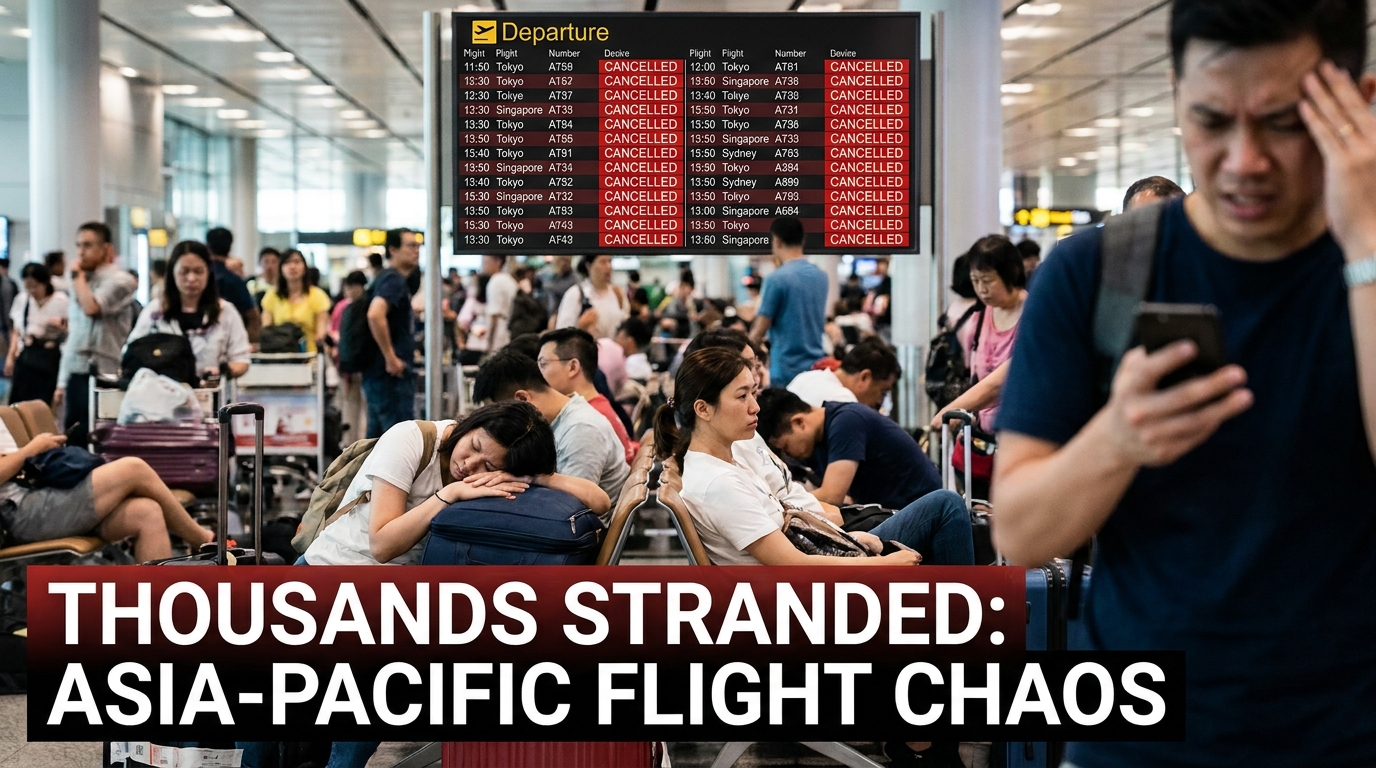
If you are planning to fly through the Asia-Pacific region anytime soon, you need a backup plan immediately. Last week, I spent eight agonizing hours stranded at Singapore’s Changi Airport watching the departure board bleed red with endless delays and cancellations. My connection to Sydney was axed, and the customer service line wrapped around the terminal.

You are not alone in this frustration. Right now, thousands of flyers are facing a massive wave of flight disruptions across Asia, Australia, and New Zealand. I dug into the exact causes, analyzed the routing data, and compiled everything you actually need to know to survive this aviation crisis.
What Is Happening to Asia-Pacific Flights Right Now?
Airlines across the Asia-Pacific network are actively slashing their flight schedules, leaving passengers stranded, rebooked on marathon layovers, or forced to pay premium last-minute fares. Major carriers are cutting international routes by up to 40% through August 2026. This is not a temporary weather glitch; it is a systemic schedule reduction affecting both budget and premium airlines.
Why Are Your Flights Getting Canceled? (The Real Reasons)
Flight networks are collapsing under a perfect storm of geopolitical and economic pressures. Here are the definitive reasons your itinerary is in jeopardy:
- Geopolitical Airspace Closures: Ongoing conflicts in West Asia (the Middle East) have forced the closure of multiple airspace corridors. Flights connecting Asia to Europe and North America must now take drastic, fuel-heavy detours.
- Record-High Jet Fuel Prices: Rerouting flights adds 5 to 6 hours of flying time. Airlines simply cannot absorb the skyrocketing fuel costs, forcing them to cancel less profitable routes entirely.
- Regional Airspace Bans: Indian carriers face specific bans over Pakistani airspace, severely limiting their westward routes and causing massive scheduling bottlenecks in hubs like Delhi and Mumbai.
- Cascading Capacity Issues: When a long-haul aircraft is delayed by 6 hours, it misses its next scheduled domestic turnaround. This creates a domino effect, destroying regional schedules in Australia, New Zealand, and Southeast Asia.
Also read – Zipair Just Launched Asia’s First Starlink Flight And the Wi-Fi Is …

Which Airports and Airlines Are the Worst Affected?
Avoid tight layovers at these specific hubs. Disruption indexes show massive operational failures across the following networks:
| Airlines Severely Impacted | Worst Affected Airports (Expect Delays) |
| Air India (Heavy cuts to North America/SE Asia) | Sydney Kingsford Smith (SYD) |
| Qantas & Jetstar (Trans-Tasman & domestic cuts) | Delhi Indira Gandhi (DEL) |
| Emirates (Auckland/Dubai routes) | Shanghai Pudong (PVG) |
| IndiGo (21% drop in int’l capacity) | Melbourne Tullamarine (MEL) |
| Cathay Pacific & Malaysia Airlines | Singapore Changi (SIN) |
How to Protect Your Trip: What You Need to Do Right Now
Do not wait for the airline to email you. Be proactive. Based on my years of navigating airline operational meltdowns, here are the steps you must take to protect your trip:
- Check Your PNR Directly: Log into the airline’s official app daily. Third-party booking sites (like Expedia or MakeMyTrip) are notoriously slow at updating passengers about schedule changes.
- Book Direct Morning Flights: The earlier your flight, the lower your risk of cascading afternoon delays. If possible, avoid stopovers in the Middle East or congested hubs like Delhi entirely.
- Pack Carry-On Only: Baggage systems at disrupted hubs are failing. If your flight is canceled, having only a carry-on allows you to sprint to a different airline’s desk and rebook immediately without waiting hours to reclaim checked bags.
When Will the Flight Delays Stop?
Expect the current level of aviation chaos to continue through late August 2026. Airlines have already rationalized and locked in their reduced summer schedules to limit financial losses. Normalcy will not return until airspace restrictions ease and fuel prices stabilize heading into the winter scheduling season.
Who Qualifies for a Full Flight Refund?
You are entitled to your money back. Do not accept airline vouchers if you do not want them.
- Under Australian Consumer Law (ACL) & NZ Consumer Guarantees Act: If your flight is canceled, you are entitled to a full refund to your original payment method or a free rebooking on the next available flight.
- India (DGCA Rules): If a flight is canceled and you are not informed at least 2 weeks in advance, the airline must offer an alternative flight or a full refund.
Airlines will try to push flight credits. Be firm, quote the local consumer laws, and demand your cash refund if your plans are ruined.