Becoming a commercial pilot in the United States means earning an FAA commercial pilot certificate, building the right flight experience, passing written and practical tests, and budgeting for far more than the checkride itself. For most people starting from zero, the realistic training cost in 2027 will likely fall around $70,000 to $110,000 for a career-track route through commercial training, depending on location, aircraft, pace, ratings, and how efficiently training is completed.

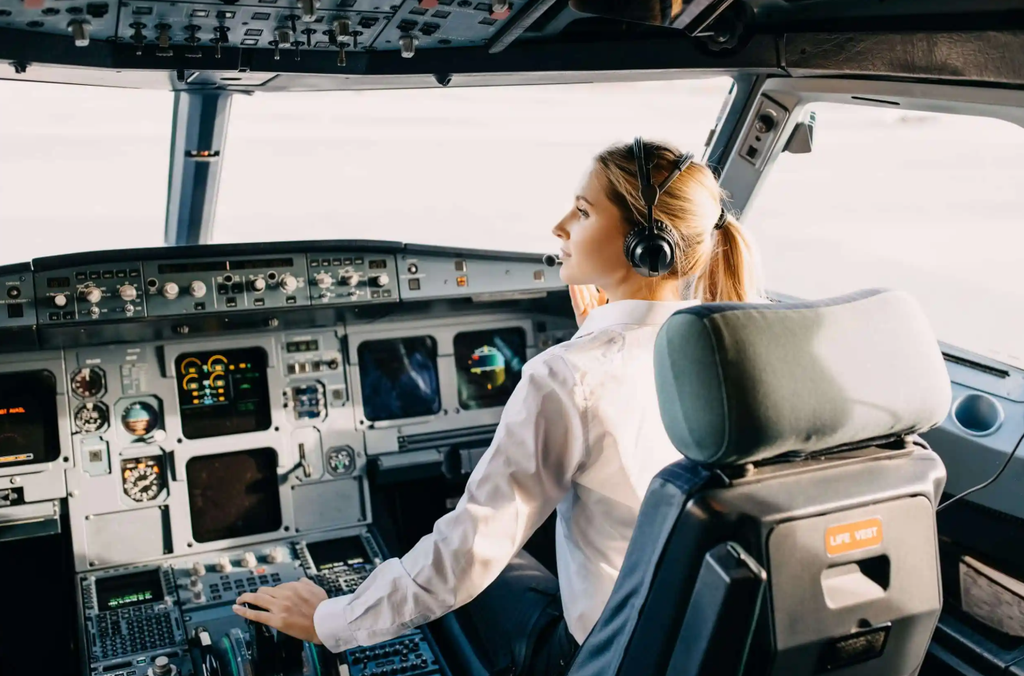
A commercial certificate lets a pilot be paid for certain flying jobs, but it is not the same as being airline-ready. Most airline first-officer paths require an Airline Transport Pilot certificate or restricted ATP eligibility, which generally involves substantially more flight time after commercial training. (faa.gov)
What Are the Requirements to Become a Commercial Pilot in 2027?
To earn an FAA commercial pilot certificate for airplanes, applicants must be at least 18 years old, be able to read, speak, write, and understand English, hold at least a private pilot certificate, receive instructor endorsements, pass the FAA knowledge test, and pass the practical test, commonly called a checkride. (ecfr.io)
The central requirement is flight experience. Under the common Part 61 route for a single-engine airplane commercial certificate, applicants need at least 250 total flight hours. Those hours must include specific categories of experience, not simply time spent flying around the local airport.
FAA Commercial Pilot Requirements at a Glance
| Requirement | What it means |
|---|---|
| Minimum age | 18 years old |
| English proficiency | Must read, speak, write and understand English |
| Starting certificate | Private pilot certificate, at minimum |
| Knowledge test | FAA commercial pilot written exam |
| Flight experience | Usually 250 total hours under Part 61 |
| Practical test | Pass a checkride with an FAA examiner |
| Medical certificate | Usually a second-class medical is needed when exercising commercial privileges for compensation or hire |
The FAA’s eligibility rule is the best starting point because it sets the baseline for age, language, instructor endorsements, testing, and prior certification.
Also read – Top 10 Best Regional Airports in North America (2026 …
How Many Flight Hours Do You Need for a Commercial Pilot License?
Most independent and local flight-school students train under Part 61, where the standard airplane single-engine commercial route requires at least 250 hours. That total includes 100 hours in powered aircraft, 100 hours of pilot-in-command time, 50 hours of cross-country pilot-in-command time, and required dual and solo training.
The required experience also includes commercial-specific tasks. Students need instrument training, night flying, towered-airport takeoffs and landings, long cross-country flights, and advanced commercial maneuvers. The FAA does not treat all logged hours equally, so a carefully maintained logbook matters as much as the total number at the bottom of the page.
A structured FAA-approved school may offer a different hour pathway. Certain approved programs can qualify students with fewer total aeronautical hours than the typical 250-hour Part 61 route, although students should compare the school’s total quoted price, aircraft availability, and completion history before assuming a lower-hour course will cost less.
What Licenses and Ratings Do You Need Before Commercial Pilot Training?
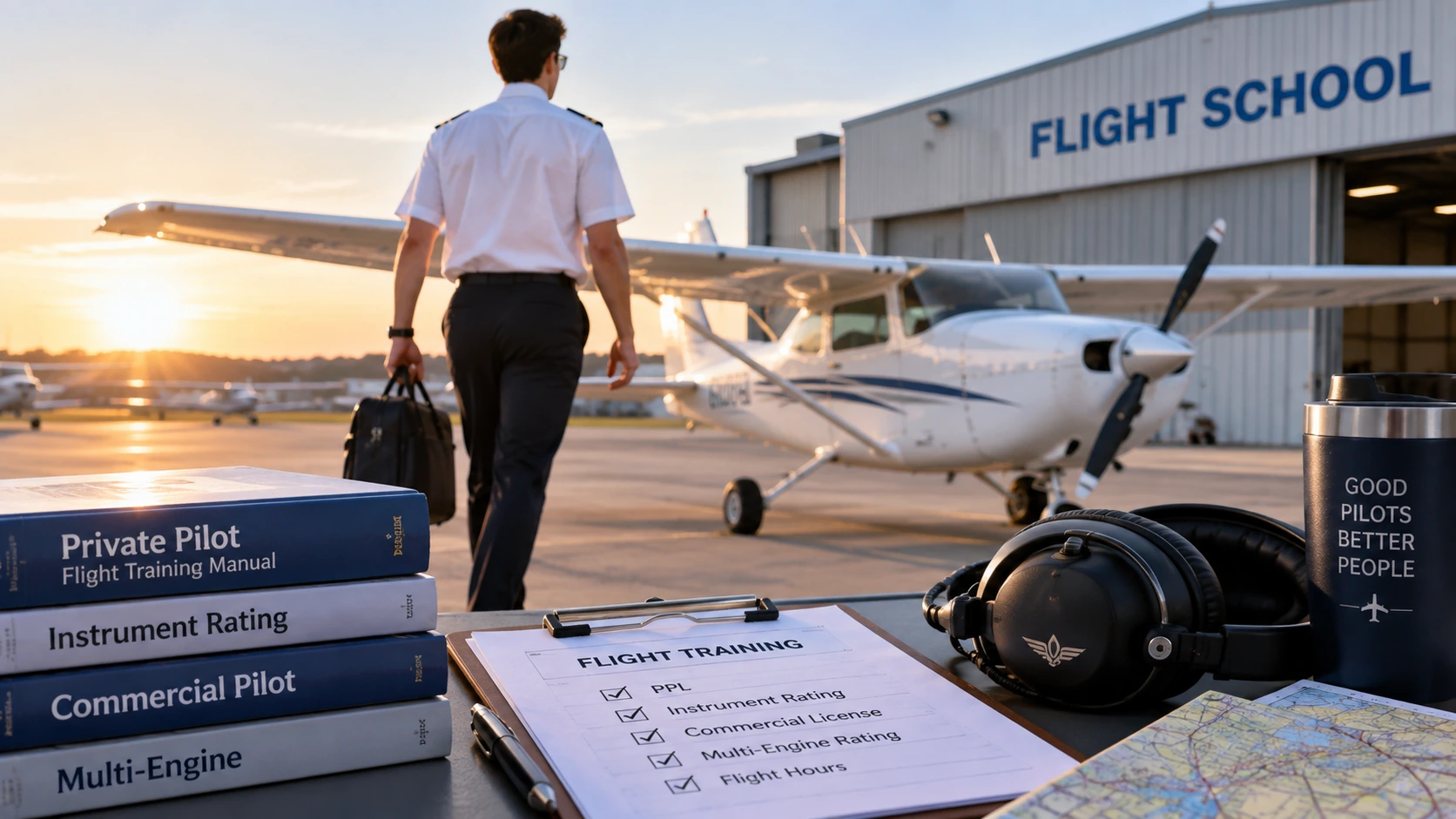
The usual career sequence is straightforward:
- Student pilot certificate and medical certificate
- Private pilot certificate
- Instrument rating
- Commercial pilot certificate
- Multi-engine rating, if needed for the intended job
- Flight instructor certificates, often used to build time toward airline hiring requirements
A private pilot certificate comes first because commercial applicants must already hold at least a private certificate.
An instrument rating is not always legally required before earning every commercial certificate, but it is strongly recommended for an airline-focused path. It also matters because commercial pilots without an instrument rating face operating limitations when carrying passengers for hire. The practical takeaway is simple: if the end goal is professional flying, plan for instrument training early rather than treating it as an optional add-on.
Do You Need a College Degree to Become a Commercial Pilot?
No, the FAA does not require a college degree to issue a commercial pilot certificate. The legal requirements focus on age, language ability, knowledge, flight experience, training, endorsements, and practical-test performance.
However, a degree can still be useful depending on the employer and career plan. Some university aviation programs may provide access to restricted ATP pathways, while a non-degree route may allow a student to finish training faster and potentially at a lower total cost. The right choice depends on whether the student needs a broader academic credential, financial-aid access, a structured campus environment, or the fastest possible entry into flight training.
What Medical Certificate Do Commercial Pilots Need?
A pilot generally needs a second-class FAA medical certificate to exercise commercial pilot privileges for compensation or hire. The FAA identifies second-class medical certification as the standard category for commercial pilots.
The smart move is to schedule an Aviation Medical Examiner appointment early, ideally before making a large nonrefundable deposit with a flight school. The FAA recommends using MedXPress, reviewing medical history and medications in advance, and bringing the necessary documentation to the exam. Missing records can delay certification. (faa.gov)
This step is especially important for students with a history of medication use, mental-health treatment, cardiovascular issues, sleep disorders, substance-related incidents, or other conditions that may require additional FAA review. A delay does not automatically end a pilot career, but it can change the timing and cost of a training plan.
How Much Does It Cost to Become a Commercial Pilot in 2027?
A realistic 2027 budget should include every certificate, rating, exam, aircraft rental, instructor hour, insurance-related fee, headset, books, checkride, lodging, transportation, and time-building expense. Do not compare schools using only their headline tuition.
Current 2026 published training data suggests that a private pilot certificate alone often costs roughly $15,600 to $20,600, with a reported median all-in estimate of about $18,083. Aircraft and instructor rates vary sharply by region.
For students who already hold private and instrument privileges, the commercial stage and needed hour-building can commonly add roughly $25,000 to $35,000, although aircraft type, instructor time, checkride availability, and local rental rates can push that number higher.
Estimated Commercial Pilot Training Costs for 2027
| Training stage | Typical planning range |
|---|---|
| Private pilot certificate | $16,000 to $22,000 |
| Instrument rating | $12,000 to $20,000 |
| Commercial training and hour-building | $25,000 to $40,000 |
| Multi-engine add-on | $5,000 to $12,000 |
| Instructor certificates | $8,000 to $18,000 |
| Zero-to-commercial career route | $70,000 to $110,000+ |
These are planning ranges, not guaranteed prices. A current 2026 national cost report and several academy estimates place full career-track training in roughly that same broad range, but a student’s final cost depends heavily on training consistency and aircraft availability.
Why Flight Training Costs More Than Students Expect
The biggest cost surprise is usually extra flight time. FAA minimums are legal thresholds, not promises that every student will finish at exactly that number.
Weather cancellations, instructor turnover, maintenance delays, long gaps between lessons, repeated checkride preparation, and weak ground-school preparation can all add expensive hours. Training two or three times per week often produces better skill retention than flying once every few weeks, assuming the budget can support that pace.
Another overlooked cost is the examiner fee. Checkride availability and designated pilot examiner pricing can vary significantly by area, so students should ask for current local estimates before choosing a school.
The Fastest Realistic Route to Commercial Pilot Training
The fastest path is not necessarily the cheapest, but it usually follows a disciplined rhythm:
- Get the medical certificate early.
- Finish ground school before flight training becomes intensive.
- Fly consistently, ideally multiple times each week.
- Use one school and a stable instructor when possible.
- Track commercial-hour requirements from the beginning.
- Avoid long training gaps.
- Keep a separate budget reserve for weather, maintenance, retests, and examiner fees.
Students should also ask every school the same questions: What aircraft is included in the quoted price? Is fuel included? How many aircraft are available? What happens when maintenance grounds a plane? Are instructor hours billed separately? How long are checkride waits? Does the price assume FAA minimum hours or the school’s typical completion time?
Can You Get Paid to Fly Right After Becoming a Commercial Pilot?
Yes, but job options are limited by ratings, experience, insurance requirements, and the type of operation. Entry-level commercial work can include flight instruction, aerial survey, banner towing, pipeline patrol, sightseeing, ferry flying, or other specialized work.
For many airline-focused pilots, becoming a certified flight instructor is the most common way to build experience after commercial training. Airline jobs generally require far more experience than the commercial certificate alone. FAA material describing ATP training notes the widely recognized 1,500-hour benchmark for a full ATP certificate, with limited restricted-ATP pathways for eligible applicants. (faa.gov)
The Bottom Line: Is Becoming a Commercial Pilot Worth It in 2027?
Becoming a commercial pilot is a serious financial and time commitment, but it can be a practical career path for students who understand the full sequence before they start. The best plan is not the school with the lowest advertised price. It is the plan that protects medical eligibility, keeps training frequent, controls hour-building costs, and prepares the student for the next certificate before the current one is finished.
Start with the FAA requirements, obtain a medical certificate early, request all-inclusive quotes from multiple schools, and keep a realistic reserve fund. That preparation can prevent the most expensive mistake in flight training: discovering a major cost, paperwork issue, or career limitation after thousands of dollars have already been spent.