
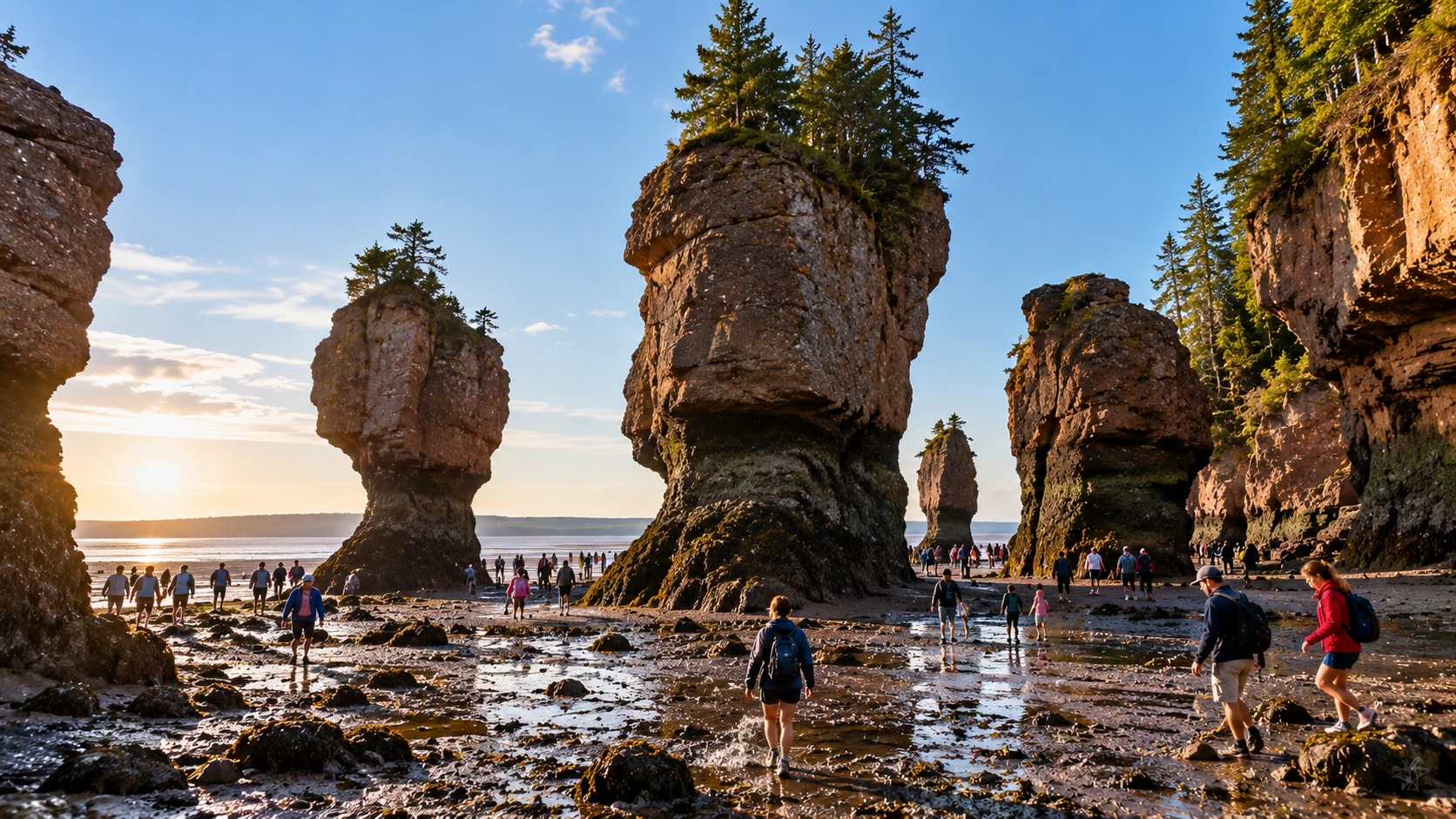
Tourists can only safely walk the exposed ocean floor at New Brunswick’s Hopewell Rocks during a strict six-hour window, beginning exactly three hours before low tide and ending three hours after. If you miss this specific time frame, the massive Bay of Fundy tides rush back in, completely submerging the beach beneath 16 meters of water and cutting off all physical exit routes.
Why You Cannot Outrun the Bay of Fundy Tides
The ocean water at Hopewell Rocks does not rise at a slow, even pace. Maritime navigators and the Fisheries and Oceans Canada authority use the “Rule of Twelfths,” which dictates that 50 percent of the total water volume surges into the bay specifically during the third and fourth hours of the incoming tide. During this peak surge period, the water level can rise over 3 meters in just two hours.

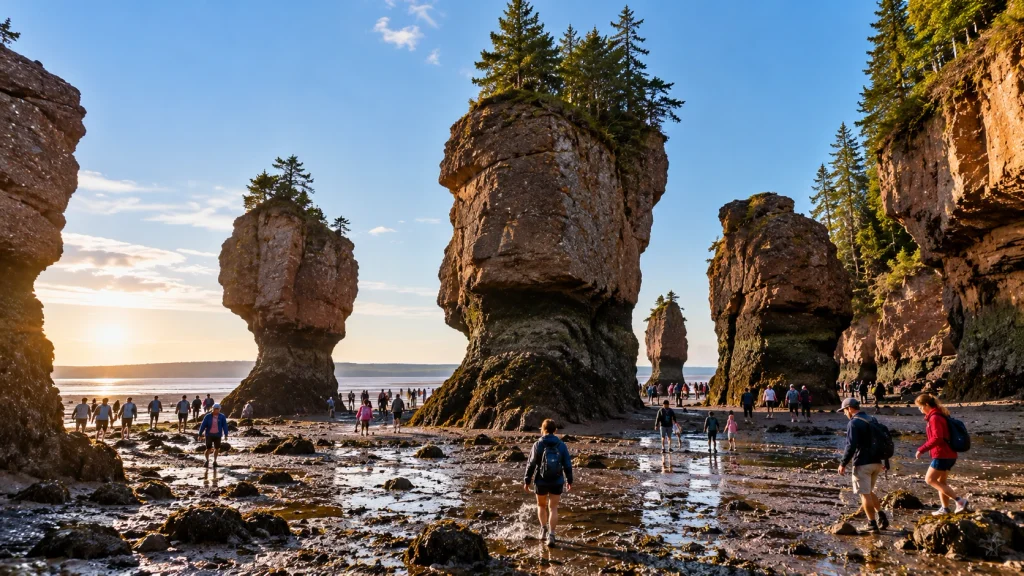
If you wander too far past the towering flowerpot rocks just as the three-hour safe window expires, the incoming tide will easily outpace your walking speed. The icy water moves deceptively fast, quickly wrapping around the sandstone columns and blocking your path back to the main metal staircase. You must establish a hard exit time and turn back long before the water reaches the cliff bases.
How to Read the Hopewell Rocks Tide Tables Before You Drive
You must cross-reference the official Hopewell Rocks Provincial Park tide charts for your specific travel date, as the low-tide schedule shifts forward by roughly an hour every single day. Because the Bay of Fundy connects directly to the Atlantic Ocean, lunar cycles dictate the exact minute the water recedes enough to expose the staircase landing.
Also read – How Tactile Walking Surface Indicators Help Toronto Travellers …
Do not rely on generic weather applications on your phone to time your visit. Standard weather apps often pull data for the nearby city of Moncton, which operates on a slightly different tidal timeline. Always bookmark the official provincial digital tide table and plan your arrival at the front gate exactly one hour before the listed low tide. This strategy gives you plenty of time to park, walk down the forest trail, and descend the metal stairs right as the beach opens.
Footwear Survival on the Muddy Ocean Floor
Walking among the Hopewell Rocks means sinking into dense, reddish-brown clay that creates an intense suction effect against your feet. If you wear basic beach flip-flops or loose sandals, the mud will instantly rip them off, forcing you to walk barefoot over sharp rocks and barnacles.
You must wear secure shoes that you do not mind ruining. The provincial park operators installed dedicated outdoor shoe-washing stations near the top of the main staircase so visitors can scrub the heavy clay off their treads before getting into their rental cars.
| Footwear Option | Mud Grip | Suction Resistance | Verdict for Hopewell Rocks |
| Old Running Shoes | Excellent | High | The absolute best option; lace them tightly. |
| Water Shoes / Aqua Socks | Good | High | Highly recommended if they secure firmly around the ankle. |
| Tall Rubber Rain Boots | Moderate | High | Acceptable, but heavy to walk in over long distances. |
| Flip-Flops & Slides | Terrible | Zero | Strictly avoid; the mud will steal them immediately. |
Double-Feature Ticket Rules and Park Re-Entry
A single general admission ticket to Hopewell Rocks Provincial Park automatically grants you full access for two consecutive days. Park management structured the pricing this way specifically so tourists can witness both the extreme low tide and the massive high tide without purchasing a second pass.
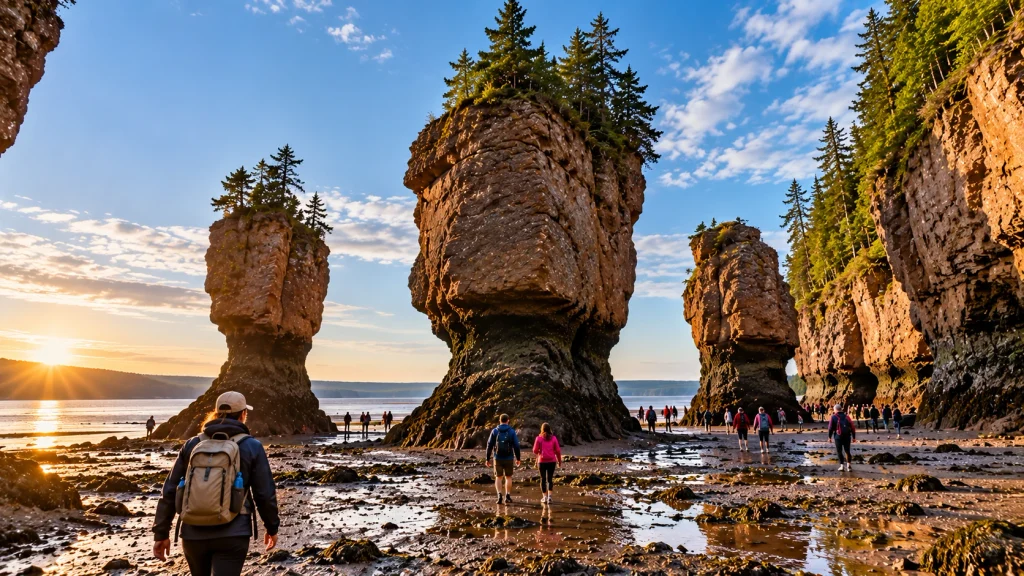
Most experienced visitors walk the muddy ocean floor during the morning low tide, leave the park to grab lunch in a nearby village, and then return four hours later. When you come back, the water will have completely swallowed the beach. This allows you to book a guided kayaking tour that paddles directly over the exact spots where you walked earlier that morning.
Safety Rules for Exploring the Flowerpot Rocks
Exploring a constantly shifting coastal environment requires strict adherence to local park warnings. The towering sandstone formations are naturally unstable, and falling debris poses a severe threat to tourists who ignore the boundary markers.
Follow these specific safety fixes to protect yourself on the beach:
- Stay away from the cliff walls: The red sandstone cliffs suffer from extreme coastal erosion, causing massive, unpredictable rockfalls. Never walk directly underneath a cliff overhang or climb up the sides of the rocks.
- Set a dual-alarm system: Designate a timekeeper in your group to set a phone alarm 30 minutes before your strict “must-leave” time. This provides enough buffer to hike back to the stairs.
- Leave the drone behind: Transport Canada and park rangers strictly prohibit all personal drone flights to protect the nesting peregrine falcons living in the cliffs.
- Respect the closing hours: Do not attempt to sneak down to the beach when the park is closed. Staff remove the safety barriers at night, and entering the dark beach invites a fatal drowning risk.