
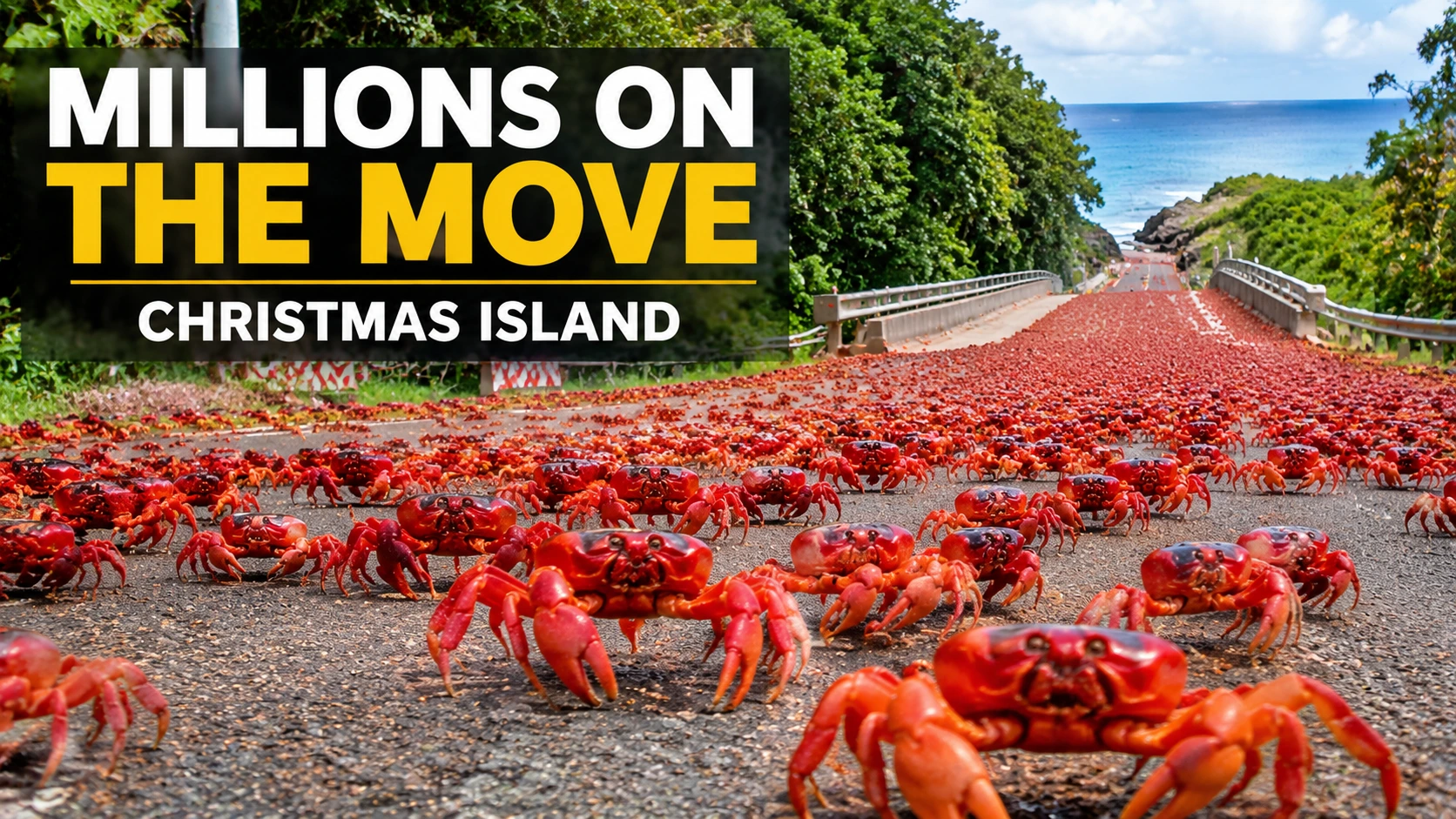
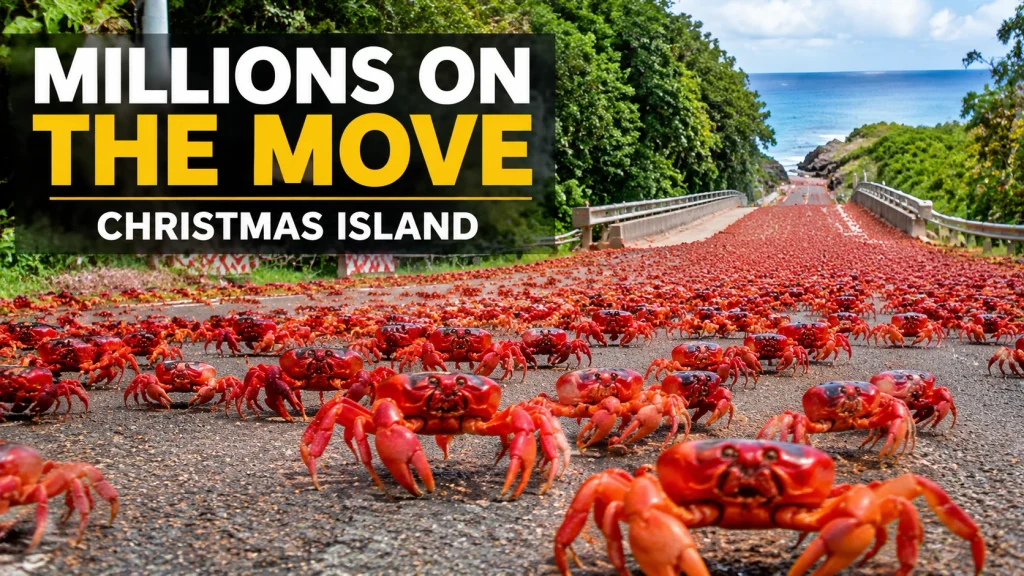
Tens of millions of red crabs officially triggered their 2026 annual migration across Australia’s Christmas Island following heavy mid-November rains. Starting November 14 and 15, the massive crustacean population abandoned their inland forest burrows and began marching toward the Indian Ocean to breed. Tourists currently visiting the island must immediately adapt their rental car routes, as local rangers have deployed physical road barriers and closed major driving tracks to protect the migrating animals.

How the Lunar Cycle and Rainfall Dictate Spawning Dates
The red crab migration does not happen on a fixed calendar date. It entirely depends on the onset of the wet season and the specific phases of the moon. The crabs wait for heavy, sustained rainfall to moisten their journey before moving toward the lower coastal terraces.
Once they reach the shoreline, the female crabs must release their eggs into the ocean precisely before dawn during the moon’s last quarter. This specific lunar phase guarantees a receding high tide, preventing the females from getting dragged out to sea by aggressive waves. Because the 2026 rains arrived in mid-November, Parks Australia experts predict the primary spawning event will align with the upcoming lunar window on December 5 and 6.
Also read – 25 Best Cultural Travel Experiences Around the World
Navigating Crab Bridges and Road Closures During the March
The Christmas Island Road Access Board (CRAB) actively manages traffic flows to separate heavy civilian vehicles from the crawling wildlife. You cannot simply drive anywhere on the island during this peak season. Rangers install temporary roadside barriers that physically funnel the crabs away from active asphalt and toward safe crossing zones.
The island features 31 dedicated underpasses and a world-famous five-meter-high “crab bridge” that carries the animals safely over the busiest local traffic arteries.

To avoid traffic citations and protect the wildlife, tourists must memorize these current road rules:
- Check the daily closures: Sections like Murray Road, the Boulder Track, and Northwest Point Road are completely closed to all civilian traffic right now to protect the primary migration paths.
- Obey the sweeps: You will see local volunteers using rakes and vehicle-mounted sweepers to gently push stray crabs off the active driving lanes. Never attempt to drive through a dense cluster of crabs.
- Do not move the animals: Touching or picking up a red crab is highly illegal. Moving them physically disrupts their navigation and causes them to march in the wrong direction.
The 5 Waves of the Red Crab Migration Sequence
Understanding the biological sequence helps you plan exactly which part of the migration you will witness during your stay. The event unfolds in five distinct waves over several weeks.
| Migration Phase | Primary Action | Expected Timeline |
| First Wave | Males leave the forest plateau to dig coastal mating burrows. | Mid-November 2026 |
| Second Wave | Females follow the males down to the terraces to mate. | Late November 2026 |
| Third Wave | Males return to the upper forests, leaving females in the burrows. | Late Nov to Early Dec |
| Fourth Wave (Spawning) | Females deposit eggs into the sea and immediately march inland. | December 5–6, 2026 |
| Fifth Wave | Surviving baby crabs emerge from the ocean and march into the jungle. | Late December 2026 |
Planning Your Wildlife Viewing Safety
If you want to view the densest concentration of migrating crabs, you must rent a vehicle and position yourself near the lower terraces during the early morning hours before 10:00 AM, or in the late afternoon after 3:30 PM. The crabs retreat into shady crevices during the extreme midday heat to prevent fatal dehydration.
Pack high-traction walking shoes, as the coastal limestone terraces become incredibly slippery when covered in millions of wet crustaceans. Always carry enough drinking water in your vehicle, because getting stuck behind a temporary, unannounced road closure can easily add two hours to your return trip to the main township.