

Flying with a dog to Europe in 2026 is possible, but the paperwork must be timed correctly before you book the flight. Most travellers need a microchip, rabies vaccination, official health certificate, airline-approved carrier and, for some countries, tapeworm treatment before arrival.

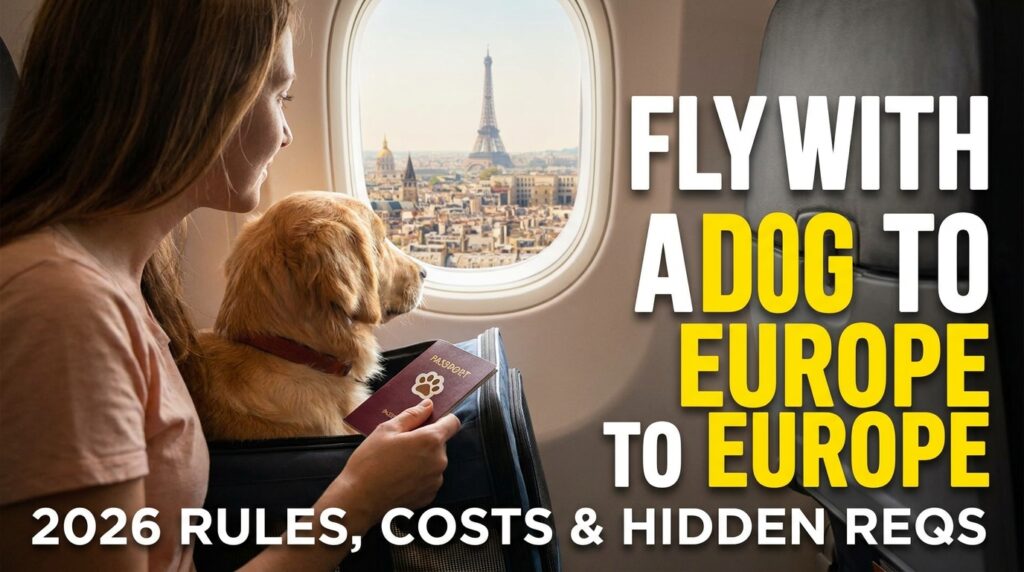
The biggest mistake dog owners make is booking the ticket first and checking the rules later. That can turn a simple Paris, Rome or Amsterdam trip into a stressful last-minute scramble with a vet, airline and government office.
For anyone searching “how to fly with a dog to Europe in 2026,” the answer depends on three things: your departure country, your dog’s size, and whether your destination follows EU rules, UK rules or extra national requirements.

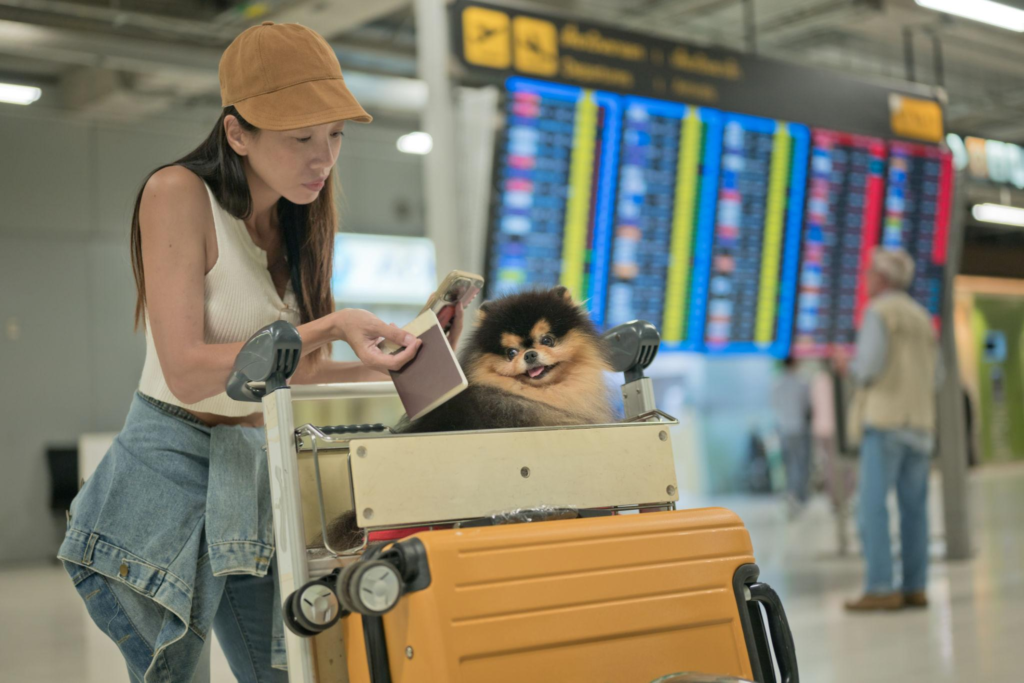
What Documents Does a Dog Need to Fly to Europe in 2026?
A dog flying to the EU in 2026 usually needs a microchip, rabies vaccination and an animal health certificate or valid pet passport. Dogs entering from many non-EU countries must also pass through an official travellers’ point of entry where documents and identity can be checked.
Use this checklist first:
| Requirement | What it means for dog owners |
|---|---|
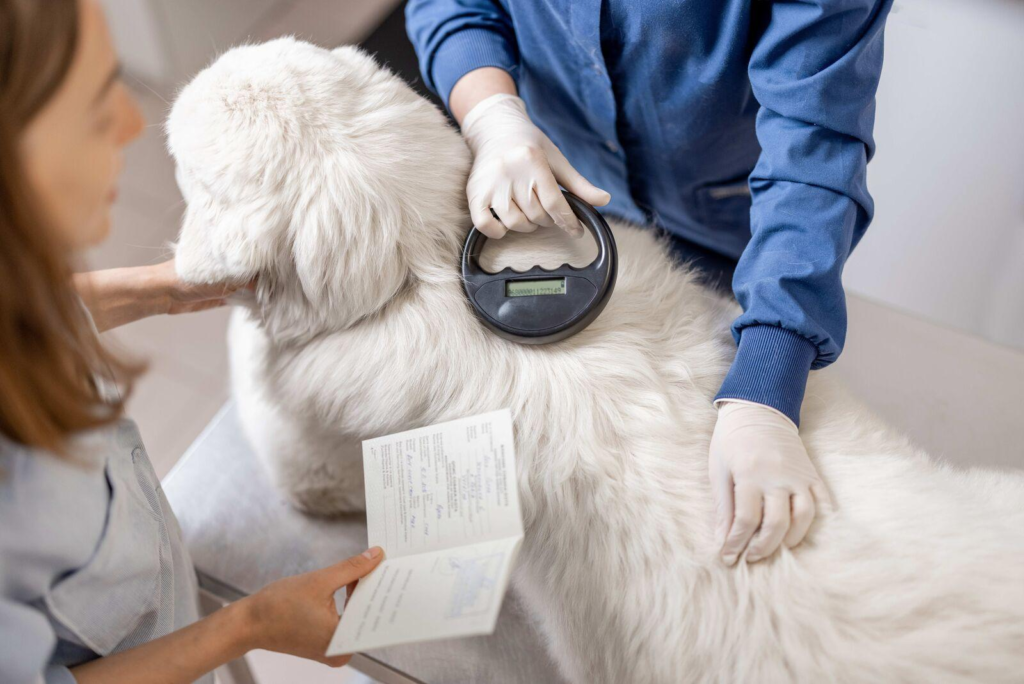
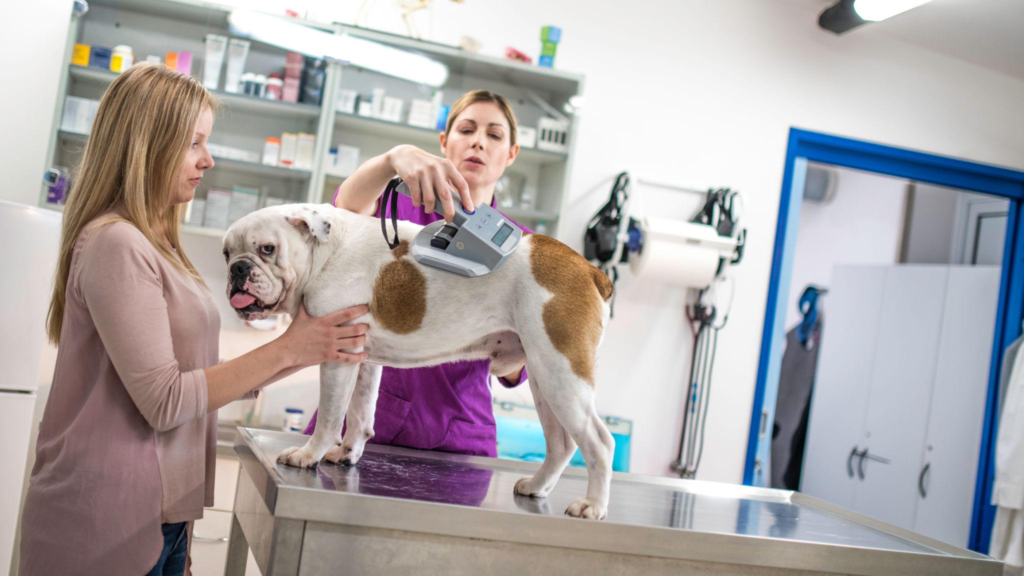
| Microchip | Must be implanted before, or at the same time as, the rabies vaccination |
| Rabies vaccine | Dog must be at least 12 weeks old when vaccinated, then wait at least 21 days after a primary vaccine |
| Health certificate | Needed for many dogs entering the EU from outside Europe |
| Pet passport | Usually for dogs habitually living in the EU, not a shortcut for every traveller |
| Tapeworm treatment | Needed for dogs entering Finland, Ireland, Malta, Northern Ireland, Norway and Great Britain |
| Airline approval | Separate from government rules and often stricter |
| Approved carrier or crate | Must match airline and IATA-style space requirements |
The official European Commission pet travel rules are the best starting point for EU entry, while U.S. travellers should also check USDA APHIS pet travel guidance.
Also read – 7 Airlines Allowing Large Dogs in Cabin for International Travel
Can My Dog Fly in the Cabin to Europe?
Small dogs can fly in the cabin on many Europe-bound airlines, but the dog and carrier usually must fit under the seat. Airlines make the final decision, not the border authority.
A useful rule: if your dog and soft carrier together are around 8 kg or 17.6 lb, you may qualify for cabin travel on airlines such as Lufthansa, KLM or Air France. If your dog is larger, the dog may need to fly in the hold as checked pet baggage or as cargo.
For example, KLM says a pet in the cabin must fit in a closed kennel or bag under the seat, with a combined pet-and-carrier weight of no more than 8 kg. Lufthansa’s animal travel rules also state that only smaller dogs and cats up to 8 kg including the carrier may travel in the cabin.

How Much Does It Cost to Fly With a Dog to Europe in 2026?
The real cost to fly a dog to Europe in 2026 can range from a few hundred dollars to well over $1,000 when you add airline fees, vet documents, government endorsement and the carrier. The flight fee is only one part of the bill.
| Cost item | Typical 2026 cost clue |
| Airline pet fee | KLM lists pet transport from €70 to €500 one-way, depending on route |
| U.S. USDA endorsement | APHIS lists $101 per certificate when no lab tests are required, with higher fees when tests are involved |
| Vet health certificate visit | Clinic pricing varies widely, so ask for the total before booking |
| Rabies vaccine or booster | Depends on your vet and country |
| Carrier or crate | Soft cabin carrier is cheaper; IATA-style hold crate costs more |
| Tapeworm treatment | Needed for selected countries and must be recorded by a vet |
| Pet cargo agent | Required on some routes, especially for Great Britain or large dogs |
The hidden cost is not always money. It is timing. If your vet fills one date incorrectly or the microchip was recorded after the rabies vaccine, the certificate can be rejected.
2026 Rule Change Dog Owners Should Know
EU pet travel rules changed in 2026, so travellers should not rely on old blog posts or screenshots from previous trips. The European Commission now refers to updated 2026 legislation for non-commercial pet travel, and USDA notes that new non-commercial EU health certificates take effect on October 1, 2026, after a transition period.
That matters if you are travelling late in 2026. Ask your vet which certificate version applies to your travel date, especially if your appointment is close to the transition window.
A smart move is to email your vet this short note:
“I’m flying with my dog to [country] on [date]. Can you confirm you are using the current 2026 EU health certificate and that the microchip, rabies vaccine and endorsement timing will meet entry rules?”
This one message can prevent a wrong-form problem days before departure.

What Is the 10-Day Rule for Dog Travel to Europe?
The 10-day rule means your dog’s health certificate must be issued or endorsed close enough to arrival for EU entry checks. For many non-EU travellers, this becomes the tightest part of the planning.
The official EU rule says the animal health certificate is valid for entry checks for 10 days from issue, and then can be valid for onward movement in the EU after entry. UK government guidance also says an animal health certificate for EU travel is valid for 10 days for EU entry and 6 months for onward travel within the EU.
Practical tip: do not schedule the vet appointment on the earliest possible day if your flight has a risky connection. Give yourself enough time for government endorsement, but not so much that a flight delay pushes your dog outside the valid window.
Also read – Tried & Tested Cheapest Ways to Travel in Europe
Hidden Requirement: Tapeworm Treatment Is Not Needed Everywhere
Tapeworm treatment is required only for certain European destinations, but missing it can stop your dog at the border. Dogs entering Finland, Ireland, Malta, Northern Ireland and Norway need treatment against Echinococcus multilocularis. Great Britain also requires tapeworm treatment for dogs.
The timing is strict: treatment must usually be given by a vet no less than 24 hours and no more than 120 hours before entry. This is not a tablet you quietly give at home and mention later. It must be recorded properly in the passport or health certificate.
Best habit: if your trip includes multiple countries, check the tapeworm rule for every border crossing, not just your first airport.
Flying to the UK With a Dog Is Different From Flying to the EU
Flying a dog to Great Britain is more restrictive than flying to many EU destinations. Great Britain has its own document rules, approved route requirements and tapeworm treatment requirement for dogs.
The UK government pet travel guide is essential if your route includes England, Scotland or Wales. Many travellers also discover that airlines may not carry pets in the cabin into the UK, even if that same airline allows cabin pets to France, Germany or the Netherlands.
If London is your final destination and your dog is too large for the cabin, speak to the airline or a pet shipping agent before buying your own ticket. Do not assume a “pet-friendly airline” means a pet-friendly UK arrival route.
Should You Sedate Your Dog Before a Long Flight?
Do not sedate your dog for a flight unless your veterinarian specifically tells you to. Sedation can create breathing and balance problems during air travel, and some airlines can refuse a pet that appears sedated.
A better approach is training, not medication:
- Put the carrier in your home weeks before travel.
- Feed treats inside it so your dog sees it as normal.
- Practise short closed-door sessions.
- Take short car rides in the carrier.
- Use a familiar blanket that smells like home.
- Walk your dog before check-in.
The FDA’s pet travel advice also recommends avoiding sedatives during travel unless discussed with a veterinarian.
Best Airlines for Flying With a Dog to Europe in 2026
The best airline is the one that accepts your dog’s size, route and destination rules in writing before you pay. Do not choose only by ticket price.
Compare airlines using this table:
| Airline question | Why it matters |
| Does the airline accept dogs on this exact route? | Some routes block pets because of airport or country rules |
| Is cabin travel allowed? | Many airlines limit cabin pets to around 8 kg including carrier |
| Is hold travel available? | Large dogs may need checked pet baggage or cargo |
| Are snub-nosed breeds allowed? | Bulldogs, pugs and similar breeds often face restrictions |
| How early must I register the dog? | Some airlines require pet booking 24 to 72 hours before travel |
| What are the carrier dimensions? | A carrier that works on one airline may fail on another |
A simple trick: after calling the airline, ask for the pet booking confirmation by email or visible note in your reservation. At check-in, a verbal promise from last week is not enough.
Also read – 35 Best Things to Do in Cozumel With A Toddler


Step-by-Step Timeline to Fly With a Dog to Europe in 2026
Start at least 8 weeks before travel if your dog already has a valid rabies vaccine, and much earlier if a rabies blood test may be required.
8 to 12 Weeks Before Travel
- Check the official rules for your destination country.
- Confirm your dog’s microchip is readable.
- Check whether the rabies vaccine was given after the microchip.
- Ask your airline about cabin, hold or cargo options.
- Buy the correct carrier or crate.
3 to 6 Weeks Before Travel
- Book a vet appointment with an accredited or authorised veterinarian.
- Confirm if your dog needs a rabies blood test.
- Train your dog to relax in the carrier.
- Reserve the pet space with the airline.
10 Days Before Arrival
- Complete the health certificate process.
- Get government endorsement where required.
- Print every document.
- Keep digital copies in your phone and email.
1 to 5 Days Before Entry, If Required
- Get tapeworm treatment for dogs entering Great Britain, Finland, Ireland, Malta, Northern Ireland or Norway.
- Check that the vet records the product name, date, time, stamp and signature.
Day of Travel
- Arrive early.
- Carry rabies certificate, health certificate, airline pet approval and microchip details.
- Do not feed a heavy meal right before the flight.
- Keep the dog calm and inside the carrier.
Final Answer: What Is the Safest Way to Fly With a Dog to Europe in 2026?
The safest way to fly with a dog to Europe in 2026 is to plan the paperwork before the ticket, choose a direct route where possible and get written airline approval for your dog’s travel method. The rules are manageable, but they are not flexible at the airport.
For most travellers, the winning formula is simple:
- Microchip first
- Rabies vaccine second
- Health certificate inside the correct time window
- Airline pet reservation in writing
- Tapeworm treatment where required
- Printed and digital documents
- No sedation unless your vet clearly advises it
A dog-friendly European trip starts long before boarding. The smoother your paperwork, the calmer your dog’s travel day will feel.