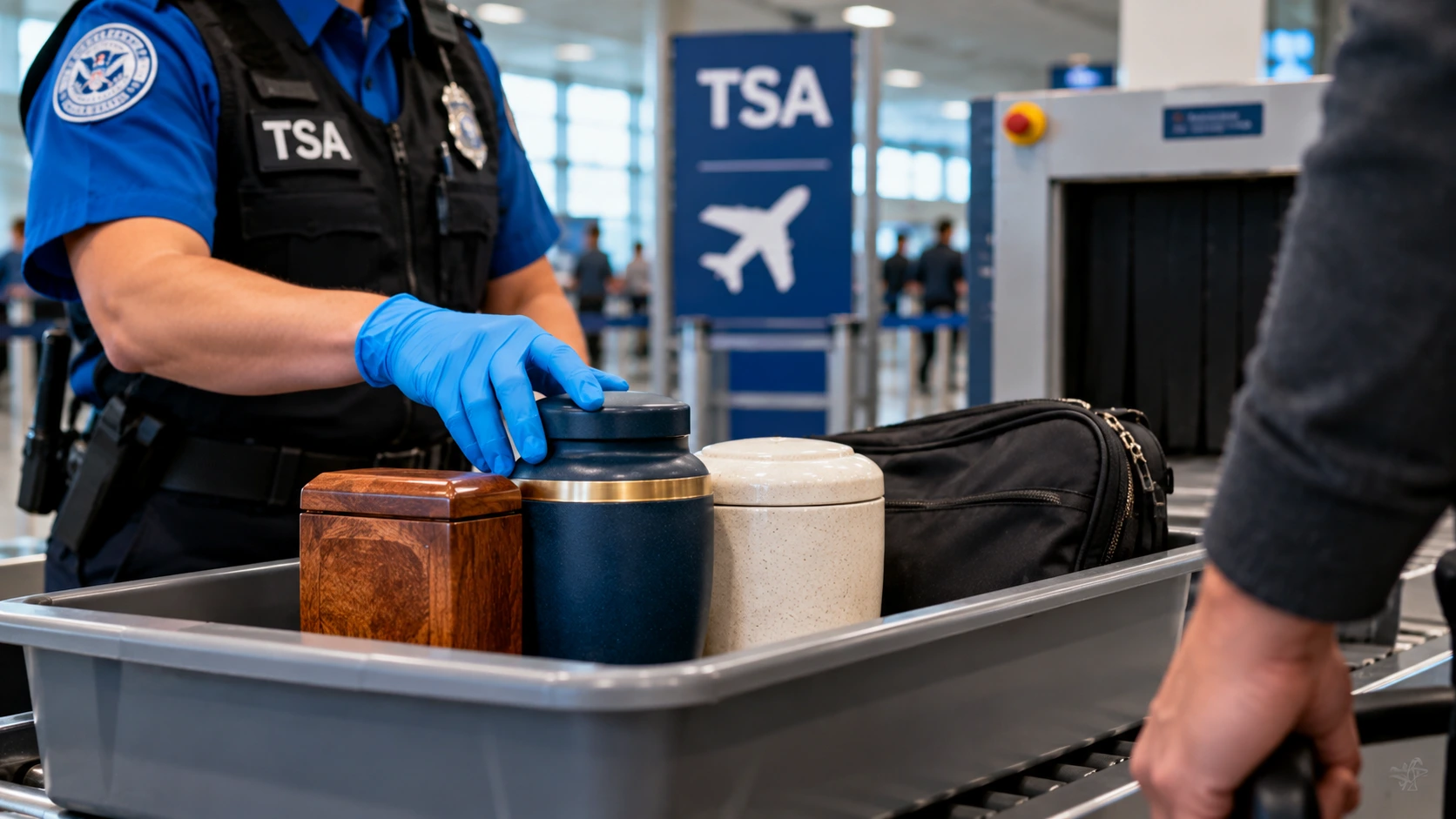
Passengers flying with cremated ashes must pack the remains in a temporary container made of wood, plastic, or cardboard. The security X-ray machine must see completely through the box to verify the contents. If the machine cannot scan the inside of the container, security officers will ban the item from the sterile terminal area.
The Transportation Security Administration (TSA) strictly forbids its officers from opening any urn to conduct a visual inspection. Even if you offer to open the container yourself, federal agents will refuse the request out of respect for the deceased and to maintain sanitary screening conditions.
Which Urn Materials Will Pass the TSA Security X-Ray Scanner?
Heavy metal and dense stone urns block X-ray beams entirely. This causes an automatic failure at the security checkpoint and forces you to leave the container behind. You must ask your funeral director to provide a temporary plastic or cardboard travel box before you head to the airport.
If you purchased a permanent metal urn for a final memorial service, you can still bring it on your trip. Simply pack the empty metal urn inside your checked luggage and carry the actual ashes in a separate, scannable plastic container.
| Urn Material | TSA X-Ray Result | Travel Recommendation |
| Thin Plastic or Cardboard | Passes Easily | The absolute best choice for airport travel. |
| Standard Wood | Passes Easily | A highly reliable and respectful travel option. |
| Glass or Ceramic | Sometimes Fails | High risk of shattering during the flight. |
| Bronze, Steel, or Stone | Automatic Failure | Blocks the scanner; pack empty in a checked bag. |

Carry-On vs. Checked Bags: Where Should You Pack the Ashes?
You should always pack the scannable container inside your carry-on luggage. The Federal Aviation Administration (FAA) strongly advises passengers to keep highly valuable or irreplaceable items in the passenger cabin. Checked bags face severe physical impacts on conveyor belts and frequently get lost during connecting flights.
Also read – 10 Best Balancing Rocks Places in the World to Travel
Most major United States airlines require you to transport cremated remains exclusively as carry-on baggage. However, you must check your specific airline’s internal policy before arriving at the departure gate. Some commercial carriers require you to place the plastic travel box inside a secondary sealed plastic bag to prevent accidental spills during severe mid-air turbulence.
3 Specific Legal Documents You Need at the Airport
Airport security agents and gate staff need official proof of what you are carrying. Traveling without the correct paperwork will result in massive delays and potential confiscation of the travel box.
You must carry these physical documents in a folder next to the urn:
- Certificate of Cremation: The official document provided by the crematorium proving the exact nature of the remains.
- Certified Death Certificate: A state-issued document featuring a raised seal. Always carry a certified copy rather than a standard photocopy.
- Burial Transit Permit: Certain states require this specific transport permit if you plan to move human remains across state lines.
If you plan to take the ashes on an international flight, you face a completely different set of rules. You must contact the destination country’s local embassy to secure specific import permits. The Customs and Border Protection (CBP) agency requires detailed documentation before allowing remains to cross international borders, while the Centers for Disease Control and Prevention (CDC) mandates that the urn must remain securely sealed to pass health inspections.
What to Do If Your Container Fails the Security Inspection
If your container blocks the X-ray scanner, you cannot carry it onto the airplane. Because TSA agents cannot manually inspect the ashes, you only have a few immediate options to resolve the crisis.
You can hand the container off to a non-traveling friend or family member waiting outside the security checkpoint. If nobody is available to take the urn, your only remaining option is to ship the remains to your final destination.
The United States Postal Service (USPS) is the only legal carrier permitted to ship human remains within the country. Private couriers like FedEx and UPS strictly ban the transport of cremated ashes. You must use Priority Mail Express and affix a highly visible orange Label 139 to the shipping box to ensure postal workers handle the package correctly.