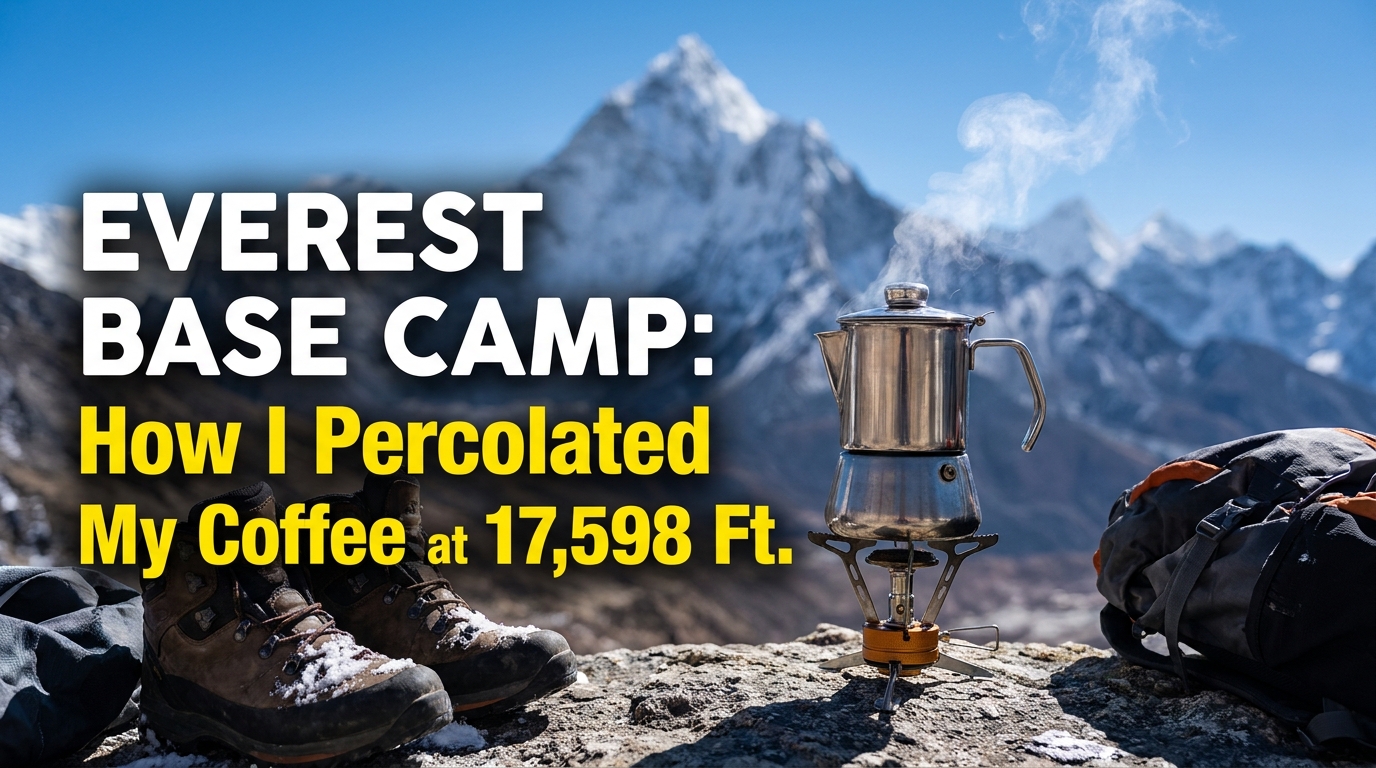
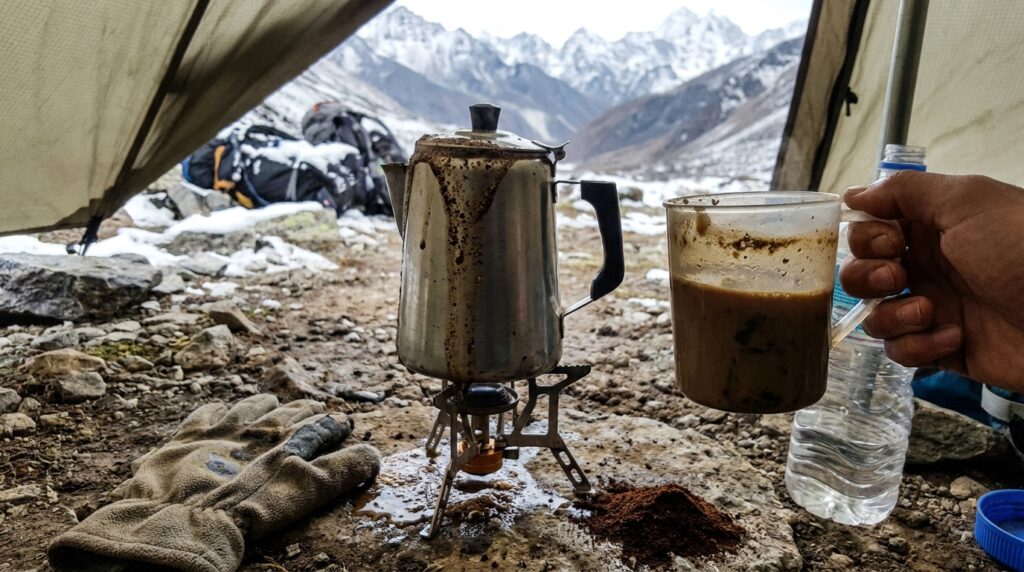
The best coffee I had on the Everest Base Camp hike was not from a café, a hotel breakfast, or a polished mountain lodge. It came from a small coffee percolator, a dented camping mug, and a cold morning when my fingers did not want to work properly.

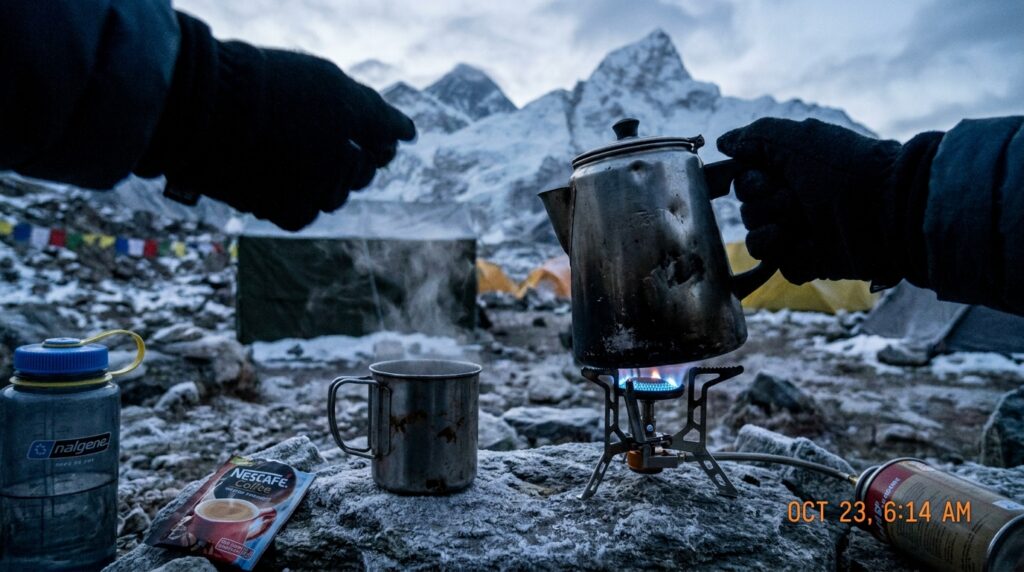
On the Everest Base Camp trail, coffee is more than a drink. It is a warm pause between thin air, frozen socks, early starts, and long walking days. But making coffee there is not the same as making coffee at home. Water boils differently, your appetite changes, fuel matters, and even a simple camping coffee pot feels like a luxury when you are standing above 4,000 meters.
Here is exactly how I made my coffee on the Everest Base Camp hike, what worked, what I would not do again, and how to make a strong, clean cup without carrying a full kitchen in your backpack.
Why I Chose a Coffee Percolator for the Everest Base Camp Trail
A coffee percolator made sense because it is simple, tough, and does not need paper filters or electricity. On a trek where everything in your bag must earn its place, I wanted one brewing method that could handle rough mornings and uneven heat.

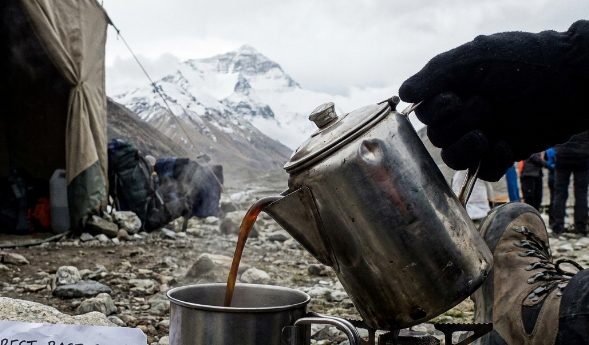
A percolator works by heating water in the lower chamber. The hot water rises through a central tube, spills over coarse coffee grounds, and cycles back into the pot. That repeated movement creates a bold cup that feels right in cold mountain air.
I did not carry an electric percolator for the actual trail because electricity is limited, charging costs rise as you go higher, and plugs are never guaranteed. An electric percolator is useful at home, in a lodge with reliable power, or before the trek in Kathmandu. For the trail itself, a stovetop or camp-style percolator is the better choice.
Also read – Is the Kinnaur Kailash Trek Dangerous? My Honest Guide
What I Packed for Coffee on the Everest Base Camp Hike
The best Everest coffee setup is small, strong, and easy to clean. I kept mine basic because mornings on the trail are not the time for complicated gear.
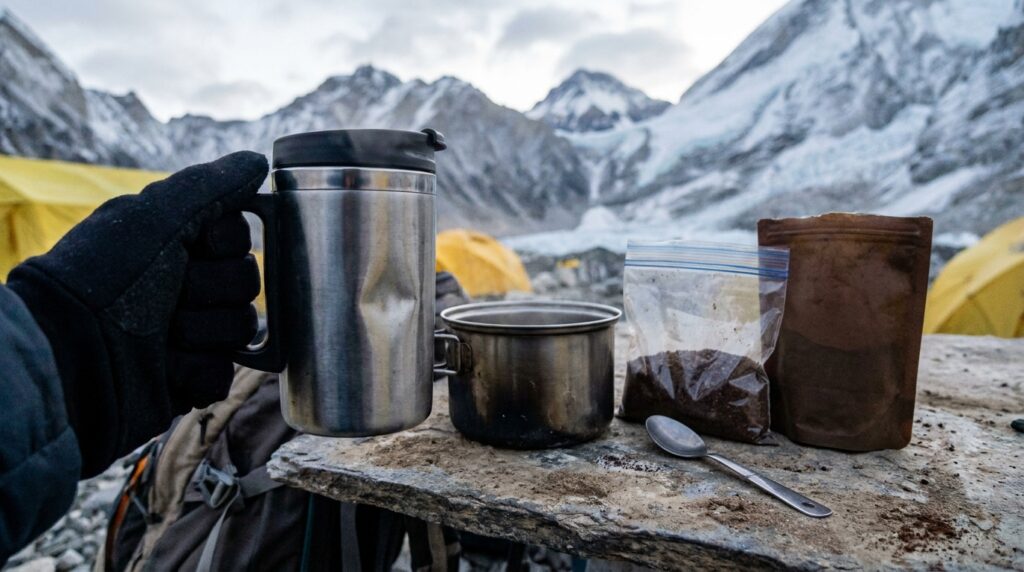
| Coffee item | Why it helped | What I would choose again |
|---|---|---|
| Small camping coffee pot | Worked on a stove and handled rough packing | Stainless steel, compact size |
| Coarse-ground coffee | Reduced bitterness and muddy sediment | Freshly ground before the trek |
| Camping mug | Kept coffee warmer during cold mornings | Insulated mug with a lid |
| Small spoon | Helped measure coffee without guessing | One dedicated coffee spoon |
| Zip bag for used grounds | Kept waste contained | Thick reusable pouch |
The most important item was not the pot. It was the camping mug. A thin metal cup cools fast at altitude. An insulated mug with a lid gives you a few extra minutes of hot coffee, and those minutes feel valuable when the dining room is cold.
How to Use a Percolator on the Everest Base Camp Hike
Here is the simple method I followed when the lodge kitchen allowed hot water or stove access.
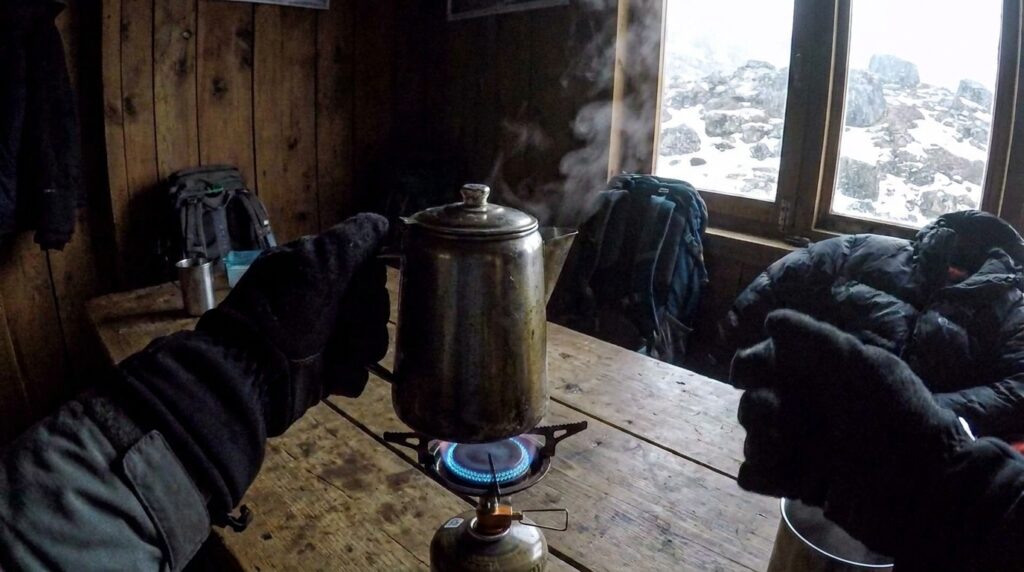
- Add clean water to the lower chamber. Keep the water below the spout line so it does not spill during brewing.
- Insert the stem and basket properly. If the basket sits crooked, the water will not move evenly through the grounds.
- Use coarse coffee, not fine coffee. Fine grounds make the coffee bitter and leave sludge in the cup.
- Start with one tablespoon of coffee per cup of water. Add more coffee next time if you want strength. Do not just brew longer.
- Heat until the coffee starts perking. Watch the glass knob if your pot has one.
- Lower the heat once perking starts. A gentle bubble is good. A violent boil ruins the taste.
- Brew for 4 to 7 minutes. Four minutes gives a lighter cup. Five to six minutes is balanced. Seven minutes is strong.
- Remove the pot and rest it for 30 to 60 seconds. This lets fine grounds settle before you pour.
This is the answer to how to use a percolator on a trek: control the grind, control the heat, and stop before bitterness takes over.
Also read – 35 Off the Beaten Path Places to Visit in the USA
The Everest Trick: Do Not Boil It Like You Do at Home
Coffee at high altitude needs a gentler hand because water behaves differently as you climb. At Everest Base Camp height, the air pressure is lower, so water boils at a lower temperature than it does at sea level. That means a rolling boil does not automatically mean better extraction.
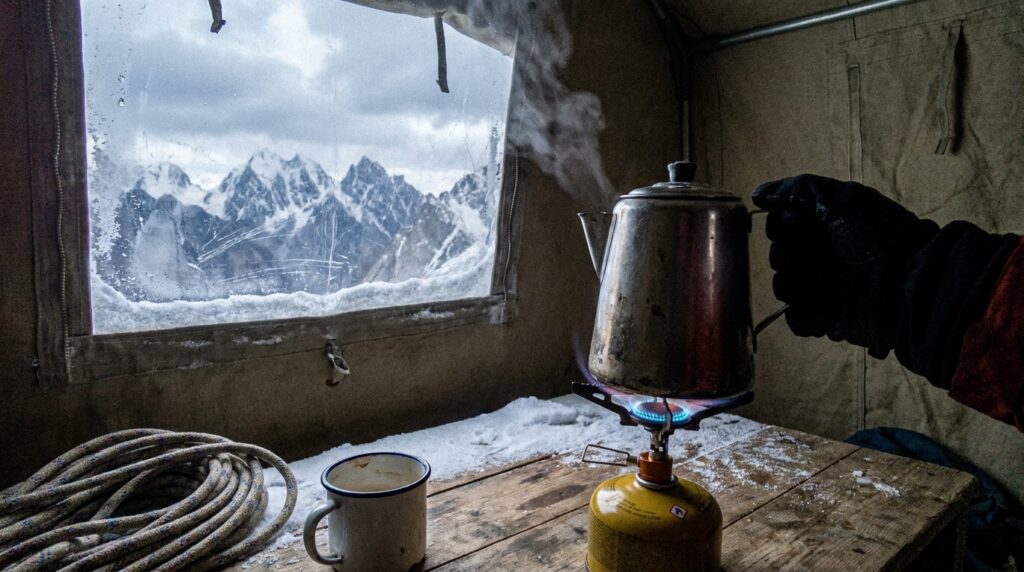
The mistake many trekkers make is thinking, “It is cold, so I should boil harder.” That makes percolator coffee harsh. The better move is to heat until perking starts, then pull the pot slightly away from the strongest heat.
My rule was simple: if the percolator sounded angry, the coffee was going to taste angry.
My Best Coffee Morning Was Near Dingboche
The most memorable cup was not at Base Camp itself. It was near Dingboche, after a night of broken sleep and a dull altitude headache that made breakfast feel like work. The room smelled like damp wool, wood smoke, and fried potatoes. Someone was coughing in the corner. Outside, the light was sharp and blue.
I made a small pot, poured it into my camping mug, and sat with both hands wrapped around it. I did not drink it fast. I used it as a slow reset.
That is when coffee on the Everest Base Camp hike made sense to me. It was not about chasing the perfect café-style flavor. It was about warmth, routine, and feeling human before walking again.
What Not to Do When Making Coffee on the EBC Trail
Avoid these mistakes if you want better coffee and fewer problems:
- Do not use fine espresso-style coffee. It slips through the basket and makes muddy coffee.
- Do not let the pot boil hard. Hard boiling makes the coffee bitter.
- Do not brew longer than 7 to 8 minutes. Add more coffee next time instead.
- Do not pour immediately. Let the pot rest so grounds settle.
- Do not dump coffee grounds outside. Pack them out or dispose of them properly at the lodge.
- Do not drink coffee instead of water. Coffee is not a hydration plan.
The last point matters. The CDC’s high-altitude travel guidance warns that altitude illness can include headache, tiredness, nausea, vomiting, and loss of appetite. Coffee is fine for many regular coffee drinkers, but it should not replace water, soup, or proper rest.
Also read – 10 Ethereal Places That Look Like a Fairytale & How to Visit
Should You Drink Coffee at High Altitude?
Yes, regular coffee drinkers can usually have coffee at altitude, but moderation matters. The CDC Yellow Book notes that regular caffeine users may continue caffeine to avoid withdrawal headaches that could be confused with altitude headaches.
That advice matched my experience. Skipping coffee suddenly gave me a headache. Drinking too much made me feel dry and restless. One moderate cup in the morning was the sweet spot.
A smart Everest coffee rule is:
| Situation | Best choice |
| You drink coffee daily at home | Have one normal cup |
| You already have a headache | Drink water first, then decide |
| You feel nauseous | Skip coffee until you feel better |
| You slept badly | Keep coffee small, walk slowly |
| Symptoms get worse | Do not climb higher |
The Himalayan Rescue Association gives the clearest altitude rule: if symptoms worsen, rest or descend. Coffee should never be used to push through warning signs.
Camping Coffee Pot vs Electric Percolator: Which Is Better for Everest?
A camping coffee pot is better for the trekking route because it is durable, simple, and does not depend on charging. An electric percolator is better before or after the trek, especially in hotels where power is reliable.

| Option | Best for | Not ideal for |
| Camping coffee pot | Trail mornings, lodge kitchens, camp stoves | People who want automatic brewing |
| Electric percolator | Hotels, home use, reliable power | High trekking days with limited electricity |
| Instant coffee | Ultralight packing | Flavor and ritual |
| French press | Better texture and control | Fragile parts and messy grounds |
| Pour-over | Clean taste | Filters, wind, and slower setup |
For the Everest Base Camp hike, I would choose a small camping coffee pot again. It gave me the right balance of flavor, durability, and simplicity.
How I Kept Coffee Grounds from Becoming Trail Trash
Used coffee grounds are still waste. They may look natural, but they do not belong on the trail, near lodges, or beside water sources. I kept mine in a small zip bag and emptied it only where proper waste disposal was available.
The Leave No Trace rule is simple: pack it in, pack it out. That includes food scraps, wrappers, and leftover coffee grounds.
This small habit matters in the Khumbu region because waste is difficult to move. There are no easy road systems on much of the route, and every unnecessary item becomes someone else’s problem.
FAQs: Coffee on Everest Base Camp Hike
Can you make real coffee on the Everest Base Camp trek?
Yes, you can make real coffee on the Everest Base Camp trek if you carry a small coffee percolator, coarse coffee, and a camping mug. You still need to respect lodge rules and avoid making a mess.
What grind is best for a coffee percolator?
Coarse grind is best for a coffee percolator. It reduces sediment, helps water move through the basket, and keeps the flavor smoother.
How long should percolator coffee brew?
Percolator coffee should brew for 4 to 7 minutes after the perking starts. Longer brewing usually makes the coffee bitter.
Is an electric percolator good for camping?
An electric percolator is good for car camping, cabins, and hotels with steady power. It is not the best choice for the Everest Base Camp trail because charging is limited and expensive higher up.
What is the best mug for trekking coffee?
The best trekking coffee mug is insulated, leak-resistant, and easy to hold with gloves. A lid helps keep coffee warm longer in cold air.
Final Takeaway: The Best Everest Coffee Is Simple
The best coffee on the Everest Base Camp hike is not complicated. Use coarse coffee, gentle heat, a small camping coffee pot, and an insulated camping mug. Brew for a few minutes, let it settle, pack out the grounds, and drink it slowly.
At home, coffee can be a habit. On the trail to Everest Base Camp, it becomes a moment. Done well, it gives you warmth, routine, and a small piece of comfort in a place where every simple thing feels earned.