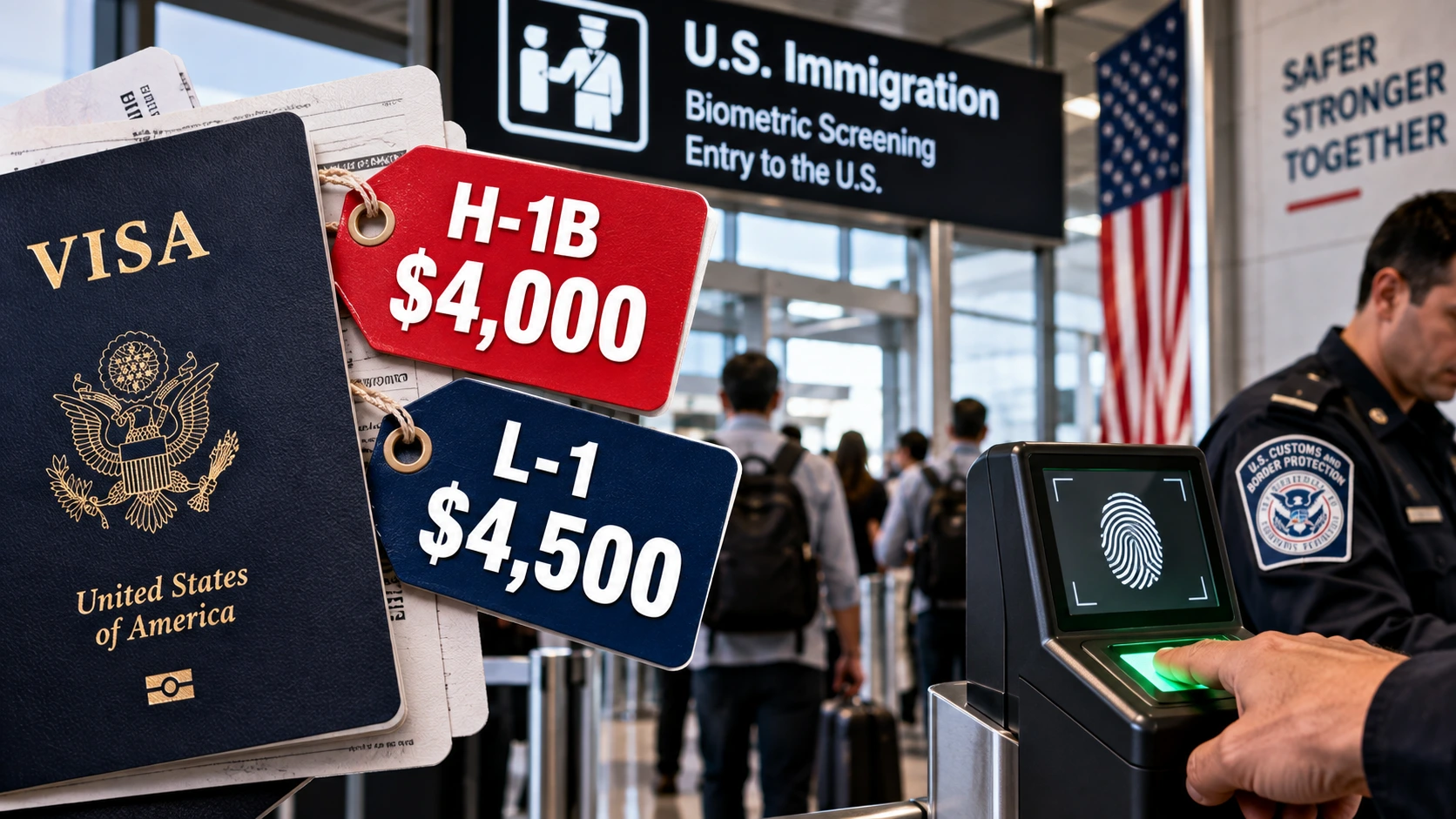
The $4,000 H-1B and $4,500 L-1 biometric fees now apply to all extension of status petitions filed by covered employers. The final rule became effective on September 9, 2026, expanding the long-standing 9-11 Response and Biometric Entry-Exit Fee to routine same-employer renewals that previously did not require it.

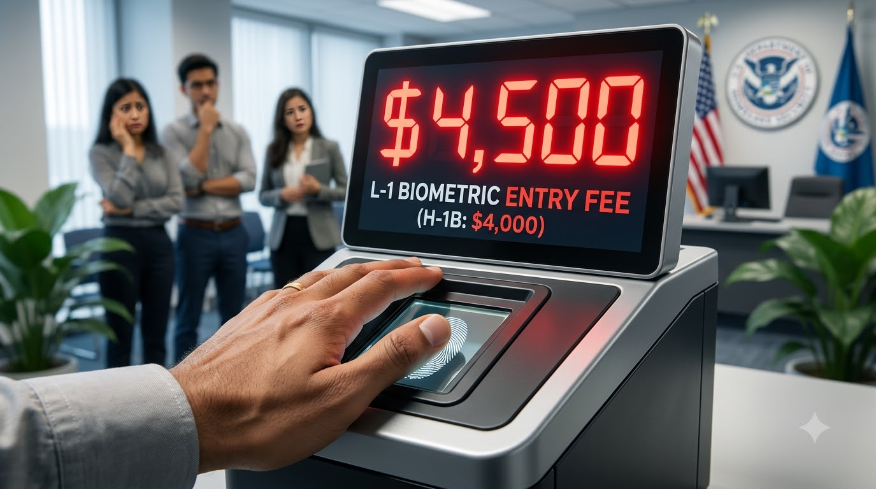
I have helped companies plan for these costs for years. The expansion raises the price of keeping H-1B and L-1 workers in status and changes budgeting for any employer that meets the covered-employer test. Here is the exact rule, who must pay, and the steps that prevent rejected filings.
What the Final Rule Changes
The Department of Homeland Security published the final rule on August 10, 2026. It amends the regulations so that covered employers must pay the 9-11 Biometric Fee on every H-1B or L-1 extension of status petition, including those filed by the same employer for the same worker.
Previously the fee applied mainly when the separate Fraud Prevention and Detection Fee was also required—typically initial grants of status and change-of-employer petitions. Same-employer extensions were generally exempt. That exemption ends for petitions filed on or after the effective date.
You can read the full official text in the Federal Register notice: 9-11 Response and Biometric Entry-Exit Fee for H-1B and L-1 Visas.
USCIS has posted a matching alert on its Form I-129 fee page confirming that petitions postmarked or submitted on or after September 9, 2026, must include the fee when required.
Also read – Ranked: The Most Expensive Tourist Visas in the World
Who Qualifies as a Covered Employer
Only covered employers pay the fee. The statutory definition is clear:
- The employer has 50 or more employees in the United States, and
- More than 50 percent of those U.S. employees hold H-1B, L-1A, or L-1B nonimmigrant status.
Both thresholds must be met. Companies that fall below either number remain exempt. The count is taken across the entire U.S. workforce in the aggregate.
Fee Amounts and When They Apply
| Petition Type | Fee for Covered Employer | Status Under New Rule |
|---|---|---|
| H-1B extension of status (same employer) | $4,000 | Now required |
| L-1A or L-1B extension of status (same employer) | $4,500 | Now required |
| Initial grant of H-1B or L-1 status | $4,000 / $4,500 | Unchanged |
| Change of employer | $4,000 / $4,500 | Unchanged |
| Amended petition that does not request extension of status | None | Explicitly exempt |
The employer pays the fee with Form I-129. The worker does not pay it personally. The amounts themselves did not increase; the rule only expanded the types of petitions that trigger the fee.
Critical Timing Rules
- Petitions postmarked or filed electronically on or after September 9, 2026, must include the fee if the employer is covered.
- Petitions filed before that date are not subject to the expanded requirement, even if USCIS decides them later.
- The fee is currently authorized through September 30, 2027, under the existing statute.
Practical Steps Employers Should Take Immediately
- Calculate the 50/50 headcount on a fixed recent date and document the result.
- Identify every same-employer extension that will be filed on or after September 9.
- Update internal cost models and any client charge-back arrangements to include the extra $4,000 or $4,500.
- Add the fee to every qualifying I-129 checklist so packages are not rejected for missing payment.
- Keep the headcount calculation on file in case USCIS later questions whether the fee was owed.
I have seen batches of extensions rejected simply because the biometric fee was omitted. Adding it at the start of the process is far less expensive than fixing a rejection or responding to a Request for Evidence.
Why the Fee Exists
Congress created the 9-11 Response and Biometric Entry-Exit Fee in 2015 to help fund the biometric system that records the entry and exit of foreign nationals. Half of the money collected goes into a dedicated account (capped at $1 billion); the other half goes to the general Treasury. Expanding the fee to more petitions increases the revenue available for that system.
What Individual Workers Should Understand
The fee is an employer obligation. It does not appear as a personal charge to the H-1B or L-1 employee. However, some employers may become more selective about which extensions they file or may push harder toward permanent residence sponsorship to reduce future temporary-status costs.
Bottom Line
From September 9, 2026, onward, almost every H-1B or L-1 extension filed by a covered employer carries the additional $4,000 or $4,500 charge. Amended petitions that do not seek more time remain exempt. Confirm your headcount status, adjust budgets, and include the fee on every qualifying filing. The authoritative sources remain the Federal Register final rule and the current USCIS Form I-129 fee guidance.