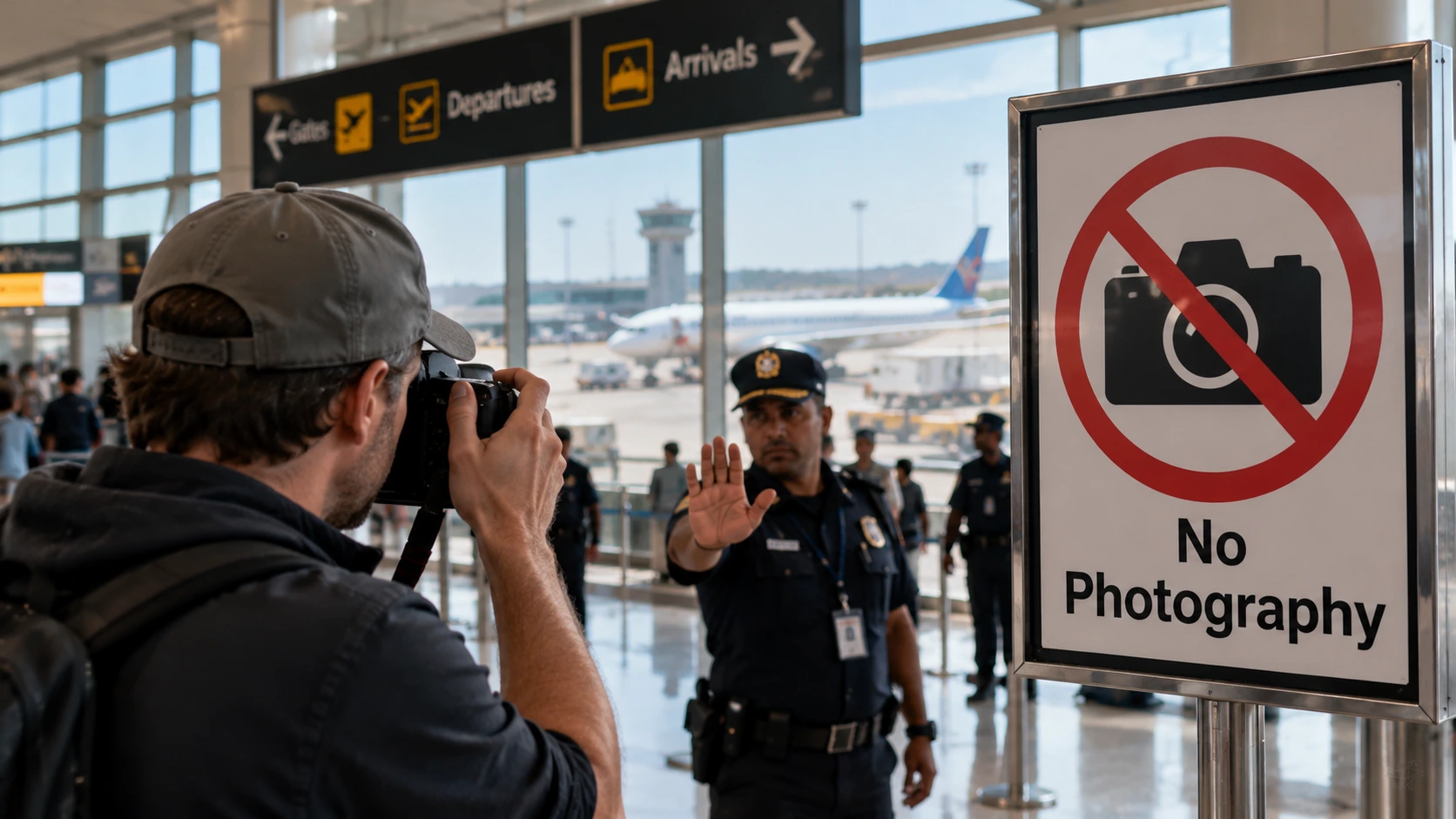
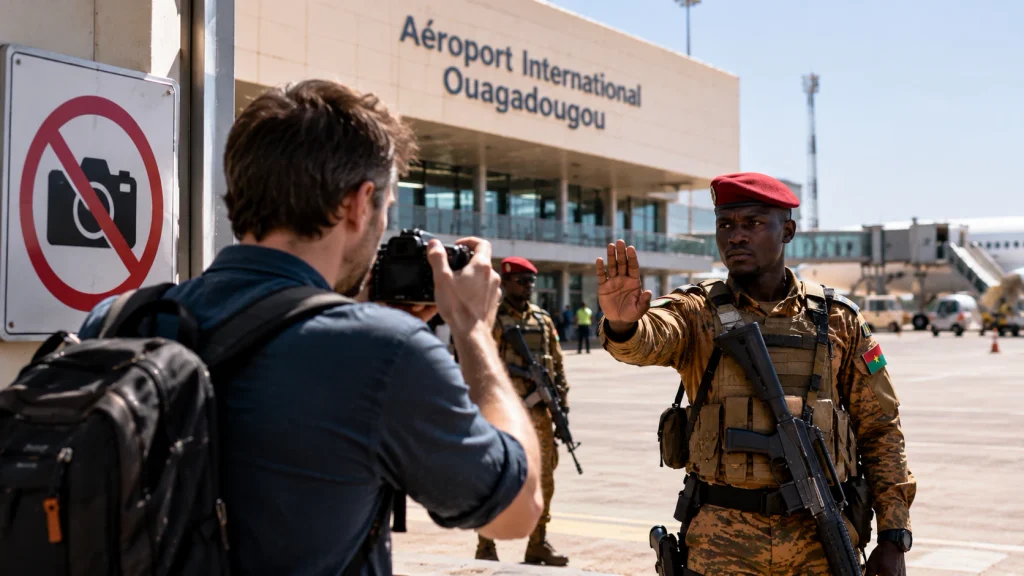
Taking a simple smartphone picture of an airport runway or security checkpoint in military-controlled nations like Burkina Faso can trigger immediate arrest and espionage charges. Authorities classify civilian airports, border crossings, and government buildings as sensitive national security installations. Snapping a photo of these locations is a severe criminal offense that frequently leads to indefinite military detention for foreign travelers.
Security forces view unauthorized photography as active reconnaissance for terrorist groups or foreign intelligence agencies. Because Burkina Faso currently operates under a transitional military government battling regional insurgencies, military personnel heavily share tarmac space with commercial airlines at Ouagadougou International Airport. Pointing a camera out of a passenger window risks capturing classified troop movements or military aircraft, which local police treat as an act of international spying.
Why Taking Photos at Burkina Faso Airports Leads to Espionage Charges
The legal stakes for this specific misunderstanding recently reached maximum severity under the current military leadership. The Burkina Faso legislature formally reinstated the death penalty for specific crimes including treason and espionage, according to the official Death Penalty Information Center. A tourist pointing a camera at a military aircraft parked on a civilian runway risks being charged under these exact treason statutes if border guards suspect malicious intent.
Foreign embassies possess extremely limited power to negotiate your release once military police categorize your actions as a national security threat. The Smartraveller Burkina Faso Advisory explicitly warns that the Australian government cannot guarantee emergency consular assistance anywhere in the country due to the volatile security environment. If you are detained for photographing an airport, you will face the local military justice system without immediate diplomatic protection.
Also read – Why 78% of Travelers Continue Researching After Booking?

What Happens When Police Catch Tourists Taking Illegal Photos
Armed guards will immediately confiscate your electronic devices, delete the files, and detain you in a military holding facility without formal charges. Checkpoint guards do not care if you are a tourist trying to capture a sunset; they operate under strict orders to seize all unauthorized recording equipment. You will not get your smartphone or camera back, and protesting the confiscation often leads to physical force.
Travelers must memorize the strict list of prohibited photography subjects before arriving in West Africa.
| Location Type | Legal Classification | Penalty Risk for Photography |
| International Airports | Dual-use military/civilian zone | Espionage charges, equipment seizure |
| Presidential Palaces | High-security government asset | Immediate arrest, treason charges |
| Police Checkpoints | Active military operation | Detention, aggressive interrogation |
| Bridges and Dams | Critical national infrastructure | Confiscation of devices, questioning |
Current State of Emergency and Curfew Enforcement Rules
A nationwide state of emergency grants security forces unchecked power to search individuals and seize property without a judicial warrant. Curfews change rapidly across different provinces, meaning travelers can easily find themselves on the street illegally after dark. The U.S. Embassy in Burkina Faso mandates that all foreign nationals must carry original physical identification, such as a passport with a valid visa, at all times to present at mandatory police checkpoints.
Failing to produce your physical passport during a random street stop results in immediate transfer to a police station for identity verification. Digital copies stored on your phone are not legally accepted by military patrols.
Also read – 20 Best Solo Travel Destinations for Cultural Experiences
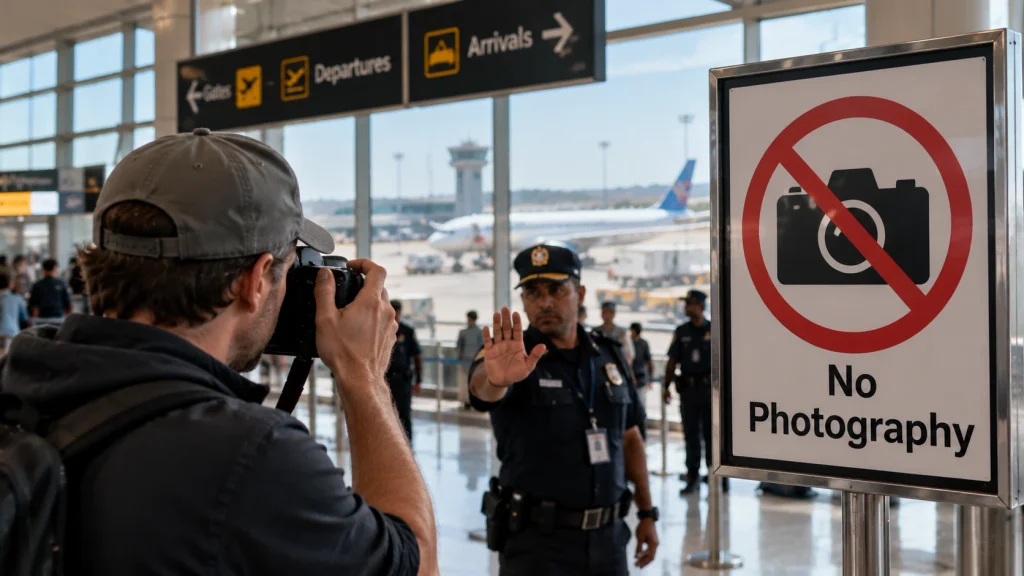
Steps to Follow If Confronted by Border Guards Over a Photo
Hand over your camera or smartphone immediately without arguing, raising your voice, or making sudden movements toward your pockets. Resisting equipment confiscation frequently escalates a minor misunderstanding into a violent physical altercation with heavily armed military personnel.
- Comply instantly: Unlock the device and allow the officer to delete the photos themselves to prove you have nothing to hide.
- Do not offer bribes: Attempting to pay an officer to look the other way triggers severe corruption and bribery charges, complicating your legal situation further.
- Request embassy contact calmly: If officers move to arrest you, state clearly that you are a foreign citizen and request access to your consular representative.
- Do not sign unreadable documents: Never sign a police confession or confiscation report written in French if you do not fluently understand the language.
Primary Threats Triggering Level 4 Travel Bans
Kidnapping and terrorism remain the primary daily threats forcing international governments to issue maximum Level 4 “Do Not Travel” warnings for Burkina Faso. Terrorist groups actively target hotels, cafes, and foreign mining operations to abduct Westerners for massive financial ransoms. You can review the exact operational zones of these militant groups and the latest security directives through the UK Foreign, Commonwealth & Development Office (FCDO).
Traveling outside the capital city of Ouagadougou requires a heavily armed private security escort. Public buses and private vehicles traveling along rural highways face constant ambushes by militant groups utilizing improvised explosive devices (IEDs).