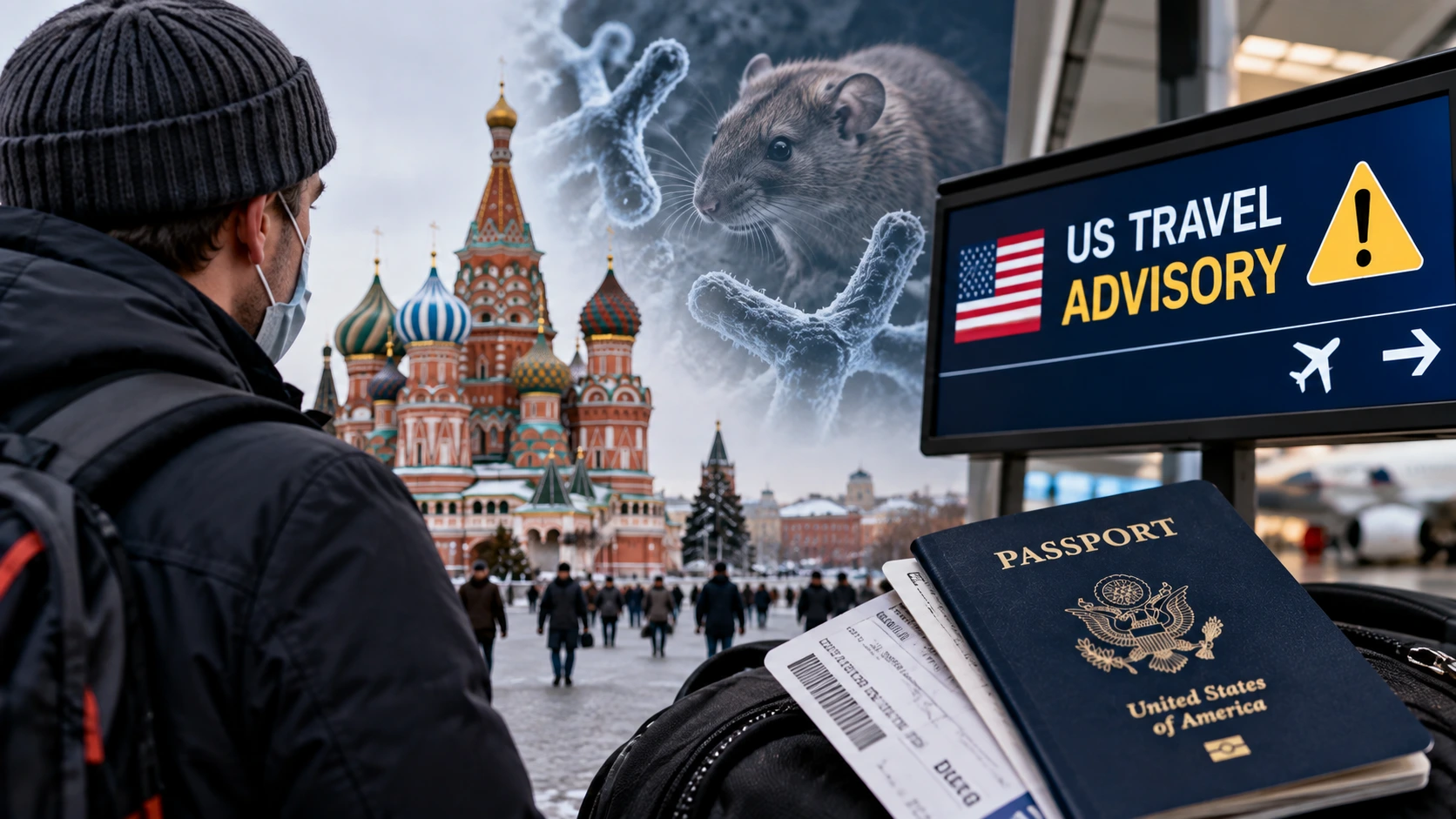
The United States government strongly advises all citizens to avoid travel to Russia due to a highly contagious pneumonic plague outbreak in specific regions. Health officials confirmed new cases of this fatal respiratory infection spreading rapidly through human contact. The Centers for Disease Control and Prevention (CDC) warns that pneumonic plague is the most severe form of the disease. It spreads easily through the air when an infected person coughs or sneezes.


What is the Official US Travel Advisory for Russia?
The US Department of State maintains a strict Level 4 “Do Not Travel” warning for the entire Russian Federation. This new health crisis adds a massive layer of danger to an already volatile region. The U.S. Department of State explicitly warns that consular assistance is extremely limited inside the country. If you contract the plague while visiting, the US government cannot evacuate you or secure medical care on your behalf.
How Does Pneumonic Plague Spread Between Humans?
Pneumonic plague spreads directly from person to person through tiny respiratory droplets in the air. You can catch the infection simply by standing close to someone who is actively coughing. Unlike the bubonic plague which requires a flea bite, this specific strain attacks the lungs directly and requires zero animal contact. The World Health Organization (WHO) classifies it as a severe public health emergency because it kills within 24 hours if left untreated.
Also read – Ten Most Inaccessible Places to Travel on This Earth

What Are the Exact Symptoms You Must Watch For?
The earliest signs of pneumonic plague include a sudden fever, severe headache, weakness, and rapidly developing pneumonia. Patients will experience shortness of breath, chest pain, and cough up watery or bloody mucus. These symptoms typically appear within one to three days after exposure to the bacteria.
Seek emergency medical help immediately if you suspect exposure. Doctors treat the infection using common antibiotics, but you must start the medication within 24 hours of your first symptom to survive.
| Disease Stage | Typical Symptoms | Required Action |
| Early (Day 1) | Sudden high fever, extreme weakness, headache | Seek medical testing immediately |
| Middle (Day 2) | Chest pain, shortness of breath, dry cough | Start antibiotic treatment instantly |
| Late (Day 2-3) | Coughing up bloody mucus, respiratory failure | Requires strict hospital isolation |
Also read – 7 Least Visited Countries in the World with Reasons
Strict Quarantine Rules for Returning Travelers
Customs officials will immediately isolate any traveler showing respiratory symptoms arriving on flights originating near the outbreak zones. The U.S. Customs and Border Protection (CBP) operates strict health screening protocols at all major international airports. If you display a fever or a severe cough at the border, medical teams will hold you in quarantine until blood tests clear you of the plague bacteria.


Always pack a digital thermometer and monitor your temperature for a full week after returning from Eastern Europe or Asia. Taking your temperature daily helps you catch the very first spike in fever before severe lung complications begin.
4 Critical Steps to Protect Yourself During a Plague Scare
Avoiding the outbreak zone entirely is the only guaranteed way to prevent an infection. If you are already in an affected region, you must avoid large crowds and wear a high-quality medical mask.
Follow these exact steps to minimize your risk of exposure:
- Cancel your trip: Do not travel to Russia under any circumstances during an active pneumonic plague outbreak.
- Wear N95 masks: Use medical-grade respiratory protection if you must enter public spaces like airports or train stations.
- Avoid sick individuals: Stay at least six feet away from anyone displaying a cough or a fever.
- Monitor health alerts: Check the European Centre for Disease Prevention and Control (ECDC) portal daily for outbreak tracking maps.