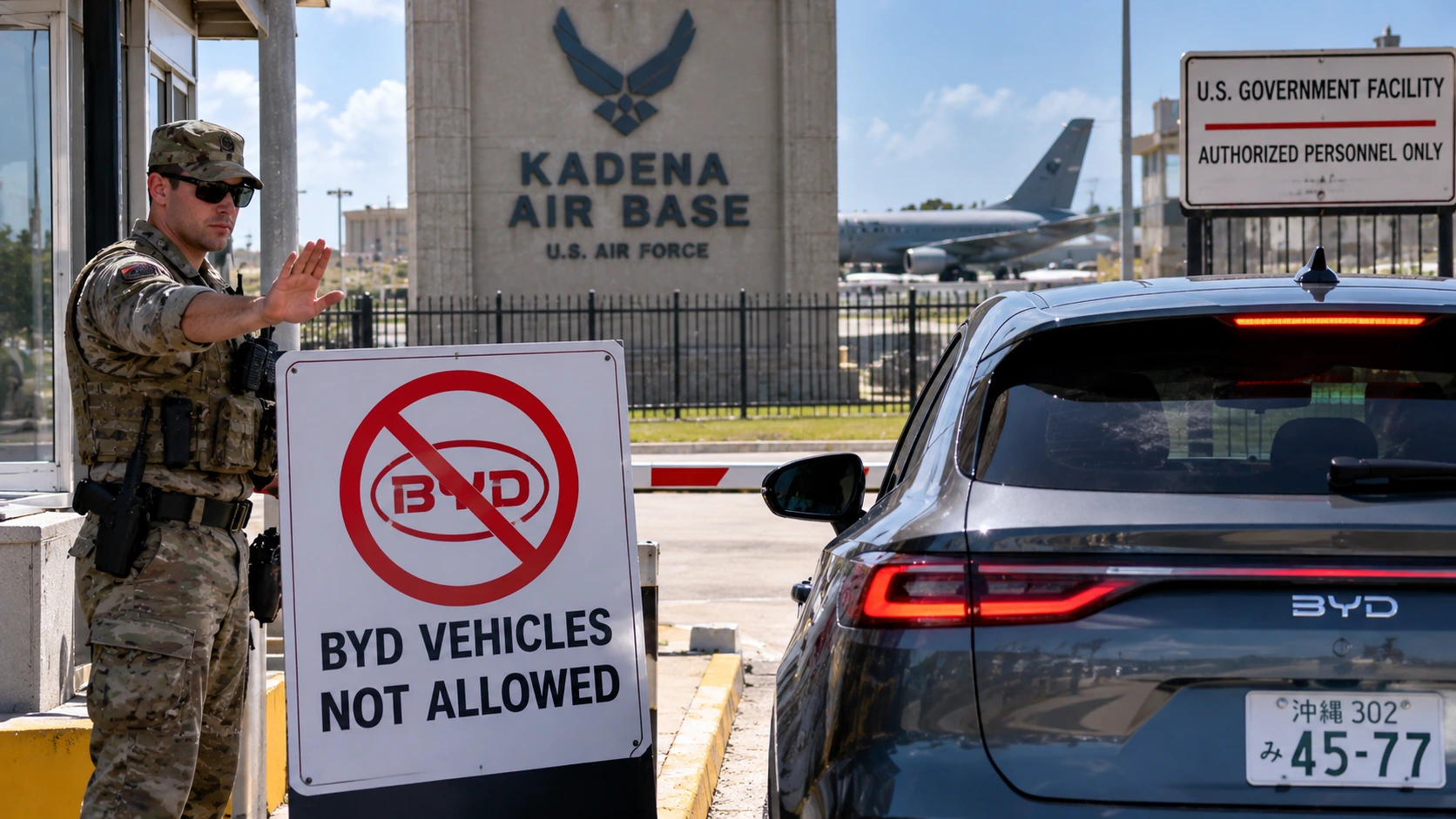
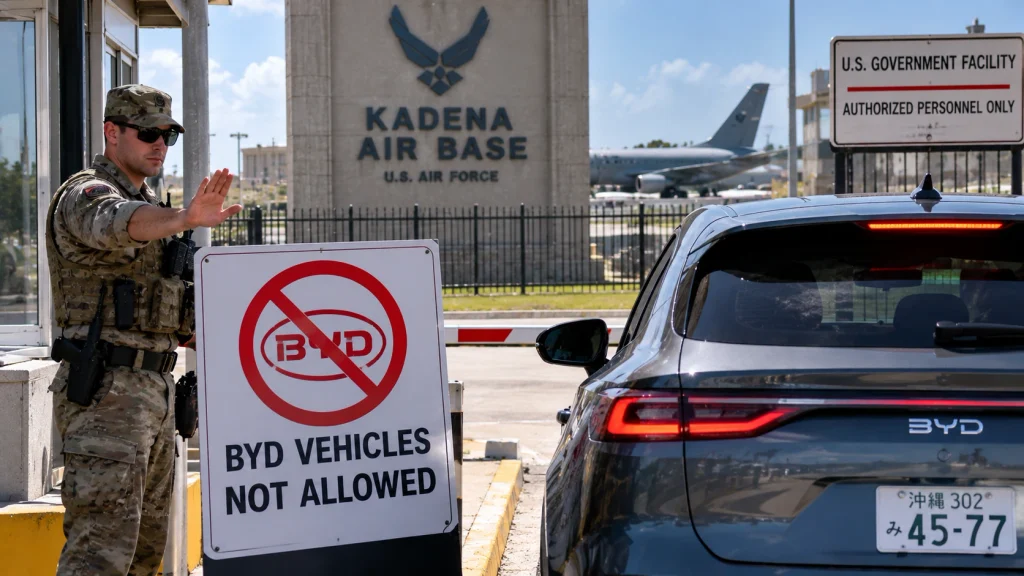
The United States military officially banned all electric vehicles manufactured by the Chinese automaker BYD from entering Kadena Air Base in Okinawa, Japan. Base security officials implemented this strict restriction because they fear the high-tech cameras and sensors built into modern BYD cars could secretly record and transmit sensitive military intelligence back to Beijing. Personnel attempting to drive these specific Chinese-branded vehicles through the security gates will now be turned away immediately.
Why the U.S. Air Force Considers BYD Vehicles a Major Security Threat
The U.S. Air Force views BYD vehicles as a direct espionage risk because modern electric cars act like rolling surveillance devices equipped with 360-degree cameras and constant internet connectivity. Lt. Col. Alli Stormer, the chief of public affairs for the 18th Wing, officially stated that these vehicles present an “unacceptable and unmitigable risk” to military personnel and their strategic mission.
Security experts worry that Chinese-manufactured hardware could map the internal layout of the classified Okinawa base simply by driving down the street. The vehicle’s advanced parking sensors and exterior cameras could theoretically track the movement of sensitive military equipment, such as the F-22 Raptor fighter jets frequently stationed at the facility. The military cannot completely verify where the vehicle’s telemetry data goes once it leaves the car’s internal computer system.

The Strategic Importance of Kadena Air Base in Okinawa
Kadena Air Base serves as the most critical staging ground for U.S. military air operations in the Indo-Pacific region, making it a primary target for foreign intelligence gathering. Located in Japan’s southernmost prefecture, this sprawling installation allows the United States to quickly project combat power toward Taiwan and the South China Sea.
If a foreign adversary manages to hack into a civilian vehicle’s sensor array while it drives through the base, they could gather highly classified operational data without ever sending a human spy across the fence. The U.S. Department of Defense routinely evaluates commercial hardware to ensure that adversary nations cannot use everyday consumer products to monitor American troop movements.
Also read – Who Benefits from US 75-Country Immigrant VISA Freeze …
Will the BYD Vehicle Ban Spread to Other Military Installations?
The restriction on BYD electric vehicles will likely expand to other U.S. military bases across Japan and South Korea in the coming months. Japan currently hosts roughly 50,000 American troops, while South Korea hosts another 39,000 military personnel across various high-security installations. Regional commanders are actively reviewing their security protocols and may soon implement identical vehicle bans to prevent cross-border data leaks.
The U.S. Forces Japan command structure takes these threats seriously, especially as Chinese electric vehicles become cheaper and more popular in the Asian civilian market. If a service member or local base contractor purchases one of these affordable vehicles for their daily commute, they inadvertently introduce a massive cybersecurity vulnerability directly into the military compound.
How Modern Electric Vehicles Collect and Transmit Classified Data
Modern electric vehicles constantly harvest massive amounts of environmental data, including precise GPS location logs, audio recordings from the cabin, and high-definition video of the surrounding environment. This constant data collection becomes a severe legal and security problem because Chinese national security laws can force domestic companies like BYD to hand over their user data to government intelligence agencies upon request.
The Cybersecurity and Infrastructure Security Agency (CISA) frequently warns that internet-connected smart devices can be weaponized by foreign state actors. A compromised electric vehicle could scan for secure Wi-Fi networks on the military base, record the faces of high-ranking officers, and document security patrol schedules.
| Vehicle Feature | Standard Gasoline Car | Modern Smart EV (Like BYD) | Security Threat Level |
| Exterior Cameras | Backup camera only | 360-degree environmental recording | Severe: Can map military base layouts |
| Location Tracking | Basic dashboard GPS | Continuous cloud-synced telemetry | Severe: Tracks troop movements |
| Internet Connection | None | Always-on cellular data connection | High: Allows remote data extraction |
| Cabin Audio | None | Voice-activated digital assistants | Moderate: Could record secure conversations |
How Military Personnel Must Adjust to the BYD Vehicle Ban
Defense contractors and military personnel stationed in Okinawa must immediately check their vehicle registration and secure alternative transportation if they currently drive a BYD car. Security forces at Kadena Air Base will no longer accept any excuses or issue temporary passes for these specific models.
Follow these specific steps to ensure you maintain base access without violating the new security directive:
- Check your vehicle manufacturer: Verify the exact make and model of your personal car or long-term rental vehicle before attempting to enter the base.
- Arrange alternative transport: Use official military shuttle services, authorized local taxis, or compliant vehicle brands to commute to your workstation.
- Audit contractor vehicles: If you manage local civilian contractors, you must inform them immediately that driving a BYD delivery van or work truck onto the installation is strictly prohibited.
- Monitor command updates: Watch for official memos from base leadership, as this ban may soon expand to include other Chinese vehicle brands or electronic devices.