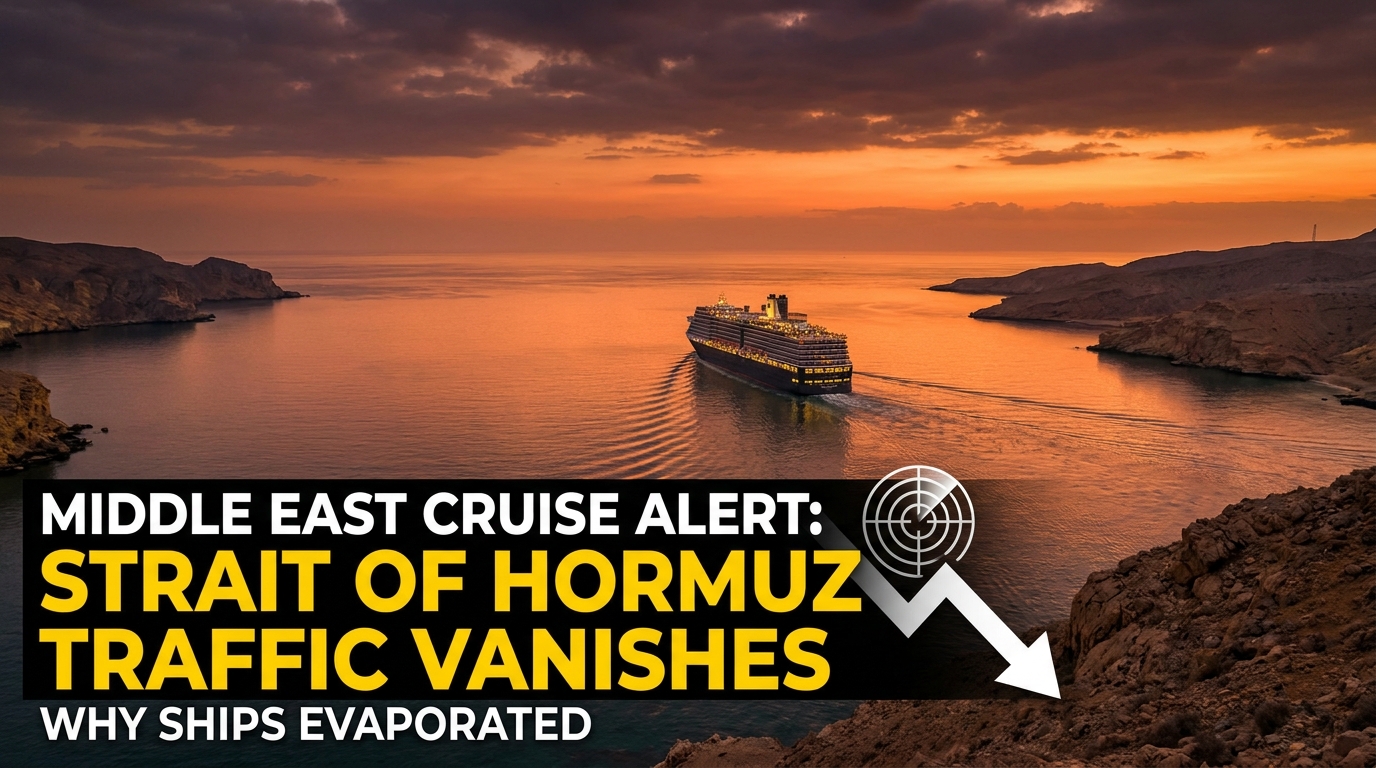
Ship traffic through the Strait of Hormuz dropped sharply after Iran said it had again shut the strategic waterway, creating fresh uncertainty for Middle East cruise routes, oil tankers and Gulf travel plans. The biggest change came over the weekend, when shipping data showed only five vessels passed through the strait on Sunday, compared with 26 ships a day earlier.

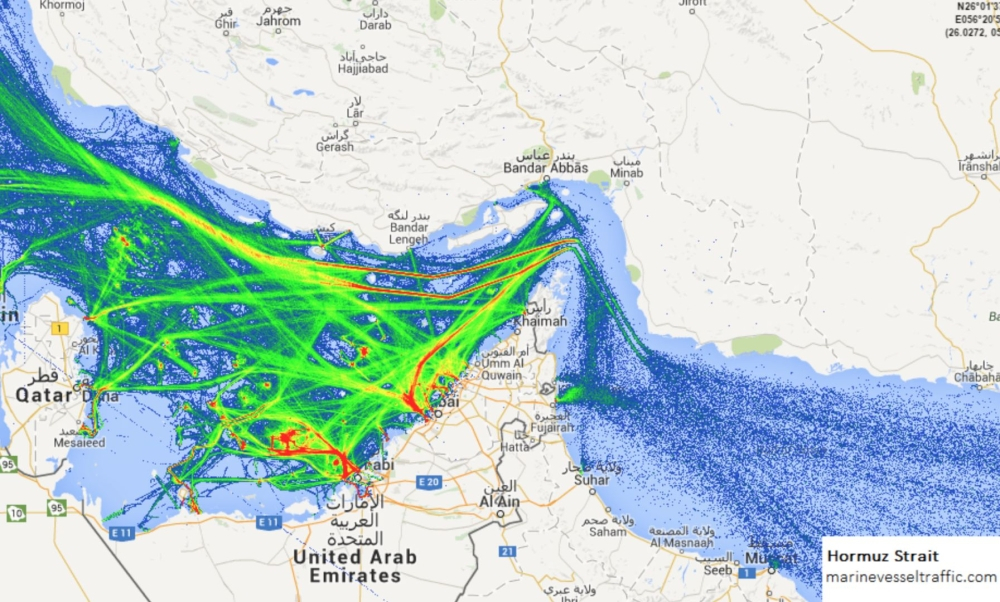
For cruise passengers, this is the part that matters: the strait is not just an oil route. It is also the narrow exit door for ships moving between the Arabian Gulf and the open sea. If that door becomes unsafe, cruise itineraries around Dubai, Abu Dhabi, Doha, Bahrain, Dammam and Oman can change quickly.
Is the Strait of Hormuz Closed Today?
The Strait of Hormuz is under severe disruption, but “closed” is not the full picture. Iran’s Islamic Revolutionary Guard Corps said the waterway was shut again after Israeli strikes in Lebanon, while the U.S. military said commercial vessels were still operating.
That is why the situation feels confusing for travellers. One side says the waterway is closed. Shipping data shows some vessels still moving. Cruise lines and cargo operators then have to make a practical safety decision, not a political one.
The best way to read the situation is this:
| Question travelers are asking | Clear answer |
|---|---|
| Is all ship traffic stopped? | No, but traffic has fallen sharply. |
| Did Iran announce another shutdown? | Yes, Iran said the waterway was shut again. |
| Are some vessels still moving? | Yes, some tankers and merchant ships have continued moving. |
| Is this normal for cruise travel? | No, this is a high-risk maritime disruption. |
| Should cruise passengers check their itinerary now? | Yes, especially for Gulf sailings. |
Also read – Can Tourists Really Visit the Strait of Hormuz? The Answer Might …
Why Did Ship Traffic Evaporate So Fast?
Ships slowed because the risk changed faster than the schedule. A cruise ship, oil tanker or LNG carrier does not need to see a physical barrier across the water to stop moving. If insurers, navies, port authorities or ship operators believe the route is unsafe, traffic can thin out almost overnight.
Shipping data showed the sudden fall clearly. Only five vessels passed through on Sunday, down from 26 on Saturday, according to ship-tracking data reported by Reuters. Some vessels may also switch off transponders in the Gulf, which means public tracking does not always show the complete picture.
That is important for readers because a quiet map does not always mean nothing is moving. It can also mean ships are hiding their position for security reasons.
Why the Strait of Hormuz Matters for Middle East Cruises
The Strait of Hormuz matters because it connects the Persian Gulf to the Gulf of Oman and the Arabian Sea. The U.S. Energy Information Administration describes it as one of the world’s most important oil chokepoints, with very few alternatives if the route is blocked.
For cruise passengers, the practical problem is simple. Many Arabian Gulf itineraries rely on ports inside the Gulf, including:
- Dubai
- Abu Dhabi
- Doha
- Bahrain
- Dammam
- Sir Bani Yas
- Muscat, depending on route direction
If a ship is inside the Gulf and needs to reposition to Europe, Asia or the Mediterranean, it may need to pass through Hormuz. If a ship is outside the Gulf and scheduled to enter for a cruise season, it may pause, reroute or cancel.
Which Cruise Routes Are Most at Risk?
Cruises that enter or leave the Arabian Gulf are most exposed to Hormuz disruption. Not every Middle East cruise is affected the same way, so passengers should look at the map of their actual sailing.
| Cruise route type | Risk level | Why it matters |
| Round-trip Dubai or Doha cruises | High | Ships may be operating inside the Gulf |
| Dubai to Muscat or Oman routes | High | These may require Hormuz passage |
| Repositioning cruises from Dubai to Europe | Very high | Ships must exit the Gulf safely |
| Red Sea-only cruises | Different risk | More exposed to Red Sea security issues |
| Mediterranean cruises with no Gulf segment | Lower | Usually not directly tied to Hormuz |
| World cruises crossing the region | High | Long routes are easier to reroute but harder to keep on schedule |
A useful rule: if your itinerary includes Dubai, Doha, Abu Dhabi, Bahrain or Dammam, check the latest route before making non-refundable travel plans.
Will My Dubai or Doha Cruise Be Cancelled?
Your cruise is not automatically cancelled, but schedule changes are possible. Cruise lines tend to avoid high-risk maritime zones before passengers are put in danger. That can mean skipping ports, adding sea days, delaying departure, ending a cruise early or moving the ship to another region.
Earlier this year, cruise-industry reporting showed how quickly Gulf itineraries can be affected. Condé Nast Traveler reported that Middle East cruise disruption had left vessels stuck in the region and caused delays or cancellations. TravelAge West also reported that several cruise lines adjusted or cancelled Gulf-season plans, including changes affecting Celestyal, MSC, Costa and Explora Journeys.
This does not mean every future sailing will be cancelled. It means travellers should stop treating Gulf cruises like fixed, guaranteed port-by-port plans.
Also read – We Analyzed New York to Miami Flights Cost in Iran Conflict
What Cruise Passengers Should Do Right Now
Cruise passengers should check the cruise line’s official itinerary page before checking flight prices. The worst mistake is booking a cheap non-refundable flight to Dubai or Doha while the ship’s route is still uncertain.
Follow this simple plan:
- Open your cruise line app or booking page. Look for itinerary notices, not just marketing pages.
- Check your embarkation and disembarkation ports. A change from Dubai to another port can affect visas and flights.
- Call your travel advisor or cruise line before booking airfare. Ask whether the ship is already in position.
- Avoid separate, non-refundable flights. If the cruise line changes the port, you may be stuck paying twice.
- Check your travel insurance wording. Look for war, civil unrest, itinerary change and supplier cancellation clauses.
- Save all emails and screenshots. You may need proof for refunds, claims or rebooking.
A smart personal habit: print the first page of your cruise confirmation and keep a digital copy offline. In fast-moving disruptions, phone signal, apps and call centers can all become unreliable.
What Not to Do During the Hormuz Cruise Disruption
Do not rely on old itinerary screenshots. A cruise itinerary can look normal online while operations teams are still reviewing security, port clearance and fuel planning.
Avoid these mistakes:
- Do not assume “ship traffic moving” means cruise ships will move too.
- Do not book tight same-day flights into Dubai or Doha.
- Do not ignore visa rules if your embarkation port changes.
- Do not cancel your cruise without checking refund terms first.
- Do not buy travel insurance after the event becomes known and expect full coverage.
- Do not assume a port substitution is a full cancellation.
Cruise contracts often allow itinerary changes for safety. That means passengers may not always get the outcome they expect if the ship still sails but skips ports.
Why Oil Tankers Still Move When Cruise Ships May Not
Tankers may accept risks that cruise ships will not. Oil and LNG cargoes are commercial lifelines, and some operators may continue moving under naval monitoring, higher insurance costs or special routing.
Cruise ships are different. They carry holidaymakers, families, elderly passengers and large hotel-style crews. Even a small security risk can become unacceptable when thousands of guests are on board.
That is why a tanker moving through Hormuz does not prove your cruise ship will follow. The risk calculation is completely different.
How This Could Affect Airfare and Hotels
Airfare and hotel prices can move when cruise plans change at scale. If a ship cancels a Gulf departure, passengers may rush to rebook flights. If a ship stays longer in port, hotels near Dubai, Abu Dhabi or Doha airports can fill quickly.
For travellers, the fix is simple:
- Book refundable hotels where possible.
- Avoid prepaid airport transfers unless cancellation is easy.
- Choose flights with change flexibility.
- Keep one extra night available after disembarkation.
- Ask the cruise line whether it will arrange charter flights if the sailing changes.
This is the kind of small planning step that saves real money when everyone else is trying to rebook at the same time.
Bottom Line: Should You Still Book a Middle East Cruise?
You can still consider a Middle East cruise, but only with flexible plans and clear cancellation protection. The Strait of Hormuz situation is unstable, and ship traffic has already shown how quickly confidence can disappear.
The safest approach is not panic. It is preparation.
Book only if you are comfortable with possible port changes, added sea days, delayed embarkation or rerouting. If your dream trip depends on one specific Gulf port, this may be the wrong week to make a non-refundable booking.
For now, the key traveler takeaway is clear: Hormuz is moving from an energy-market story into a cruise-planning story. Anyone sailing near the Arabian Gulf should check the ship, not just the headline.