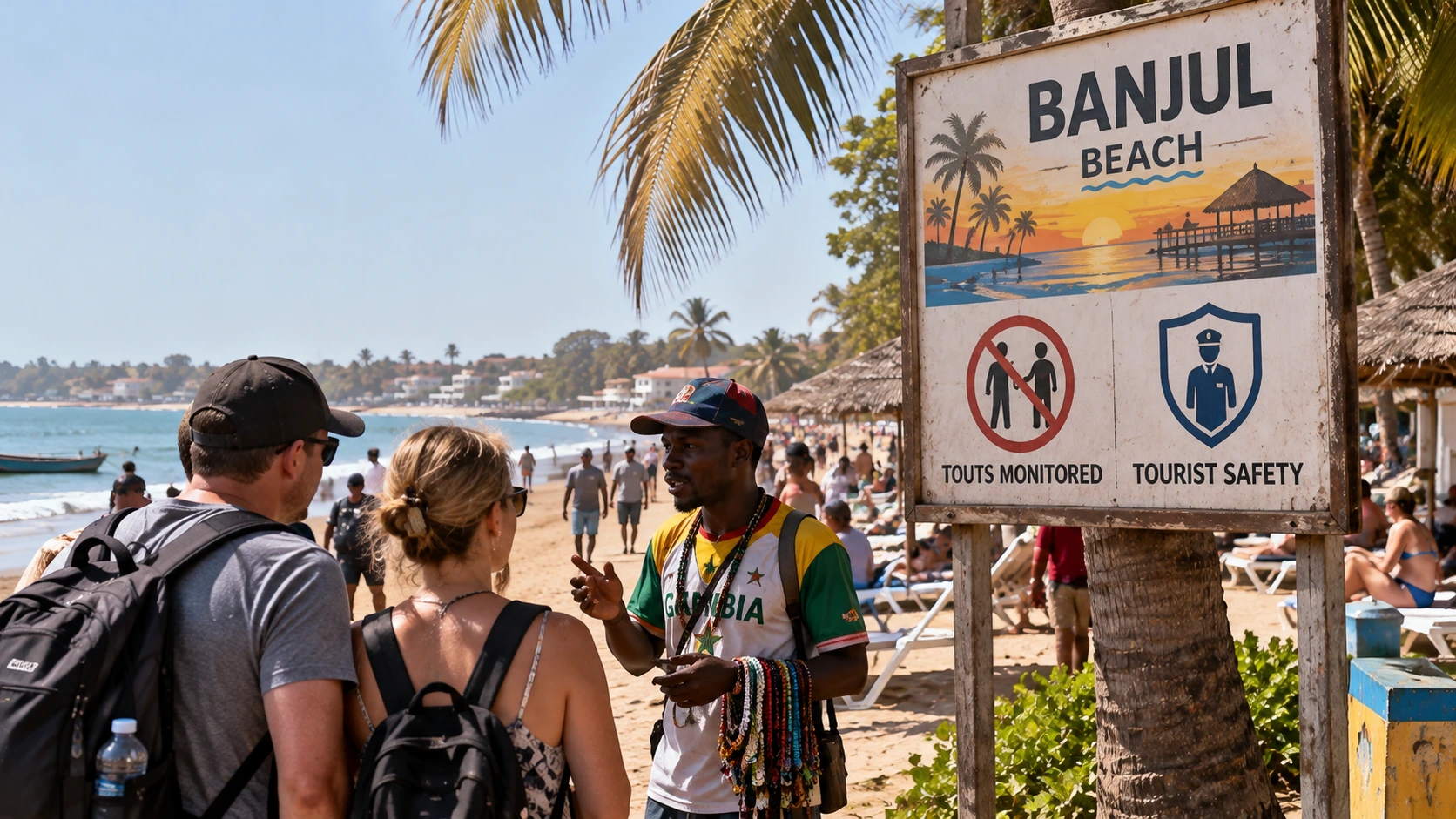
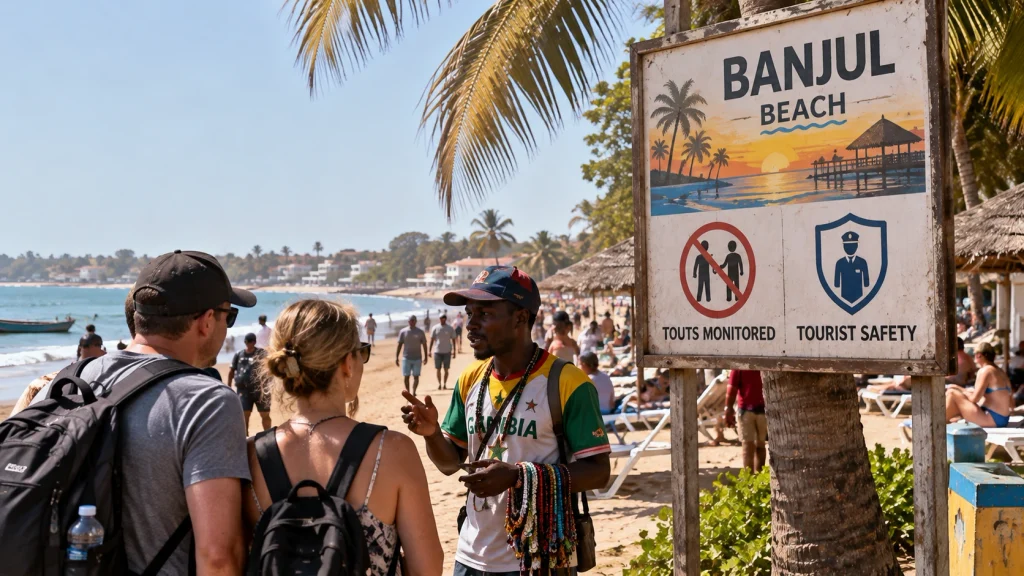
Bumsters are local men who aggressively approach tourists on the beaches and in the resort zones of Banjul to offer unsolicited guide services or initiate romantic relationships. They operate daily along popular coastal strips, looking for vulnerable foreign visitors who appear lost, overly friendly, or unfamiliar with the area.

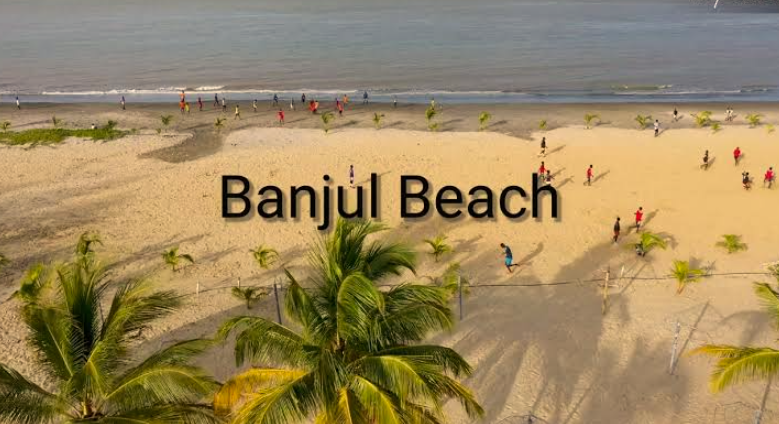
Once they attach themselves to a tourist, these men will eventually demand cash payments for their “help,” even if the tourist never explicitly agreed to hire them. The U.S. Department of State formally warns travelers about this specific harassment tactic in its latest security briefing, urging foreigners to remain vigilant at all times.
How to Safely Handle Unwanted Beach Touts
The safest way to deal with a bumster is to deliver a firm, immediate, and polite “no” the second they approach. Do not engage in small talk, do not accept offers to show you around the local markets, and never hand over your smartphone or camera for them to take a picture of you.
If the harassment continues, walk purposefully toward a crowded hotel lobby, a licensed security guard, or a busy restaurant. You must never physically resist or escalate a verbal argument. Petty street crime, including pickpocketing and purse snatching, often accompanies these encounters, especially after dark in crowded tourist spots.
Also read – 7 Affordable All-Inclusive Resorts in the Caribbean …
U.S. State Department Level 2 Advisory for The Gambia
The Gambia currently sits under a Level 2 Travel Advisory, meaning tourists must exercise increased caution nationwide. Petty street crime and residential burglaries happen frequently across the Banjul metropolitan area where wealthy tourists congregate.
Travelers must remain highly vigilant at ATMs and completely avoid walking on the beaches after sunset. Furthermore, enrolling in the Smart Traveler Enrollment Program (STEP) allows U.S. citizens to receive real-time security alerts directly from the local embassy. This free service proves critical during periods of civil unrest or sudden border closures.
Mandatory Airport Security Fees and Visa Overstay Rules
All arriving and departing travelers must pay a strict $20 security fee at the airport. You can only pay this specific fee in physical cash using U.S. dollars or Gambian dalasi. Credit cards are entirely useless at the airport fee checkpoints.

If you stay in the country past your allowed visa duration, border control will fine you $15 for every single month you overstay. To legally extend a stay, visitors must visit the Department of Immigration in Banjul before their original entry stamp expires. Always verify the absolute latest entry requirements directly through the Embassy of The Gambia in Washington DC.
Currency Exchange Laws and Medical Evacuation Risks
The Central Bank of The Gambia strictly prohibits exchanging foreign currency outside of licensed banking systems. Using unauthorized street vendors for money exchange violates national law and carries heavy financial penalties for tourists caught in the act.
Medical facilities in The Gambia remain completely inadequate compared to U.S. or European health standards. The Centers for Disease Control and Prevention (CDC) advises that local pharmacies lack proper regulation, making over-the-counter medications potentially unsafe or counterfeit. Always carry a complete supply of your prescription drugs and ensure your travel insurance specifically covers emergency medical evacuations by air.
Southern Border Unrest and Transportation Dangers
Travelers driving outside the main Banjul resort areas face additional security threats near the southern border with Senegal. A separatist rebel group remains active in the neighboring Casamance region, leading to unpredictable, sporadic fighting near the border lines.
The State Department strictly advises tourists to stay on main paved highways and completely avoid driving at night in these rural zones. Local law enforcement response times outside the capital are incredibly slow, leaving stranded motorists vulnerable to highway robbery. U.S. citizens facing severe emergencies should contact the [suspicious link removed] directly at their Kairaba Avenue headquarters.
Key Tourist Risks and Immediate Solutions
| Threat Type | Location Focus | Required Safety Action |
| Bumsters (Touts) | Beaches & Tourist Zones | Decline firmly; do not engage in conversation |
| Petty Theft | Banjul Markets & ATMs | Conceal cash; leave valuables in a hotel safe |
| Medical Emergency | Nationwide | Buy medical evacuation insurance prior to arrival |
| Currency Fraud | Street Corners | Use only licensed banks or hotel exchanges |
| Border Unrest | Casamance Border Region | Stay on main highways; do not drive at night |