
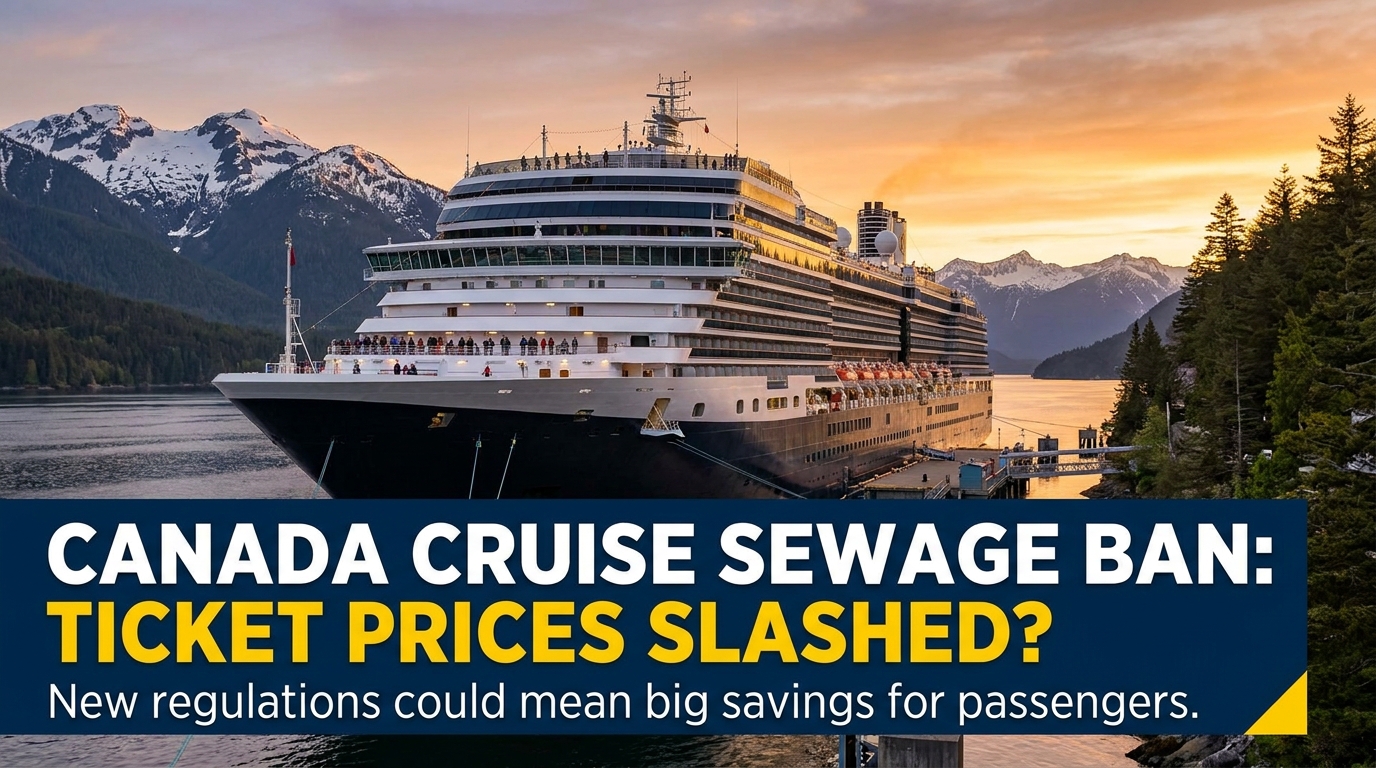
Canada has tightened cruise ship sewage and greywater discharge rules, and the change could make some Canada-linked cruises cheaper if operators adjust routes, ships, or late-season capacity. The rule itself does not order cruise lines to cut prices. The fare impact would come from the market: if an itinerary becomes harder to operate, less attractive to some passengers, or needs stronger last-minute demand, cruise lines may use discounts, onboard credits, or package deals to fill cabins.
For travelers asking “Will Canada’s cruise sewage ban slash ticket prices?”, the honest answer is this: not across the board, but some Alaska, Pacific Coast, Atlantic Canada, and Canada-New England sailings could become better deal-hunting targets.

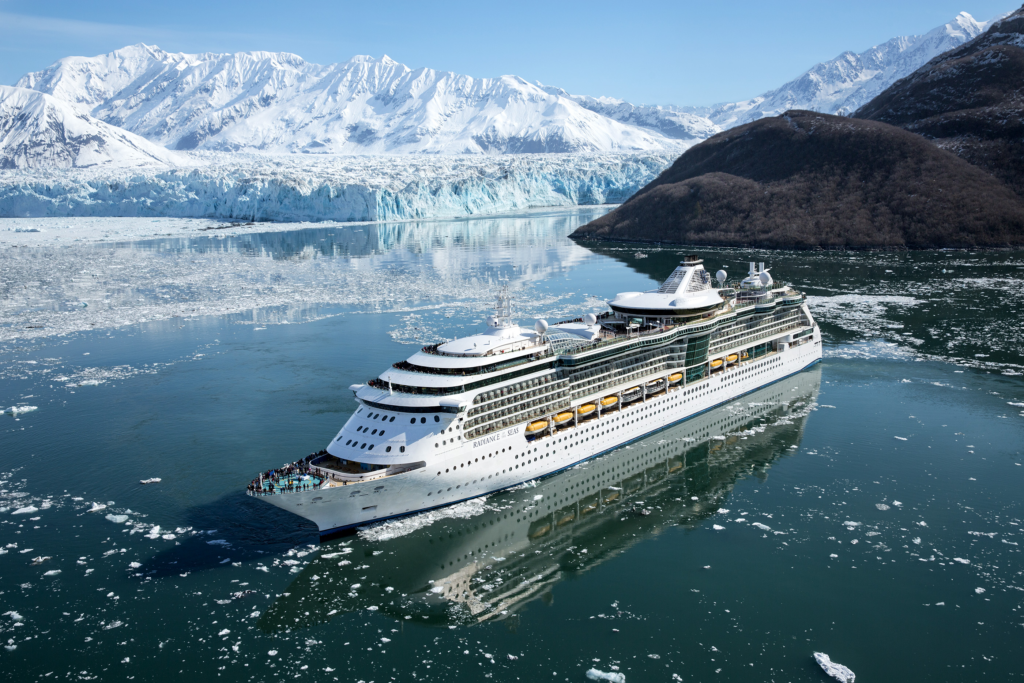
What is Canada’s new cruise sewage and greywater rule?
Canada’s rule restricts where cruise ships can discharge sewage and greywater in Canadian waters. Transport Canada’s Ship Safety Bulletin page lists the 2026 discharge bulletin, while Canada’s Senate records show Interim Order No. 4 Respecting the Discharge of Sewage and the Release of Greywater by Cruise Ships in Canadian Waters was formally deposited in June 2026.
In plain English, the rule targets two waste streams:
- Sewage: toilet waste and related body-waste drainage
- Greywater: used water from sinks, showers, laundry machines, bathtubs, and dishwashers
Transport Canada’s earlier published discharge guidance explains that the measures apply to cruise ships certified to carry more than 100 people with overnight accommodations, including foreign ships operating in Canadian waters.
What cruise ships are banned from doing near Canada’s coast?
Cruise ships cannot release sewage or greywater within 3 nautical miles of shore, ice-shelf, or fast ice. Between 3 and 12 nautical miles, discharge is allowed only when strict treatment standards are met.
Here is the rule in a simple table:
| Distance from shore | Sewage rule | Greywater rule | What it means for cruisers |
|---|---|---|---|
| 0 to 3 nautical miles | No discharge allowed | No release allowed | Ships must hold waste or use approved alternatives |
| 3 to 12 nautical miles | Must be treated with approved sanitation equipment | Must be treated where required | Older or less-equipped ships may face more planning pressure |
| Beyond 12 nautical miles | Broader international and Canadian pollution rules still apply | Broader international and Canadian pollution rules still apply | Not a “free dumping zone” |
| Special cases | Exceptions can apply for safety, narrow waters, or lack of reception facilities | Same | Not every exception means a ship can act freely |
The key technical limit is also strict: between 3 and 12 nautical miles, treated effluent must meet Canadian sanitation-device standards, including a fecal coliform count of 14 per 100 mL or less, with no visible solids, sheen, discoloration, sludge, or residue.

Why Canada is doing this now
Canada is trying to protect coastal waters, marine habitats, and tourism communities that depend on clean shorelines. Transport Canada first introduced voluntary cruise wastewater measures in 2022, then moved toward mandatory interim orders while developing longer-term regulations.
This matters because Canadian cruise routes often pass through sensitive coastal areas: British Columbia’s Inside Passage, Atlantic Canada ports, the St. Lawrence region, and Alaska-bound waters used by ships calling at Vancouver or Victoria.
A cruise ship is basically a floating town. It has cabins, restaurants, laundries, spas, kitchens, medical spaces, pools, and thousands of people using water every day. Cleaner handling of wastewater is not a cosmetic issue. It is part of keeping the destination worth visiting.
Could Canada’s cruise sewage ban really slash ticket prices?
Ticket prices could fall on some sailings, but the rule is not a guaranteed fare cut. Cruise pricing depends on demand, ship supply, fuel costs, port fees, weather risk, season, cabin type, and how close the ship is to departure.
The fare impact is most likely in these situations:
- Older ships face higher operating pressure. If a ship needs more careful wastewater planning, a cruise line may rethink where it deploys that vessel.
- Some routes become less flexible. Waste holding, discharge windows, and port reception limits can affect operations.
- Shoulder-season sailings need stronger demand. Canada-New England and Alaska shoulder-season cruises already see pricing swings.
- Itinerary changes make some trips less attractive. If port timing changes, cruise lines may use credits or fare drops to protect occupancy.
- Competing ships create discount pressure. If many cabins are still open, environmental-rule complexity can become one more reason to price aggressively.
The smart takeaway: do not expect every Canada cruise to get cheaper. Watch specific sailings where demand is soft.
Also read – 20 Best Solo Travel Destinations for Cultural Experiences
Which cruises should deal hunters watch?
The best fare-watch targets are Canada-linked cruises where pricing already moves quickly. These are the trips where a regulatory or itinerary change can add extra pressure.
| Cruise type | Why prices may move | Best deal-hunting window |
| Alaska cruises via Vancouver or Victoria | Canadian waters are part of many routings | 60 to 120 days before sailing |
| Pacific Coast repositioning cruises | Short seasonal demand windows | After final payment dates |
| Canada-New England cruises | Weather and shoulder-season demand matter | Late August to October |
| Atlantic Canada sailings | Port-heavy itineraries can shift | Last-minute cabin checks |
| Older-ship itineraries | Compliance planning may be more sensitive | Track ship changes and cabin inventory |
A practical cruise-planning trick: search the same sailing in private mode, then compare the cruise line’s own site, a major travel agency, and a warehouse-club travel portal. Sometimes the base fare stays the same, but one seller adds onboard credit, free gratuities, or a drink-package perk that makes the total trip cheaper.
What should travelers check before booking?
Travelers should check the itinerary, ship age, cancellation terms, and port-change policy before chasing a cheap fare. A low ticket price is not always a better deal if the route is unstable or the cabin terms are strict.
Before booking, check:
- Does the itinerary enter Canadian waters?
- Does the ship call at Vancouver, Victoria, Halifax, Quebec City, Saint John, or other Canadian ports?
- Is the sailing close to departure with many cabins still unsold?
- Does the cruise line allow port changes without compensation?
- Are taxes, port fees, gratuities, drinks, Wi-Fi, and transfers included?
- Is the cabin refundable or non-refundable?
- Has the ship recently had a dry dock or wastewater-system upgrade?
The best deal is not the cheapest fare. It is the fare where the full cost, route, cabin, timing, and cancellation terms still make sense.
Also read – 7 Secret Tricks to Save Money on Your FIFA World Cup Stay
What not to assume about Canada’s cruise wastewater rule
Do not assume this rule means cruises are unsafe, dirty, or about to disappear from Canada. Major cruise lines already operate under strict wastewater policies in many regions. CLIA, the cruise industry association, says its member cruise lines do not discharge untreated sewage during normal operations and use advanced wastewater treatment systems across much of the global fleet, according to its wastewater policy page.
Also, do not assume environmental groups are fully satisfied. West Coast Environmental Law has argued that previous Canadian interim rules still left broad exceptions, especially in narrow or remote waters, as explained in its response to Canada’s cruise pollution measures. That tension is important because it shows why the story is bigger than ticket prices.
How to book smarter if fares drop
If prices fall, book only after checking the real total cost. Cruise fares can look cheap on the first screen and much higher by checkout.
Use this quick money-saving checklist:
- Compare the same cabin category across sellers.
- Check onboard credit before judging price.
- Add gratuities, taxes, port fees, drinks, Wi-Fi, and excursions.
- Avoid non-refundable deposits unless the savings are strong.
- Watch final payment dates, when cabins often reprice.
- Set price alerts for Alaska, Canada-New England, and repositioning cruises.
- Read the itinerary-change clause before paying.
For families, also check flight prices first. A cruise fare dropping by $300 is not useful if flights into Vancouver, Seattle, Boston, Montreal, or Halifax have jumped by $600.
Why this rule matters beyond cruise fares
Canada’s wastewater rule matters because clean coastal destinations are part of the cruise product passengers are paying for. People book Alaska for glaciers, wildlife, forests, and cold clean scenery. They book Canada-New England for harbors, fishing towns, coastal color, and historic ports. If those waters lose trust, the cruise experience loses value.
This is why the rule cuts both ways for travelers. It may create short-term pricing opportunities on some sailings, but it also supports the long-term health of the destinations people want to visit.
Also read – 20 Epic Budget Road Trips Under $500 in the USA
Final takeaway: watch prices, but don’t book blindly
Canada’s cruise sewage and greywater restrictions could create fare deals on select Canada-linked sailings, but they are not a blanket ticket-price crash. The real opportunity is for smart travelers who track specific ships, routes, and dates.
The best approach is simple: watch Alaska, Pacific Coast, Atlantic Canada, and Canada-New England cruises closely; compare total trip cost; check port-change terms; and treat unusually cheap fares as a reason to investigate, not an automatic win.
If the price drops and the itinerary still works, this could be a good time to book. If the fare is low because the route is weak, the timing is awkward, or the terms are strict, walk away and keep watching.