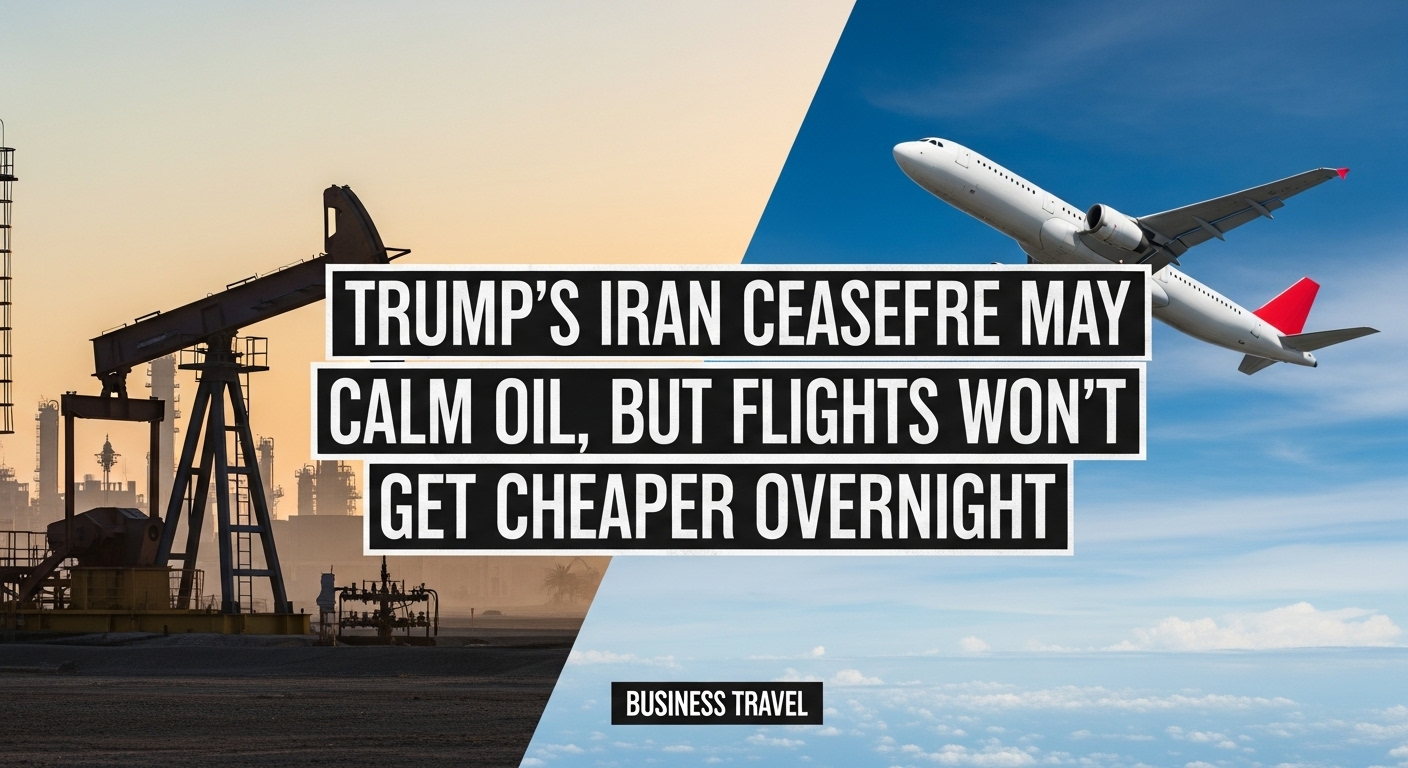
Trump’s surprise two-week ceasefire announcement on Iran may have lifted markets, but for travelers the bigger story is slower and far less dramatic: airlines are still dealing with expensive reroutes, restricted airspace, and a fuel squeeze that industry leaders say could take months to unwind.

Quick take
- Trump said the two-week pause is tied to the safe reopening of the Strait of Hormuz, which remains central to the aviation and energy fallout.
- The International Air Transport Association says jet fuel supply may take months to recover, even if the strait stays open.
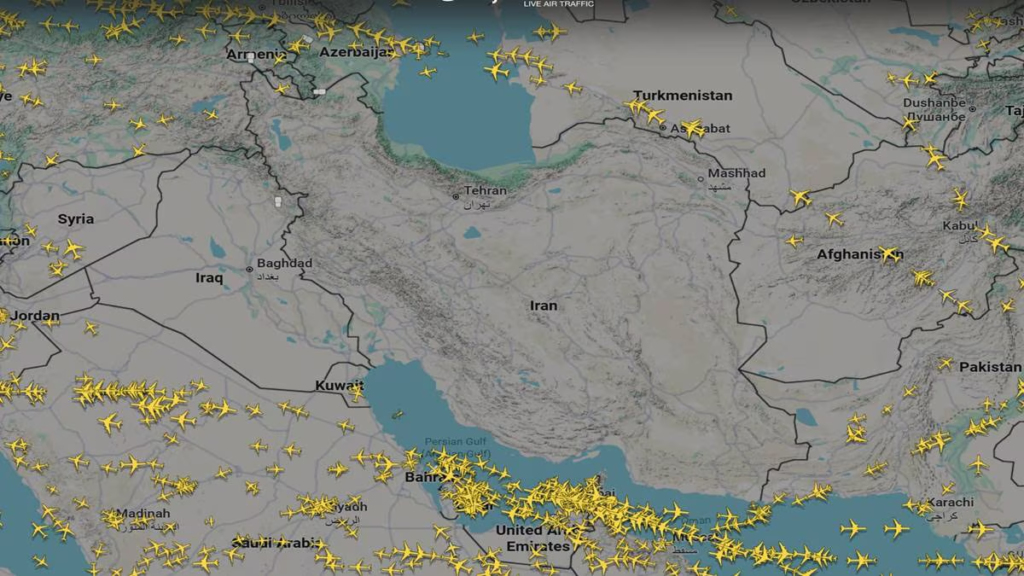
- Europe’s aviation authorities are still treating much of the region as high risk, and EUROCONTROL says about 1,150 flights a day are continuing to face rerouting impacts.
The real travel story is not the ceasefire. It is the lag.
Markets reacted fast. Passengers probably will not see relief nearly as fast.
Reuters reported that oil fell below $100 a barrel after the ceasefire news, but airline executives and analysts are warning that the pain point for carriers is not just crude oil. It is jet fuel, refinery disruption, and the cost of flying around closed or risky airspace. That is why airlines are still hiking fares, cutting flights, adding refueling stops, and loading extra fuel where they can.

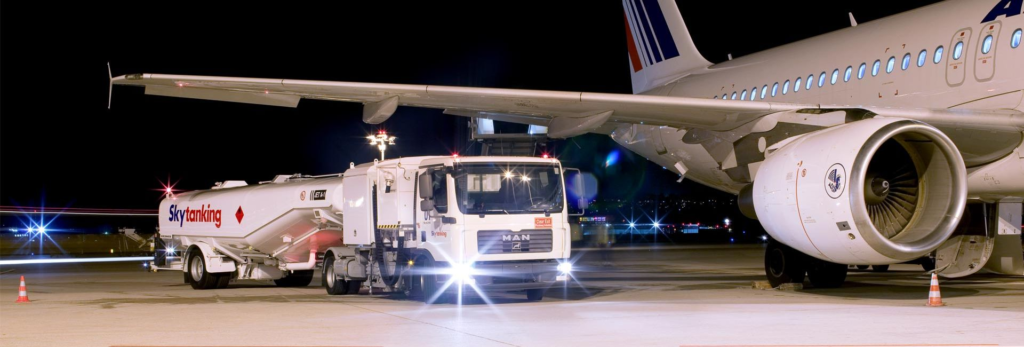
That distinction matters. Fuel is typically the second-biggest airline expense after labor, and Reuters says it usually makes up about 27% of operating costs. In this crisis, jet fuel prices have more than doubled since the conflict began, far outpacing the rise in crude before the ceasefire. Delta alone said it expects about $2 billion in extra fuel costs in Q2 and is cutting capacity to cope.
So yes, the ceasefire matters. But no, it does not instantly turn expensive seats into cheap ones.
Airlines are still flying with caution, not confidence
A big clue is airline scheduling.
British Airways has extended cancellations to Amman, Bahrain, Dubai and Tel Aviv through May 31, while Doha remains suspended through April 30 and Abu Dhabi is still off its map until later this year. Lufthansa Group carriers have suspended service to several Gulf and Middle East cities, with some routes paused until October 24. Eurowings is also keeping multiple routes offline for months.
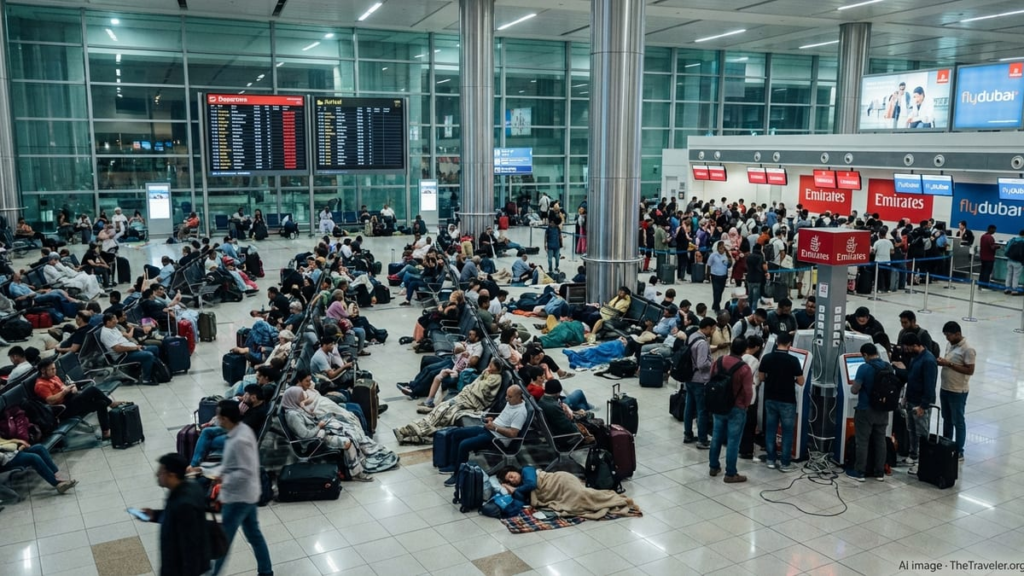
Even where flights are running, they are often not running normally. Condé Nast Traveller reported that no major schedule reset followed the ceasefire announcement, while Gulf carriers continued operating reduced or carefully managed networks. Reuters separately noted that Emirates was operating at about 69% of normal capacity and Qatar Airways at about 26%, using tightly controlled corridors.
That is why this is the better travel angle for Travelohlic: the headline may say “ceasefire,” but the passenger reality still says “limited schedules, longer routings, and uncertainty.”
Airspace is still the real bottleneck
The European Union Aviation Safety Agency has an active conflict-zone bulletin that covers airspace across Bahrain, Iran, Iraq, Israel, Jordan, Kuwait, Lebanon, Oman, Qatar, the UAE and parts of Saudi Arabia. Its guidance tells operators not to use the affected airspace at all flight levels, with only narrow exceptions in limited areas of Saudi and Omani airspace. The current bulletin is valid through April 10, unless reviewed earlier.
EUROCONTROL’s latest assessment shows just how deep the disruption still runs. Traffic between Europe and the Middle East was running about 59% below pre-crisis levels, down to around 800 daily flights. It also estimates that about 1,150 flights per day are still being rerouted, adding roughly 206,000 extra kilometers of flying, 602 extra tons of fuel burn, and around 1,900 extra tons of CO2 emissions every day.

That is the part many readers miss. Even when a ceasefire lowers the temperature politically, airlines do not just flip a switch and go back to normal. Safety advisories, flight planning, insurance, staffing, airport slots, and aircraft rotations all move slower than headlines.
Why this still matters even if you are not flying to Iran
Because the Gulf is not just a destination market. It is a global transfer machine.
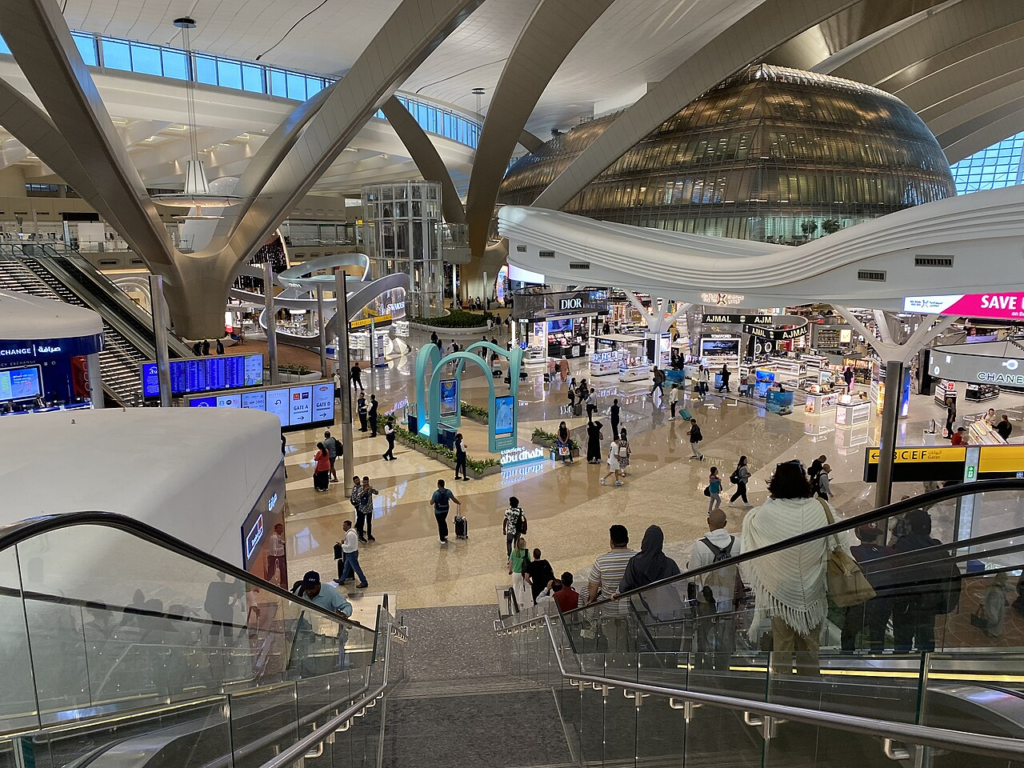
AP reported that at least 90,000 people a day change planes at Dubai, Doha or Abu Dhabi on just three airlines: Emirates, Qatar Airways and Etihad. When those hubs get squeezed, the ripple effect spreads across Europe-Asia, Africa-Asia, Australia-Europe and dozens of other long-haul journeys that depend on Gulf connections.
That is also why travel disruptions have felt wider than the war zone itself. A passenger flying from London to Bangkok, Manchester to Melbourne, or Paris to Colombo may never go near Iran, but can still get hit by longer routings, changed departure times, missed onward connections, or higher fares because the Gulf network remains under pressure.
What travelers should do now
If you are booking in the next few days, the smart move is to think in terms of stability, not bargains.

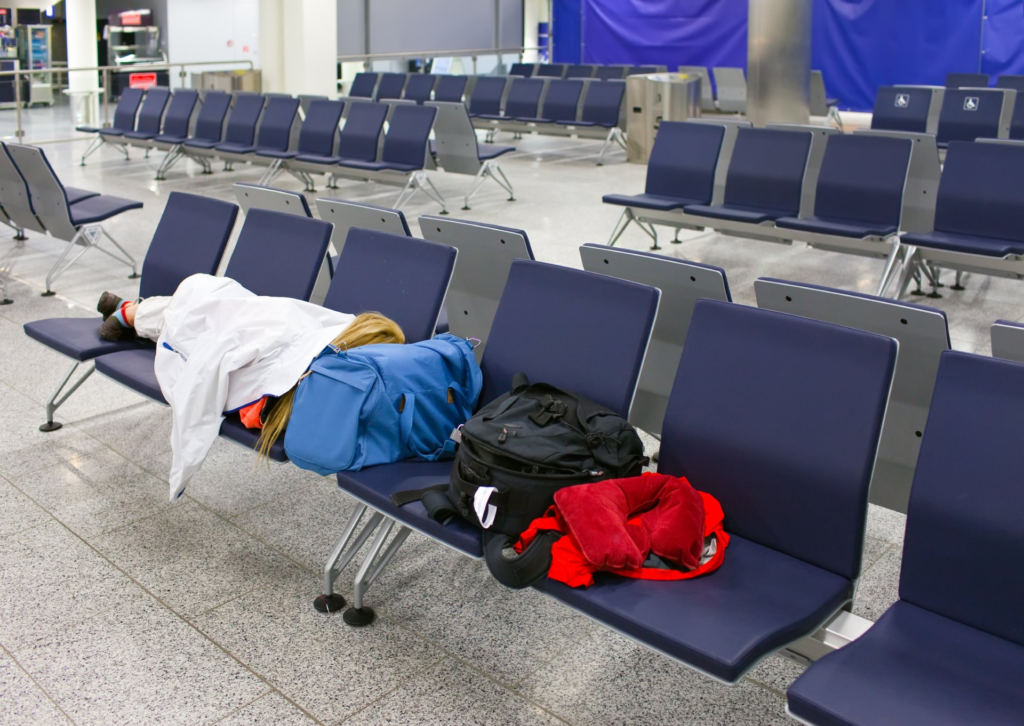
Prioritize airlines with flexible change policies, avoid very tight layovers through major Gulf hubs, and expect route timings to keep shifting while carriers wait for clearer airspace guidance. The safety side is still serious enough that the global pilots’ federation has said pilots should have a final, non-negotiable right to refuse conflict-zone overflights.
For readers, that is the honest takeaway: the ceasefire is a relief headline. It is not yet a normal-travel headline.
Bottom line
Trump’s two-week Iran ceasefire may have eased market panic and pulled oil lower, but the airline industry is still dealing with the slower aftershock: damaged fuel supply chains, active airspace warnings, reduced schedules and expensive detours. For travelers, that means the first visible change may be less panic, not lower fares.
Are flights to Dubai and Doha back to normal after the Iran ceasefire?
No. Travel and aviation reporting on April 8 said there had been no major schedule reset after the ceasefire announcement, and several airlines are still operating reduced schedules or extending suspensions on Gulf and Middle East routes.
Will airfares fall now that oil prices dropped?
Not necessarily. Reuters reported that jet fuel supply could take months to recover, jet fuel prices have more than doubled during the conflict, and airlines are still facing higher operating costs, reroutes and capacity cuts.
Are airlines still avoiding Iranian airspace?
Yes. EASA’s active advisory still warns operators away from a broad stretch of affected Middle East airspace, and multiple airlines continue to avoid Iran and neighboring conflict-linked corridors.
Why are flights outside the Middle East also affected?
Because Gulf hubs are major transit points for long-haul travel. AP reported that at least 90,000 passengers a day connect through Dubai, Doha and Abu Dhabi on Emirates, Qatar Airways and Etihad alone, so disruption there spreads far beyond the region.