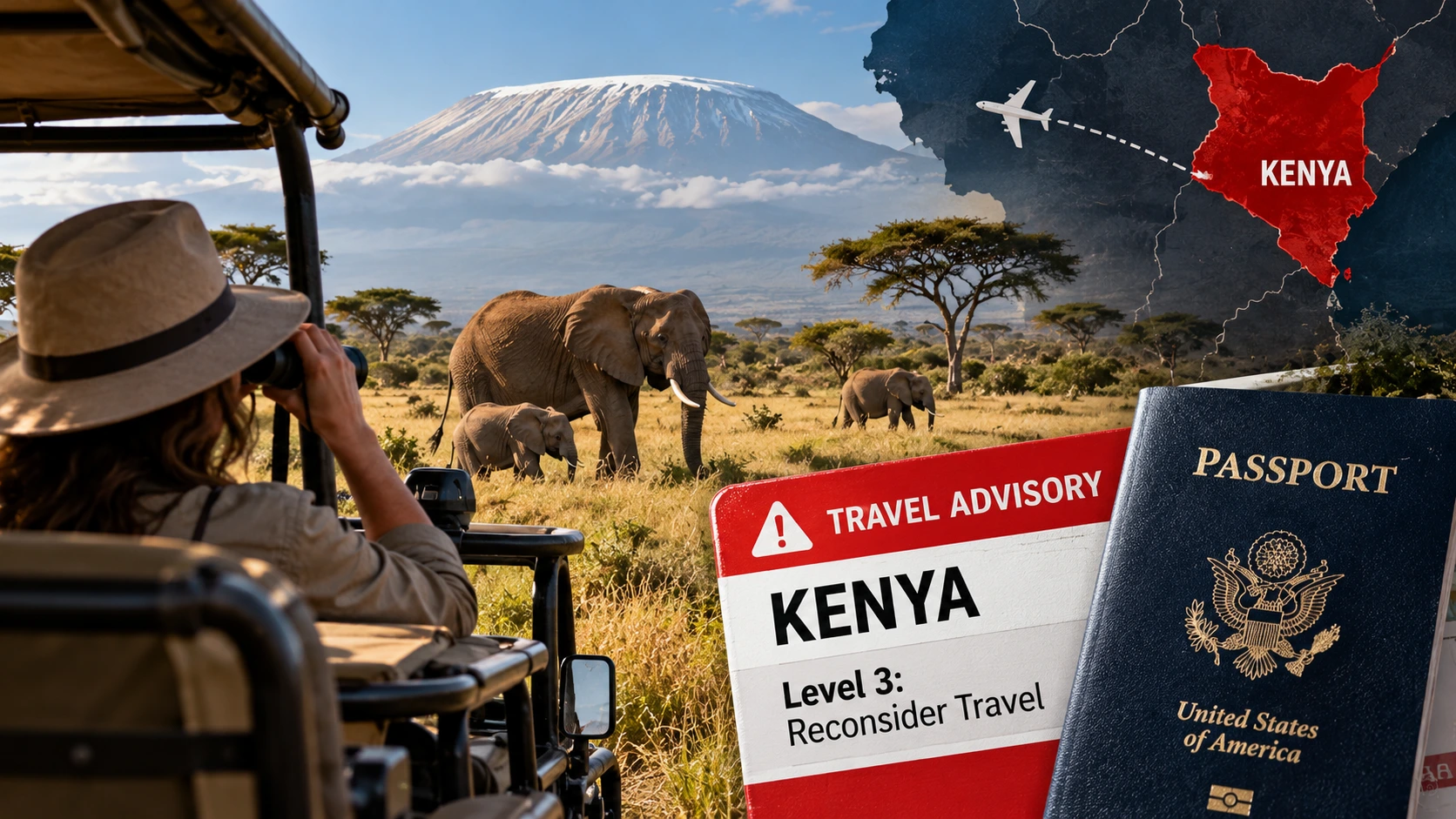
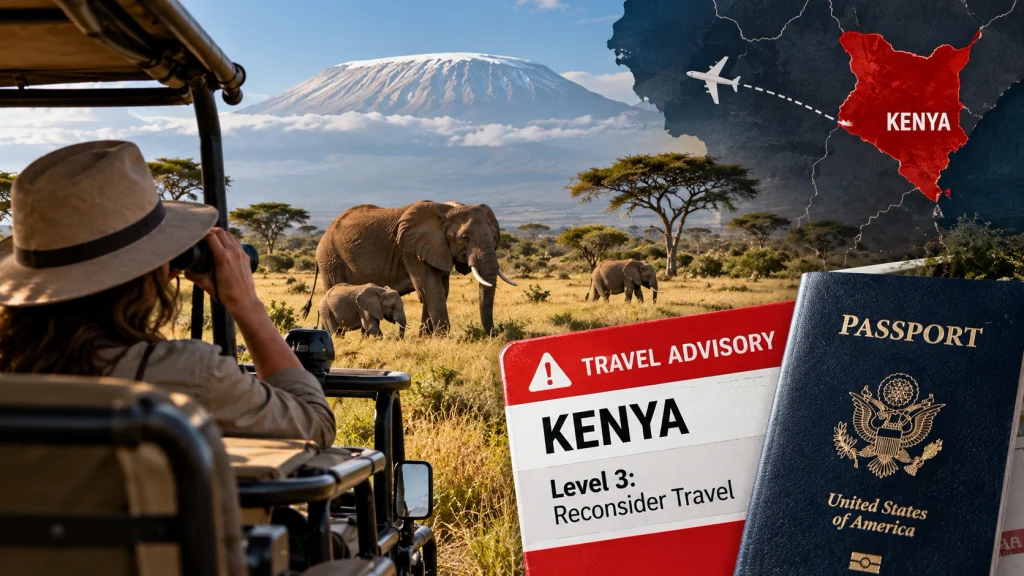
The U.S. Department of State officially elevated Kenya to a Level 3 “Reconsider Travel” status on October 19, 2026. This sudden escalation stems from a localized Ebola virus outbreak, rising urban crime, and severe civil unrest. Tourists holding expensive safari packages do not necessarily need to cancel their flights, but you must completely reroute your itinerary away from specific restricted zones and urgently verify your medical evacuation coverage.
Why Did the U.S. Government Issue a Level 3 Warning for Kenya?
The primary trigger for the October 2026 advisory update is the confirmed presence of the Bundibugyo strain of the Ebola virus, with eight documented cases officially recorded by local health authorities. Beyond the immediate health emergency, federal authorities cite a massive increase in violent carjackings, kidnappings, and political protests that regularly block major tourist highways.
The U.S. Embassy in Kenya specifically noted that criminal groups frequently target foreign nationals walking alone or riding in unregulated off-the-street taxis. Local police forces currently lack the manpower to respond effectively to rapid home invasions and highway robberies, leaving tourists highly vulnerable in urban centers like Nairobi and Mombasa.

Will the New Security Alert Disrupt Your Safari Itinerary?
Most major wildlife reserves, including the Maasai Mara, Tsavo, and Amboseli National Park, sit far outside the primary conflict zones and remain fully operational. However, the State Department issued a direct warning regarding tourists traveling in open-air safari vehicles without seatbelts, noting a sharp rise in fatal rollover accidents.
Furthermore, massive political protests have recently resulted in crowds throwing rocks at tourist vehicles moving between major cities. You must instruct your tour operator to avoid all urban protest centers when driving from the airport to the remote bush. The World Health Organization (WHO) also continues to monitor rural clinics near safari camps to ensure the viral outbreak does not spread into popular tourist corridors.
Also read – Kenya Safari This Summer? Read the Urgent US Travel Warning
Specific Kenyan Regions Placed Under Level 4 “Do Not Travel” Rules
While the country overall holds a Level 3 status, the U.S. Department of State designated several specific neighborhoods and border regions as absolute Level 4 “Do Not Travel” zones. Entering these areas voids most commercial support structures and puts you at extreme risk of kidnapping or terrorism.
| Restricted Region in Kenya | U.S. Advisory Level | Specific Security Threat |
| Nairobi (Eastleigh & Kibera) | Level 4 – Do Not Travel | Extreme risk of violent street crime and targeted kidnapping. |
| Kenya-Somalia Border | Level 4 – Do Not Travel | High risk of terrorist incursions and armed conflict. |
| Kenya-Ethiopia Border | Level 4 – Do Not Travel | Active tribal unrest and cross-border militia violence (within 50km). |
| West Pokot & West Turkana | Level 4 – Do Not Travel | Rampant highway banditry and heavily armed local gangs. |
How a Level 3 Advisory Voids Standard Travel Insurance Policies
Upgrading a country to a Level 3 advisory instantly voids the medical and trip cancellation coverage on most standard travel insurance policies. If you suffer an injury from a safari accident or require an emergency medical evacuation, you will pay hundreds of thousands of dollars completely out of pocket.
You must immediately contact your current insurance provider and purchase a specialized “Cancel For Any Reason” (CFAR) policy or a high-risk destination rider. The Centers for Disease Control and Prevention (CDC) heavily mandates that international travelers review their exact medical evacuation coverage limits before entering any African zone currently managing an active viral outbreak.
4 Immediate Actions to Take Before Flying to Nairobi
Securing your physical safety requires aggressive pre-planning before you ever land at Jomo Kenyatta International Airport.
Follow these specific travel fixes to protect your family on the ground:
- Register your itinerary: Enter your exact safari dates into the Smart Traveler Enrollment Program (STEP) to receive instant SMS text alerts if a riot blocks your highway.
- Hire licensed operators: Only book transportation through verified, highly rated safari lodges rather than hiring independent drivers who may use unsafe vehicles.
- Avoid public transport: Never ride in a “matatu” (privately-operated public minibus), as these vehicles suffer frequent fatal crashes and are heavily targeted by armed robbers.
- Stay away from crowds: Turn your vehicle around immediately if you see a large political gathering or demonstration forming, as local police frequently deploy tear gas without warning.