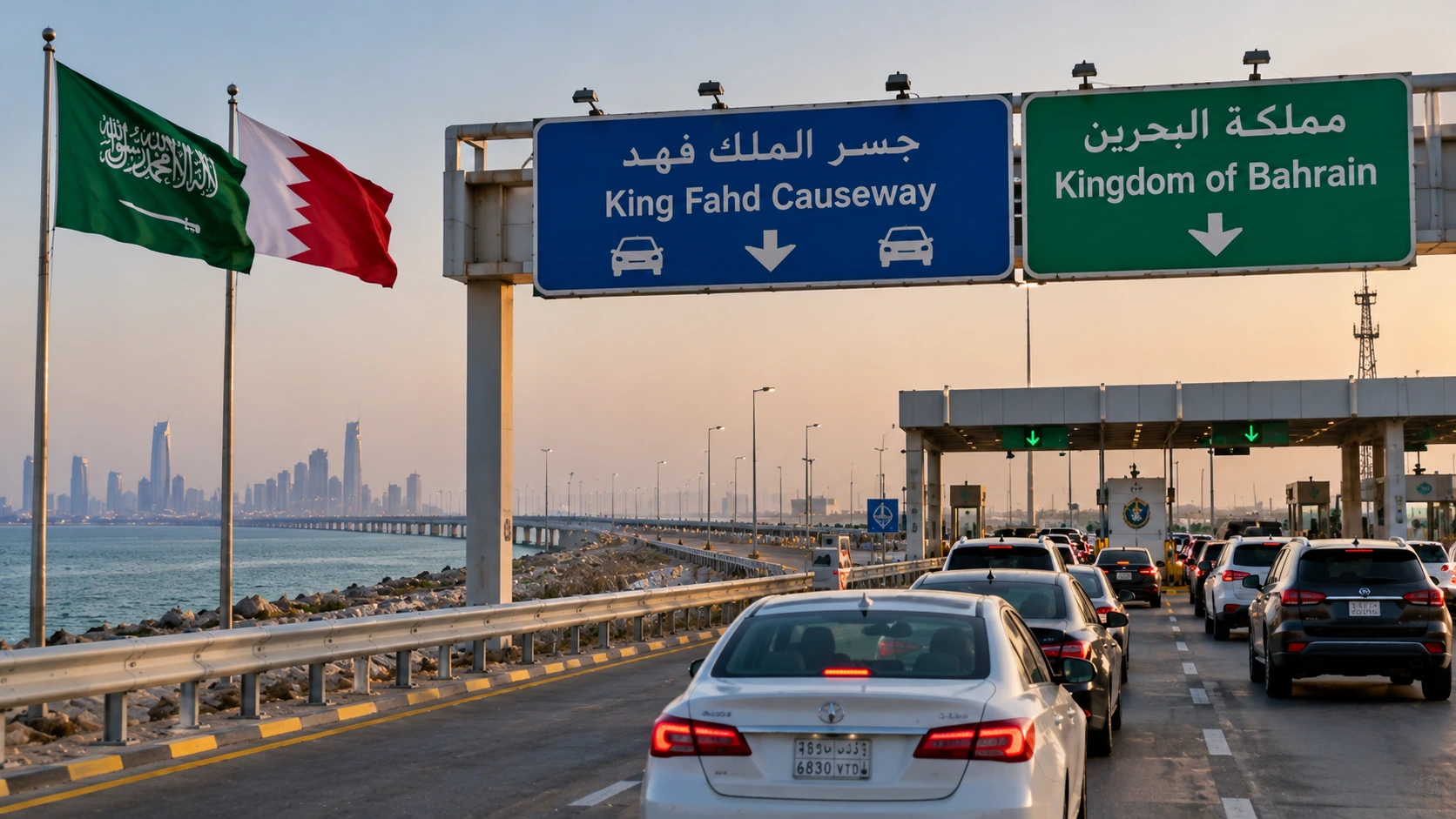
With commercial airspace severely compromised across Saudi Arabia, the King Fahd Causeway connecting the Kingdom to Bahrain remains completely open and fully operational for ground evacuations. The U.S. State Department ordered the departure of all non-emergency government personnel and their families from Saudi Arabia on October 23, 2026, due to escalating regional drone and missile threats. Because commercial flights out of major Saudi cities are facing severe delays and cancellations, this 25-kilometer land bridge serves as the most reliable escape route for stranded tourists, expatriates, and business travelers looking to reach a safe transit hub.
Why the King Fahd Causeway Serves as the Safest Evacuation Route Today
The King Fahd Causeway provides a direct, uninterrupted highway connection from the Eastern Province of Saudi Arabia straight into the Kingdom of Bahrain. The U.S. Embassy in Saudi Arabia explicitly confirmed in its October 27 security alert that all land border crossings remain fully functional, offering a safe alternative to the heavily targeted civilian aviation network. Driving across this bridge completely bypasses the unpredictable airspace closures that currently trap passengers inside airport terminals for hours.
Once travelers successfully cross the causeway into Bahrain, they can access Bahrain International Airport to book commercial flights back to the United States or Europe. Bahrain’s airspace remains significantly safer and more stable than the heavily contested skies over central Saudi Arabia.

Current Status of Saudi Arabia’s Major Highways and Domestic Transport
All major highways and regional roads in and around Riyadh, Jeddah, and Dhahran remain fully operational and safe for civilian ground transport. If you are currently in Riyadh or Jeddah, you can safely hire a private car or book a domestic train to reach the eastern border. The Saudi Arabia Railways (SAR) continues to operate standard passenger schedules, allowing evacuees to travel across the country without relying on vulnerable domestic flights.
For travelers who do not own a personal vehicle, regional bus networks provide a reliable alternative to reach the Dhahran and Dammam areas near the causeway. The Saudi Public Transport Company (SAPTCO) continues to run intercity bus routes that connect major metropolitan zones to the eastern border checkpoints.
Also read – Saudi Arabia Enacts Major Revisions to Foreign Work Visa Quotas
What is Happening to Commercial Flights Inside Saudi Arabia?
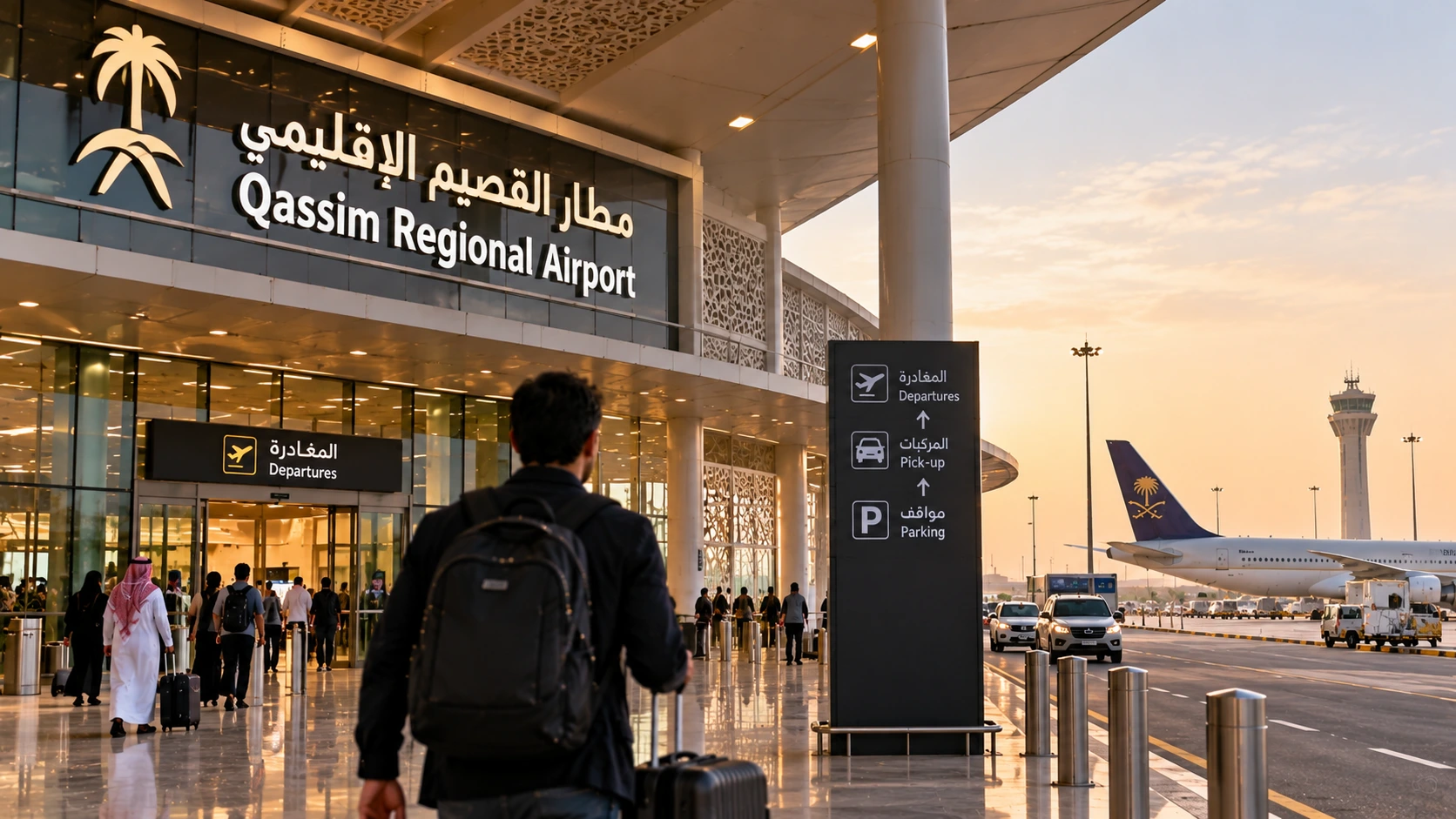
Commercial aviation across the Kingdom faces massive logistical hurdles, making airports highly unreliable for urgent evacuations. King Khalid International Airport in Riyadh announced only a partial reopening on October 23, strictly limiting operations to domestic routes and a handful of national carriers. Attempting to fly out of the capital right now guarantees severe delays and a high probability of sudden flight cancellations.
Airports closer to the eastern border, such as King Fahd International Airport in Dammam, remain operational but are actively experiencing cascading delays as they absorb rerouted air traffic. The Federal Aviation Administration (FAA) continues to monitor the airspace, but the constant threat of intercepted missiles sending debris onto runways makes ground transport the only guaranteed way to secure an exit.
Entry Rules and Document Requirements for Crossing into Bahrain
Entering Bahrain via the land border requires strict adherence to local immigration laws and having the correct physical paperwork in hand. Gulf Cooperation Council (GCC) citizens can cross using only a valid national ID card, but American citizens and other foreign nationals must verify their specific visa eligibility before approaching the toll gates. The Bahrain eGovernment Portal allows travelers to check their eligibility and apply for an electronic visa using their passport and current residency details.
Foreign workers currently residing in Saudi Arabia must also secure a valid exit or exit-and-reentry visa from their Saudi sponsor before attempting to cross the bridge. Border control officers will immediately turn away anyone lacking the proper Saudi exit clearance, leaving them stranded at the causeway processing center.
4 Essential Steps for Executing a Safe Ground Evacuation
Securing a safe exit requires proactive planning and constant communication with official diplomatic channels.
Follow these exact steps to ensure a smooth transition across the Saudi-Bahrain border:
- Enroll in STEP immediately: Register your current location in the Smart Traveler Enrollment Program (STEP) so the U.S. Department of State can send you instant SMS updates regarding border closures.
- Prepare physical documents: Keep your physical passport, Saudi Iqama (if applicable), and printed Bahrain visa confirmation easily accessible in the vehicle.
- Confirm onward flights: Do not drive to the border until you have a confirmed, ticketed flight departing from Bahrain International Airport.
- Monitor local toll apps: Check the official King Fahd Causeway Authority (KFCA) applications for real-time processing wait times before you leave your hotel.
Summary of Saudi Evacuation Transport Options
Understanding your available transit methods helps you build a reliable exit strategy when flights fail.
| Transport Method | Current Operational Status | Best Use Case |
| King Fahd Causeway | Fully Operational | Quickest exit to Bahrain for foreign nationals. |
| Saudi Arabia Railways (SAR) | Fully Operational | Safe cross-country travel from Riyadh to the Eastern Province. |
| SAPTCO Bus Lines | Fully Operational | Budget-friendly transit to border cities. |
| Commercial Air Travel | Severely Disrupted | Only viable for domestic movement on national carriers. |