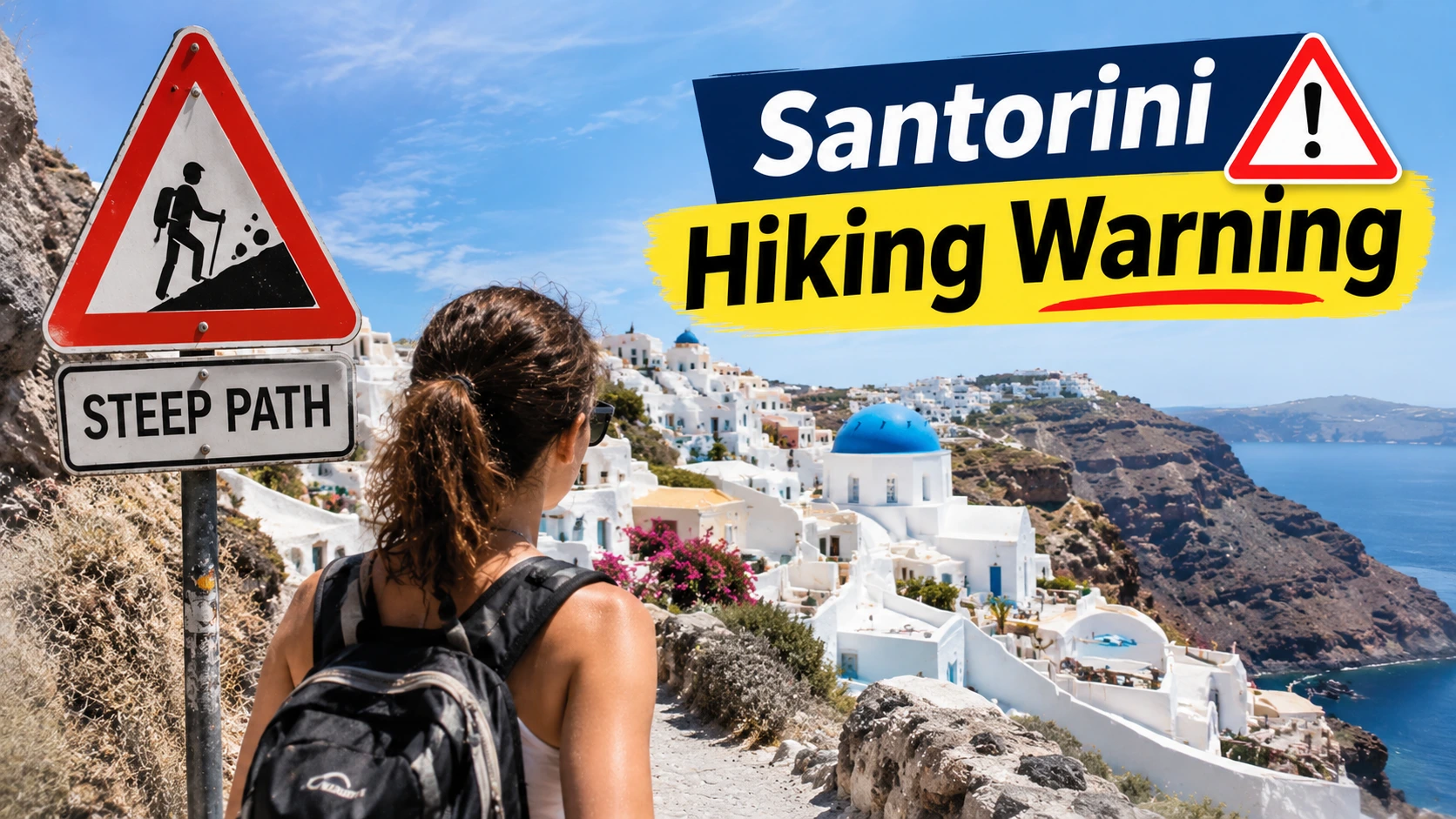
The UK Foreign, Commonwealth & Development Office (FCDO) officially warns tourists attempting the Santorini caldera hike and other Aegean island trails to prepare for extreme heat exposure and treacherous, unshaded paths. Walking the iconic route between Fira and Oia exposes hikers to intense solar radiation and crumbling volcanic rock, leading to severe dehydration and rescue emergencies during the peak summer season. Simultaneously, the Australian Smartraveller advisory alerts foreign visitors to prepare for sudden, unannounced transportation strikes in central Athens that frequently paralyze the metro system and block access to the international airport. Preparing for both extreme weather on the islands and civil disruptions on the mainland prevents a highly anticipated Greek vacation from turning into a logistical nightmare.
Why the UK FCDO Issued Heatwave and Steep Path Warnings for Santorini
The FCDO updated its safety guidance because the famous Santorini caldera hike lacks physical shade, emergency water stations, and mobile phone reception in several deep ravines. Walking this 10.5-kilometer trail during the midday heat frequently causes severe heatstroke among foreign tourists who underestimate the relentless Aegean sun. The path consists of loose gravel, steep volcanic inclines, and jagged rocks that easily cause severe ankle sprains for visitors attempting the trek in casual sandals.

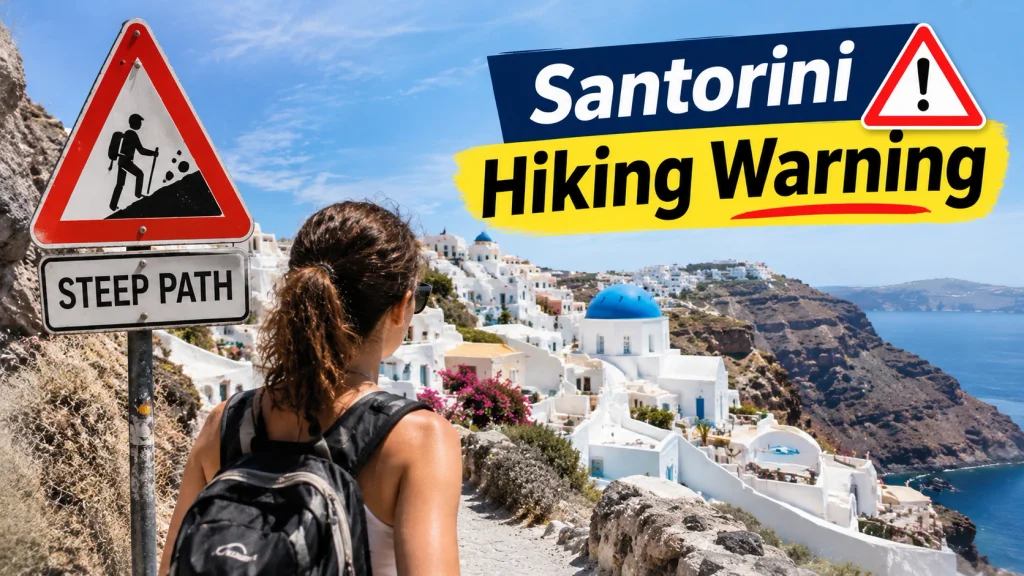
Tourists consistently require emergency helicopter evacuations because they set out at noon with insufficient water supplies. The official FCDO Greece Travel Advice specifically instructs all British nationals and international visitors to respect local heat-health alerts and entirely avoid physical exertion during the hottest parts of the day.
| Trail Hazard in Santorini | Specific FCDO Safety Warning | Required Tourist Action |
| Extreme Heat Exposure | Lack of shade causes heatstroke | Hike only in the early morning or late evening |
| Loose Volcanic Gravel | High risk of slips and fractures | Wear professional closed-toe hiking boots |
| No Emergency Water | Dehydration sets in rapidly | Carry a minimum of three liters of water per person |
| Unfenced Cliff Edges | Fatal falls from crumbling paths | Stay strictly on the marked central trail |
How to Safely Hike the Aegean Islands During Extreme Heat
Surviving a summer hike in the Greek islands requires starting the trek before 8:00 AM to ensure completion before the sun reaches its dangerous midday peak. You must carry electrolyte powders alongside plain water to replace the massive amounts of salt lost through sweating on the steep inclines.
Follow these strict physical preparation rules before attempting any Aegean island trail:
- Wear proper footwear: Discard flip-flops and fashion sneakers. Use sturdy hiking shoes with aggressive tread patterns to grip the slippery, dust-covered cobblestones.
- Download offline maps: Mobile data drops frequently along the caldera edge. Save the trail route on your smartphone using offline GPS applications before leaving the hotel Wi-Fi.
- Cover your skin: Wear wide-brimmed hats, UV-blocking sunglasses, and loose-fitting, long-sleeved UPF shirts to block direct solar radiation.
- Register your plans: Always inform the hotel reception desk of your exact hiking route and your expected return time before departing for the trail.
Also read – UK Passport 10-Year Rule: British Holidaymakers Denied …
What Smartraveller Advises for Sudden Transportation Strikes in Athens
The Australian government explicitly warns that Greek transport unions frequently launch sudden, highly disruptive strikes that instantly shut down the Athens metro, city buses, and regional trains. These civil actions usually center around Syntagma Square and often trap foreign tourists trying to catch outbound flights at Athens International Airport or ferries departing from the Port of Piraeus. The Smartraveller Greece Advisory instructs all travelers to monitor local Greek media constantly, as transport unions routinely announce major work stoppages with less than 24 hours of notice.
When public transit workers walk off the job, securing a standard street taxi becomes virtually impossible. Thousands of stranded commuters instantly flood the streets, creating massive traffic gridlock across the entire Attica region.
How to Avoid Disruptions During an Athens Transport Strike
Protecting your travel itinerary from an Athens transit strike requires booking private airport transfers weeks in advance and positioning your hotel within walking distance of primary historical sites. Private transfer companies operate independently of the public transit unions and will guarantee your arrival at the airport, even if they must navigate longer secondary roads to bypass downtown protests.
If your itinerary involves island hopping, you must independently verify your ferry departure status directly with the operator. When the Panhellenic Seamen’s Federation (PNO) joins a national strike, all commercial ferries remain docked at Piraeus, Rafina, and Lavrio for 24 to 48 hours. Never travel to the port during a confirmed maritime strike, as the terminal waiting areas offer zero seating or air conditioning for stranded passengers.
Emergency Contacts and Medical Evacuation Rules in Greece
Tourists facing a sudden medical emergency, such as heat exhaustion on a trail or an injury during a protest, must dial the European emergency number 112 for immediate dispatch of Greek authorities. English-speaking operators manage this centralized line and can pinpoint your exact GPS location if you call from a smartphone.
Securing emergency medical care on remote Greek islands presents severe logistical challenges. Local island clinics only stabilize patients; they cannot perform complex surgeries. The U.S. Department of State Greece Travel Advisory emphasizes that serious trauma requires an expensive medical airlift to a mainland hospital in Athens.
Because public hospitals face severe staff shortages, foreign tourists usually rely on private medical facilities. You must carry comprehensive travel insurance that explicitly covers private medical flights, as standard policies often reject these massive claims. EU citizens can present their European Health Insurance Card (EHIC) for access to state-provided healthcare, but this card does not cover private clinic fees or international repatriation flights.