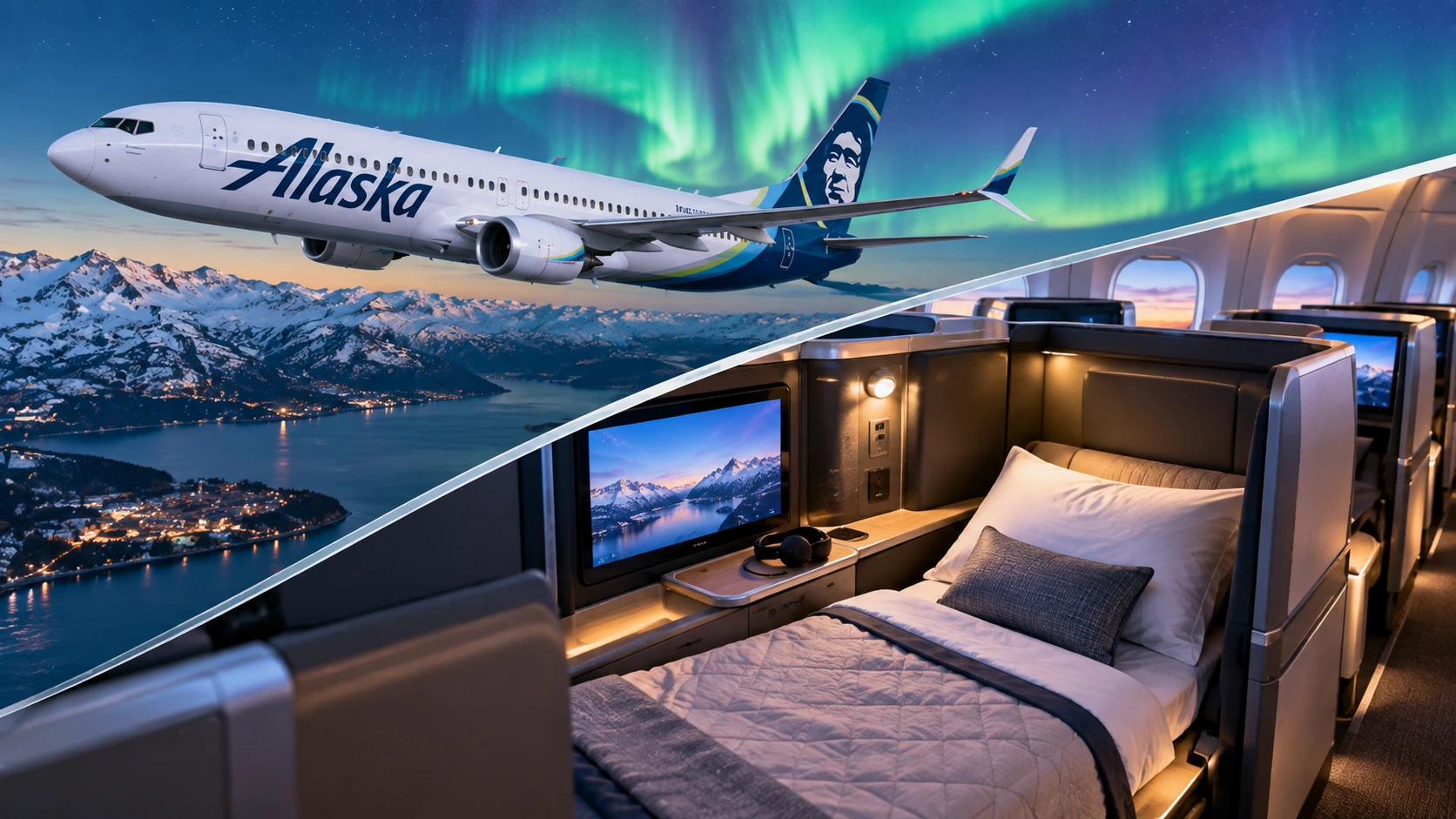
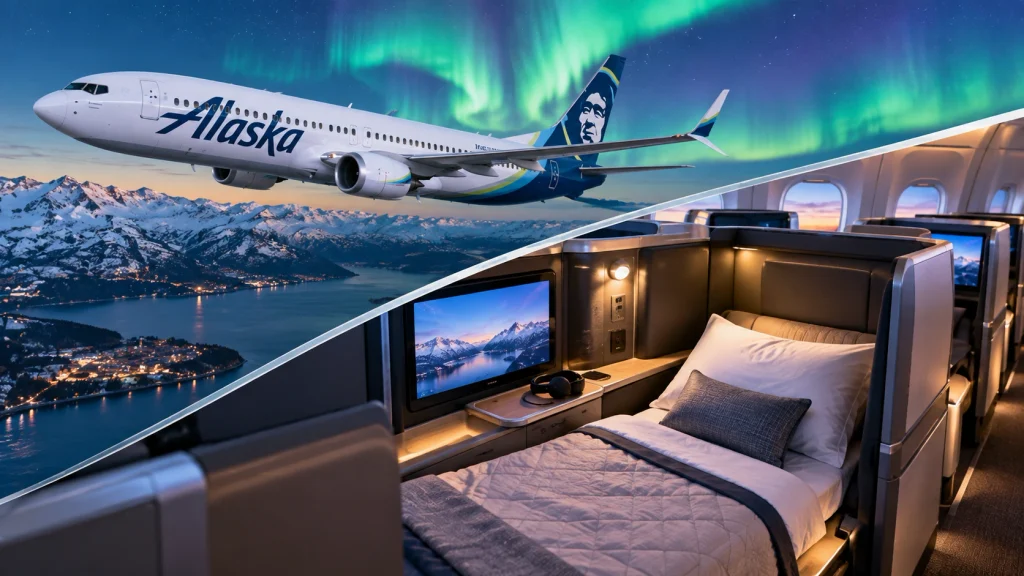
Alaska Airlines is officially adding lie-flat beds and a dedicated premium economy cabin to its fleet starting in 2028. The airline will install 12 lie-flat Aurora Suites with sliding privacy doors on at least 25 new Boeing 737 MAX 10 aircraft. This massive cabin overhaul marks the first time Alaska Airlines will offer flat-bed business class seating on a narrow-body jet, directly challenging legacy carriers on lucrative transcontinental routes.

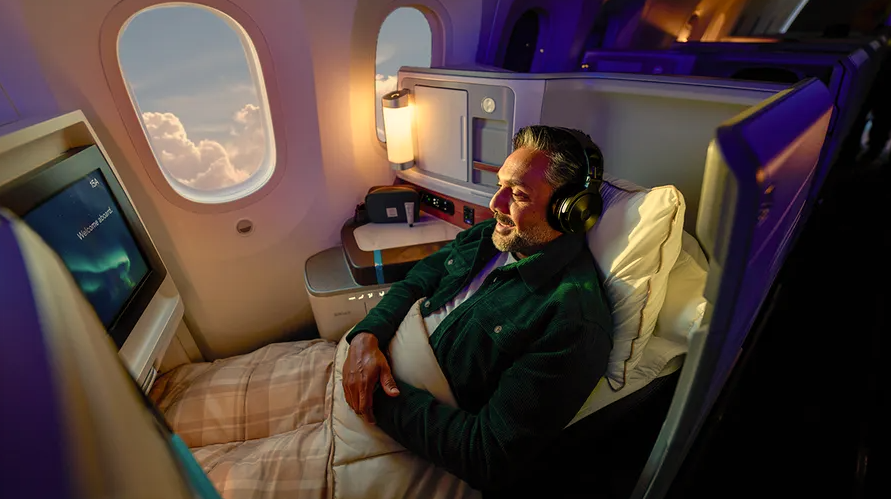
What Are the New Aurora Suites and Premium Reserve Seats?
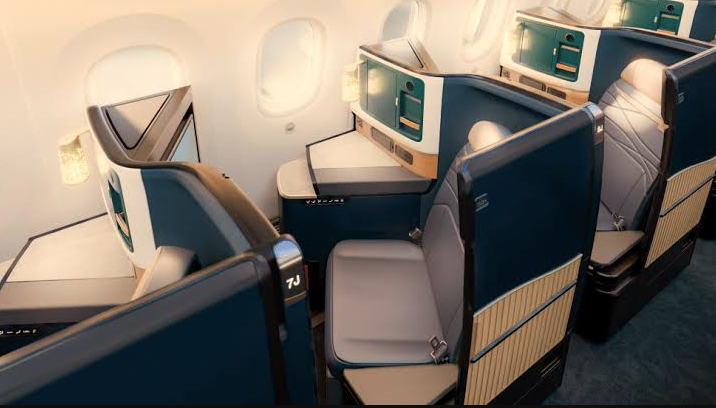
The Aurora Suites feature completely lie-flat beds, closing privacy doors, and 19-inch 4K entertainment screens. Premium Reserve acts as a brand-new premium economy tier sitting directly behind the luxury suites. Premium Reserve seats offer 38 inches of pitch and enhanced recline mechanisms paired with dedicated calf rests.
Also read – 7 Best Places to See Northern Lights for Couples in the USA

Management revealed these exact product specifications during the 2026 Investor Day in Seattle. The Securities and Exchange Commission (SEC) requires publicly traded companies like Alaska Air Group to disclose these major capital expenditures to shareholders. The airline plans to activate these new cabins in 2028 to attract travelers willing to pay higher fares for guaranteed comfort.
Which Aircraft Will Receive the Luxury Upgrades?
Alaska Airlines will install the Aurora Suites primarily on its upcoming Boeing 737 MAX 10 narrow-body deliveries. Hawaiian Airlines, which Alaska acquired in September 2024, will also receive massive interior upgrades across its wide-body fleet. Hawaiian will install 22 Leihōkū Suites on its fleet of 24 Airbus A330 aircraft.
Both airlines will feature the new Premium Reserve seating tier by 2028. The Federal Aviation Administration (FAA) must certify all new seat installations and cabin configurations before these modified planes can carry paying passengers.
| Airline Fleet | Lie-Flat Suite Name | Suite Count | Premium Reserve Count |
| Alaska 737 MAX 10 | Aurora Suites | 12 Seats | 12 Seats |
| Alaska 787-9 & 10 | Aurora Suites | Varies | 35 Seats |
| Hawaiian A330 | Leihōkū Suites | 22 Seats | 28 Seats |

Why is Alaska Airlines Pushing Premium Travel?
Alaska Air Group is expanding its premium footprint to boost profit margins while high jet fuel costs aggressively squeeze standard economy returns. Management expects these luxury additions to capture higher-paying corporate and leisure travelers on long-haul routes.
Financial filings submitted to the Department of Transportation (DOT) consistently show that premium cabins generate significantly more revenue per square foot than standard economy seating. This strategy, officially dubbed “Alaska Accelerate”, leverages the recent Hawaiian Airlines merger to build a more global network. By flying upgraded planes out of the Seattle hub, the airline can successfully compete against massive international carriers.
Massive New Airport Lounges in Seattle and Honolulu
Alaska will open a massive 41,000-square-foot lounge complex at Seattle-Tacoma International Airport in late 2027. This new space includes a standard 500-seat Alaska Lounge and an exclusive 200-seat Aurora Lounge reserved strictly for intercontinental and premium suite travelers. Hawaiian Airlines will open its own 13,000-square-foot luxury lounge in Honolulu Terminal 1 by early 2028.
Both premium facilities will offer dedicated fast-track check-in services and high-end dining. Airport authorities must approve these massive construction footprints, as they require significant structural changes to existing terminal concourses.
How Does Free Starlink Wi-Fi Factor In?
Alaska Airlines expects to complete its fleetwide installation of Starlink satellite Wi-Fi by the end of 2027. This high-speed internet service will be completely complimentary for all passengers enrolled in the newly unified Atmos Rewards loyalty program.
Airlines use free streaming-quality Wi-Fi as a massive differentiator to secure repeat business. Data published by the Bureau of Transportation Statistics (BTS) confirms that onboard connectivity directly influences passenger airline choices on routes exceeding four hours. Pairing lie-flat beds with free broadband internet ensures the carrier remains highly competitive in the premium aviation market.