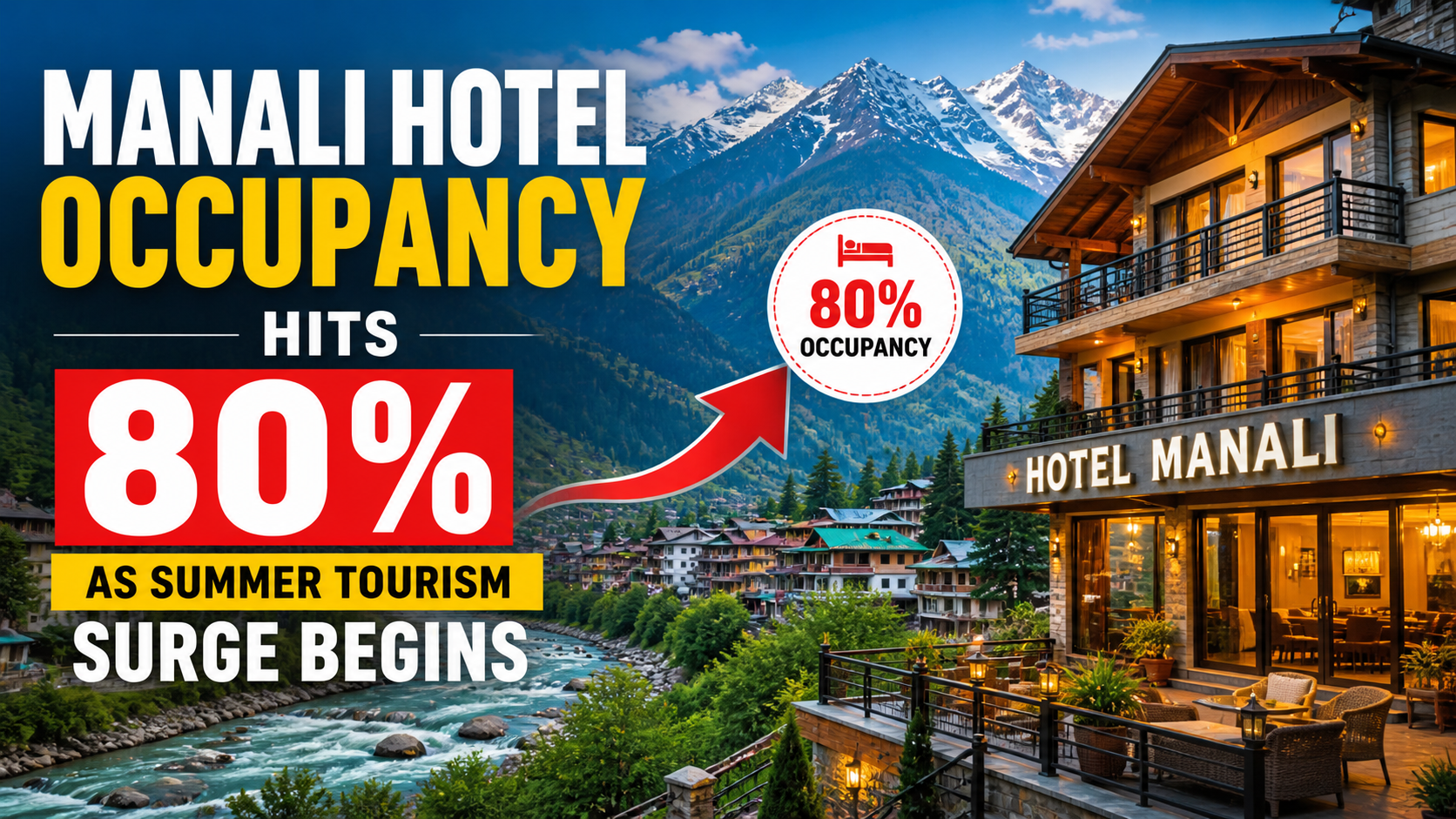
Manali is logging its strongest pre-summer tourist influx in recent years, with hotel occupancy climbing to 80 percent and local operators projecting steady growth through May and June. Industry stakeholders and district tourism officials report coordinated readiness across lodging, transport, and permit desks as domestic travel demand shifts toward hill stations.
Manali Hotel Occupancy Rates Climb to 80 Percent as Summer Travel Peaks
Chaman Kapoor, a senior hotelier operating in the Kullu valley, confirmed that current booking levels sit between 70 and 80 percent. Advance reservations for late May and June are already tracking above last year figures. The occupancy jump follows a recovery in domestic travel spending and targeted promotional packages from registered properties.
Kapoor attributed the rise to stable weather, visible snow cover at higher elevations, and improved coordination among taxi unions, auto operators, and homestay networks. Properties are rolling out early-bird rates and flexible cancellation windows to capture advance demand.
Key Factors Behind the Manali Tourism Surge This Season
- Clear daytime skies and consistent mountain visibility
- Residual snow above 3,000 metres drawing photography and trekking groups
- District-wide readiness from transport unions and verified homestays
- Early booking discounts and standardised refund policies across registered hotels
- Completed winter maintenance on the Chandigarh-Manali highway and feeder roads
Also read – The Ultimate Weekend Road Trip from Chandigarh to Spiti Valley
Rohtang Pass Reopening Calls Grow After Atal Tunnel Traffic Shift
Kapoor renewed requests for regulated tourist access to Rohtang Pass, noting that vehicular pressure on the old alignment has dropped significantly since the Atal Tunnel opened. The National Green Tribunal previously restricted daily entries to limit ecological strain and traffic bottlenecks.
With through-traffic now routed underground, local tourism bodies argue that a controlled permit system could restore high-altitude access without repeating past congestion. District authorities are reviewing environmental compliance reports and crowd management protocols before issuing a final decision.
Current Season Travel Metrics and Infrastructure Status
| Metric | Current Season Status | Year-Ago Comparison | Notes |
|---|---|---|---|
| Hotel Occupancy Rate | 70-80 percent | 55-60 percent | Based on local hotelier association reports |
| Advance Booking Window | 14-21 days | 7-10 days | Peak demand expected mid-May to late June |
| Daily Tourist Arrivals | Estimated 12,000-14,000 | Estimated 8,500-9,500 | District tourism desk projections |
| Rohtang Pass Permit Status | Under review | Restricted | NGT caps remain until ecological clearance |
| Atal Tunnel Traffic Diversion | 65-70 percent of through-traffic | 40-45 percent | Reduces surface road congestion significantly |
Essential Booking Guidelines for Manali Hotels and Local Transport
- Peak occupancy is expected between May 15 and June 20
- Registered properties require valid ID verification and standard environmental fees at check-in
- Taxi and cab fares remain fixed by district transport authorities. Negotiated rates outside official slabs are not recognised
- Snow-point visits above Solang Valley require local guide registration
- High-altitude permit applications must be submitted 48 hours before travel through authorised portals
Tourism department officials are monitoring crowd density, waste collection schedules, and water supply lines as arrivals climb. If weather patterns remain stable and highway connectivity holds, Manali is positioned to record its highest summer footfall since 2019. Operators advise travellers to confirm reservations through verified channels and check district advisories before departure.