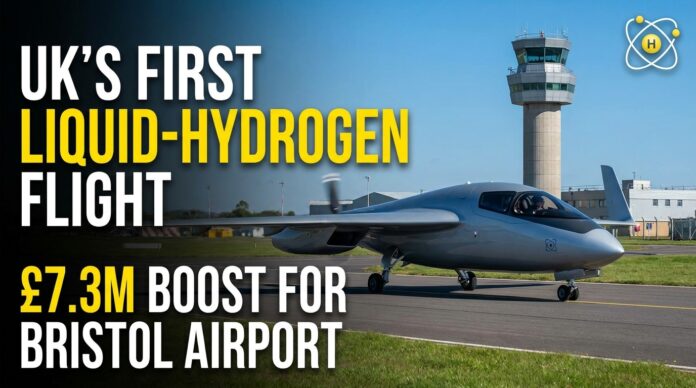
Bristol Airport is preparing to host the first departure of a liquid-hydrogen-powered aircraft from a UK commercial airport. The landmark demonstration is part of a new £7.3 million government programme supporting eight hydrogen and electric aviation projects across Britain.
Bristol has the strongest local stake in the announcement. Three projects directly involve Bristol Airport, covering the first demonstration flight, a mobile hydrogen refuelling vehicle and a detailed plan for storing and supplying liquid hydrogen at the airport. Bristol-based Vertical Aerospace is also leading a separate high-power electric-aircraft charging project with the University of Bath.
The immediate passenger message is simple: there are no hydrogen flights to book yet. The money pays for testing, infrastructure, safety work and operating procedures—not a newly announced passenger route.
What does the £7.3m green aviation funding mean for Bristol?
Bristol Airport will become a real-world testing site rather than simply participating in another research report. Its three projects are designed to answer practical questions: Where can liquid hydrogen be stored? How quickly can an aircraft be refuelled? Can airport workers handle it safely during normal operations?
Based on the Department for Transport’s detailed award list, the three projects involving Bristol Airport have maximum government grants totalling approximately £3.37 million.
That is nearly half of the funding listed across the eight projects. However, this does not mean £3.37 million is being paid directly to Bristol Airport. The grants are awarded to project-leading companies and shared across consortium activities, equipment, testing and research.
Which Bristol green aviation projects received funding?
| Project | Government funding | Total project cost | What it will do in Bristol |
|---|---|---|---|
| CHOSAN hydrogen flight demonstration | £1,153,790 | £1,722,191 | Operate regional demonstration flights using liquid hydrogen, beginning with a planned departure from Bristol Airport |
| HyPRIME mobile hydrogen refuelling | £2,124,651 | £3,417,518 | Build and test a mobile vehicle for refuelling aircraft and hydrogen-powered airport equipment |
| Bristol Airport hydrogen supply study | £93,164 | £135,237 | Plan how liquid hydrogen could be delivered, stored and managed safely at the airport |
| ECLiPSE electric-aircraft charging | £1,752,747 | £3,372,793 | Develop faster charging and cooling technology through Bristol-based Vertical Aerospace and the University of Bath |
The first three projects directly name Bristol Airport as a partner. ECLiPSE is a wider South West and South Wales project, not specifically a Bristol Airport trial, but it strengthens Bristol’s position as a centre for electric-aircraft development.
Funding accuracy note: The eight published maximum grants add up to approximately £7.21 million, which the government presents as a rounded £7.3 million programme. The awards are described as maximum indicative amounts and may support projects lasting up to 24 months from August 2026.
When will hydrogen flights start from Bristol Airport?
The first demonstration flight is expected within the next couple of years, but no exact date has been announced. Bristol Airport says the CHOSAN consortium will conduct a series of regional flights in a light aircraft, with the first liquid-hydrogen departure taking place from Bristol.
The project intends to prove that liquid hydrogen can be handled during operations at a working commercial airport. Its flights may cover regional routes of up to 500 kilometres, although no destination, timetable or passenger service has been confirmed.
For travellers, this distinction matters:
- A demonstration flight is not a scheduled airline service.
- Tickets are not on sale.
- No airline route from Bristol has been announced.
- The aircraft, fuel system and airport procedures still require regulatory work.
- A successful test would be one step toward commercial operations, not their immediate launch.
A practical rule for future announcements is to look for three details before treating a proposed flight as a real travel option: regulatory certification, a named airline and a published booking date.
How will liquid-hydrogen refuelling work at Bristol Airport?
Liquid hydrogen must be kept at about minus 253°C, making storage and refuelling far more complicated than filling an aircraft with conventional fuel. The airport needs specialist tanks, secure delivery arrangements, trained employees, emergency procedures and equipment capable of maintaining extremely low temperatures.
The Equilibrion study will examine how this infrastructure could fit into Bristol Airport’s existing operation. The HyPRIME project will take a more mobile approach by developing a vehicle that can refuel hydrogen-powered aircraft and airport machinery without immediately requiring a permanent airport-wide pipeline system.
HyPRIME will also investigate whether hydrogen released naturally as the stored liquid warms—known as boil-off—can be captured and used to:
- Power a hydrogen aircraft tug.
- Generate electricity for other airport equipment.
- Reduce wasted fuel during airport operations.
- Support aircraft refuelling within normal turnaround times.
This is one of the most important parts of the programme. A hydrogen aircraft has little commercial value if refuelling takes too long, wastes fuel or repeatedly disrupts airport schedules.
Also read – Top 10 Best Regional Airports in North America (2026)
Is hydrogen new to Bristol Airport?
Bristol Airport has already tested hydrogen equipment during live operations. In 2024, Project Acorn used hydrogen to refuel and power a baggage tractor servicing easyJet aircraft.
The tractor took approximately three minutes to refuel and could then operate for two to three hours. The Civil Aviation Authority participated as an independent reviewer of the safety case, while airport and emergency teams gathered information intended to support future rules and industry guidance.
The new projects move beyond ground vehicles. They will explore the harder stage: storing liquid hydrogen and transferring it safely into an aircraft at a busy commercial airport.
Are electric flying taxis coming to Bristol?
The funding supports technology that may eventually be used by electric flying taxis, but no Bristol taxi route has been approved or placed on sale. Bristol-based Vertical Aerospace will lead the £3.4 million ECLiPSE programme, including up to £1.75 million of government support.
Its partners will develop high-power charging and liquid-cooling systems intended to reduce charging time, equipment size, installation work and operating costs. Faster charging is essential because an electric aircraft that remains plugged in for long periods cannot operate enough journeys to become commercially practical.
The government has linked Vertical Aerospace’s development programme to potential passenger services from 2029, but this remains an industry target—not a confirmed launch date for flights from Bristol Airport.
What will Bristol Airport passengers notice first?
Most passengers will initially notice very little. Early testing is likely to happen in controlled airside areas rather than at check-in desks or departure gates.
The first visible changes could include:
- Specialist hydrogen storage or mobile refuelling equipment.
- New safety zones and emergency-response procedures.
- Hydrogen-powered tugs or other ground vehicles.
- High-capacity electric charging equipment.
- Demonstration aircraft operating outside normal passenger schedules.
Travellers should not change existing bookings or delay planned trips because of this announcement. Conventional aircraft will continue to operate from Bristol Airport while hydrogen and electric systems are tested.
What should Bristol and South West residents watch next?
The project’s real progress will be shown by operational milestones, not promotional images. Five developments will indicate whether the programme is moving closer to passenger use:
- A confirmed date for the first Bristol hydrogen demonstration flight.
- Civil Aviation Authority approval for the aircraft and refuelling process.
- Details of how the hydrogen is produced and transported.
- Evidence that aircraft can be refuelled within commercial turnaround times.
- A named airline, route and ticket-sale date for any future passenger service.
The UK Civil Aviation Authority’s Hydrogen Challenge has already identified safety risks, regulatory readiness and operating standards as central issues. This means successful engineering trials must still be converted into clear, repeatable rules before hydrogen aircraft can become a routine part of airport life.
Why Bristol’s hydrogen flight project matters
Bristol is becoming one of the UK’s most important test locations for low-emission regional aviation. The city combines an active commercial airport with nearby aerospace companies, engineering expertise and university research.
The £7.3 million announcement will not transform passenger journeys overnight. Its value is more practical: it pays organisations to solve the less glamorous problems that determine whether a new aircraft can operate safely—fuel delivery, storage, charging, cooling, turnaround times and emergency planning.
For Bristol passengers, the honest conclusion is clear: the first hydrogen departure will be a significant test flight, not the start of an immediate new airline service. But if the projects succeed, Bristol Airport could provide the operating blueprint that other UK airports follow.

