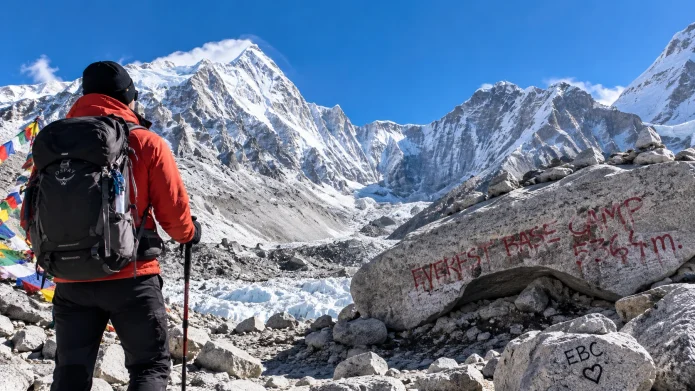
The Everest Base Camp trek costs between $1,200 and $2,500 for a standard 14-day trip, and you do not need to be an elite athlete to do it. You just need to be fit enough to walk 10 to 15 kilometers a day, mentally prepared for cold nights, and ready for a serious lack of hot showers.
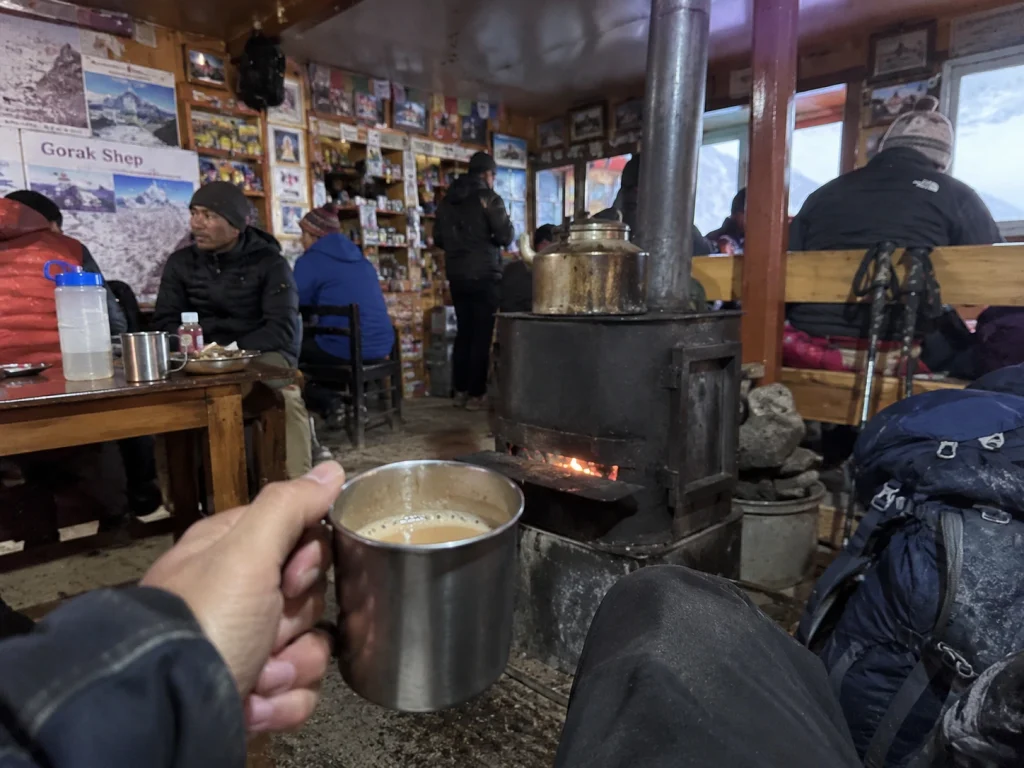
Back in April 2026, I found myself shivering in a teahouse in Gorak Shep, smelling burning yak dung from the stove, wondering why I packed three heavy sweaters I never even took out of my bag. I made plenty of mistakes on that trail. I also overpaid for terrible coffee and learned the hard way that wet wipes are the greatest currency in the Khumbu region.
Also read – Know How I Percolated My Coffee on Everest Base Camp Hike
You are probably planning your own trip right now. You want to know exactly what to budget, how to get your permits, and what the daily reality of the trail actually looks like. I am going to give you the honest, first-hand facts right now so you can stop stressing and start packing.
How Much Does the Everest Base Camp Trek Actually Cost in 2026?
A comfortable, fully guided 14-day Everest Base Camp trek will cost you roughly $1,500 per person. This includes your domestic flights, permits, guide, porter, teahouse accommodation, and three meals a day. If you are a strict budget backpacker carrying your own gear and paying for everything independently, you can scrape by for around $1,200. Luxury treks with helicopter returns will set you back closer to $4,500.
I tracked every single dollar I spent on the mountain. Here is a realistic breakdown of what you will pay.
| Expense Category | Estimated Cost (USD) | What You Get |
| Guided Package | $1,200 – $1,700 | Guide, porter, basic lodging, food, and permits. |
| Kathmandu to Lukla Flights | $360 – $500 (Return) | Essential domestic flights. Usually included in packages. |
| Trekking Permits | $40 – $50 | Sagarmatha National Park and Khumbu local permit. |
| Nepal Tourist Visa | $50 | A 30-day visa on arrival at Kathmandu airport. |
| Trail Extras (Wi-Fi, Showers) | $150 – $250 | Hot water, device charging, and internet access high up. |
| Guide/Porter Tips | $100 – $150 | Expected at the end of the trek. |
Do not assume your package covers your trail extras. By the time I reached Dingboche, I was paying $5 just to charge my phone and another $5 for a bucket of warm water to wash with. Always carry extra local currency (Nepalese Rupees) because the higher you go, the more expensive a simple bottle of water becomes.
Essential EBC Trek Permits and Visa Rules for 2026
You only need two permits for the Everest Base Camp trek in 2026, and the old TIMS card is completely dead for this region. You will need the Sagarmatha National Park Entry Permit and the Khumbu Pasang Lhamu Rural Municipality Permit.
The national park permit costs NPR 3,000 (about $23) for foreigners. You can grab this at the Nepal Tourism Board office in Kathmandu before you leave, or just pay for it at the park entrance in Monjo.
The local Khumbu permit costs NPR 2,000 (about $17). You cannot buy this in Kathmandu. You pay for it in local cash at the arrival checkpoint in Lukla or at the Monjo checkpost. When I handed over my cash at the Lukla counter, they strictly wanted Nepalese Rupees, so make sure you hit the ATM in Kathmandu first.
Getting into the country is very straightforward. Most nationalities get a tourist visa on arrival at Kathmandu airport. You will pay $50 for a 30-day visa. Do yourself a massive favor and bring crisp, clean US dollars to pay for this. The card machines at the airport drop out frequently, and having cash saves you an hour of lining up at a broken ATM. You can fill out your arrival forms ahead of time on the Department of Immigration Nepal website to speed things up.
Also read – 15 Best Places to Stargaze in India in 2026 & 5 My Favourite
The Truth About Flights to Lukla
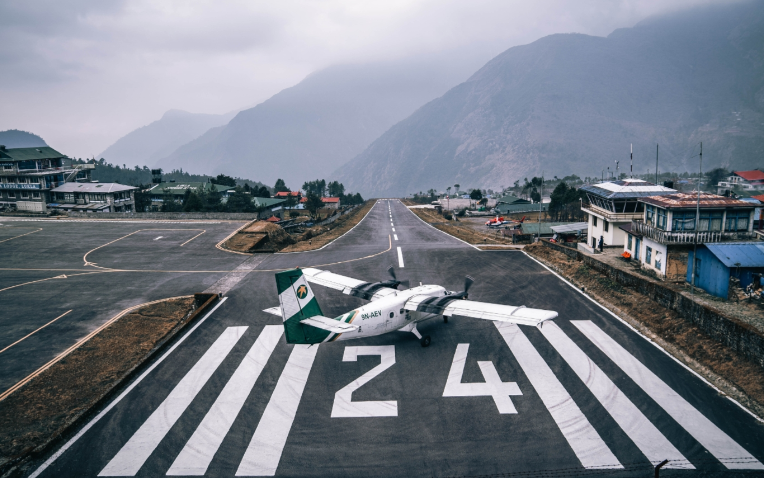
You will most likely fly out of Manthali Airport in Ramechhap instead of Kathmandu, meaning your trek actually starts with a brutal 4 AM bus ride. Due to heavy air traffic, the Civil Aviation Authority of Nepal diverts most Lukla flights to Ramechhap during the busy spring and autumn trekking seasons.
The 14-Day Everest Base Camp Itinerary
A safe and successful Everest Base Camp trek takes 14 days, which includes two mandatory rest days to prevent altitude sickness. Do not try to rush this schedule. The mountain always wins if you try to go too fast.
Here is the exact visual profile of your climb, showing where you will sleep and when you will rest.
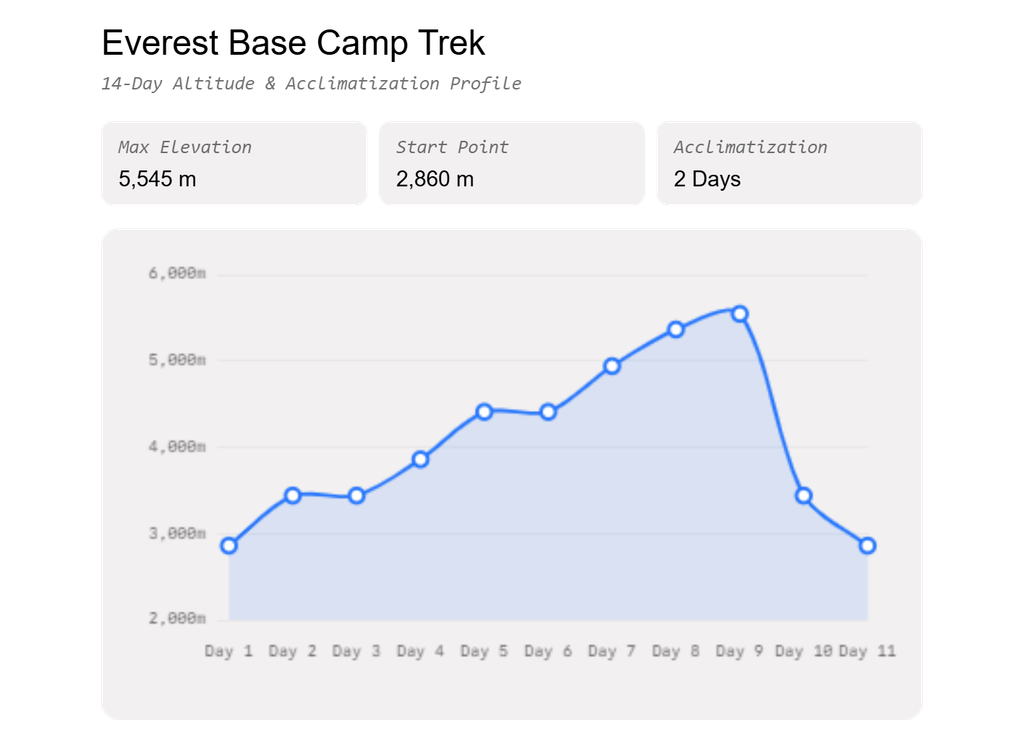
Your actual itinerary looks like this. Notice that the walk down is much faster than the walk up.
- Day 1: Fly to Lukla (2,860m), trek to Phakding (2,610m).
- Day 2: Trek to Namche Bazaar (3,440m). A massive uphill slog at the end.
- Day 3: Acclimatization day in Namche. Hike to the Everest View Hotel.
- Day 4: Trek to Tengboche (3,860m). Visit the famous monastery.
- Day 5: Trek to Dingboche (4,410m). The tree line disappears here.
- Day 6: Acclimatization day in Dingboche. Hike up Nangkartshang Peak.
- Day 7: Trek to Lobuche (4,940m). You pass the emotional climbers memorial.
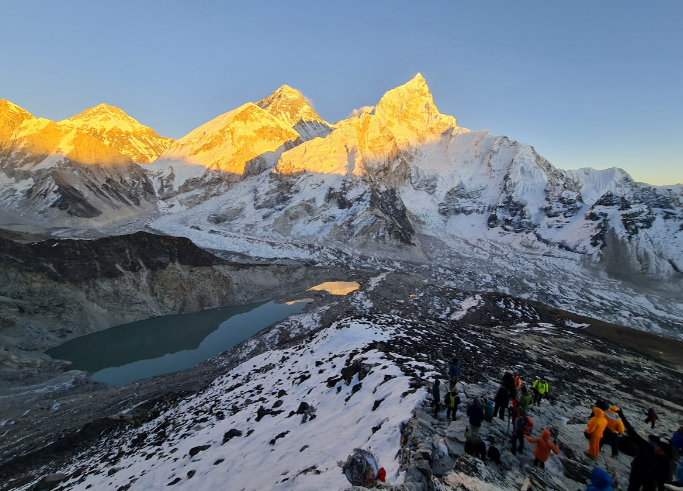
- Day 8: Trek to Gorak Shep (5,164m), drop bags, hike to EBC (5,364m), return to sleep in Gorak Shep.
- Day 9: Early morning hike to Kala Patthar (5,545m) for sunrise, then trek all the way down to Pheriche (4,210m).
- Day 10: Trek down to Namche Bazaar (3,440m).
- Day 11: Trek down to Lukla (2,860m).
- Day 12: Fly back to Kathmandu.
- Day 13 & 14: Buffer days in Kathmandu. You absolutely need these in case your flights are delayed by bad weather.
What to Expect: Realities of the Trail and Teahouses
Teahouses are incredibly basic stone lodges that get progressively colder and more expensive the higher you climb. You get a wooden bed, a thin mattress, and a pillow. That is it.
There is no central heating. The only warm room is the communal dining hall, which is heated by a stove burning dried yak dung. Everyone huddles around it after dinner, drinking ginger tea and playing cards. Once you leave that room to go to bed, you are stepping into a freezer. My water bottle actually froze solid inside my room at Gorak Shep. You absolutely need a high-quality, negative-degree sleeping bag.
The toilets are another reality check. At lower elevations, you might find western flush toilets. By the time you reach Lobuche, you are dealing with squat toilets that you flush yourself with a bucket of icy water. Always carry your own toilet paper. None is provided.
The food, however, is surprisingly good. Dal Bhat is the staple meal of the Himalayas. It is a massive plate of lentil soup, rice, vegetable curry, and pickles. The best part? The teahouse owners give you free refills. As the locals say, “Dal Bhat power, 24 hour.” You will eat a lot of pasta, fried rice, and garlic soup, which is a local remedy for altitude sickness. I strongly advise you to avoid eating meat after Namche Bazaar. All meat is carried up the mountain on the backs of porters or animals, unrefrigerated for days. Stick to a vegetarian diet to avoid stomach bugs.
How to Avoid Altitude Sickness
Altitude sickness is the single biggest reason people fail this trek. It happens because there is less oxygen in the air, and your body needs time to adjust. It has absolutely nothing to do with your fitness level. Marathon runners get it, and chain-smokers sometimes breeze right past it.
My biggest mistake early on was trying to walk at my normal city pace. A Sherpa guide kindly tapped my shoulder and said, “Bistari, bistari,” which means “slowly, slowly.”
You must walk at a painfully slow pace. If you are out of breath, you are going too fast. Second, you need to drink a massive amount of water. Aim for four to five liters a day. Yes, it means you will be peeing constantly behind rocks, but it flushes your system and helps your blood acclimatize.
Many trekkers, myself included, take Diamox (Acetazolamide) as a preventative measure. Speak to your doctor before you go. It causes a tingling sensation in your fingers and toes, but it can significantly reduce headaches and nausea. If you get a severe headache that does not go away with painkillers, or if you start vomiting or losing coordination, you must descend immediately. Going higher will literally kill you. The Sagarmatha National Park authorities log hundreds of helicopter rescues every season strictly due to tourists ignoring their symptoms.
Packing Essentials: What You Actually Need
You need far less clothing than you think, but the gear you do bring must be high quality. You are allowed a strict 15kg limit on the Lukla flight. That includes 10kg for your main duffel bag (carried by your porter) and 5kg for your daypack (carried by you).
You do not need to buy a $400 sleeping bag or a $300 down jacket back home. You can rent both in the Thamel district of Kathmandu for about $1 to $2 a day. They are heavily washed and perfectly warm.
Here is what you actually need to pack:
- Worn Gear: Broken-in waterproof hiking boots. Do not wear new boots on this trail unless you want your feet covered in blisters by day two.
- Layers: Two moisture-wicking base layer shirts, one fleece jacket, and one heavy down jacket for the evenings.
- Pants: Two pairs of lightweight trekking pants. Avoid cotton completely.
- Accessories: A warm beanie, a buff to protect your lungs from the cold, dusty air (the “Khumbu cough” is very real), and polarized sunglasses to prevent snow blindness.
- Hygiene: Wet wipes, hand sanitizer, water purification tablets, and a basic first aid kit with blister pads.
Trekking to Everest Base Camp is physically exhausting, mentally draining, and entirely life-changing. Do not let the logistics scare you off. Book your flights, train your legs, pack light, and just keep putting one foot in front of the other. You will be standing at the foot of the highest mountain on earth before you know it.

