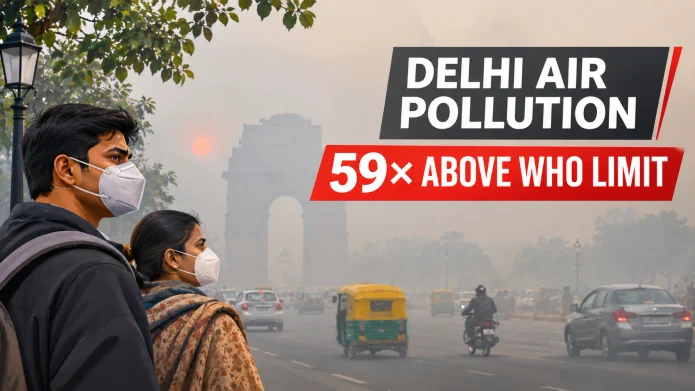
New Delhi’s air quality collapsed to catastrophic levels this week, with toxic fine particulate matter (PM2.5) spiking to nearly 59 times the World Health Organization’s recommended daily maximum. The immediate aftermath of Diwali firecrackers, combined with seasonal crop burning and stagnant winter air, created a dense, hazardous smog layer across the National Capital Region (NCR). If you are currently visiting or planning to land in northern India, you must completely rethink your outdoor itinerary to prevent acute respiratory illness.
What Actually Pushed Delhi’s Air to 59 Times the WHO Limit?
A toxic combination of illegal festival fireworks, stagnant weather, and agricultural fires created a perfect storm for this pollution crisis. Despite a strict Supreme Court ban on the sale and use of firecrackers, massive overnight detonations during the Diwali celebrations dumped immense volumes of heavy metals and smoke into the lower atmosphere. The World Health Organization (WHO) strictly advises that daily PM2.5 levels should not exceed 15 micrograms per cubic meter, but local monitoring stations recorded numbers entirely destroying that baseline.
Also read – How to Choose the Best Airline Miles Credit Card for You
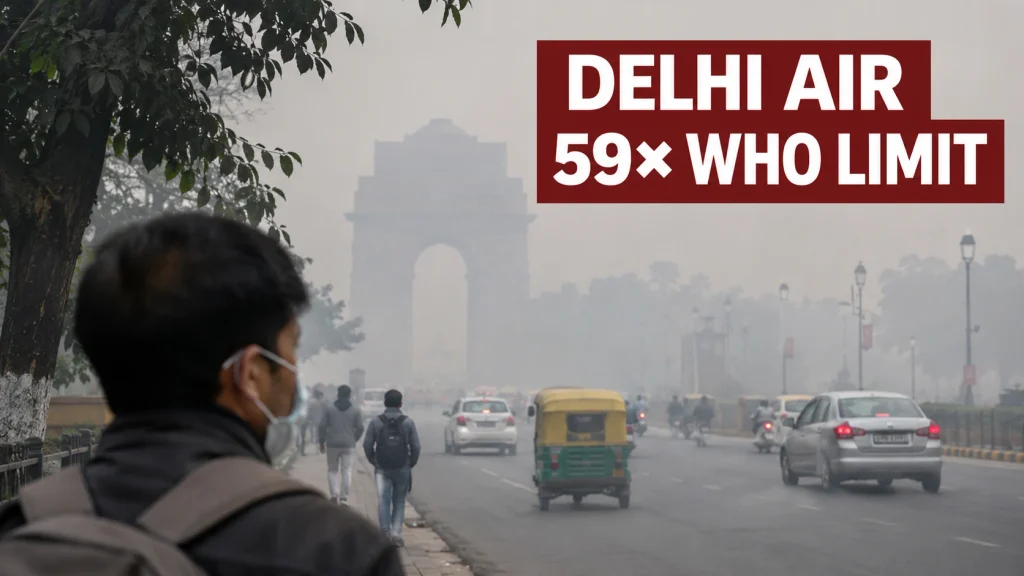
Because winter temperatures trap cold air close to the ground, this heavy pollution cannot simply blow away. The India Meteorological Department (IMD) confirms that ground-level wind speeds dropped to a dead calm, effectively locking the toxic particulate matter inside the city bowl. Agricultural stubble burning in neighboring Punjab and Haryana contributes roughly 20 percent of the current smoke, while trapped vehicle exhaust and industrial emissions make up the remainder. Particulate matter measuring 2.5 microns or less (PM2.5) poses the greatest threat because it bypasses normal bodily defenses and enters the human bloodstream.
How GRAP Stage III Restrictions Impact Foreign Travelers
The local government officially invoked Stage III of the Graded Response Action Plan (GRAP) to artificially suppress the skyrocketing Air Quality Index (AQI). This severe emergency mandate bans all non-essential construction work, severely limits the entry of diesel-powered commercial trucks into the city, and suspends physical classes for primary schools. You will notice a massive decrease in commercial traffic, but you will also face sudden hurdles when trying to book private transportation.
The Central Pollution Control Board (CPCB) dictates that older diesel and petrol vehicles are temporarily banned from the roads during this phase. This strict vehicle rationing means you might struggle to find available rideshare cabs, and standard hotel transfer vehicles could face police impoundment if they do not meet modern BS-VI emission standards. If you planned to use the Delhi Metro to bypass road traffic, prepare for extreme crowding. Millions of local commuters are abandoning their private vehicles to comply with the new mandates, pushing the public transit system to its absolute maximum capacity.
| Air Quality Index (AQI) | Health Impact Level | Official Traveler Advice |
| 0 – 50 | Good | Enjoy outdoor activities normally. |
| 201 – 300 | Poor | Sensitive groups should limit heavy exertion. |
| 301 – 400 | Very Poor | Risk of respiratory illness on prolonged exposure. |
| 401 – 500+ (Current) | Severe | Absolutely avoid all outdoor physical activity. |
Flight and Train Delays: What to Expect at IGI Airport
Severe morning smog directly chokes visibility on the runways, causing a cascading series of delays for both domestic and international flights. Pilots cannot legally land heavy commercial jets if the runway visual range drops below a specific, highly regulated threshold. You must assume your early morning or late evening flight out of Delhi Indira Gandhi International Airport will experience holding patterns or sudden rescheduling.
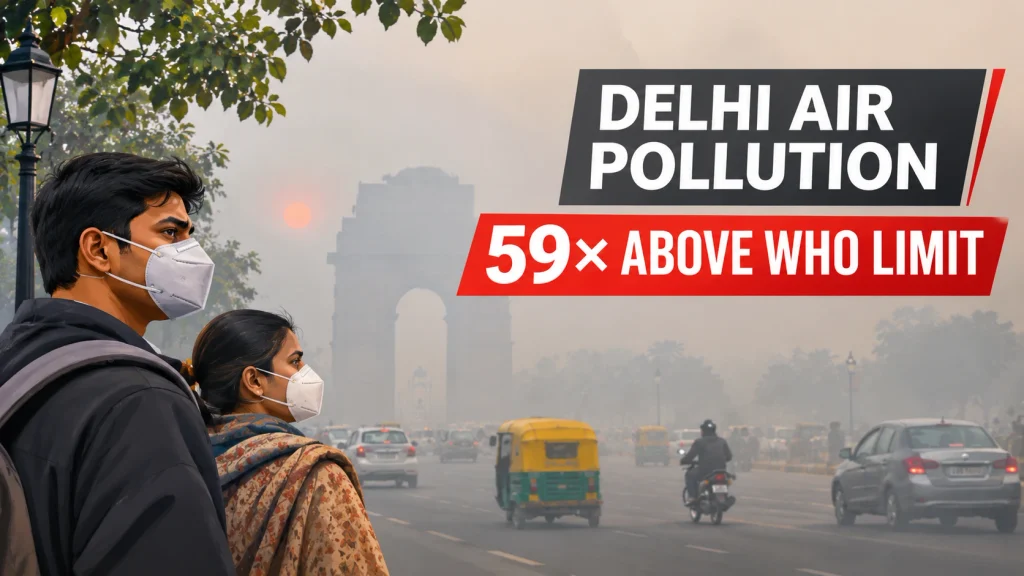
Trains running through the northern railway network face identical visibility hurdles. Conductors are ordered to drastically reduce locomotive speeds when navigating through dense smog corridors, adding hours to typical transit times. Always check your live PNR status before leaving your hotel room rather than waiting on a freezing, polluted railway platform breathing in the heavy exhaust.
Immediate Medical Protection Tactics for Lung Safety
You cannot rely on standard cloth masks or surgical masks to filter out PM2.5 particulate matter. These microscopic pollutants are small enough to bypass basic fabrics and lodge directly deep inside your lung tissue. The Ministry of Health and Family Welfare strongly urges vulnerable individuals to remain completely indoors in sealed, air-conditioned rooms.
Protect your respiratory system right now by following these non-negotiable health tactics:
- Wear N95 or P100 masks: Only wear certified N95, KN95, or FFP2 respirators that form a tight physical seal around your entire nose and mouth.
- Run HEPA purifiers: If you are staying in a hotel or Airbnb, confirm they operate heavy-duty High-Efficiency Particulate Air (HEPA) purifiers in the bedrooms.
- Cancel outdoor tours: Do not walk around the Red Fort, India Gate, or Qutub Minar. The physical exertion forces you to inhale massive volumes of toxic air.
- Skip the street food: The dense airborne ash settles rapidly on exposed food carts, introducing toxic heavy metals directly into your digestive system.

