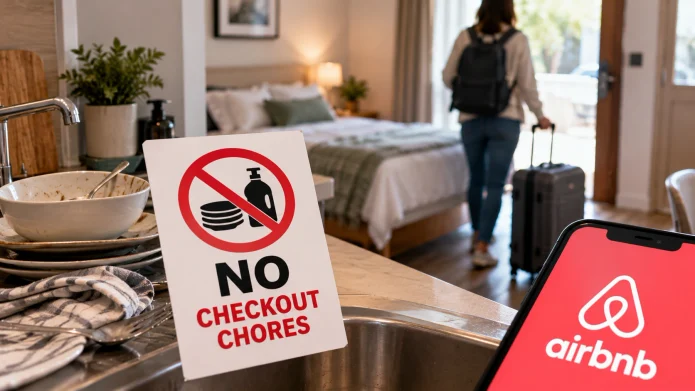
Airbnb officially bans property hosts from forcing guests to perform time-consuming checkout chores like washing dishes, stripping beds, or hauling trash offsite. The short-term rental platform updated its global policy to permanently separate mandatory house rules from optional guest requests. Travelers no longer have to pay a massive cleaning fee and spend their final vacation morning doing the exact job a professional cleaner is hired to do.
What Checkout Chores Are Banned?
Hosts can no longer demand any physical labor that requires significant time, effort, or skills normally handled by a paid cleaning crew. The new policy specifically targets the most hated checkout requirements that ruin the guest experience.
- Stripping beds: Guests no longer have to pull sheets, pillowcases, or heavy duvet covers off the beds.
- Washing dishes: Hosts cannot force visitors to wash, dry, and put away dirty dishes or run the dishwasher.
- Starting laundry: You cannot be asked to load towels or linens into a washing machine before leaving.
- Hauling trash offsite: Guests do not have to carry heavy garbage bags down the street or to a distant community dumpster.
- Vacuuming and sweeping: Running a vacuum or sweeping floors is now strictly classified as a professional cleaning duty.
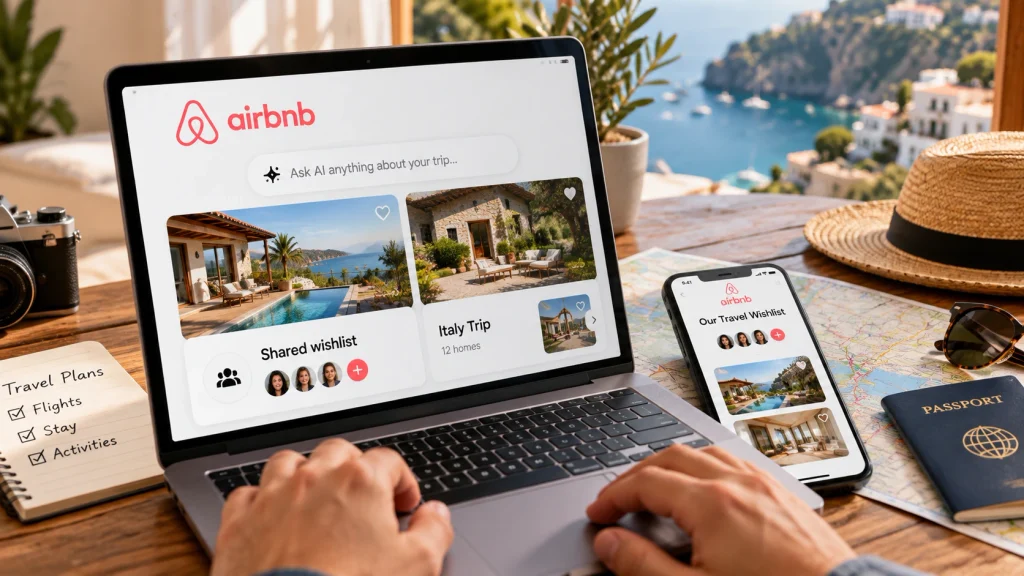
Also read – How to Use Airbnb’s New Shared Travel Wishlists & AI
Allowed Chores: What Guests Can Still Be Asked to Do
The platform still allows property owners to ask for very basic tidying, but these tasks must require minimal physical effort. Airbnb now classifies these items strictly as “requests” rather than binding rules.
| Chore Category | What Hosts Can Legally Request | What is Strictly Banned |
| Dishes | Place used dishes neatly inside the kitchen sink | Hand-washing, drying, or putting dishes away in cabinets |
| Linens | Gather damp towels into a single bathroom pile | Stripping beds or running the washing machine |
| Trash | Sort everyday garbage into the provided indoor bins | Carrying heavy trash bags off the physical property |
| Utilities | Turn off the air conditioning and lights upon exit | Forbidding the use of the AC entirely during the stay |
The Ban on Hidden House Rules and Cleaning Fines
Property owners can no longer surprise guests with hidden chore lists printed on a kitchen chalkboard or stuffed inside a welcome binder. Airbnb removed the dedicated checkout instructions tab entirely. All rules must be highly visible on the digital listing page before a traveler ever books the property.
Furthermore, hosts are completely banned from charging financial penalties or withholding security deposits if a guest ignores an optional chore request. If an owner attempts to fine a traveler for leaving unwashed dishes in the sink, the guest can file a direct dispute with the Better Business Bureau (BBB) or escalate the chargeback through the Federal Trade Commission (FTC) regarding unfair hidden fees.
Why Property Hosts Are Angry About the New Policy
Thousands of rental hosts are furious because this policy shift directly cuts into their profit margins and disrupts their tight scheduling. Without guests acting as unpaid labor, owners must pay professional cleaning crews to stay longer and handle the dirty dishes and heavy laundry.
Hosts are now forced to absorb these extra costs or raise their nightly Airbnb checkout rates to compensate. Many owners fear that removing the threat of financial penalties will encourage disrespectful guests to leave properties completely trashed. However, the Airbnb Resource Center clarified that basic respect is still required, and AirCover insurance remains active for actual physical property damage.
How to Handle a Host Demanding Illegal Chores
If you book a stay after November 20, 2026, and the host sends you an aggressive checkout chore list, you have total protection to ignore the illegal demands.
Follow these specific steps to protect your booking rating:
- Take screenshots: Capture any messages from the host demanding you wash dishes or strip beds.
- Ignore the illegal requests: Complete the basic allowed requests like locking the door and turning off the lights, but leave the heavy cleaning to the professionals.
- Report the listing: Flag the property directly through the Airbnb application. The platform uses an automated system to catch non-compliant wording and will eventually lower the search visibility of repeat offenders.
- Check local consumer laws: If the host attempts to process an unauthorized credit card fine, report the transaction to your local Department of Consumer Affairs as fraudulent billing. European travelers can also report unfair pricing tactics to the Competition and Markets Authority (CMA) if a host tries to enforce a private contract outside of the official platform.

