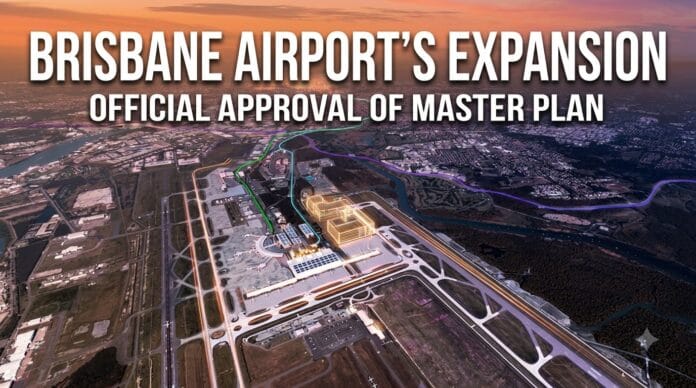
Brisbane Airport now has official approval for its 2026 Master Plan, giving the airport a 20-year framework for more terminal capacity, better ground transport, commercial development and future passenger growth. Australia’s Infrastructure Minister Catherine King approved the plan on 15 June 2026, with the decision publicly announced the following day. Brisbane Airport confirms the approval here, while the Australian Government’s announcement sets out the conditions surrounding future development.
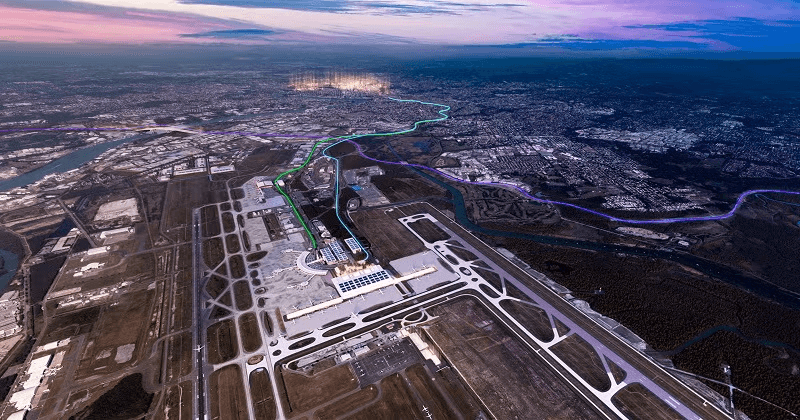
What does Brisbane Airport’s Master Plan approval actually mean?
The approval does not mean every proposed building or terminal can immediately begin construction. It establishes the planning framework Brisbane Airport will use through roughly 2046.
That distinction matters. Large individual developments may still require separate Major Development Plans, public consultation and ministerial approval under Australia’s airport-planning rules. The Department of Infrastructure explains that process.
For travelers, the simplest way to read the decision is:
- More airport capacity is being planned
- Terminal upgrades will continue
- Road, parking and public-transport access will become increasingly important
- More hotels, shops and commercial facilities could appear around the airport
- Growth will be planned alongside environmental and aircraft-noise requirements
How big will Brisbane Airport become by 2046?
Brisbane Airport is planning capacity for more than 50 million passengers within two decades. The airport also expects employment across the precinct to increase from about 25,000 to 50,000 jobs.
| Brisbane Airport plan | What it means |
|---|---|
| Planning horizon | Around 20 years |
| Passenger capacity | More than 50 million |
| Airport jobs | Around 50,000 |
| Near-term investment | More than A$5 billion |
| Key focus | Terminals, transport, land use and sustainability |
Brisbane Airport says more than A$5 billion will be invested in major infrastructure, with substantial work already focused on both terminals. Its current Future BNE program includes screening improvements, passport-control changes, self-service check-in, automated bag drop and planning for a future Terminal 3 precinct. Current projects can be tracked directly through Brisbane Airport.
Will Brisbane Airport get a new terminal?
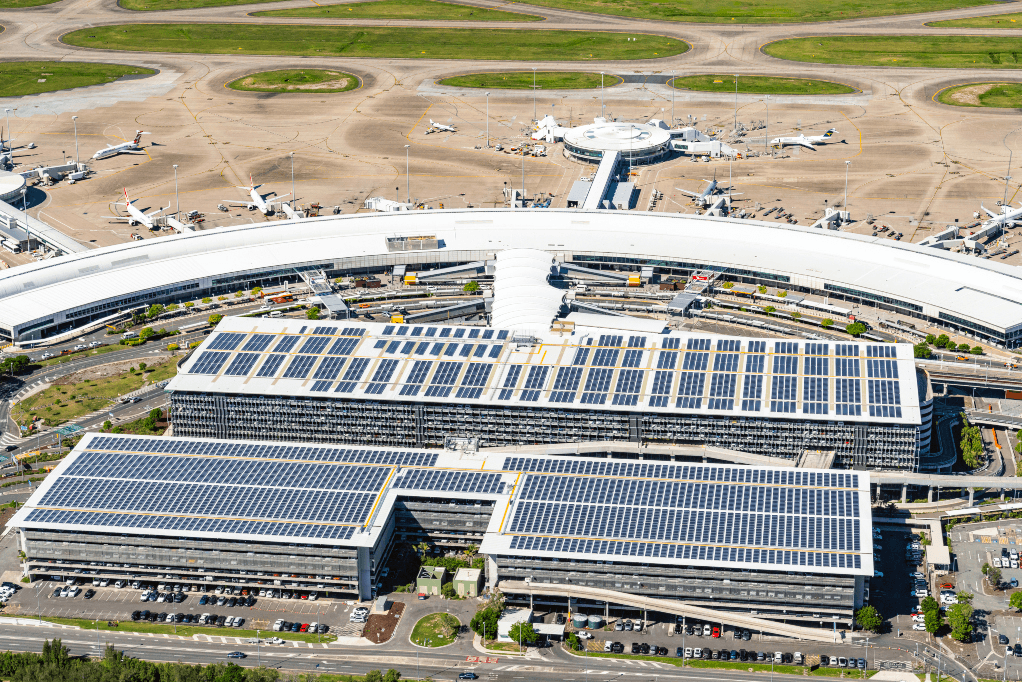
A future Terminal 3 remains part of Brisbane Airport’s broader development planning, but travelers should not read the Master Plan approval as a confirmed opening date.
This is where airport announcements can become misleading. A master plan protects space and establishes what development may be needed; detailed projects follow their own design, funding and approval timelines.
For someone booking a Brisbane flight next month, this approval changes very little immediately. For a family flying through Brisbane repeatedly over the next five to ten years, however, the difference should gradually become visible through new processing technology, altered terminal layouts and construction around airport access points.
Also read – How Australia Digital Passenger Declaration Works & Details
What should Brisbane Airport passengers expect during the expansion?
Expect improvement and disruption to happen at the same time. Large airports rarely transform in one clean construction phase.
A useful traveler habit is to check Brisbane Airport’s construction updates before leaving home rather than relying on the terminal layout remembered from a previous trip.
During major works:
- Arrive with extra time if airport notices flag changed screening or access arrangements.
- Check your terminal before driving to the airport, especially when meeting arriving passengers.
- Do not assume your usual drop-off route, parking entrance or check-in area is unchanged.
- Watch official airport notices rather than social-media posts when construction information conflicts.
What about Brisbane Airport aircraft noise?
Aircraft noise remains a major condition attached to the airport’s future growth. Minister Catherine King specifically asked Brisbane Airport Corporation to keep engaging nearby communities and to work with Airservices Australia on Brisbane’s Noise Action Plan.
The airport has also been conducting an 18-month voluntary tailwind data trial connected with efforts to reduce overnight aircraft-noise impacts where operationally safe. Future flight-path changes may also require updated noise forecasting.
That is an important part of the story: Brisbane Airport’s expansion approval is not simply permission to grow. Capacity, community impact, transport access and environmental performance now have to develop together.

