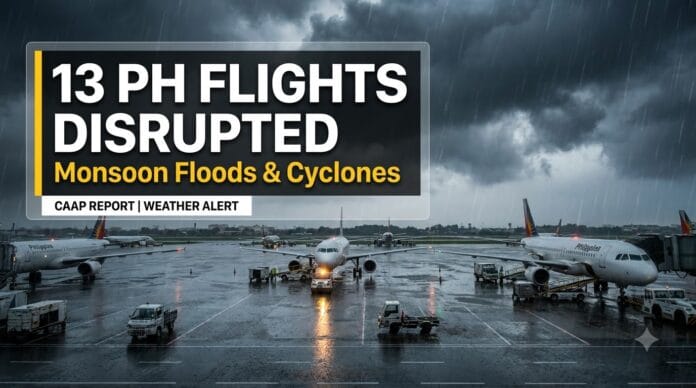
Philippine travelers flying through Manila, Clark and several domestic routes should check their flight status before leaving for the airport, even if their flight still shows “scheduled.” The Civil Aviation Authority of the Philippines reported 13 weather-related flight disruptions as the southwest monsoon, or Habagat, affected landing conditions. CAAP’s tally included diversions, missed approaches and go-arounds rather than outright cancellations as of 3 p.m.
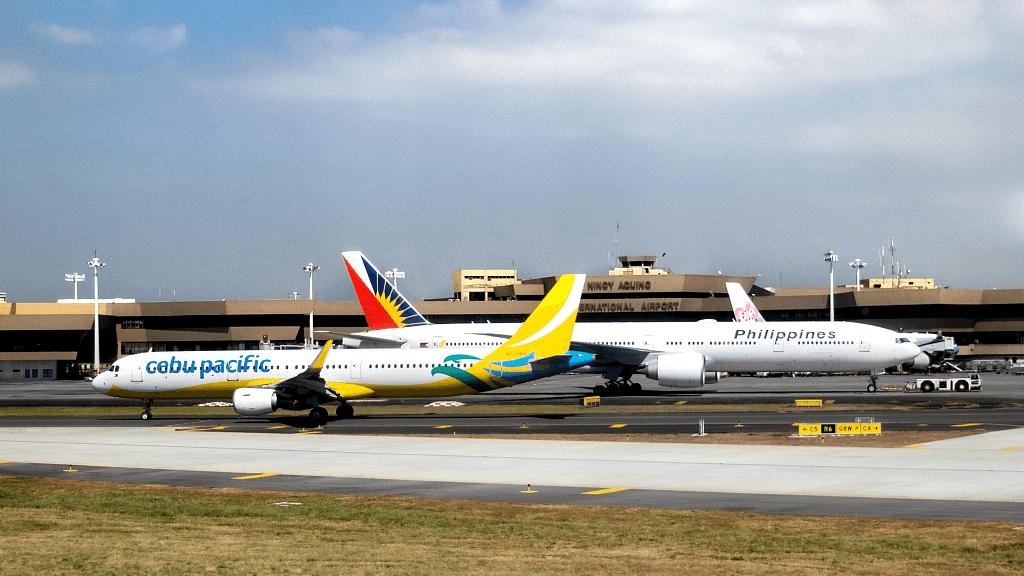
That distinction matters. A flight can remain active while still landing at a completely different airport.
Which Philippine Flights Were Affected by Habagat on August 17?
Eight flights were diverted, three abandoned their first landing approach, and two performed go-arounds. CAAP’s reported disruptions affected both international and domestic services.
| Disruption | Reported examples |
|---|---|
| Diverted to Clark | Air Canada Vancouver–Manila, Philippine Airlines San Francisco–Manila, AirAsia Da Nang–Manila and Bacolod–Manila |
| Diverted elsewhere | Cebu Pacific Tacloban–Manila to Iloilo; Cebu Pacific and Emirates Dubai–Manila services to Cebu |
| Missed approaches at Clark | Jin Air, Jeju Air and Scoot flights |
| Go-arounds | Philippine Airlines Taipei–Manila and Cebu Pacific Caticlan–Manila |
A China-origin Central Airlines flight heading for Clark was also rerouted to Manila.
Were 13 Philippine Flights Cancelled?
No—CAAP had reported no weather-related cancellations. The 13 affected flights were disrupted during landing or redirected to alternate airports.
This is an important detail for anyone searching “Are Philippine flights cancelled today?” A diversion can cause almost as much disruption as a cancellation because passengers may land hours away from their planned airport and the aircraft may then be out of position for its next service.
Also read – Vietnam Airlines Flight VN-671 Inaugurates Nonstop Flights …
Why Are Manila and Clark Flights Being Diverted?
Heavy monsoon rain and reduced landing conditions were affecting parts of Luzon and the Visayas. PAGASA’s official 4 p.m. August 17 forecast said the southwest monsoon was affecting Luzon and the Visayas, with monsoon rains over parts of western Luzon and occasional rain across Metro Manila and several surrounding provinces.
PAGASA’s official weather forecast warned of possible flash floods or landslides from moderate to intense rainfall in affected areas. It also reported moderate-to-rough coastal conditions over northern and western Luzon.
The practical lesson: clear weather where you are standing does not mean your aircraft’s arrival route is clear.
A Cebu passenger, for example, may see manageable rain outside the terminal while the inbound aircraft is delayed or diverted hundreds of kilometres away.
What Should You Do if Your Manila Flight Is Diverted?
Do not immediately book another flight while your airline is still deciding whether the aircraft will continue to its original destination.
Use this order instead:
- Check your airline app or official flight-status page.
- Look at the arrival airport, not only the words “delayed” or “landed.”
- Keep your boarding pass and disruption messages in case you later need them for rebooking, insurance or expense claims.
- Ask the airline about onward transport before paying for a long taxi ride.
- Tell anyone collecting you that the landing airport has changed.
If a Manila-bound flight lands in Clark, for example, arranging a Manila airport pickup based solely on the original itinerary can leave both passenger and driver waiting in different cities.
Does a Go-Around Mean the Flight Is Unsafe?
No. A go-around means the crew discontinued a landing attempt and climbed away to try again or follow another instruction. It is a normal aviation safety procedure when conditions are not suitable for continuing the approach.
The useful thing for passengers is not to panic when tracking apps show unusual circling or a delayed landing time. Wait for the airline’s confirmed arrival information before changing ground transport plans.
How Should You Prepare for Habagat Flight Disruptions?
Build flexibility into both sides of the flight, not just your airport arrival time.
For travel during active monsoon weather:
- Avoid booking a tight same-day onward connection.
- Keep medicines, chargers and one change of clothes in cabin baggage.
- Download your airline app before leaving home.
- Save your hotel and transfer contacts offline.
- Check both PAGASA and your airline rather than relying only on a weather app.
CAAP also maintains official aviation notices and guidance through its public announcement portal, including guidance concerning aircraft movement during inclement weather.
Bottom Line: Should You Still Go to the Airport?
Yes, unless your airline tells you not to—but verify your flight before departing. The August 17 disruption report involved 13 affected flights but no reported weather cancellation by 3 p.m., showing why passengers should distinguish between cancellation, diversion and delayed landing.
During Habagat season, the smartest move is simple: check the flight, check the weather, then check the arrival airport again.

