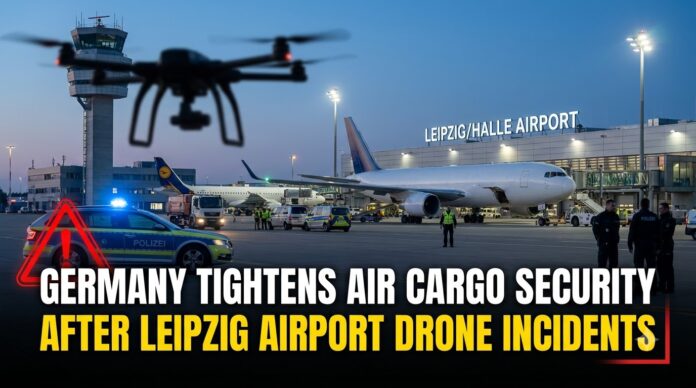
German authorities enforced massive new air cargo security protocols this week after police discovered three explosive-laden drones at Leipzig/Halle Airport. You will now face immediate processing delays and mandatory secondary screenings for any freight moving through this major European hub.
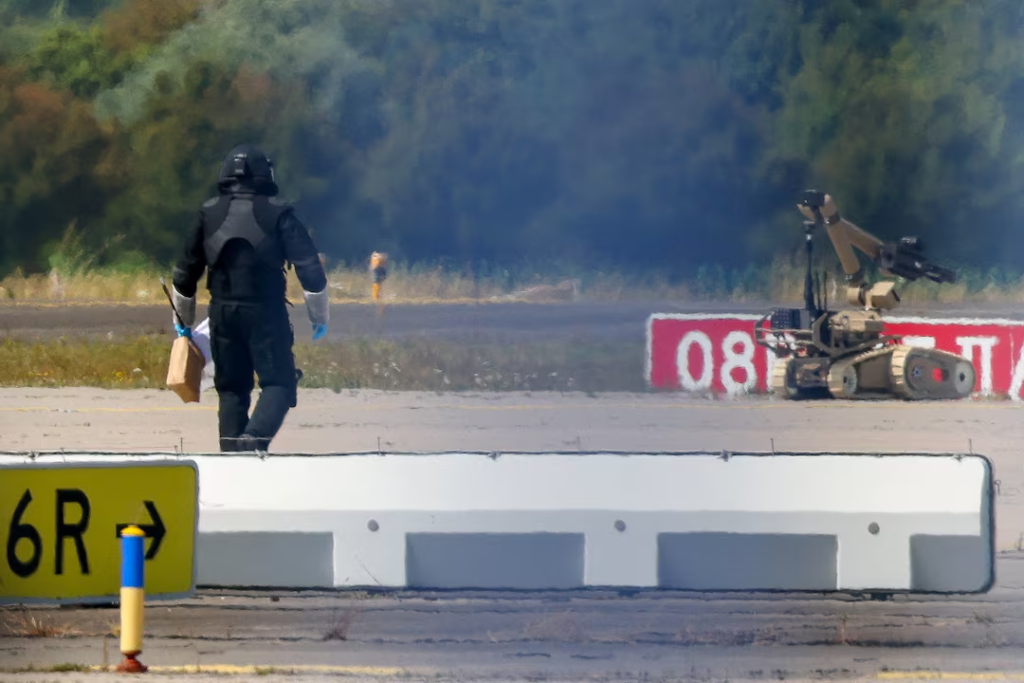
The security alert forces airlines and logistics providers to completely alter how they inspect packages. You cannot expect your cargo to move at standard speeds while the federal police lock down the airport perimeter.
Why Did Germany Change Cargo Security Rules at Leipzig?
Security officials changed the rules because a highly coordinated, multi-drone attack targeted cargo planes directly on the Leipzig tarmac in August 2026. The attackers used modified drones carrying military-grade hexogen explosives.
German Interior Minister Alexander Dobrindt called the event a severe hybrid attack scenario. One drone landed right next to a Ukrainian Antonov cargo plane, while another actually collided with an incoming DHL aircraft. Investigators recently found a third drone hidden in a nearby field in Kabelsketal, forcing the German Federal Ministry of the Interior to mandate stricter, permanent defense measures.
I monitor aviation security closely, and I have never seen authorities lock down a cargo hub this fast. The government knows that hostile state actors are actively trying to sabotage logistics lines across NATO territory.
Also read – Ranked: The Most Expensive Tourist Visas in the World
How The Drone Attacks Impact Your DHL Shipments
Your packages moving through the Leipzig DHL hub will experience immediate 24- to 48-hour delays. Leipzig is Germany’s second-largest freight airport, and thousands of international businesses rely on it daily.
Because DHL operates its primary European hub here, these new rules create a massive bottleneck. Every single pallet now requires extra explosive trace detection.
Here is exactly how the security updates change the process:
| Security Protocol | Old Standard (Before August) | New Rule (Active Now) |
| X-Ray Screening | Random checks on bulk freight | 100% mandatory X-ray scanning |
| Explosive Testing | Used only for suspicious items | Swab tests applied to all pallets |
| Perimeter Defense | Basic fence patrols | Active anti-drone jamming signals |
Steps to Fix Your Delayed Cargo Shipments
You must proactively manage your shipping routes to avoid lost revenue while Leipzig adjusts to these strict rules. Waiting for an automated email update will leave your business stranded.
Follow these exact steps to protect your supply chain today:
- Check your Air Waybill (AWB) immediately. Log into your carrier’s portal and track exactly where your cargo sits. If it shows “Customs Hold at LEJ,” you are caught in the security backlog.
- Reroute urgent shipments. Call your freight forwarder and ask them to divert your time-sensitive goods through Frankfurt or Hannover instead.
- Budget for new surcharges. Airlines will eventually pass the cost of these expensive anti-drone systems down to the consumer. Update your quarterly shipping budgets now.
What Extra Screenings Are Happening on the Tarmac?
Customs officers now force all inbound and outbound cargo through advanced chemical sniffers before it ever reaches the loading bays. Ground crews must also pause all operations whenever local radar detects an unidentified flying object.
The European Union Aviation Safety Agency (EASA) fully supports these harsh measures. Their safety bulletins confirm that standard X-ray machines often miss military-grade hexogen when it is packed in small quantities. The manual swab tests take time, but they prevent planes from blowing up mid-air.
I advise my logistics clients to stop shipping loose cartons through Germany right now. Pack your goods tightly into secure, hard-sided crates. Consolidated crates clear these manual trace inspections much faster than dozens of individual cardboard boxes.
Plan ahead and warn your buyers about the delays. German aviation security will not relax these drone defense rules anytime soon.

