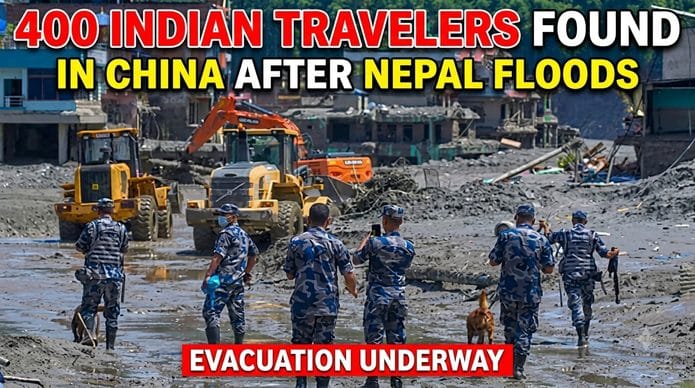
Around 400 Indians stranded on the Chinese side of the Nepal-Tibet border have been contacted and are safe, while the Indian Embassy in Beijing is working with Chinese authorities to arrange their evacuation. The Ministry of External Affairs provided the update on August 28 as rescue operations continued after catastrophic flooding devastated the Himalayan border region.
The reassuring news, however, comes alongside another major concern: 320 Indian nationals in Nepal were still uncontactable in the latest Indian government update. Rescue teams are operating across difficult terrain where roads, bridges and communication links have been badly damaged.
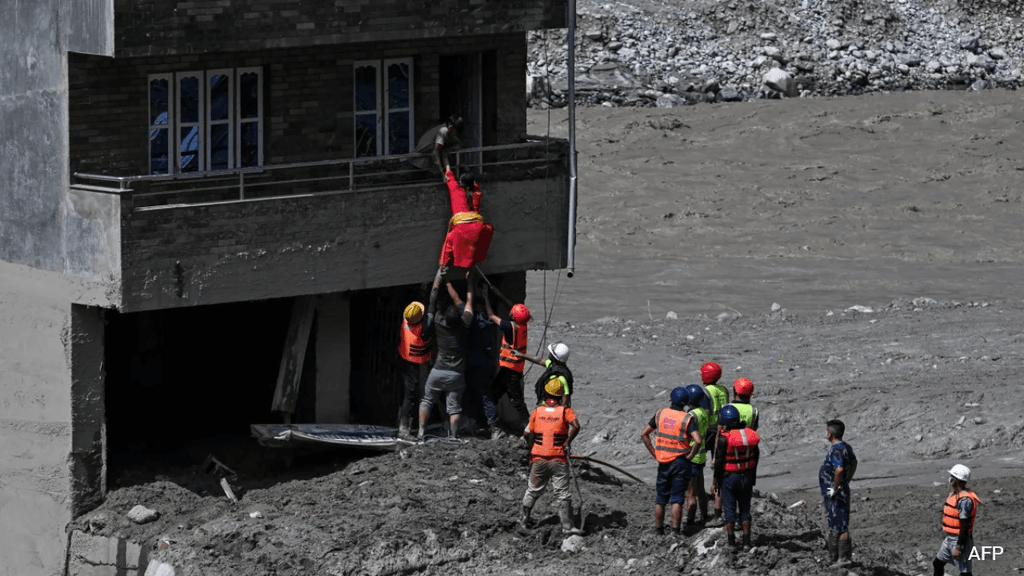
Are the 400 Indians stranded in China safe?
Yes. Officials have established contact with the roughly 400 Indians stranded on the Chinese side, and they are reported safe.
MEA spokesperson Randhir Jaiswal said the Indian Embassy in Beijing was in touch with Chinese authorities to find a safe way to bring them out of the affected region.
For families following the news, one distinction is important: stranded does not mean missing. Officials know where these travelers are and have contact with them; the problem is moving them safely through an area where normal transport routes have been disrupted.
How many Indians have been rescued after the Nepal floods?
Several groups of Indians have already reached safer locations, but hundreds remain uncontactable.
| Latest India-related update | Status |
|---|---|
| Indians contacted on Chinese side | Around 400, safe |
| Indians who crossed from China into Nepal | 96 |
| Trishuli-I project workers rescued | 63 |
| Tamil Nadu travelers returned to Delhi | 21 |
| Indians still uncontactable in Nepal | 320 |
Twenty-one Indians from Tamil Nadu who had reached Kathmandu after being rescued returned to Delhi on Friday. Separately, 63 Indian employees working at the Trishuli-I hydropower project were rescued, while 96 Indians previously stranded on the Chinese side crossed safely into Nepal.
Why is the Nepal-China flood evacuation taking time?
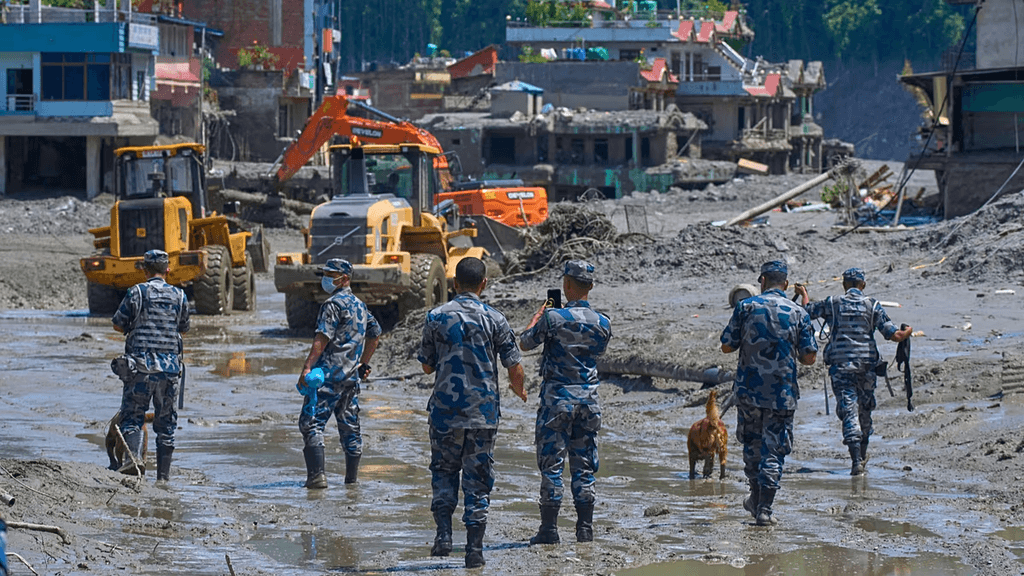
Destroyed infrastructure and the threat of further flooding are making this a rescue operation, not a normal road evacuation.
The disaster was triggered after a glacial collapse sent enormous quantities of water, mud, ice and rock through valleys along the Nepal-China border on August 26. Reuters reported that rescue work was briefly halted on August 28 because of concern that a newly formed lake could overflow, before operations resumed when the immediate risk eased.
That explains why someone can be confirmed safe yet remain stranded for hours or days. In high mountain terrain, a washed-out bridge or unstable slope can turn a short drive into an impossible journey.
Also read – Nepal Request India to Accept New Digital ID for Border …
What should families do if an Indian traveler is still uncontactable?
Families should send authorities one complete set of identification and last-location details rather than relying only on repeated calls.
Keep these details ready:
- Full passport name and passport number
- Indian and overseas mobile numbers
- Recent photograph
- Last confirmed location and time
- Hotel, tour operator or pilgrimage group
- Vehicle or bus details, if known
- Names of accompanying travelers
A phone going silent is not proof that a traveler is injured or missing. Floods can disable mobile towers, electricity and charging facilities, while rescued travelers may also be moved between locations without immediate internet access.
Families should rely on updates from the Ministry of External Affairs and Indian diplomatic missions rather than forwarding unverified casualty lists circulating on social media.
Is it safe to travel near the Nepal-Tibet border now?
Non-essential travel into the flood-affected border region should be avoided while rescue operations and infrastructure assessments continue.
Reuters reported on August 28 that 547 people had died in Nepal and five in Tibet, while hundreds remained missing after one of the region’s most severe recent disasters. More than 90,000 people had been affected.
Travelers planning Kailash Mansarovar journeys or overland Nepal-Tibet routes should not assume an existing tour booking means the route is operational. Confirm road access, border status and transportation directly with authorities and the operator before leaving.
What happens next for the stranded Indians?
The immediate priority is safe evacuation, while search efforts continue for Indians who remain uncontactable in Nepal.
For relatives, the most meaningful update is this: the roughly 400 Indians on the Chinese side have been reached and reported safe. Evacuation arrangements are being coordinated, while authorities continue the more difficult task of locating those whose status is still unknown.

